Home › Repair cases › Volvo XC60
TOTAL VEHICLE INSPECTION / CASE RECORD
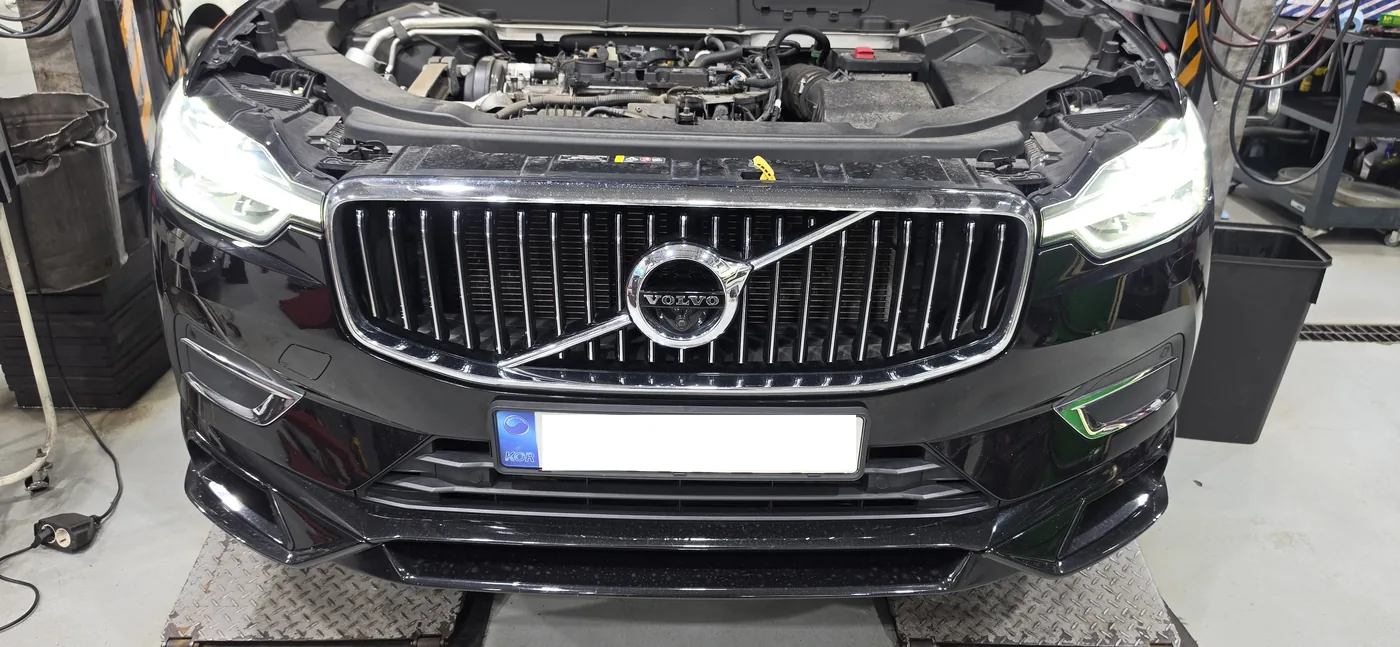
2019 Volvo XC60Total inspection:
low voltage and tyre wear
The owner bought this 2019 XC60 used. Start/Stop was inactive despite a recent battery replacement, so the visit also covered the car’s wider condition.
On this page
01 / POWER & USAGE
Why were there low-voltage records after a battery replacement?
Several battery-related low-voltage fault codes were stored. The date of the last battery replacement was only part of the picture. We also looked at what was drawing power while the car was parked.
The dashcam used parking recording without a dedicated auxiliary power pack. Its low cut-off setting could have contributed to power consumption while parked, so the setting was adjusted first. A separate dashcam battery pack should not be confused with the car’s factory Start/Stop support battery.
DASHCAM CUT-OFF SETTING
Parking recording was set to stop earlier.
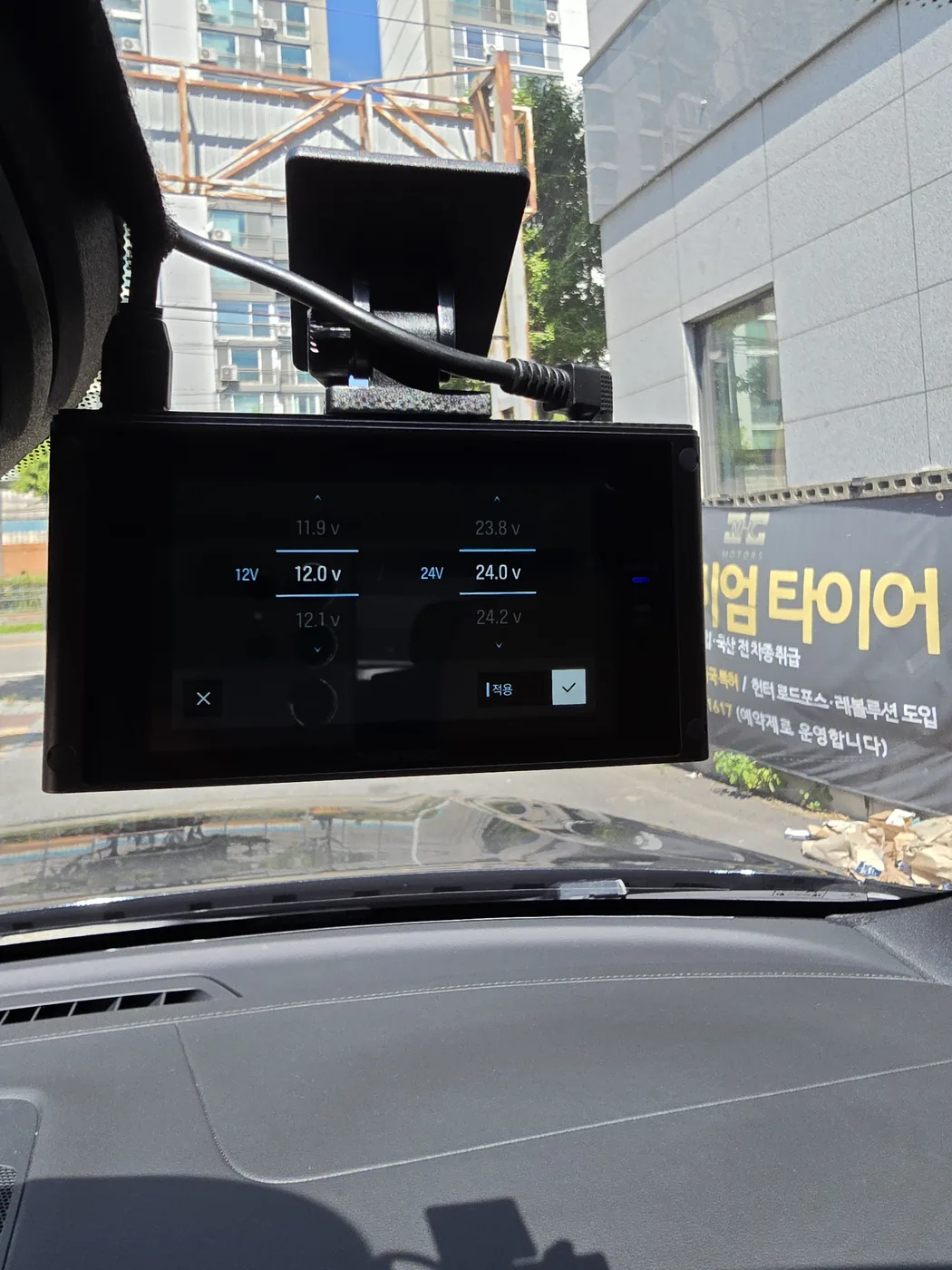
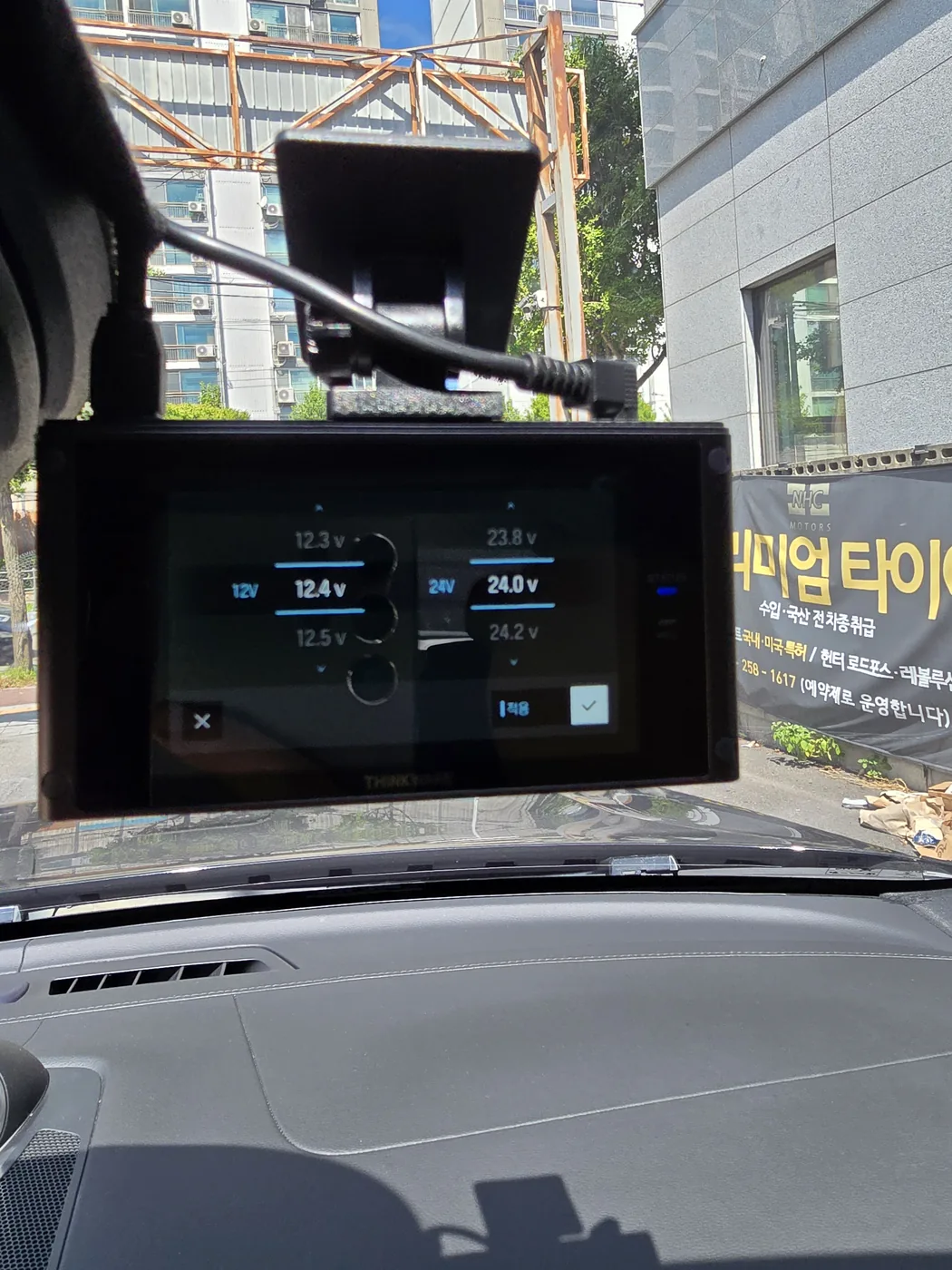
The 12.0→12.4 V figures are dashcam cut-off settings. The existing fault codes were cleared. At the next visit, we will check for recurring low-voltage warnings and normal Start/Stop operation.
If warnings return, check battery condition, charging and power consumption while parked first. Those results will guide any replacement decision. Battery checks and replacement guide (Korean)
02 / TYRE MEASUREMENTS
Front-tyre replacement took priority
Both front tyres were worn, with heavier wear on the passenger side. An Autel TBE200 measured the inner, centre and outer tread on each tyre. The chart compares the lowest reading from each tyre.
TREAD DEPTH
The front-right tyre needs attention first
All 12 measurements · mm
| Position | Inner | Centre | Outer |
|---|---|---|---|
| Front left | 3.6 | 3.8 | 2.9 |
| Front right | 2.0 | 1.4 | 1.8 |
| Rear left | 4.1 | 3.6 | 3.4 |
| Rear right | 5.1 | 2.7 | 2.8 |
Positions follow the driver’s view looking forward. Each tyre is listed inner–centre–outer. No post-replacement readings are available.
The front-right centre measured 1.4 mm, below the 1.6 mm legal wear limit in Korea. It needed immediate replacement. Korea Transportation Safety Authority inspection guidance
The owner was considering replacing all four tyres, with alignment to be checked at the same time. Uneven wear alone was not treated as proof of an alignment fault. Neither tyre replacement nor alignment adjustment was completed during this visit.
Tyre wear and replacement guide (Korean) · Wheel alignment guide (Korean)
03 / ENGINE, CHASSIS & BRAKES
What could remain in service, and what needed monitoring?
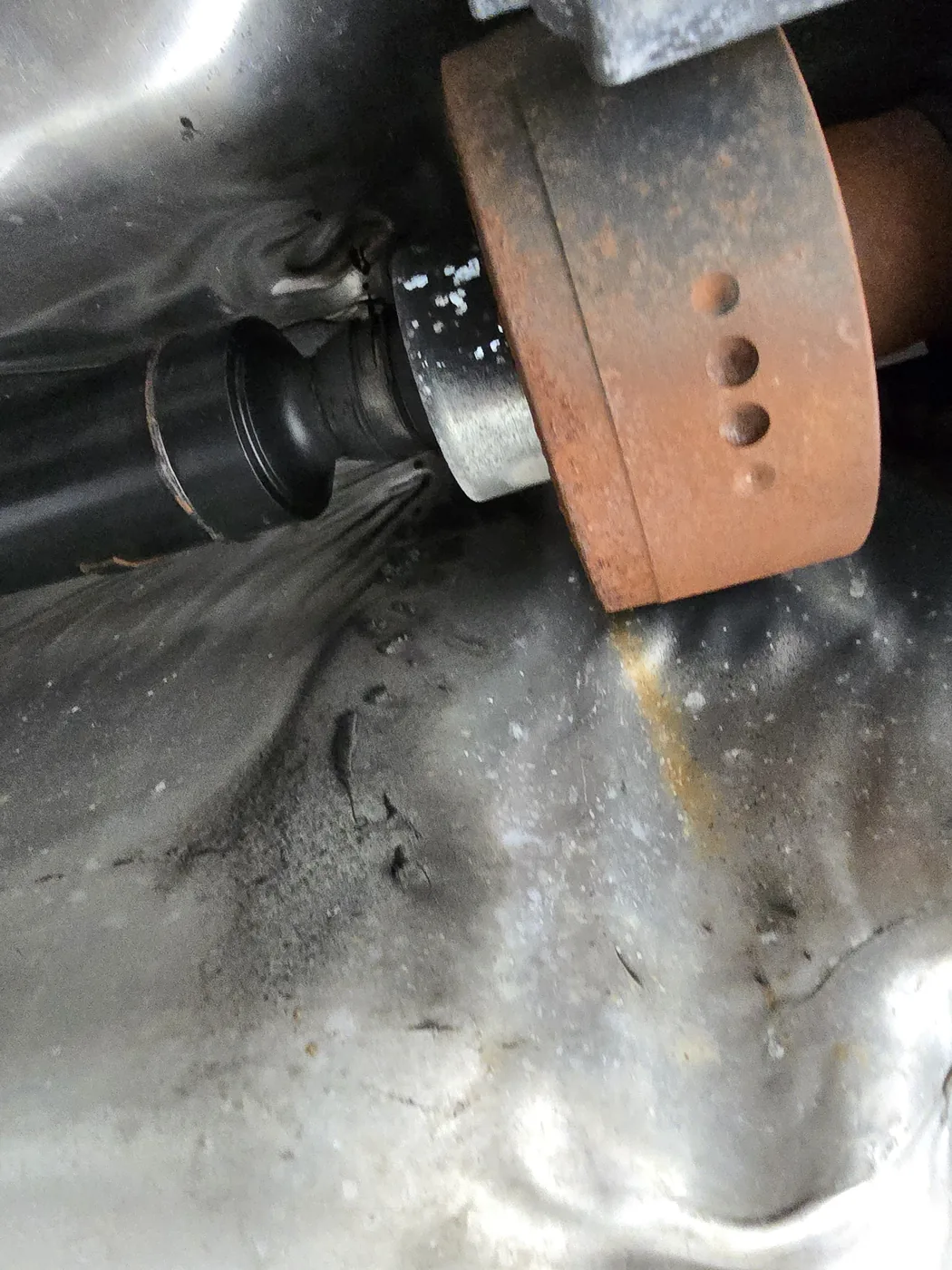
Within the inspection scope, the engine and chassis were in better condition than the owner had feared. No torn CV boots or major visible chassis issues were observed.
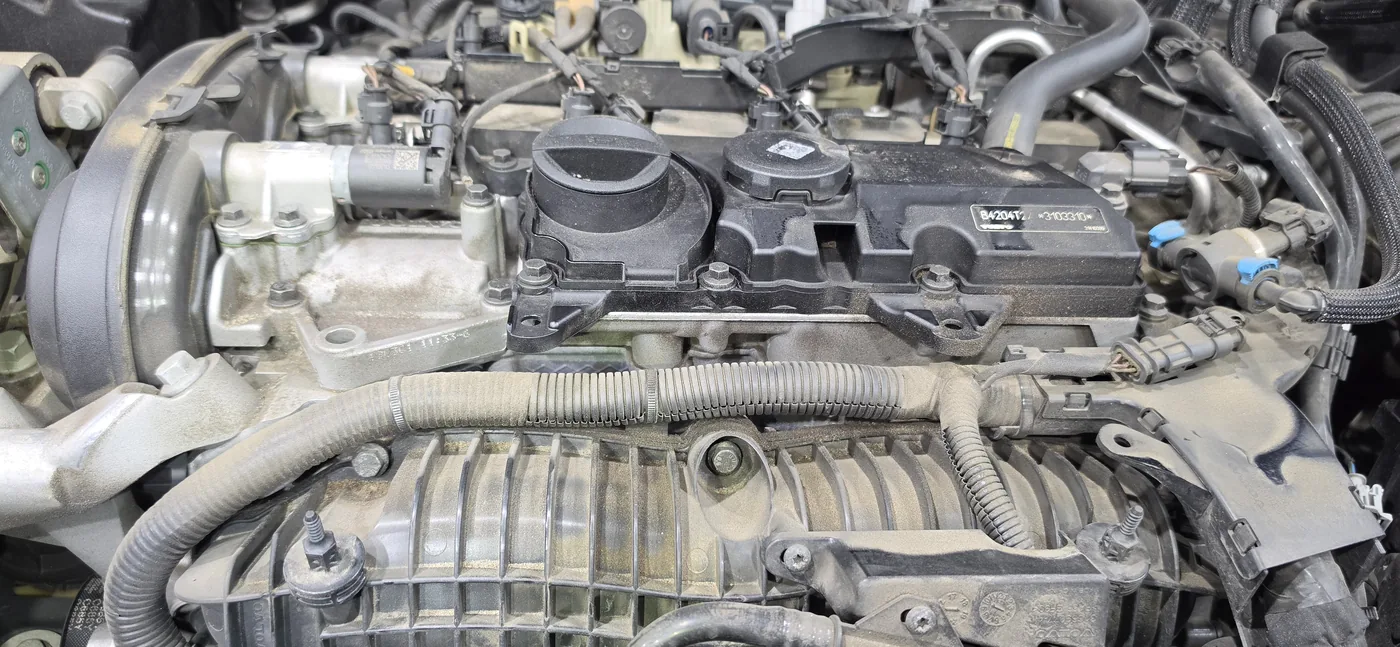
There was minor seepage near a driveshaft entry. It was not scheduled for immediate dismantling; the area was retained for comparison at the next inspection.
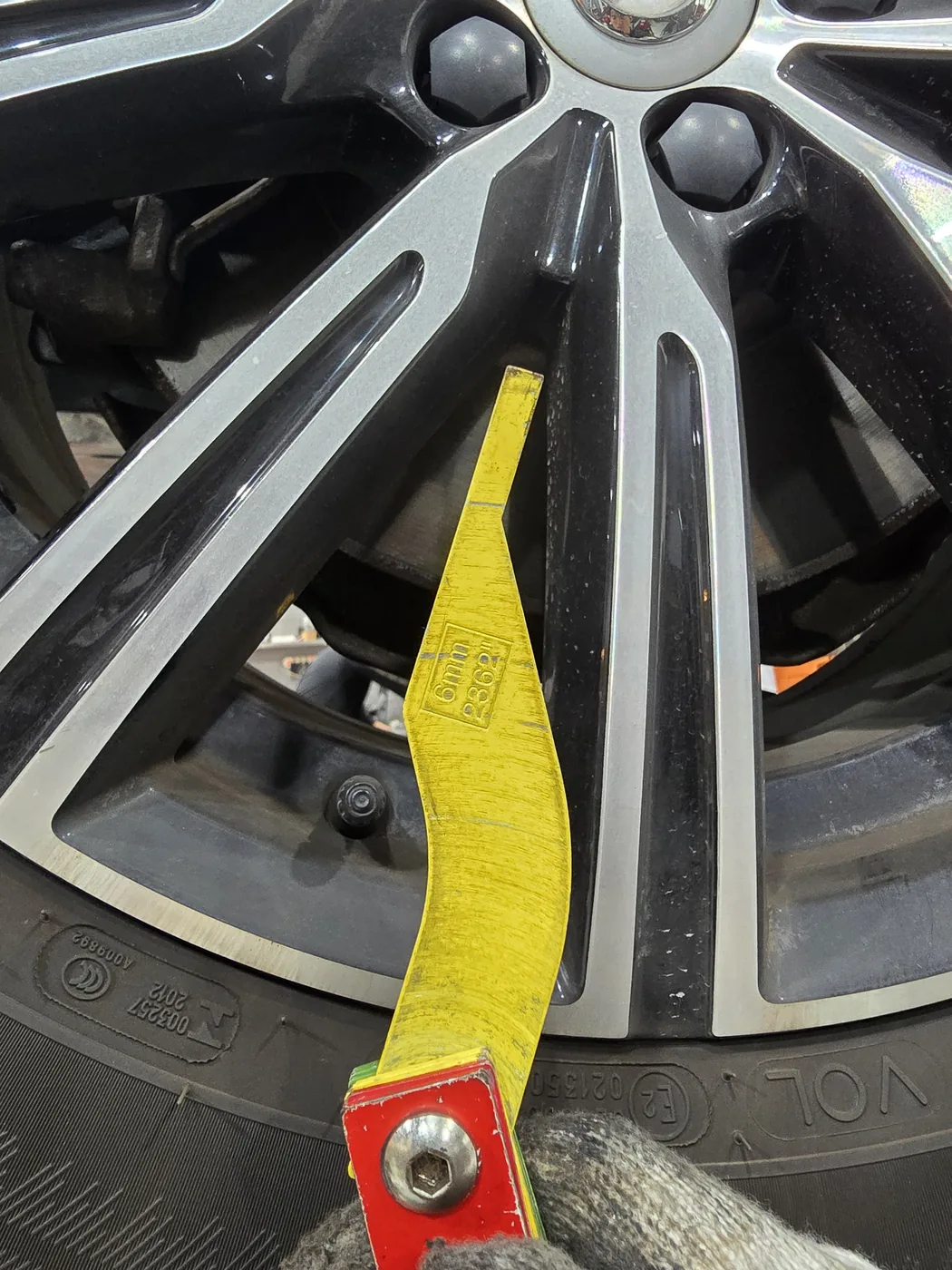
The front pads had material remaining, and the rear pads appeared relatively recent. The owner was advised to replace the front discs when the front pads are next changed. Pad life and disc condition are separate considerations. No pads or discs were replaced during this visit.
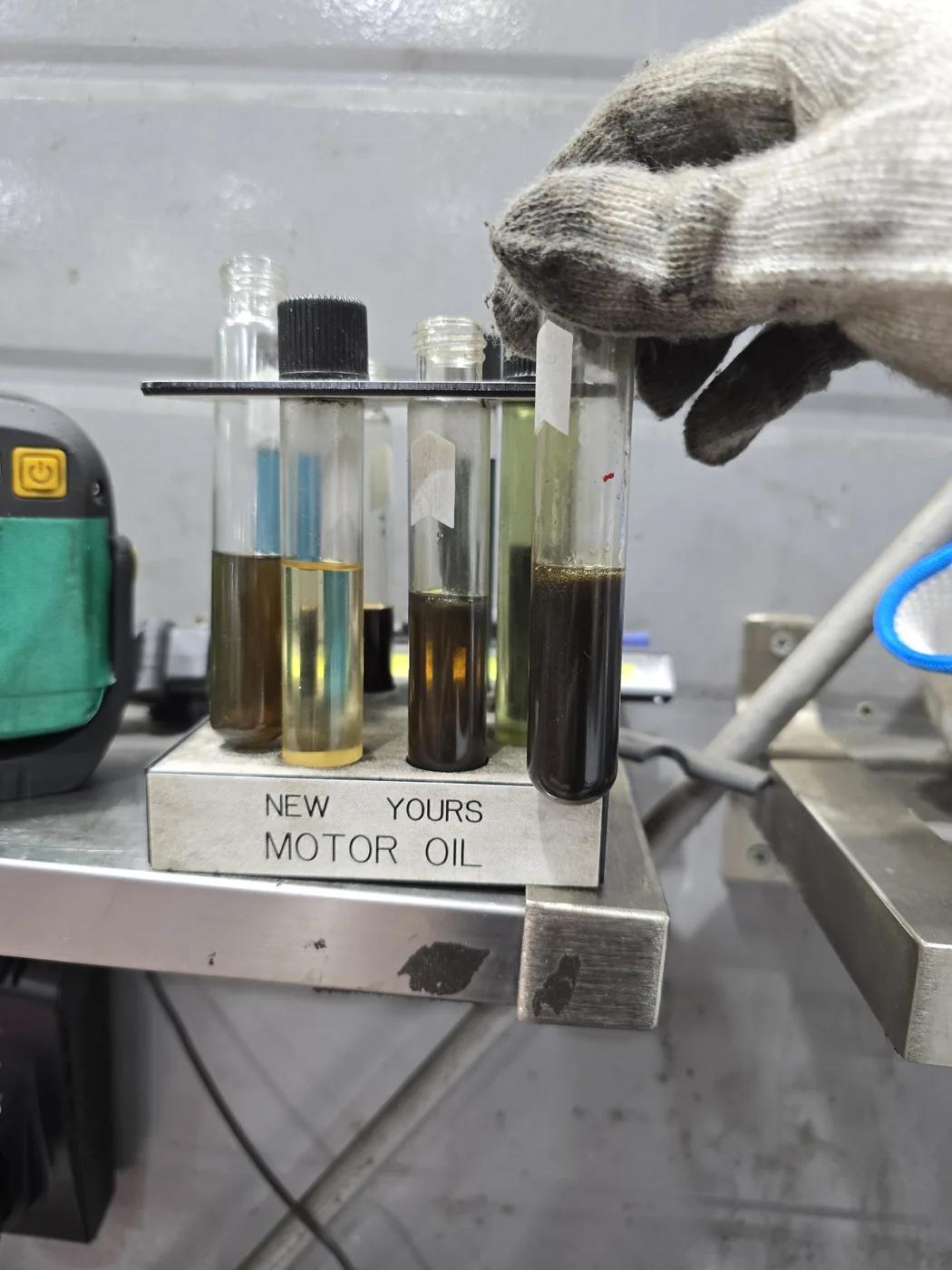
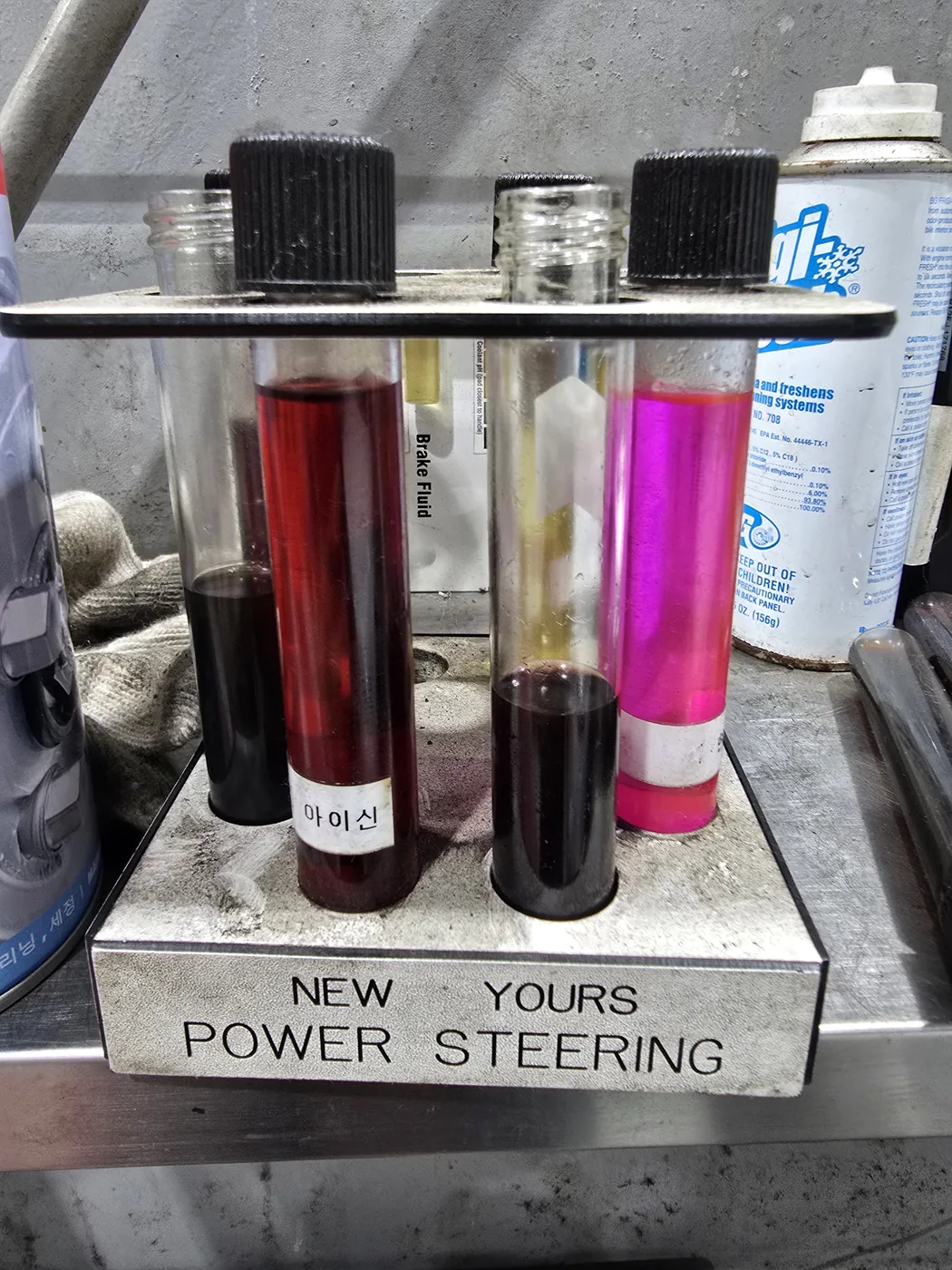
Sampled oil alongside comparison fluids
Oil was sampled for comparison during the inspection. The rear differential oil and brake fluid were changed that day; the front differential and transmission oil were left for a later visit.
04 / COMPLETED WORK
Rear differential oil, brake fluid and cabin filter replacement
Rear differential: cleaning the plug and replacing the oil
Metallic deposits were cleaned from the rear differential plug and the oil was replaced. Before-and-after photographs provide a reference for a future service. The deposits alone did not establish internal damage or the source of the reported noise.
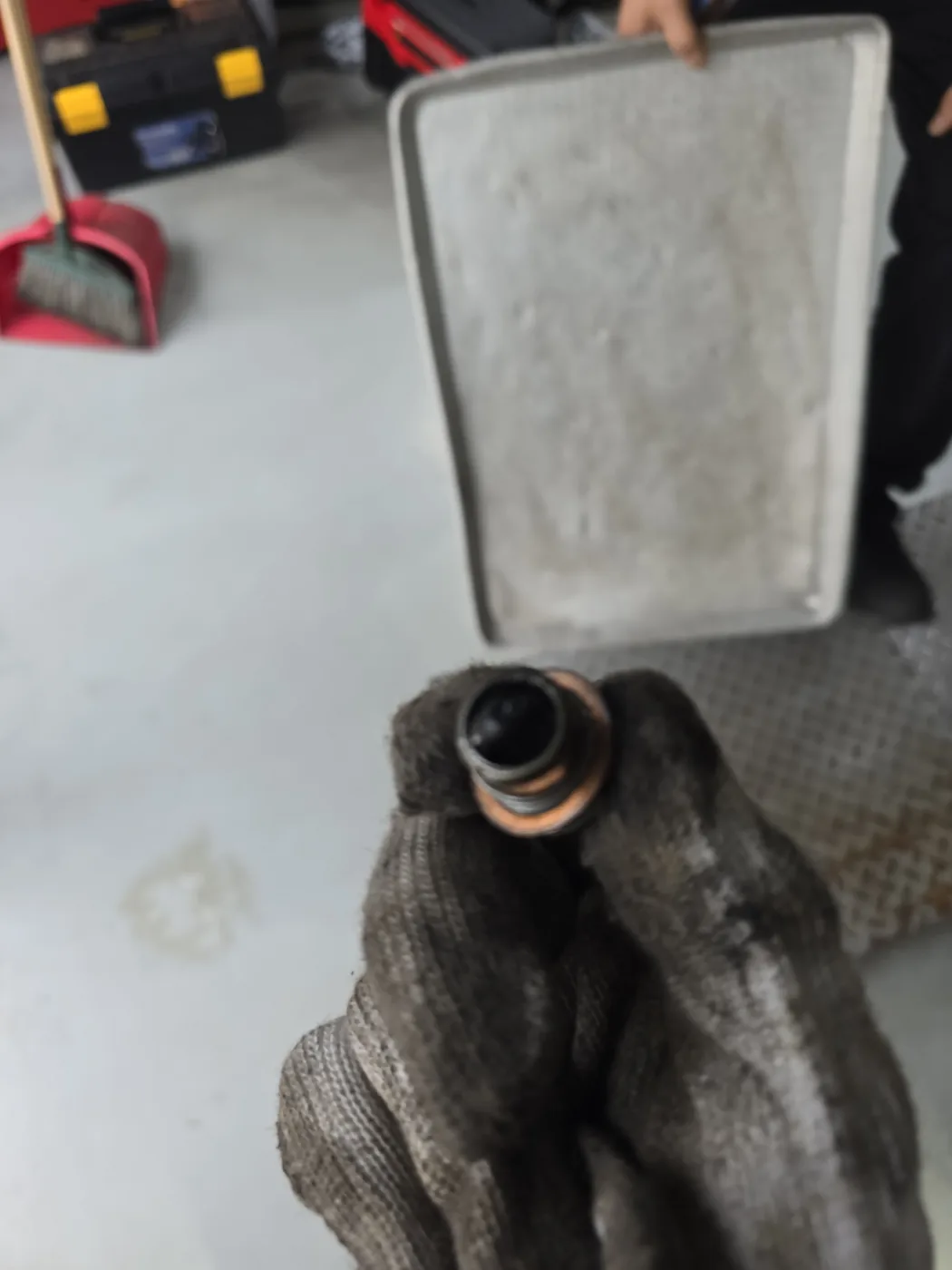
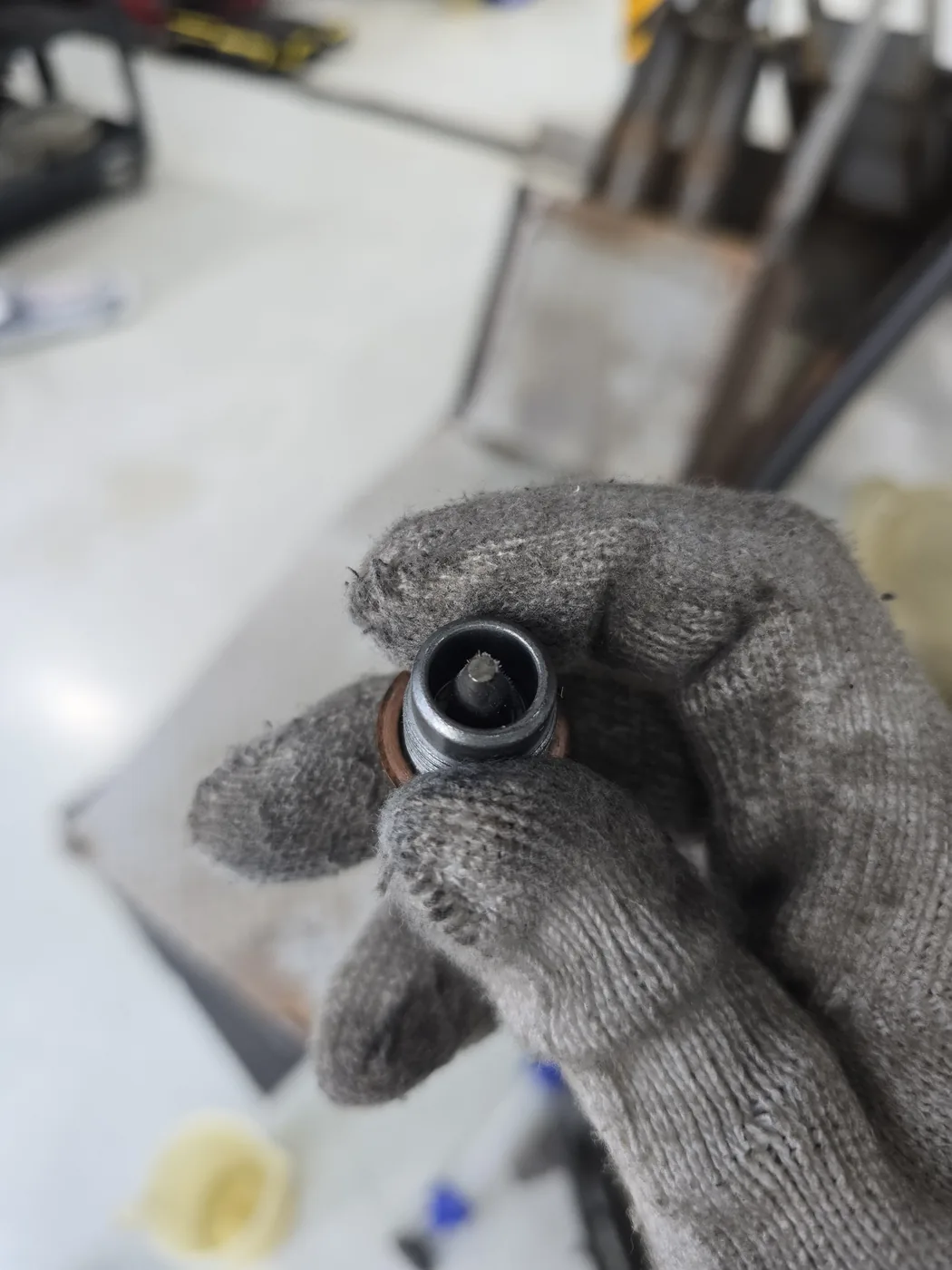
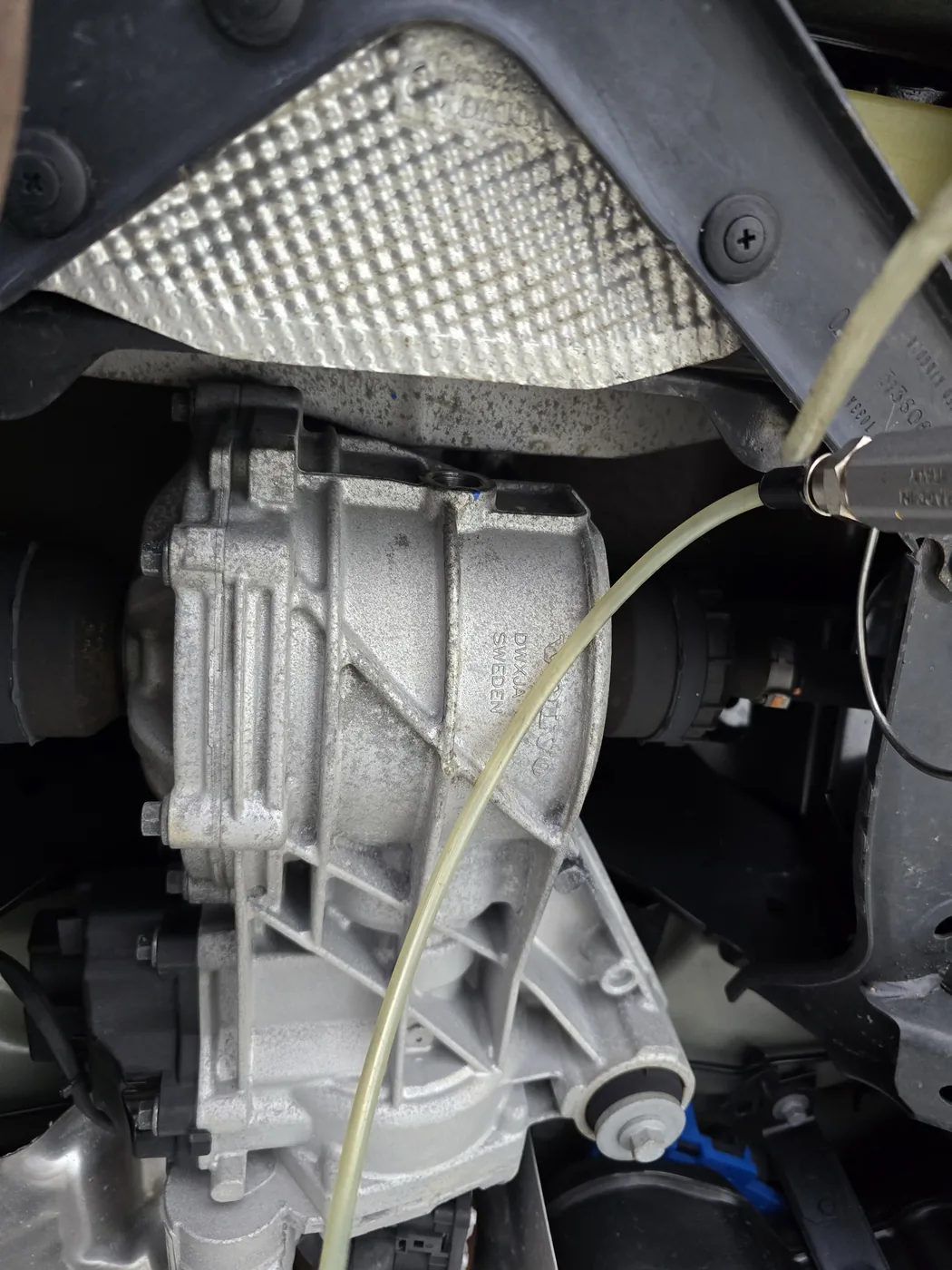
The completed work was the rear differential oil service. Front differential and transmission oil remained for a later visit. Differential oil guide (Korean)
Brake fluid: inspection and replacement
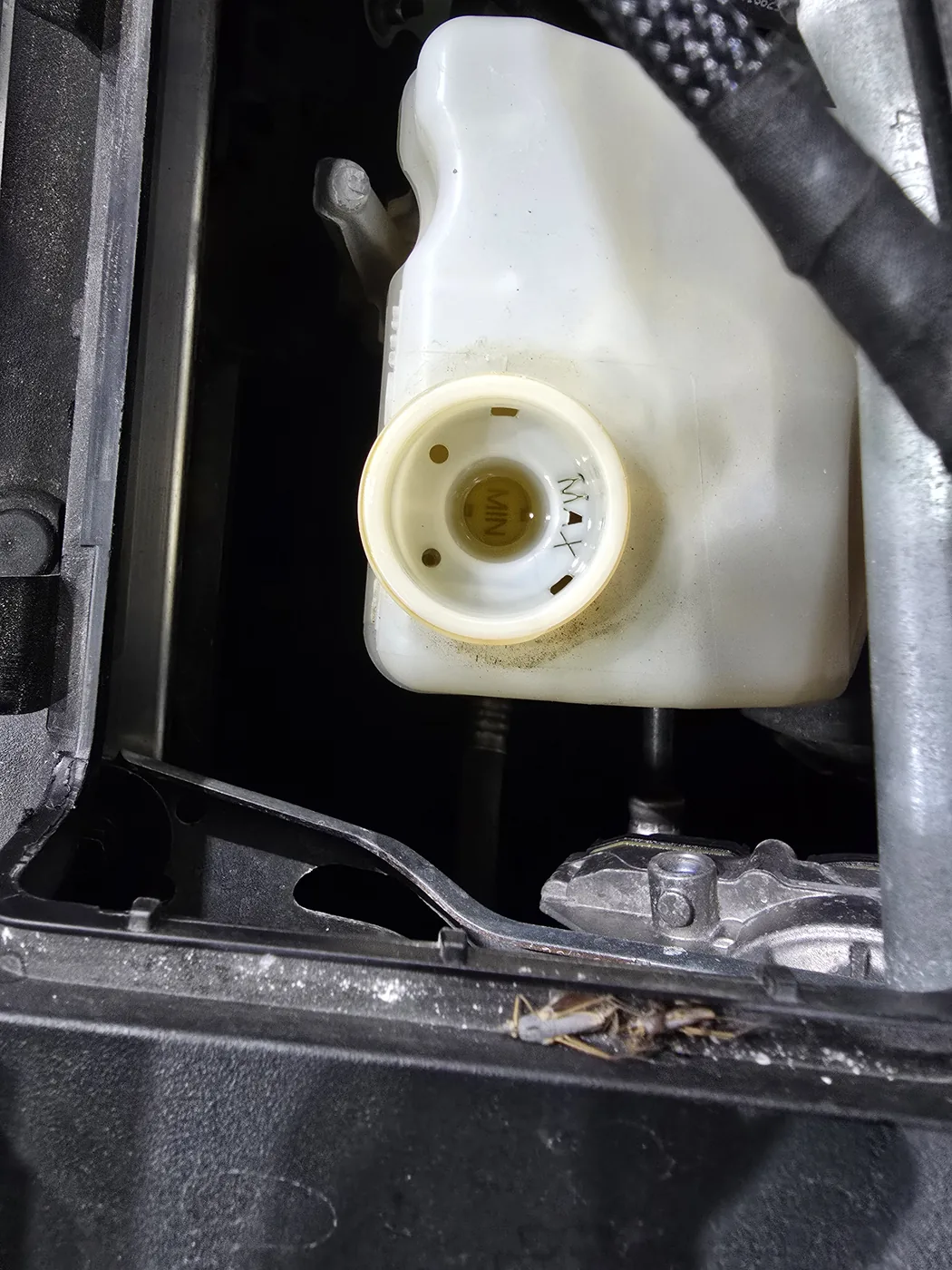
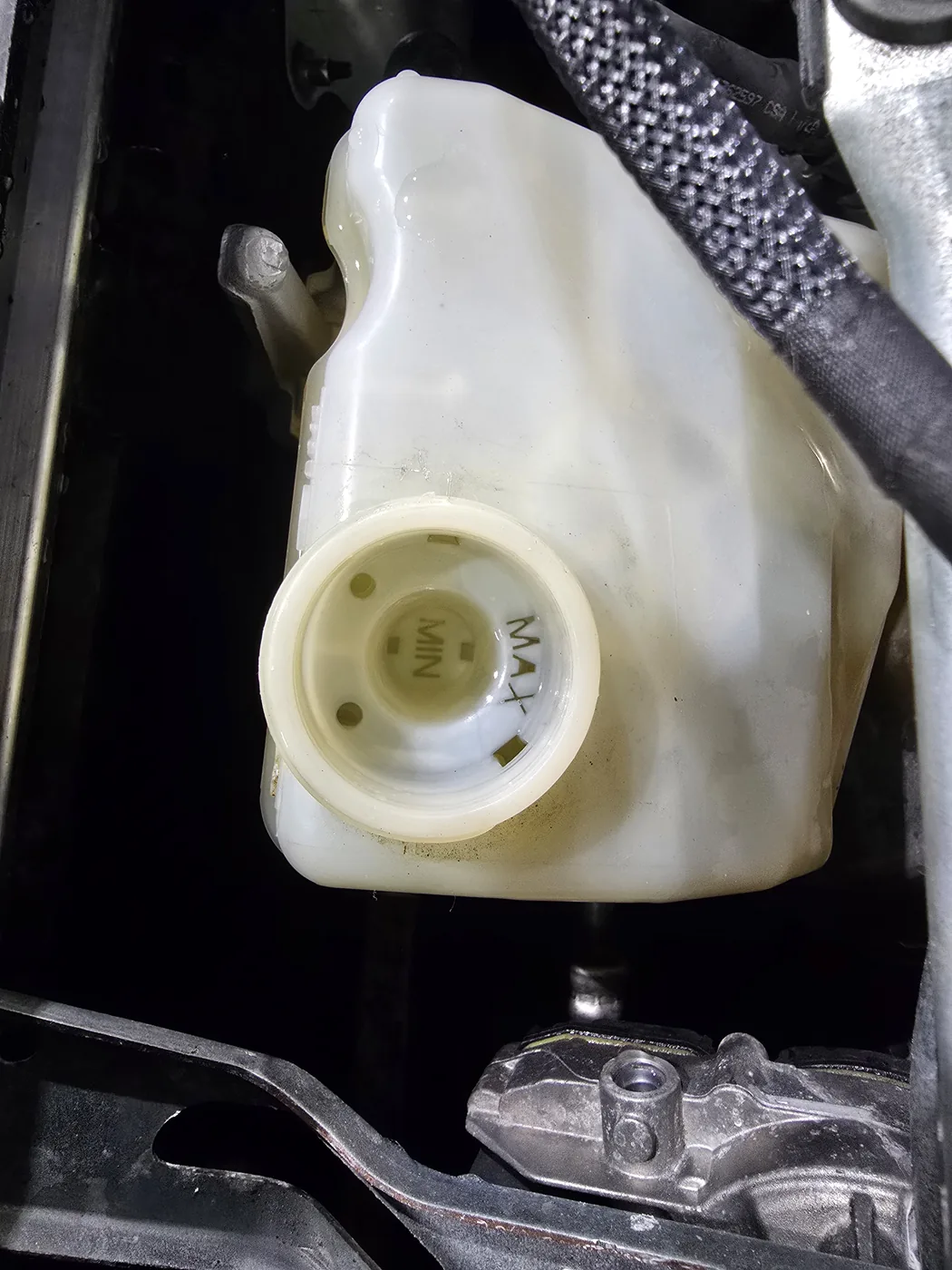
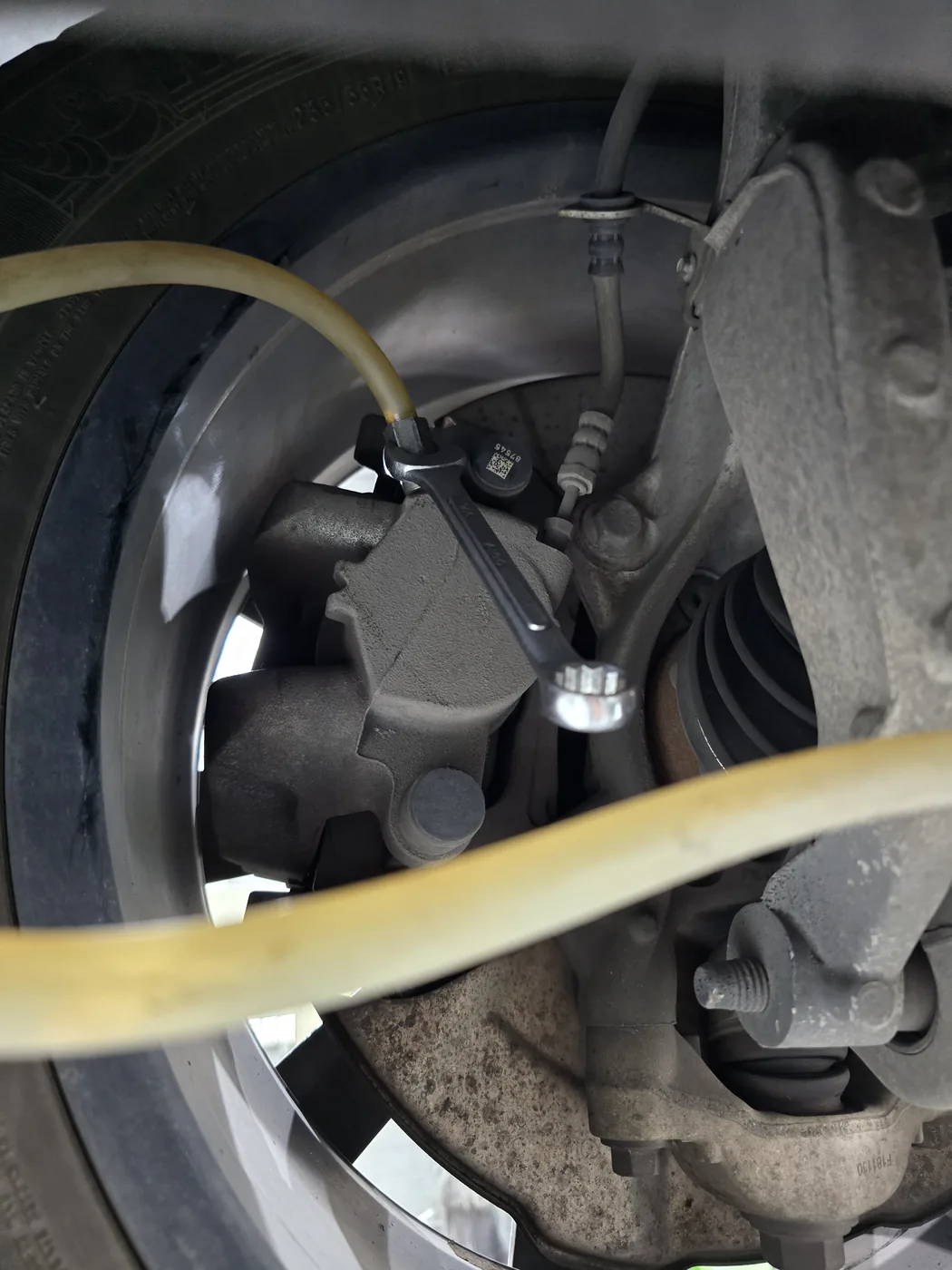
After inspection, the brake fluid was replaced with BG DOT 5.1. The manufacturer describes ultra-low electrical conductivity and low viscosity as product features. The low-viscosity formulation is intended to maintain fluidity in cold conditions. BG product feature information
The reservoir before and after replacement, and the bleeding process, were recorded in photographs.
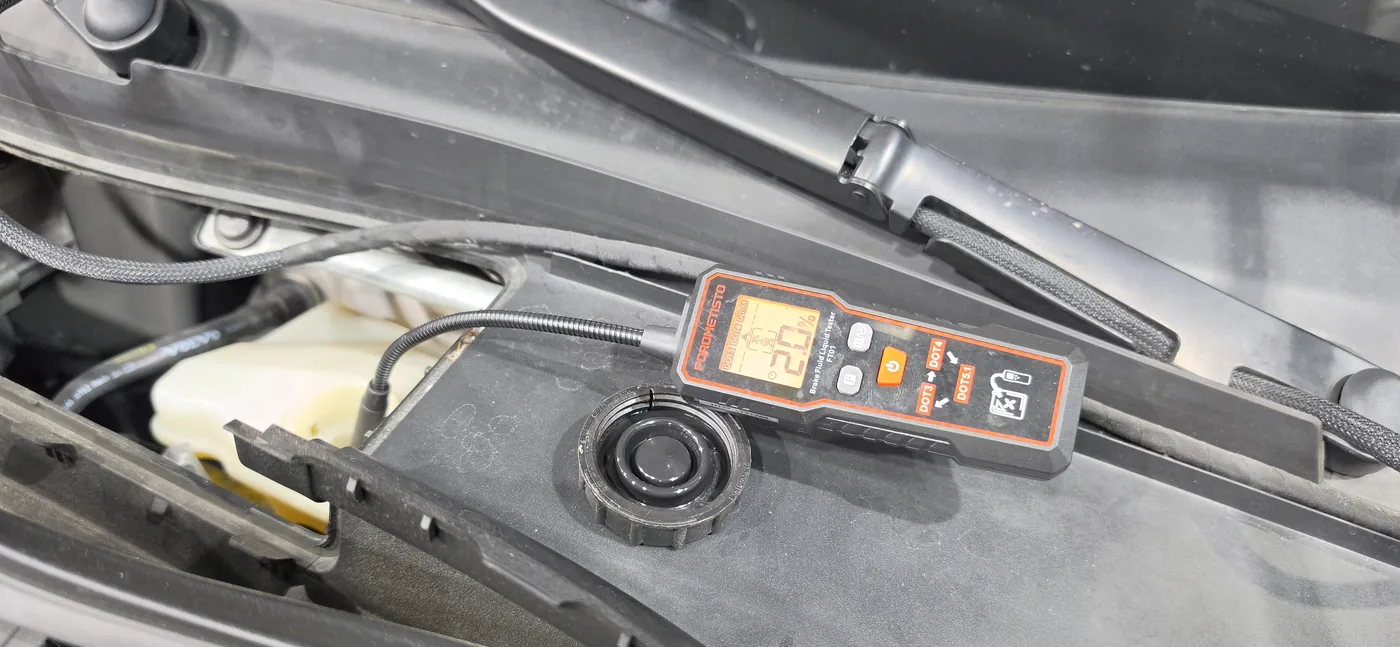
View the brake-fluid bleeding photograph
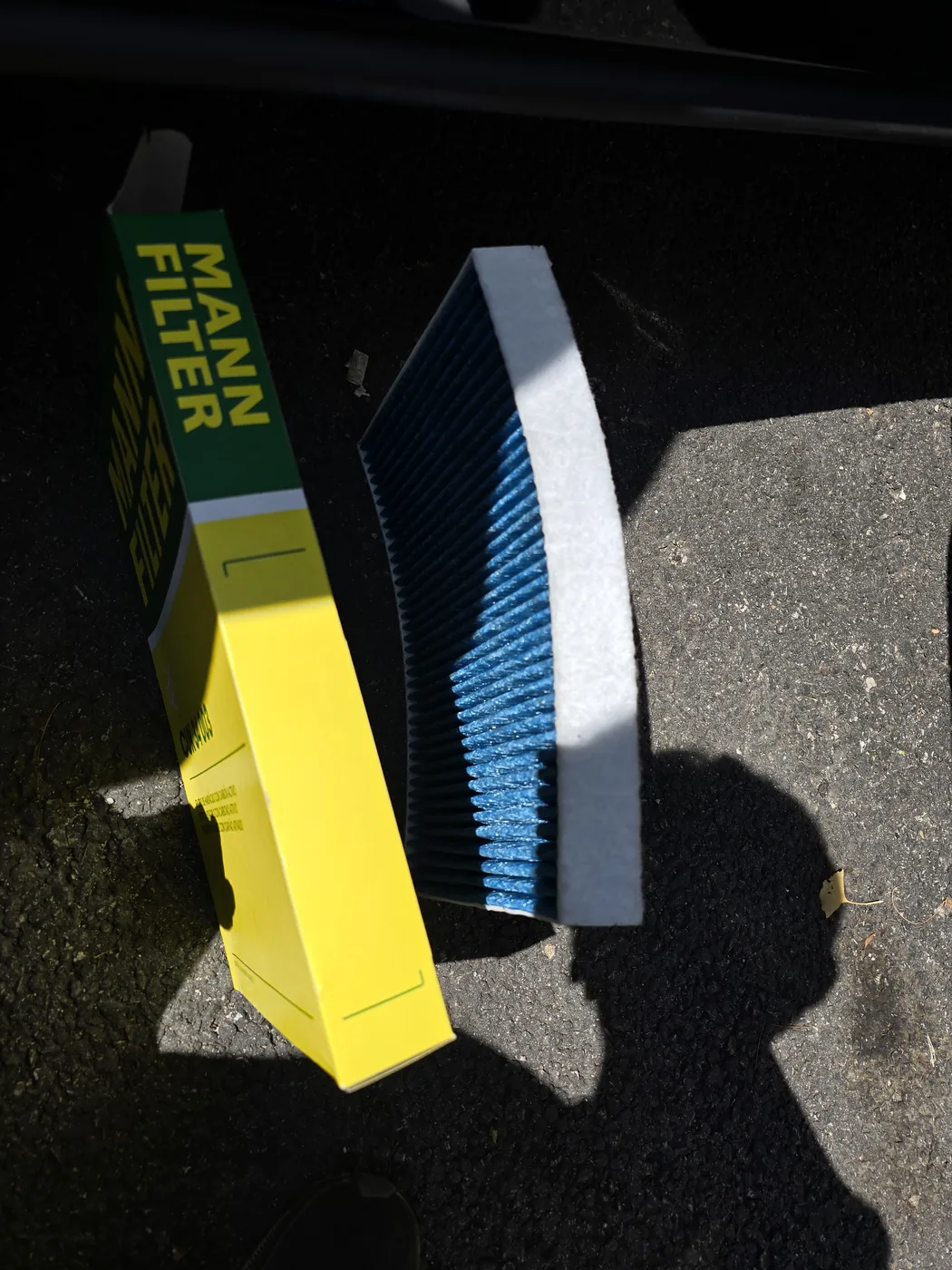
Cabin filter: replacement based on its condition
The removed cabin filter was dirty and was replaced.
05 / RESULTS & FOLLOW-UP
Completing the inspection did not resolve every issue
The noise was difficult to reproduce during the inspection. We have not found its source yet and agreed to look at it again on the next visit.
Dashcam setting adjusted; existing fault codes cleared
Rear differential oil, brake fluid and cabin filter replaced
Replacement of the worn front tyres
Scope of all-four replacement and alignment to be arranged
Front differential and transmission oil
Front discs advised with the next front-pad replacement
Low-voltage recurrence and Start/Stop operation
Condition-specific noise and driveshaft-entry seepage
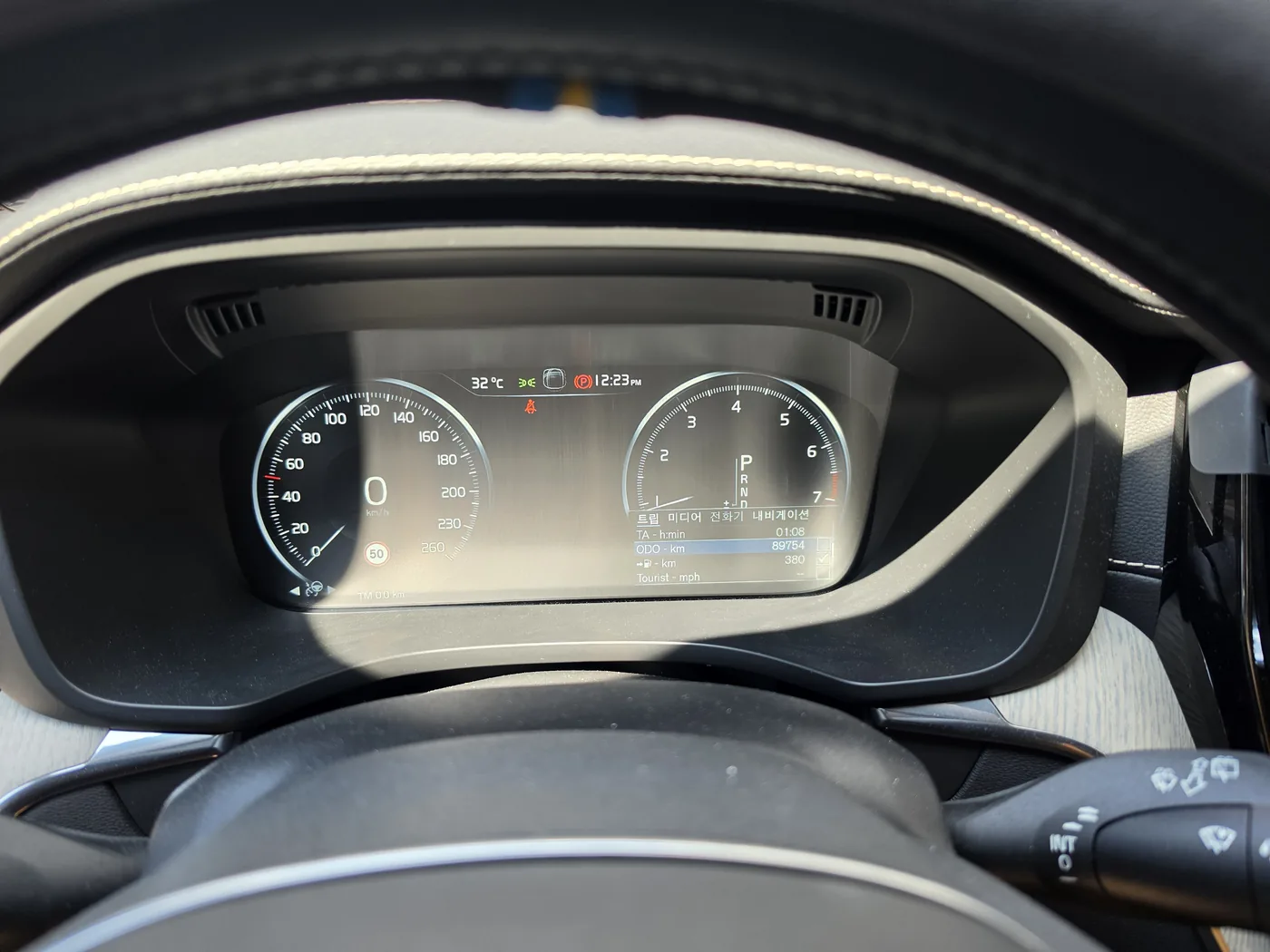
The odometer showed 89,754 km on the day of work. The battery replacement history, current measurements, completed work and outstanding items were recorded together so that the next visit can continue from the same record.
View the odometer photograph
Whether to repair, when to repair, and whether to keep the car
On this XC60, front-tyre replacement took priority. The brake pads had material remaining and were not replaced. Minor oil marks near a driveshaft entry were recorded for comparison at the next inspection.
After a total inspection, we explain which items need attention first, which can be scheduled later and which need monitoring, along with estimated timing and costs for the required work.
The findings give the owner a basis for choosing. The intended ownership period and the extent of required work help determine whether to repair now or schedule work in stages. Knowing the current condition also helps when deciding whether to repair and keep the car or sell it.
NHC Motors holds Korean Patent 10-2552759 (Korean) for maintenance scheduling based on vehicle history and inspection records. For this XC60, the battery replacement history and current measurements were considered together when organising the maintenance priorities. Total inspection scope and booking information (Korean)
Checking behind covers for oil leaks
Oil leaks can be hidden behind covers. Following the vehicle’s inspection procedures, we lift the car and remove the covers needed to inspect those areas. Diagnostic tools and measuring equipment are selected for the task, and the readings are assessed against vehicle-specific criteria and service history.
A drive with the owner helps pinpoint when a noise or vibration occurs. Driving alone cannot reveal every covered area or establish the condition of the underbody. When the symptoms call for a road test, its findings are considered alongside the workshop inspection.
06 / QUESTIONS
Questions about this XC60 inspection
Does an inactive Start/Stop system mean my XC60 needs a new battery?
Not on that symptom alone. Temperature, climate-control demand and other operating conditions also affect Start/Stop. For this car, we considered the recent battery replacement, low-voltage fault codes and dashcam settings together. A follow-up is needed after the settings change.
Will raising the dashcam cut-off voltage solve a low-voltage problem?
It is intended to shorten the time the dashcam draws power while parked. Parking time and driving patterns matter. If warnings return, battery condition, charging and power consumption while parked need to be checked.
Does heavier wear on the front-right tyre prove an alignment fault?
No. Tyre pressure, usage history, wheel and tyre condition, and suspension condition also need consideration. Front-tyre replacement took priority here, with alignment to be checked when the tyres are replaced. Alignment was not measured or adjusted during this visit.
Can I book a total inspection after I have been driving a used car for some time?
Yes. Understanding the current condition helps you decide what to repair and when. Your intended ownership period and the extent of required maintenance can also inform whether to repair and keep the car or sell it. For this XC60, the inspection findings were used to separate the work completed that day from the follow-up items.
Does every trace of oil require immediate repair?
The extent of the seepage, any dripping and the surrounding condition matter. Minor marks near this car’s driveshaft entry did not lead to immediate dismantling. The area was recorded for comparison at a later inspection.
Does booking an inspection also authorise repairs?
We explain the findings, the scope of any repairs and the estimate first. Repairs proceed with your approval. For this XC60, work completed on the day was recorded separately from planned maintenance.
Can a total inspection identify every fault?
Some problems do not show up during an inspection. On this car, the noise was difficult to reproduce and its source was not found. The outstanding issue stays on the record for the next visit.
How long does a total inspection take, and what does it cost?
It usually takes 60–90 minutes; some vehicles need around 120 minutes. The inspection fee is KRW 165,000 including VAT, or KRW 150,000 excluding VAT. If additional diagnosis or repairs are needed, we explain the scope and cost first.
Is a drive with an inspector enough when buying a used car?
A drive helps identify the conditions in which noise or vibration occurs. Oil leaks behind covers and underbody condition need separate inspection. During a total inspection, the necessary covers are removed and diagnostic readings and measurements are assessed against vehicle-specific criteria and service history.
General Start/Stop operating conditions were checked against the Volvo 2019 XC60 owner’s manual. Work on this vehicle is described from the supplied discussion record, photographs and tyre report.
Bought a used car and unsure what needs attention first?
Tell us the model, mileage and what you have noticed. Even if the service history is incomplete, we can start by assessing its current condition.
We explain the scope of any repairs and the estimate before proceeding with your approval.
Total inspection · Time and fee
- Typical inspection time
- 60–90 minSome vehicles need around 120 minutes.
- Inspection fee
- ₩165,000Including VAT
₩150,000 · Excluding VAT
This is the inspection fee. If additional diagnosis or repairs are needed, we explain the scope and cost first. Fees by inspection type (Korean)
By appointment only · Gwonseon-gu, Suwon
Total inspection scope and booking information (Korean)
For checks before signing, see the Audi A7 pre-purchase inspection, covering oil leakage, brake wear and maintenance costs to discuss before buying.