KIA K8 · RIDE QUALITY
Kia K8 pulling, vibration and road noise
Tyres, struts and wheel alignment
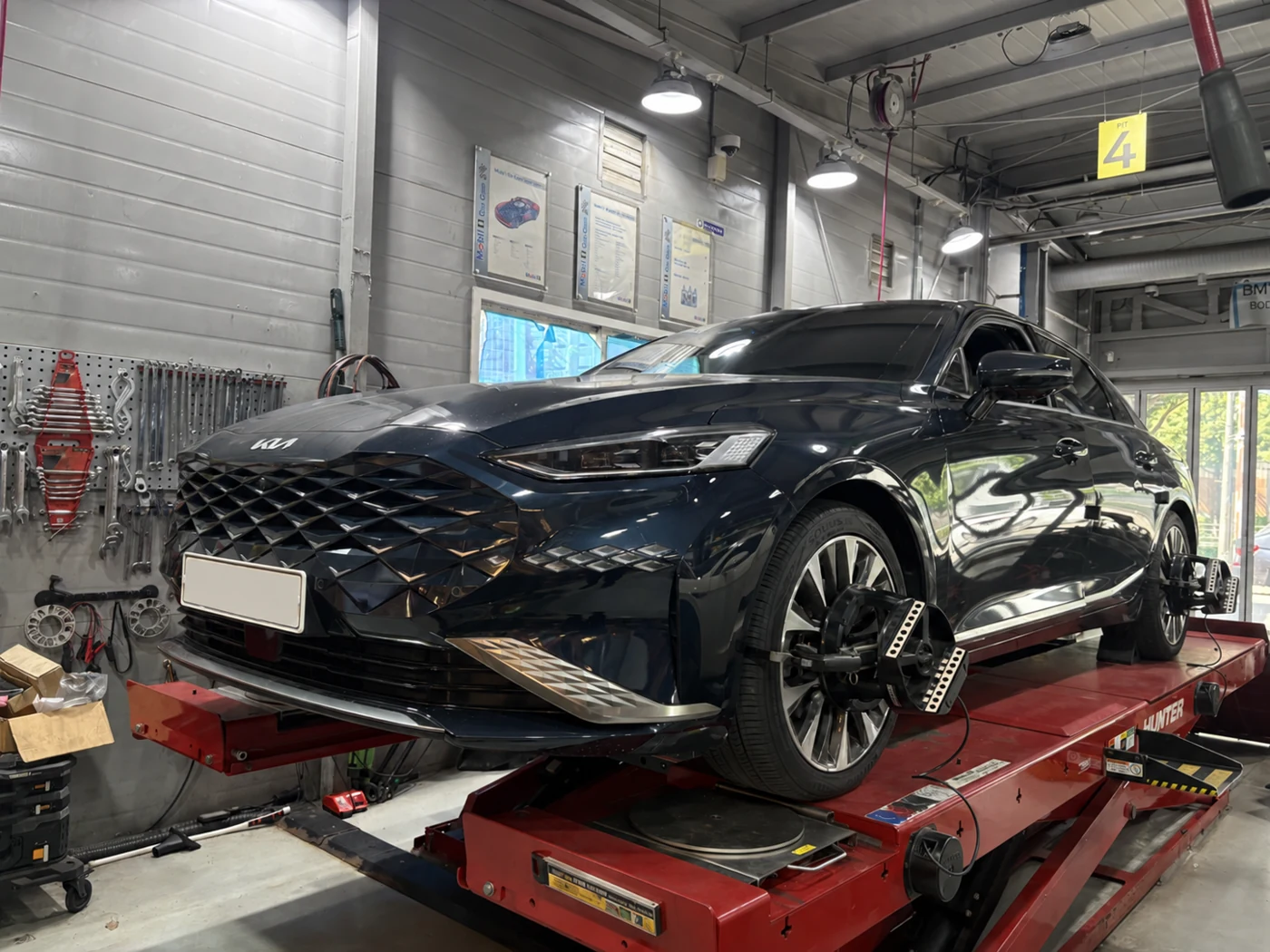
The owner felt this used Kia K8 rode worse than their previous LF Sonata. Pulling and seat vibration persisted after two alignments, prompting a visit from Pyeongtaek. The work covered tyres, front struts, alignment and brakes.
01
Symptoms and initial inspection
The owner reported pulling, an unusually light and unsettled steering feel, loud road noise and a separate vibration when braking.
An alignment alone cannot explain every one of these symptoms. The initial accompanied road test established when and where each was felt.
“These are different things. They are not all one issue.”
Jong-tae Kim · initial road-test transcript, 09:06; translated excerpt
02
Tyre wear and replacement
The old tyres showed cracking. The technician described pronounced uneven wear on the inner part of the left rear tyre, with high and low spots that could be felt by hand. This is commonly called cupping.
The owner wanted to experience how the car should ride, prioritising refinement when choosing four Goodyear EfficientGrip tyres.
The work did not stop at tyre replacement. Alignment and the condition of the front struts were also assessed.
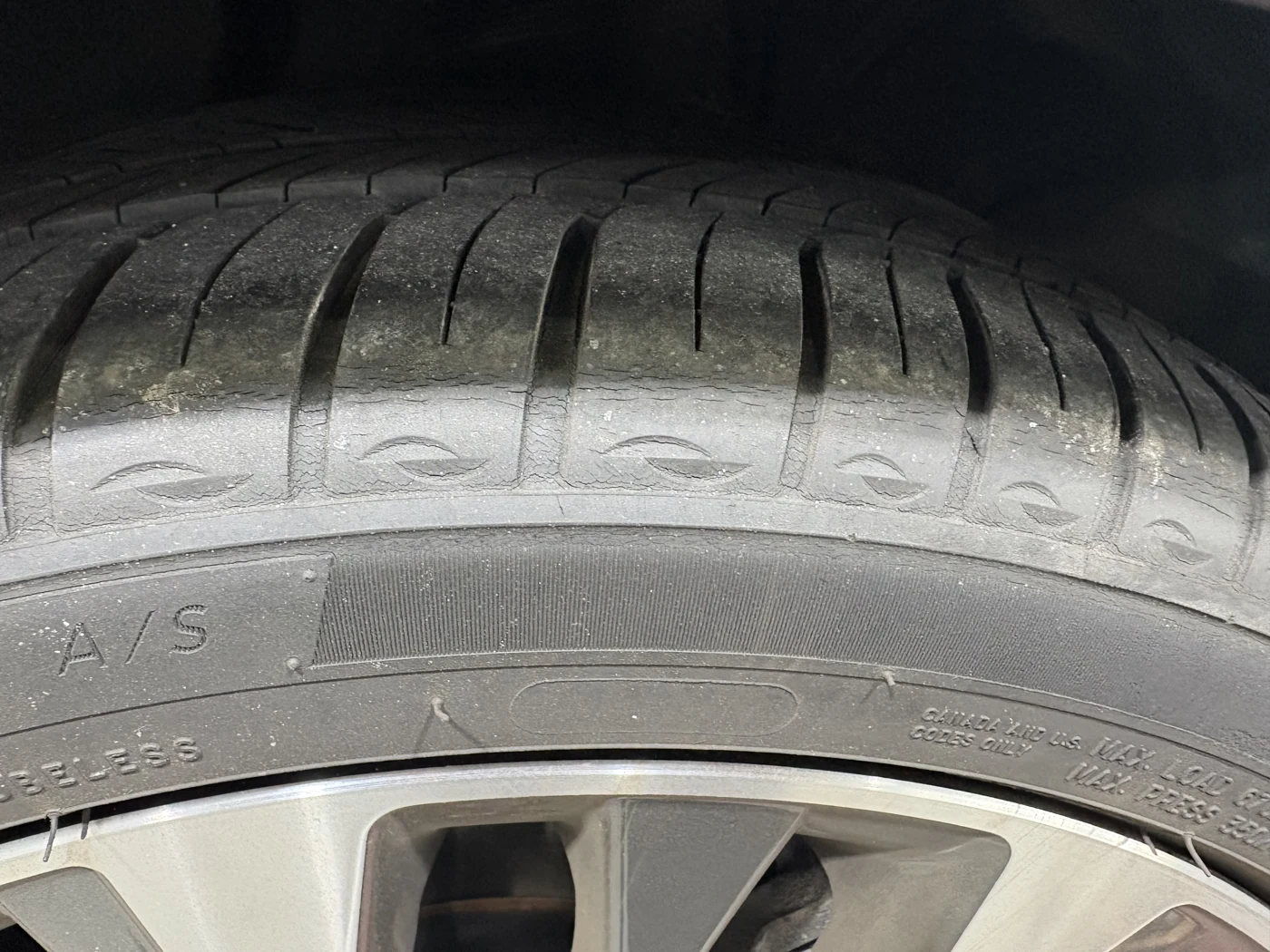
Alignment cannot restore rubber that has already worn away. The causes of irregular wear need attention alongside tyre replacement. See the tyre inspection guide (Korean).
03
Front struts and related components
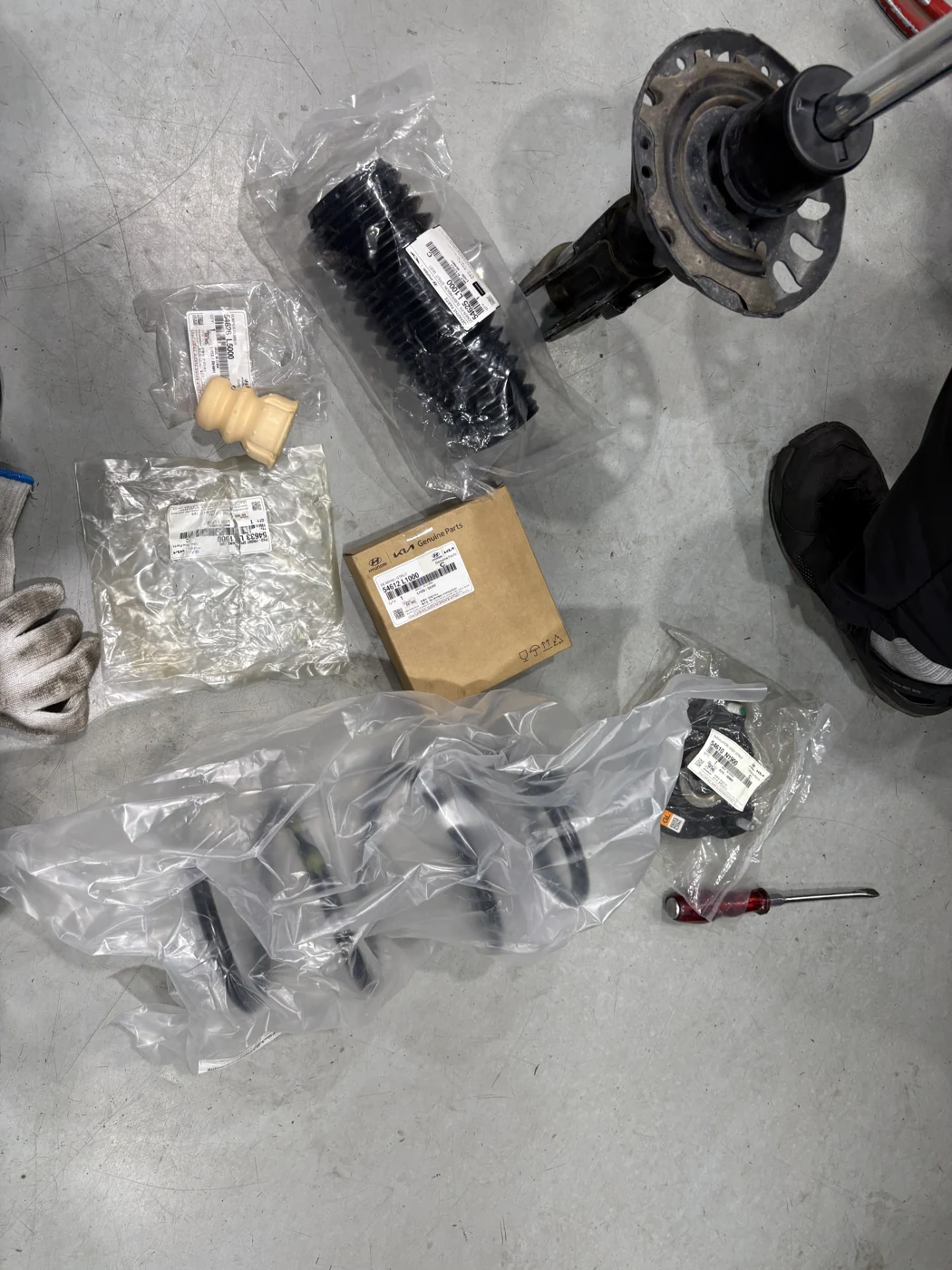
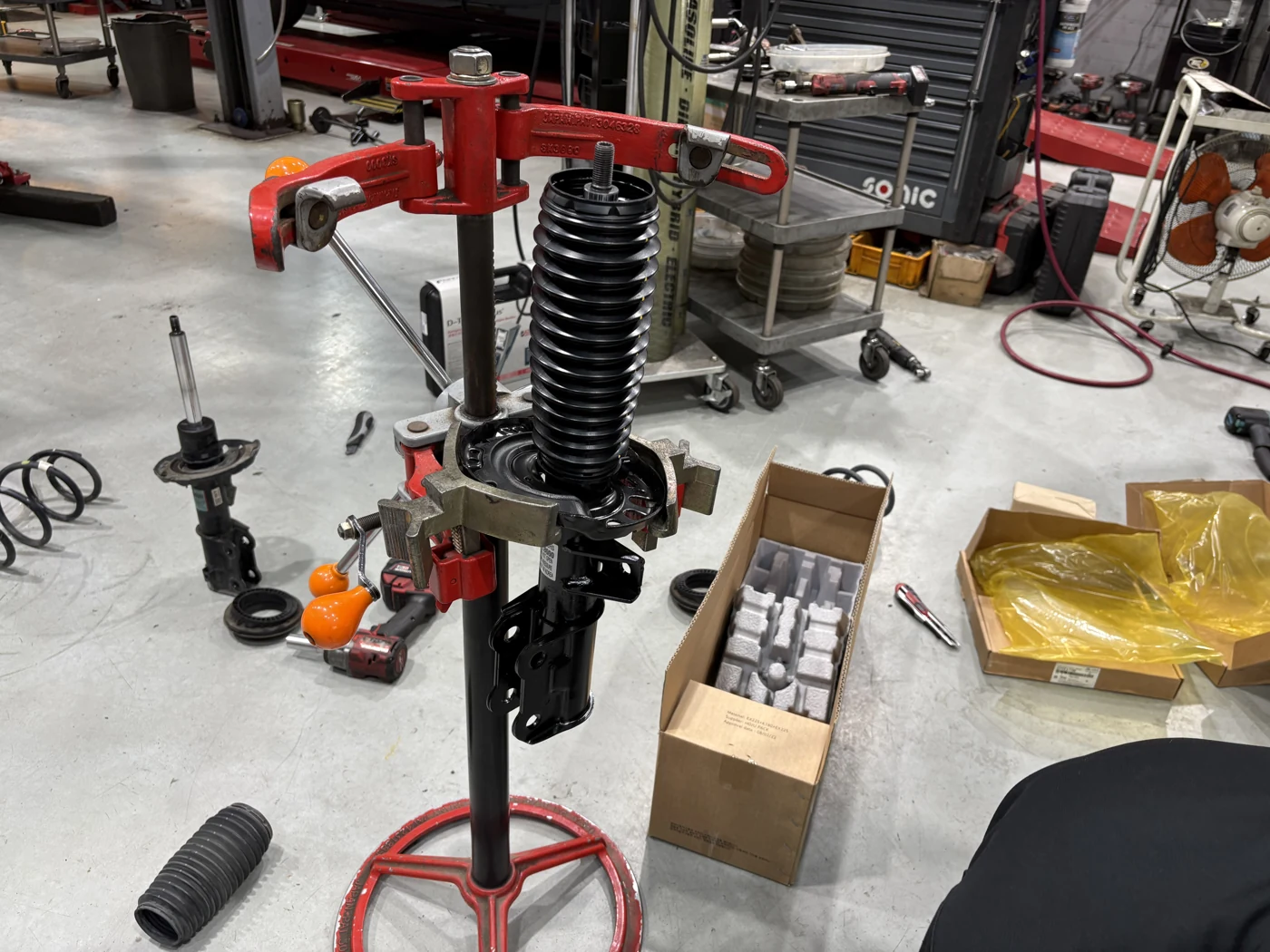
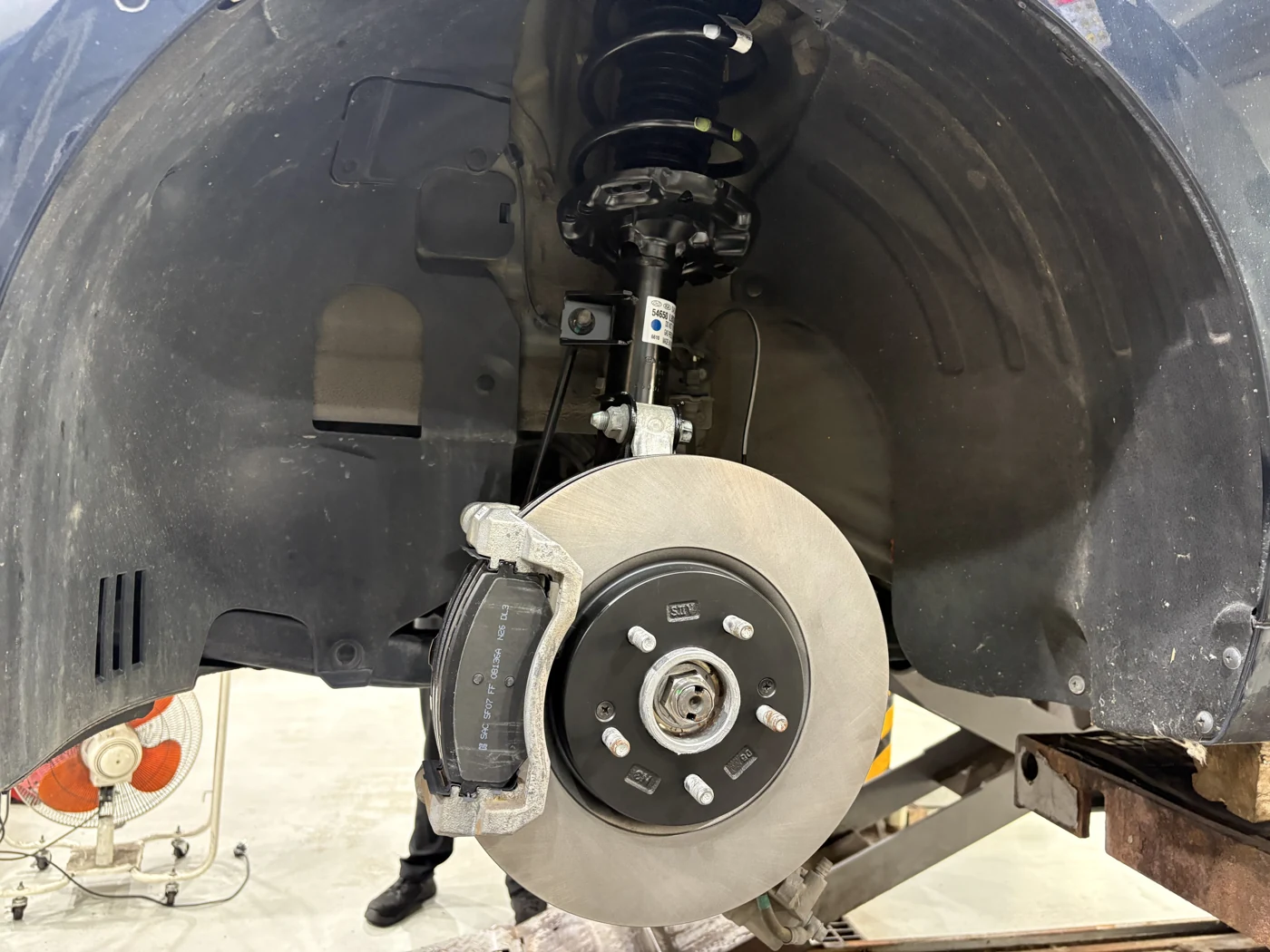
Disassembly exposed broken front bump stops. Comparing the old and new struts by hand also showed a difference in operating resistance and return movement.
The front struts, springs, bump stops and related rubber components were replaced. Component positions and installation orientation were checked against service information.
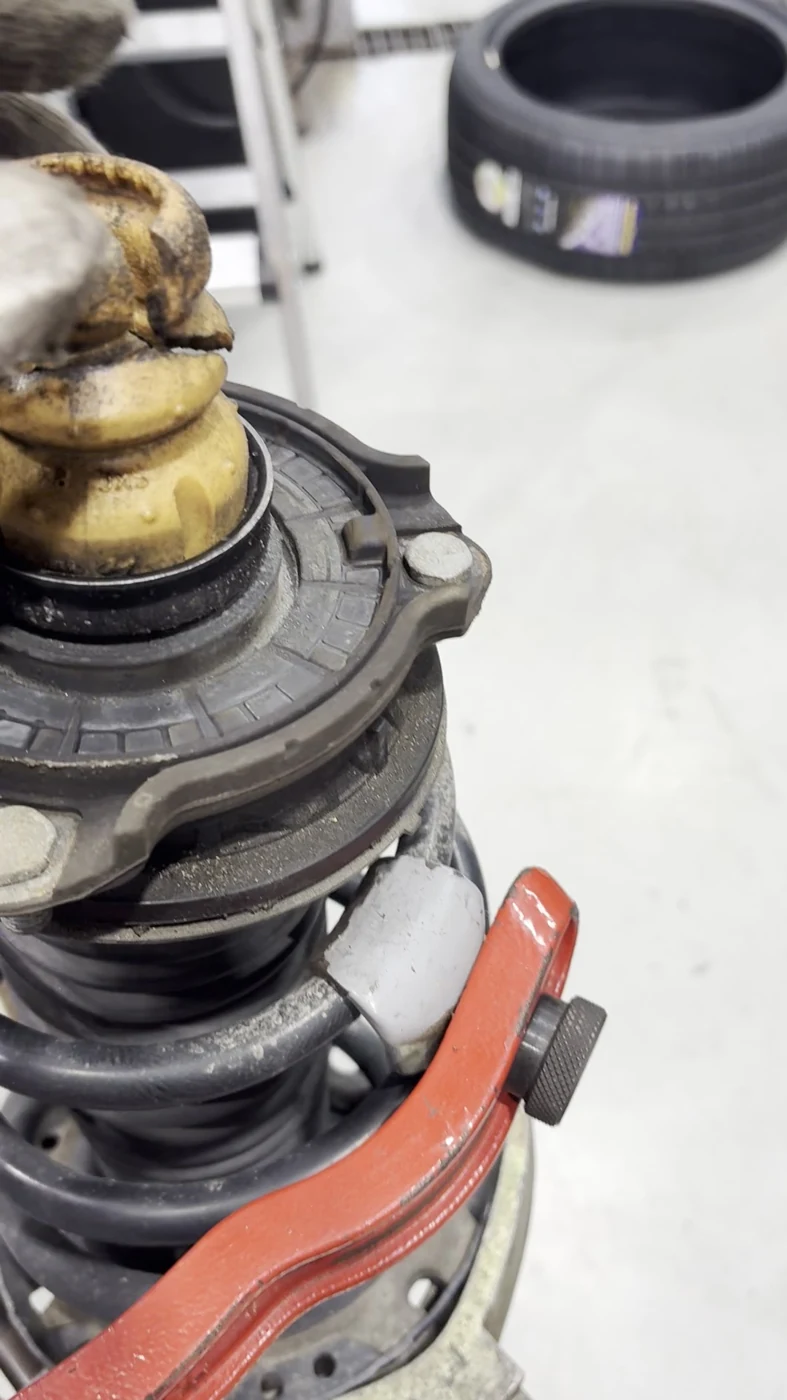
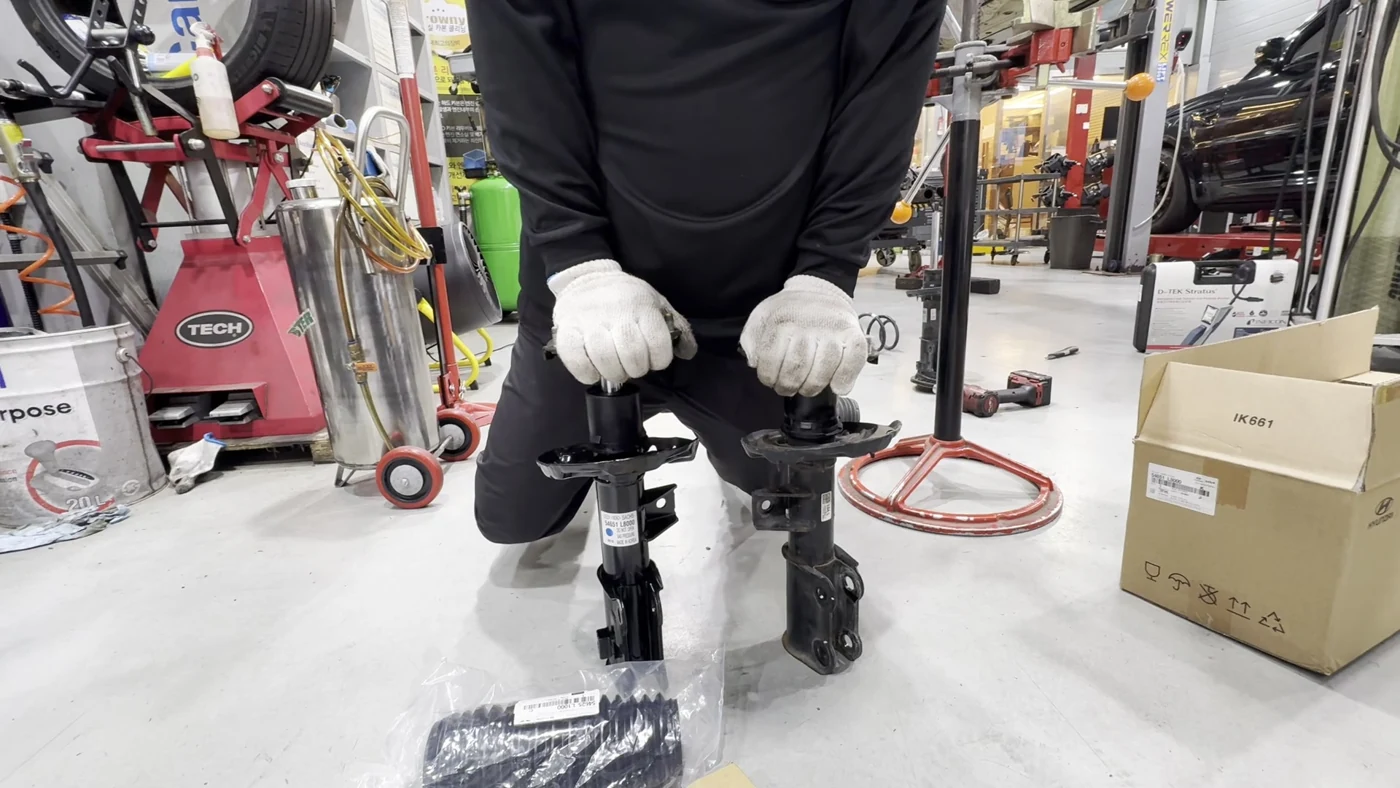
Struts control body and wheel movement. Irregular tyre wear calls for more than an alignment reading alone. Monroe’s guide to worn struts explains the relationship.
04
Loaded measurement and tyre matching
The new tyres were measured under load after installation. Tyre/rim positions were rematched and measured repeatedly, and wheel placement was compared.
Conventional balancing corrects rotating mass imbalance without a load. Road Force testing applies a load to measure radial force variation (RFV). The equipment has a maximum load capacity of 567 kg.
ASSEMBLY RFV · FINAL SUMMARY
All four new tyres were measured
The work also included reassessing vibration and road noise in actual driving. Read the Road Force guide (Korean) for more on measurement and matching.
05
Measured alignment changes and steering calibration
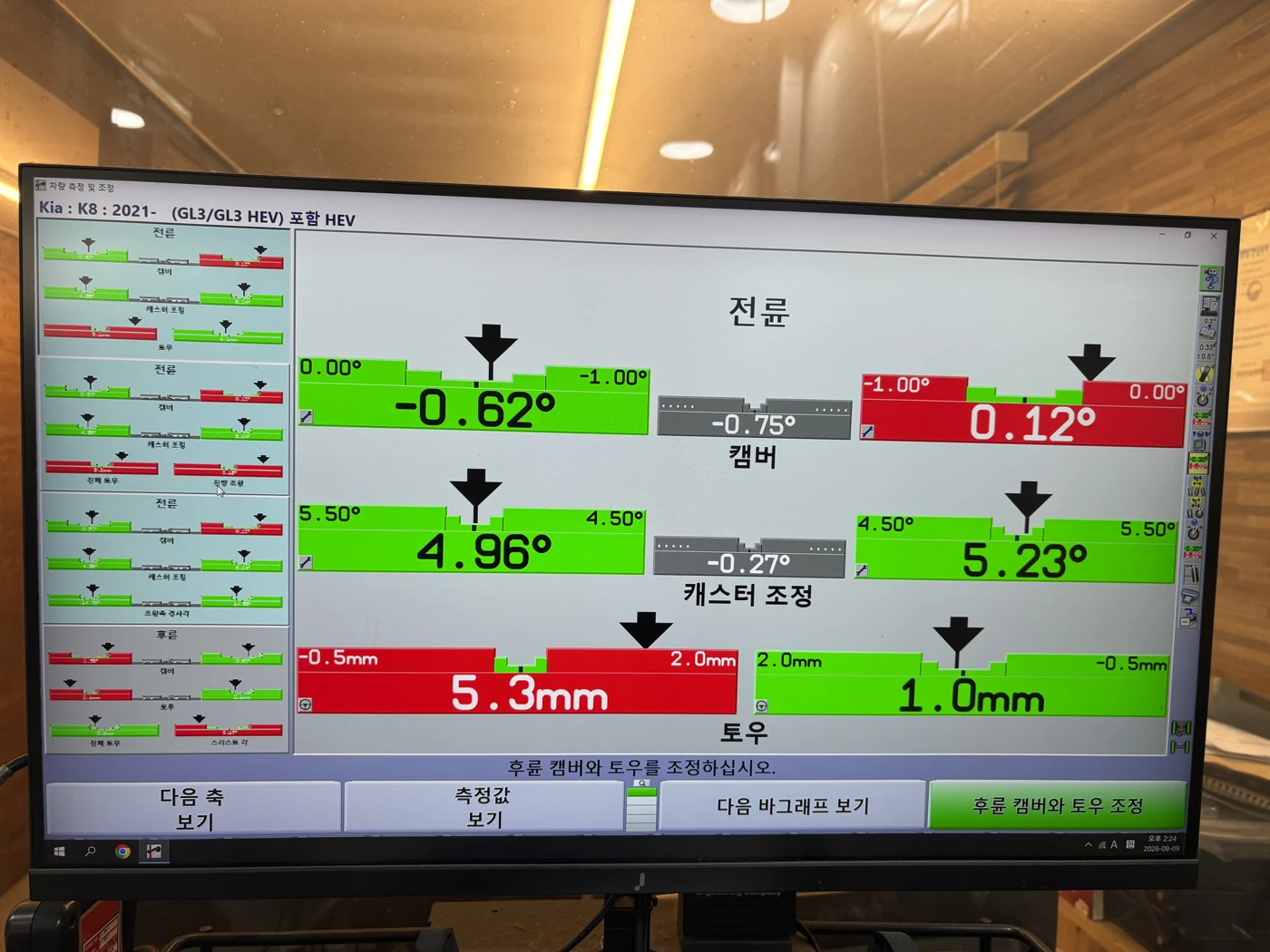
Initially, front left toe, rear left toe and thrust angle were among the readings outside the selected screen’s range. Rear wheel directions differed substantially.
Alignment was measured again after replacing the components. Seized rear adjustment points and front right camber required additional work.
REAR TOE · MEASURED VALUES
Correcting rear-wheel direction
Before
Both rear wheels pointed to one side
After
Both wheels retain toe-in
FRONT RIGHT CAMBER · WHEEL TILT
Front right camber
back within the displayed range
Front right camber did not immediately return to the selected range after strut replacement. Possible deformation of related parts was considered during additional adjustment; the final readings shown were within range.
View key alignment measurements
| Measurement | Before | After |
|---|---|---|
| Front left toe | 5.3 mm | 0.7 mm |
| Front right toe | 1.0 mm | 0.8 mm |
| Rear left toe | −2.2 mm | 1.0 mm |
| Rear right toe | 2.2 mm | 1.1 mm |
| Front left camber | −0.62° | −0.34° |
| Front right camber | +0.12° | −0.50° |
| Rear left camber | −1.55° | −1.05° |
| Rear right camber | −0.82° | −1.02° |
| Thrust angle | −0.17° | 0.00° |
9 September: initial measurement at 14:24 → complete post-adjustment screen at 18:28:45.
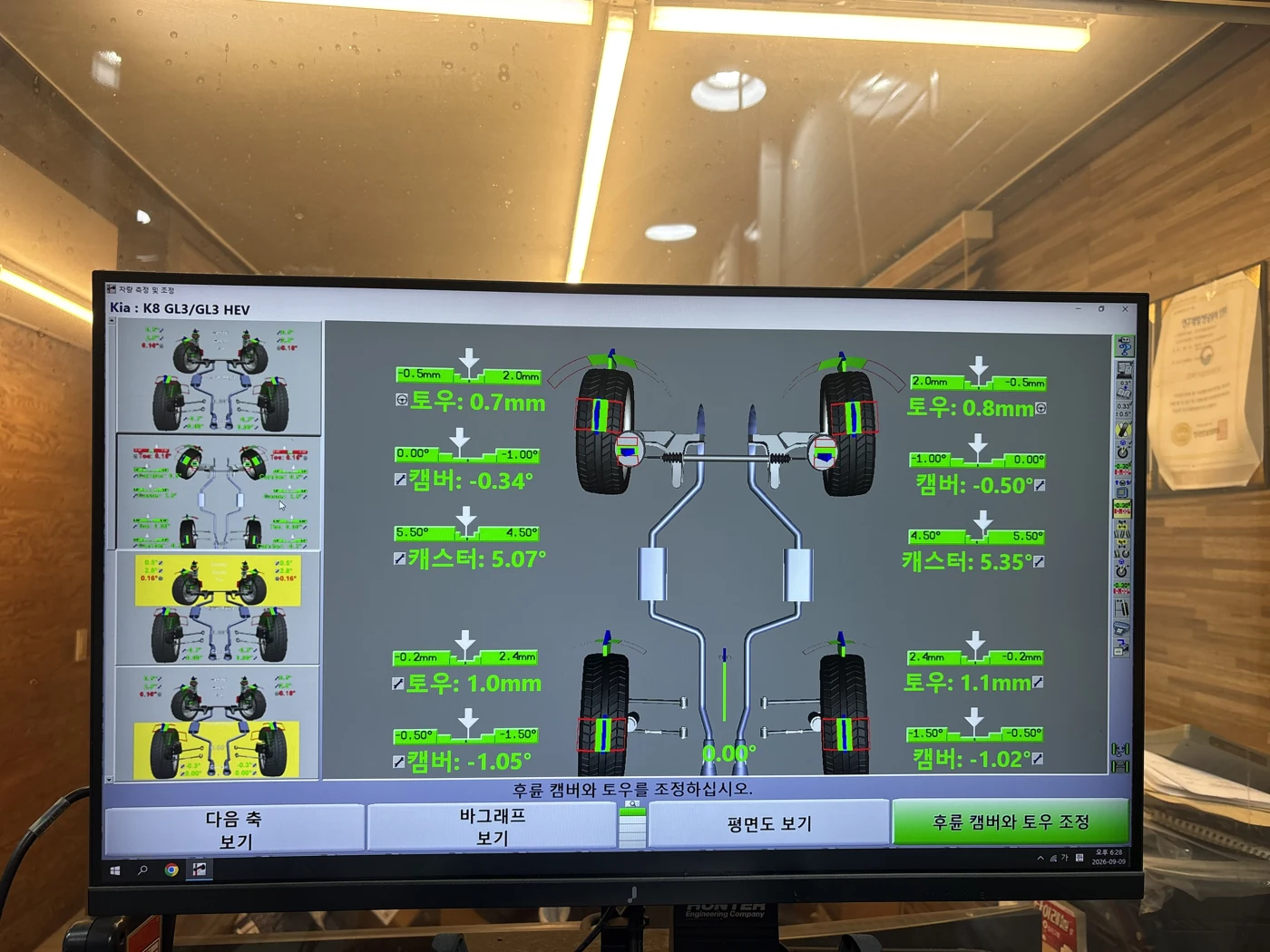
Electronic steering reference values were set after the mechanical alignment. The diagnostic tool showed steering-angle calibration completed and a stationary angle of 0.0°. See the alignment service guide (Korean).
06
Braking vibration and coolant level
Vibration under braking was assessed separately. Discs and pads were replaced; the technician’s post-work report states that the braking vibration was no longer present.
The owner also reported recent water-pump warranty work. More than one litre of coolant was added to a low reservoir level. Residual air was considered but not established as the cause; the level should be monitored for a further drop.
07
Road-test findings and owner feedback
The car returned to the route where the discomfort had first been assessed. The findings below are the technician’s driving observations, not instrumented comfort scores.
Low-speed seat vibration
InitiallyFelt through the seat soon after setting off
After workNot felt on the same road-test route
Right pull and steering feel
InitiallyStrong pulling and light, unsettled steering
After workPulling and unsettled steering improved
Road noise
InitiallyLoud from low speed
After workQuieter, including at 70–80 km/h
Vibration under braking
InitiallyVibration when braking
After workImproved after disc and pad work
An intermediate road test also identified a small steering-wheel centre offset. Further alignment and steering-reference setting followed.
These changes followed combined tyre, strut, alignment and brake work; they are not attributed to any single intervention. The reported HVAC start-up click and intermittent low-speed metallic noise remain separate inspection items.
FINAL ACCOMPANIED ROAD TEST · OWNER FEEDBACK
The change was also felt
from the rear seat
After correcting the steering centre, the owner and their companion joined the final road test. The companion sat in the rear to assess the ride as well.
At intake, the owner had been disappointed that the K8 felt worse than their previous LF Sonata. After the final drive, they were highly satisfied with the improvement and said they would return, according to the workshop owner’s handover account.
Owner feedback as reported by the workshop representative at handover.
08
K8 pulling and ride-quality Q&A
Why can a K8 still pull after a wheel alignment?
Tyre wear, lateral tyre forces and suspension condition can matter as well as wheel direction. On this K8, rear alignment, tyre wear and front strut condition were assessed together before deciding the work.
Will an alignment remove cupped tyre wear?
Alignment cannot replace rubber that has already worn away. Tyre replacement depends on the wear condition; alignment and suspension should also be checked to reduce recurring wear.
Can new tyres benefit from Road Force measurement?
A new tyre and wheel assembly can still have force variation under load. Where vibration or refinement matters, the measurements can guide tyre/rim matching and wheel placement.
Should rubber parts be replaced with the struts?
Bump stops, spring seats and mounts should be inspected for damage. This car had broken bump stops, so related components were replaced during the front strut work.
Are pulling and vibration under braking the same fault?
They should not be assumed to share a cause. Alignment and tyres are among the checks for pulling, while discs, pads and related components are inspected for braking vibration. The work was separated accordingly on this car.
I bought a used K8 and do not know how it should ride. What should I do?
A road test under the conditions that cause discomfort helps establish what needs investigation. If the service history is unclear or other systems are a concern, a total inspection can help prioritise the required maintenance.
How much will the work cost and how long will it take?
It depends on tyre replacement, strut and related component condition, and the alignment work required. The inspection scope, recommended work and estimate are explained before proceeding with your agreement.
NHC MOTORS · SUWON · BY APPOINTMENT
Pulling, noise and vibration?
Start with the cause.
Before choosing tyres or struts, let us assess the symptoms. A road test and inspection help identify the required work and its priority.
If other systems are also a concern after buying a used car, a patent-based total inspection (Korean) can help establish its current condition. Scope and cost are explained before repairs.
Tell us your vehicle, symptoms and recent tyre or suspension work.
524 Maesonggosaek-ro, Gwonseon-gu, Suwon, South Korea