MERCEDES-BENZ · STEERING & TYRES
Mercedes CLA 250
Steering vibration
Alignment and tyre inspection
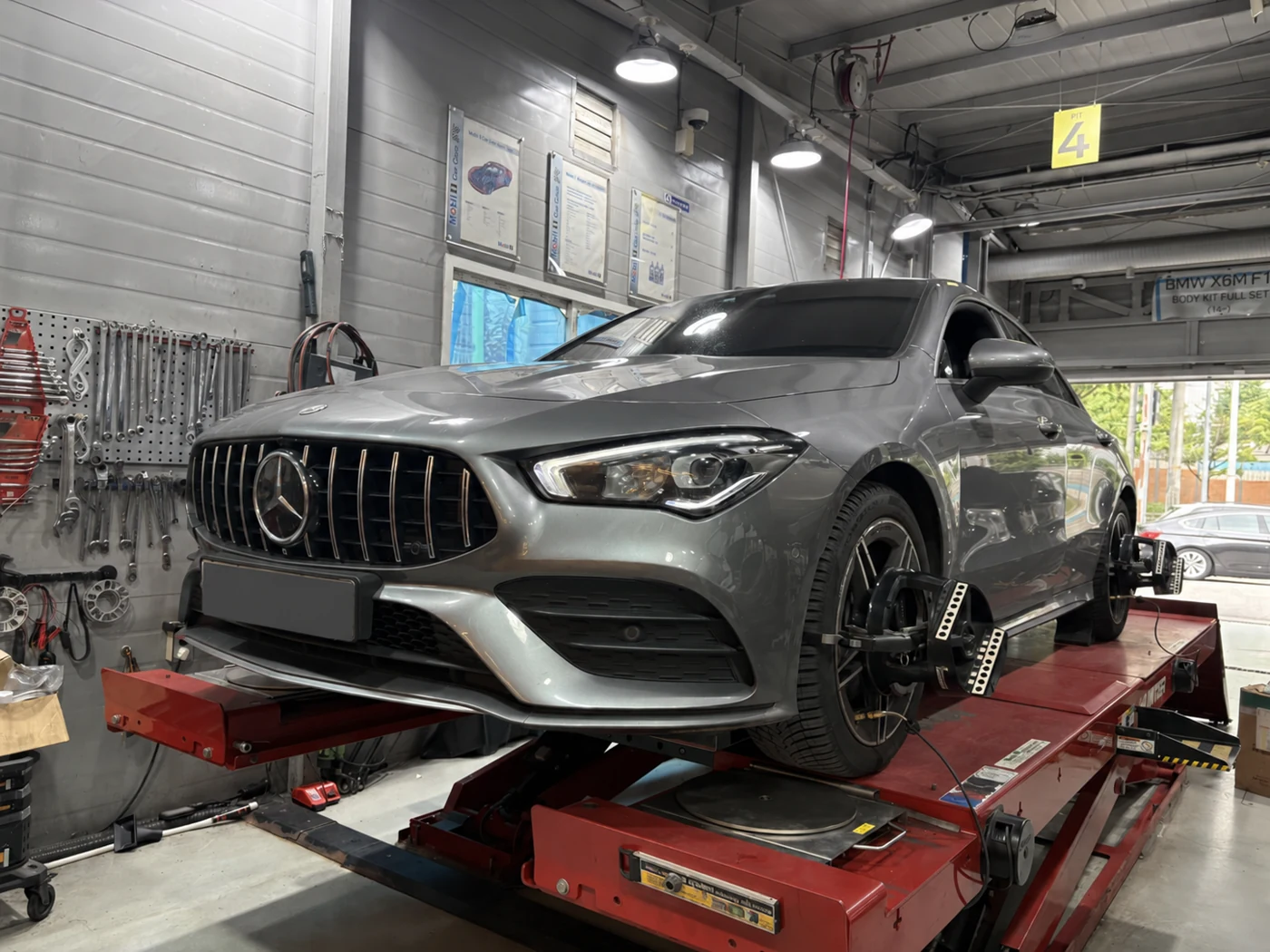
The owner reported steering vibration that made them grip the wheel firmly with both hands. This 2022 Mercedes CLA 250 also had an off-centre steering wheel to the left. Seized tie rods on both sides were found during the inspection.
01
Pressures and vehicle setup
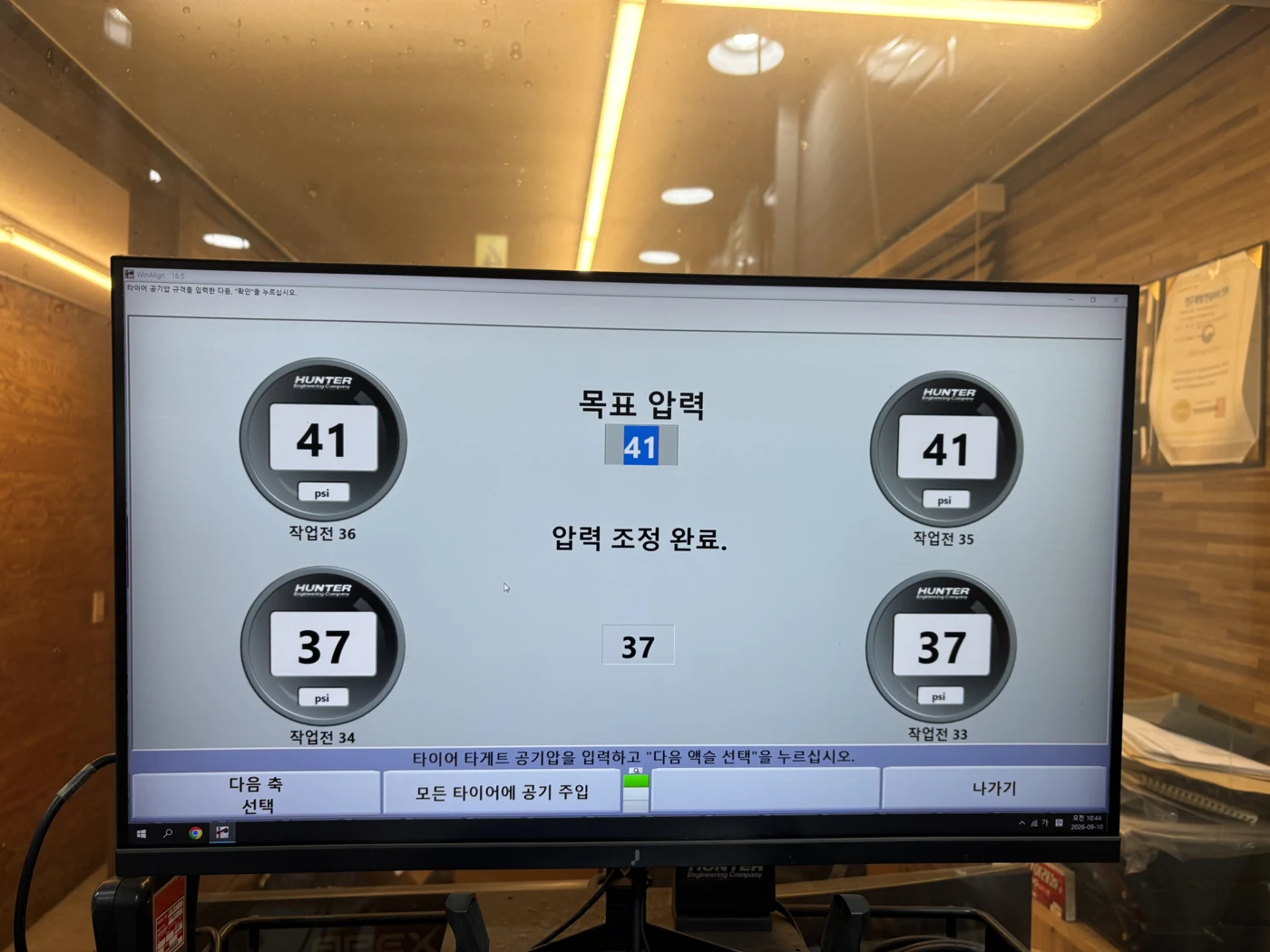
Tyre pressures and the vehicle specification were checked before measurement. Pressures were set to 41 psi at the front and 37 psi at the rear. The vehicle’s label lists different values for passenger and load conditions.
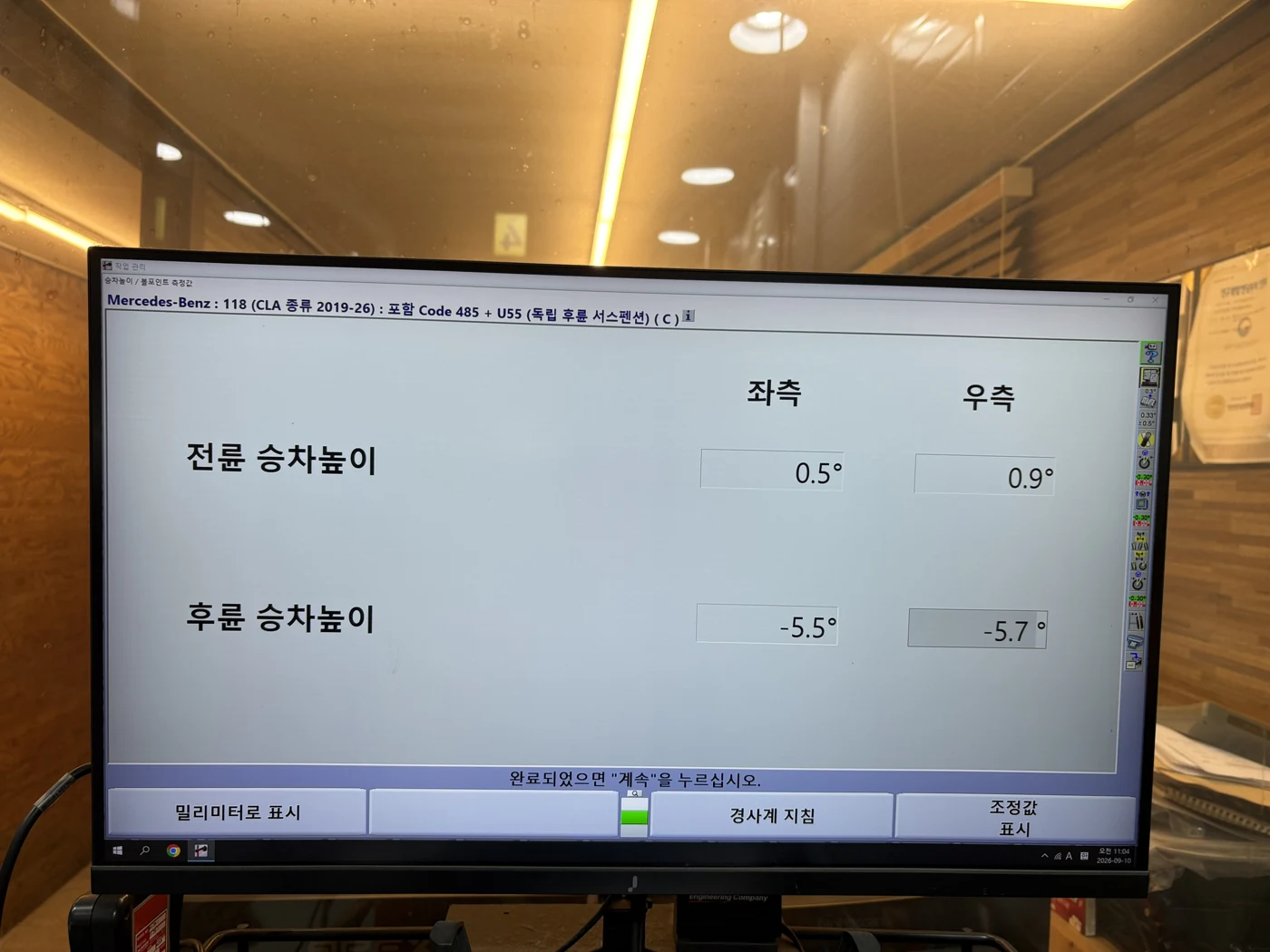
The alignment setup included the selected vehicle specification and ride-height-related inputs before measuring wheel direction.
02
Alignment measurement records
Initial front toe differed substantially between left and right. Both readings were outside the selected screen’s adjustment range. Later measurements recorded during the work are shown below.
Toe describes whether the fronts of the wheels point inward or outward when viewed from above. The diagram shows how the front-wheel directions changed.
FRONT TOE · MEASURED VALUES
Front toe:
recorded measurements
Initial measurement
Uneven left and right toe
Later measurement
Left and right in the later reading
View the alignment measurements
| Measurement | Initial | Later |
|---|---|---|
| Front left toe | 3.8 mm | 1.9 mm |
| Front right toe | −0.8 mm | 1.8 mm |
| Rear left toe | 0.2 mm | 1.4 mm |
| Rear right toe | 2.5 mm | 1.3 mm |
| Thrust angle | −0.09° | 0.00° |
Compared with the initial screen and the later overview at 11:40. Units follow the equipment display.
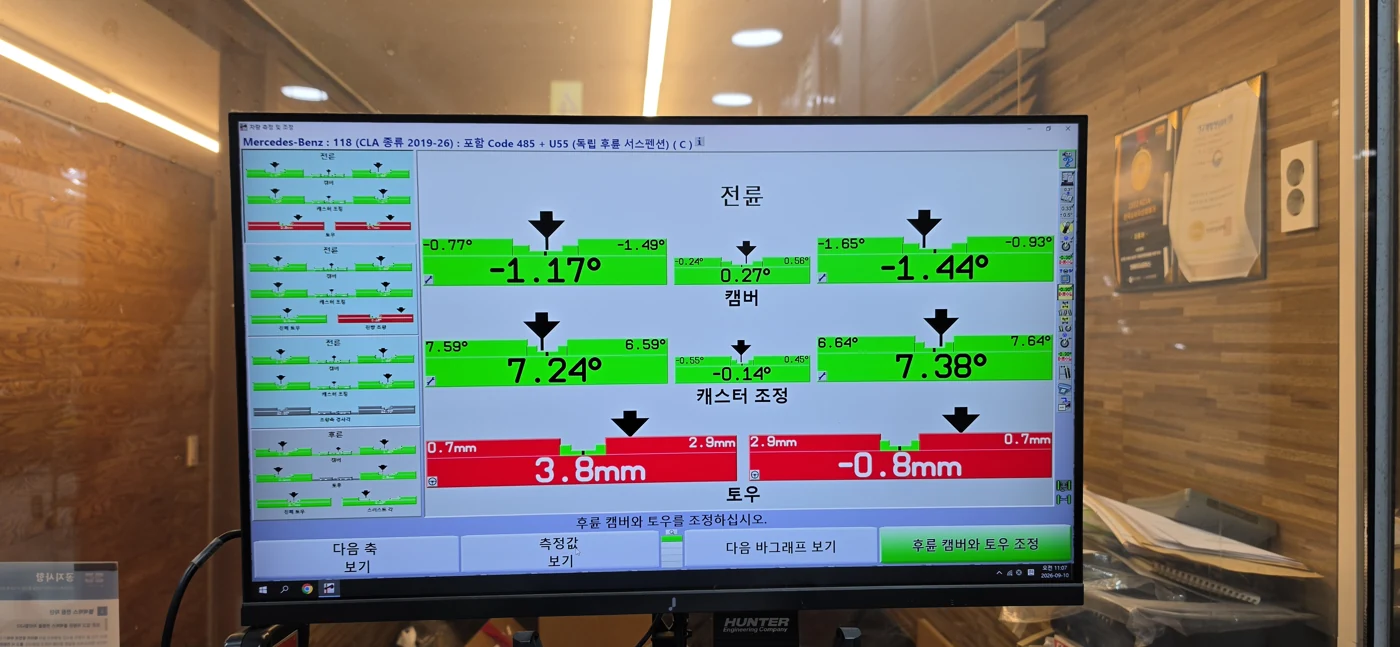
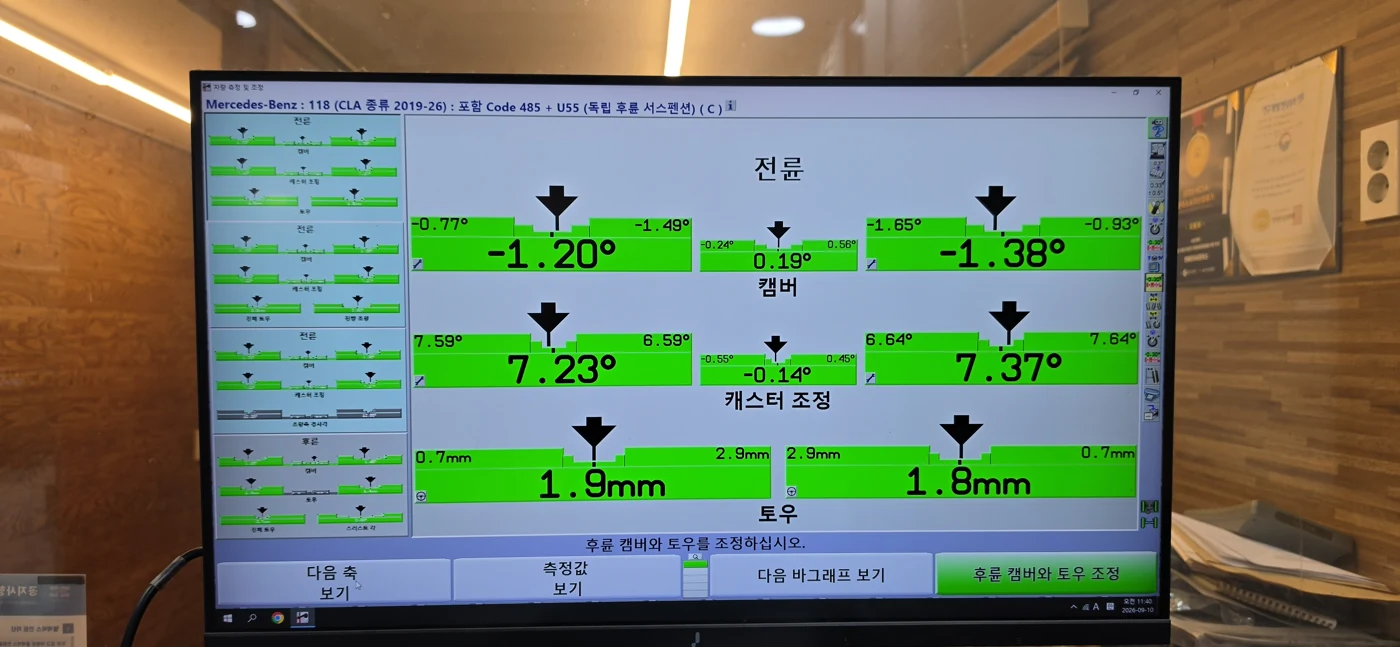
Thrust angle describes the direction established by the rear wheels. Rear toe and steering-wheel centre were also checked. See the wheel alignment guide (Korean) for the service scope.
03
Seized tie rods and the recommended repair
The tie rods on both sides were seized. When the threaded adjustment points bind, setting toe becomes difficult and takes longer.
Replacement of both inner and outer tie rods was recommended. The parts were not available that day, so replacement with OEM parts was discussed for a later visit.
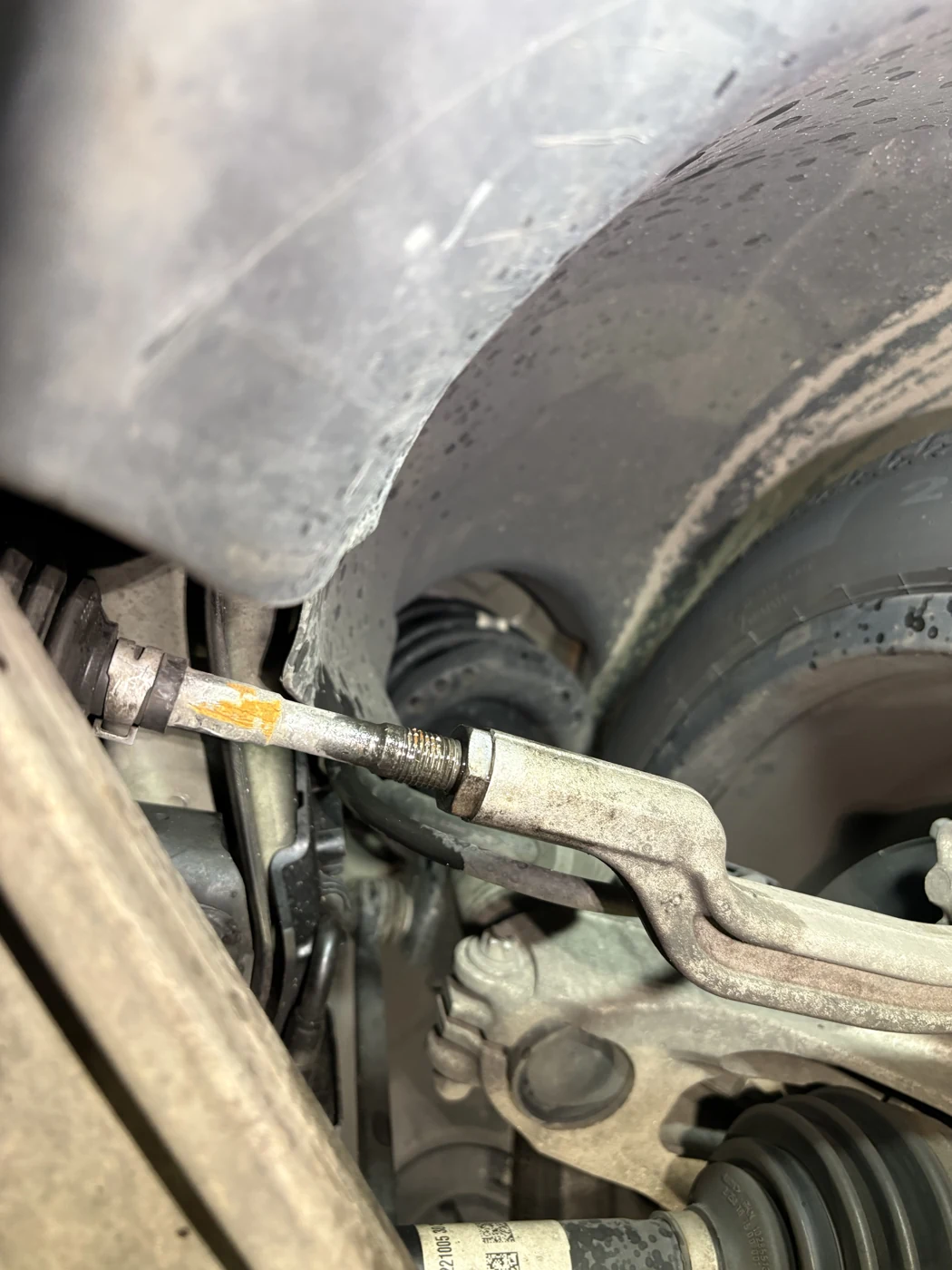
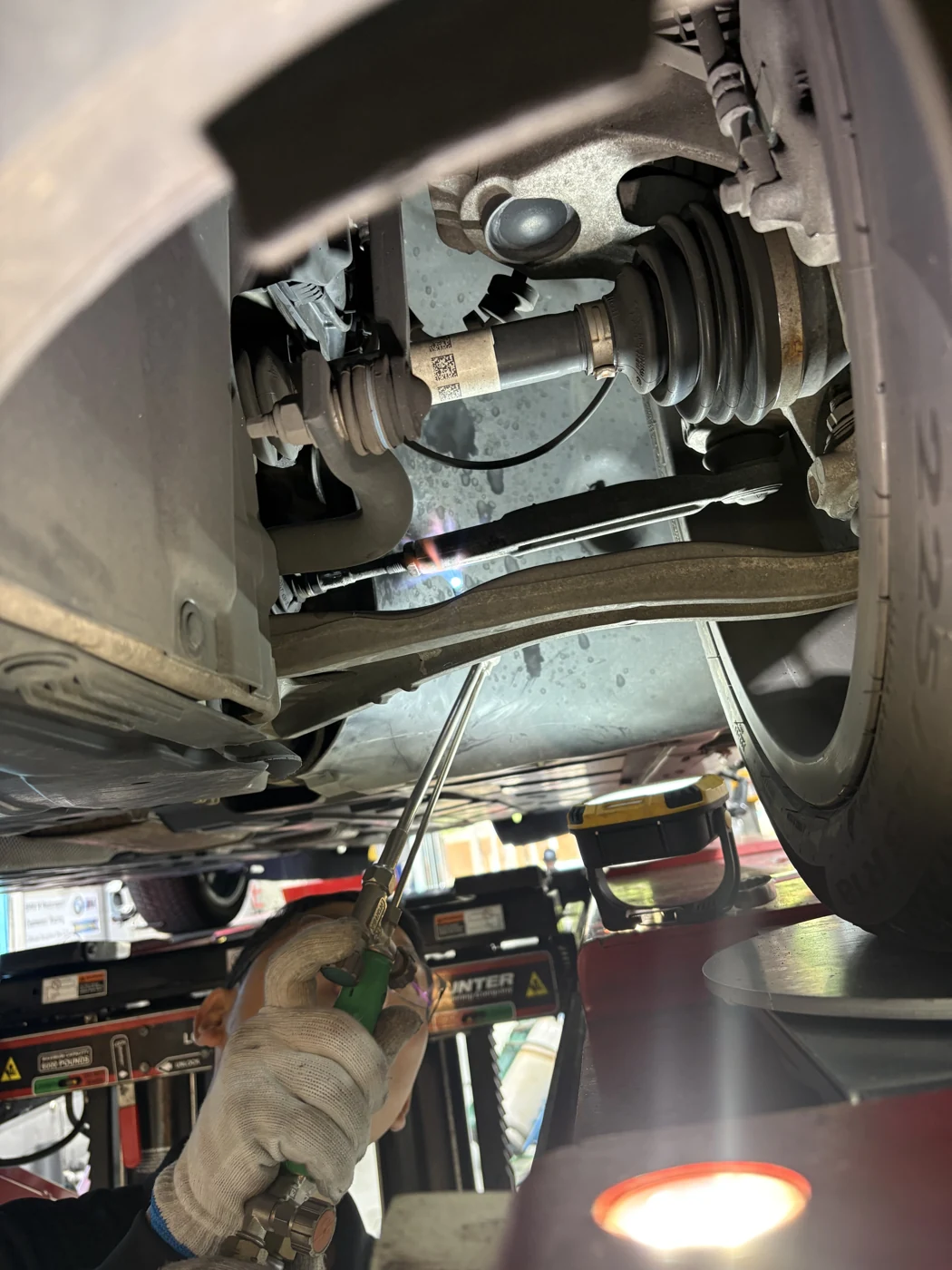
Seizure is different from looseness in a joint. This record concerns a seized adjustment point. Toe must be checked and aligned again after tie-rod replacement. Tie-rod guide (Korean).
04
Tyre and wheel inspection for steering vibration
Alignment readings alone do not establish the cause of steering vibration. All four tyre/wheel assemblies were tested on the Road Force balancer.
Conventional wheel balancing corrects rotating mass imbalance without a load. Road Force testing loads the tyre and measures radial force variation (RFV). The equipment’s maximum load specification is 567 kg.
The tyre’s position on the rim was matched following measurement. The recorded work also includes removing residue from inside a wheel.
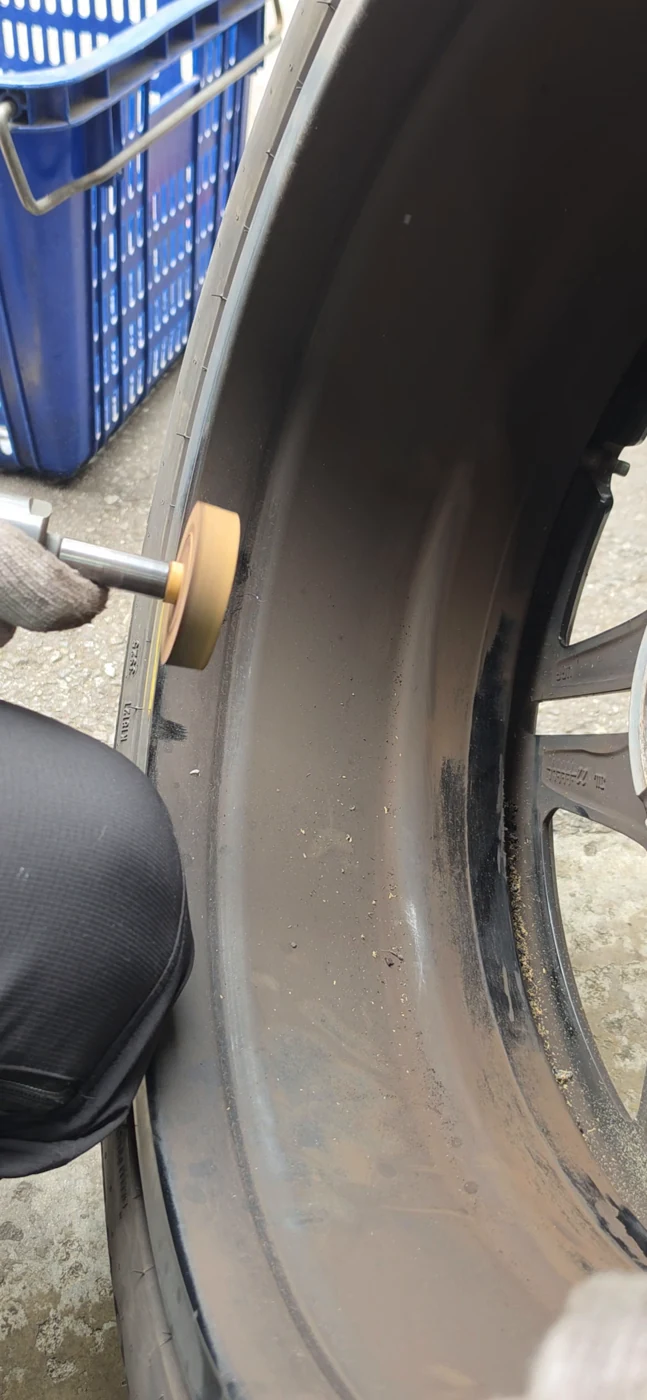
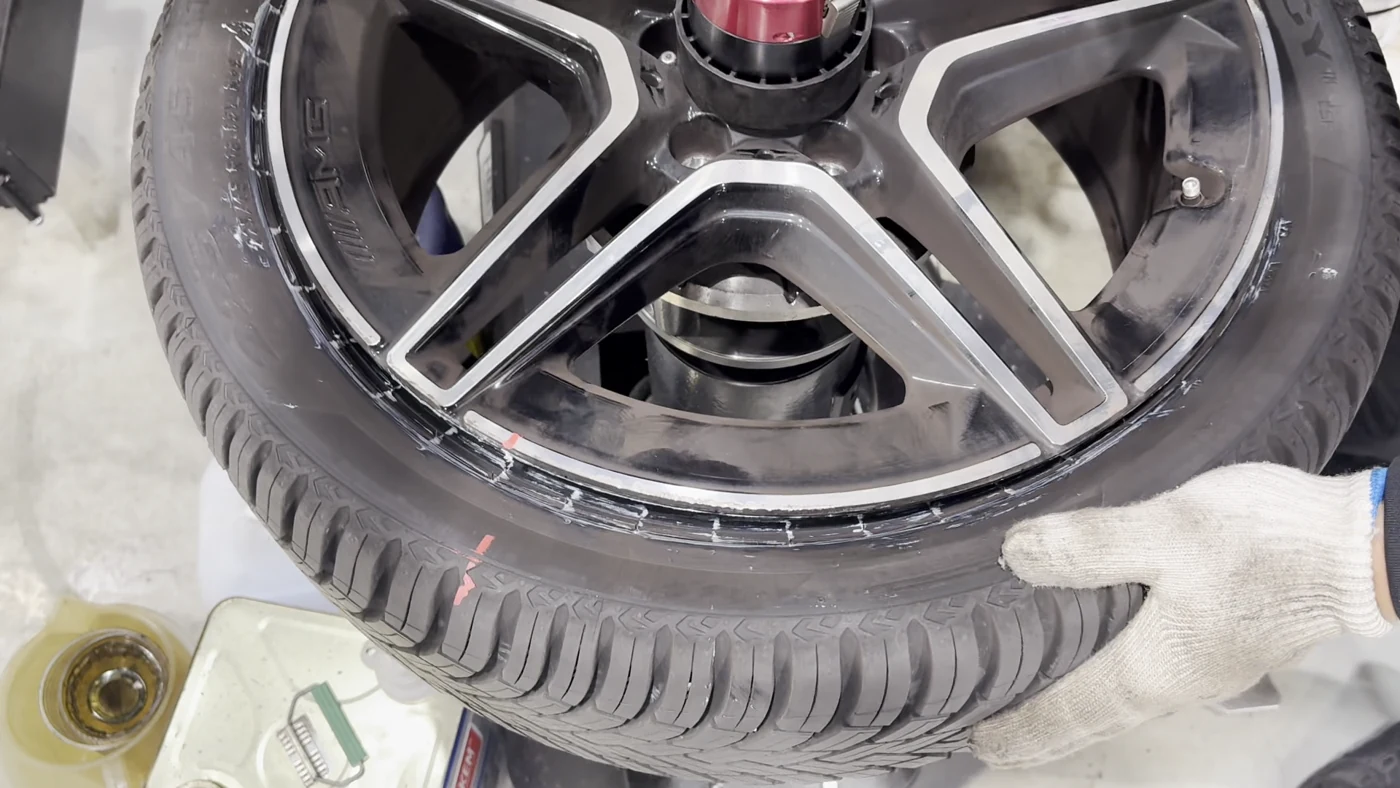
The screen below separates the tyre reading from the assembled tyre/wheel reading. These are different measurements on the same screen, not a before-and-after repair comparison.
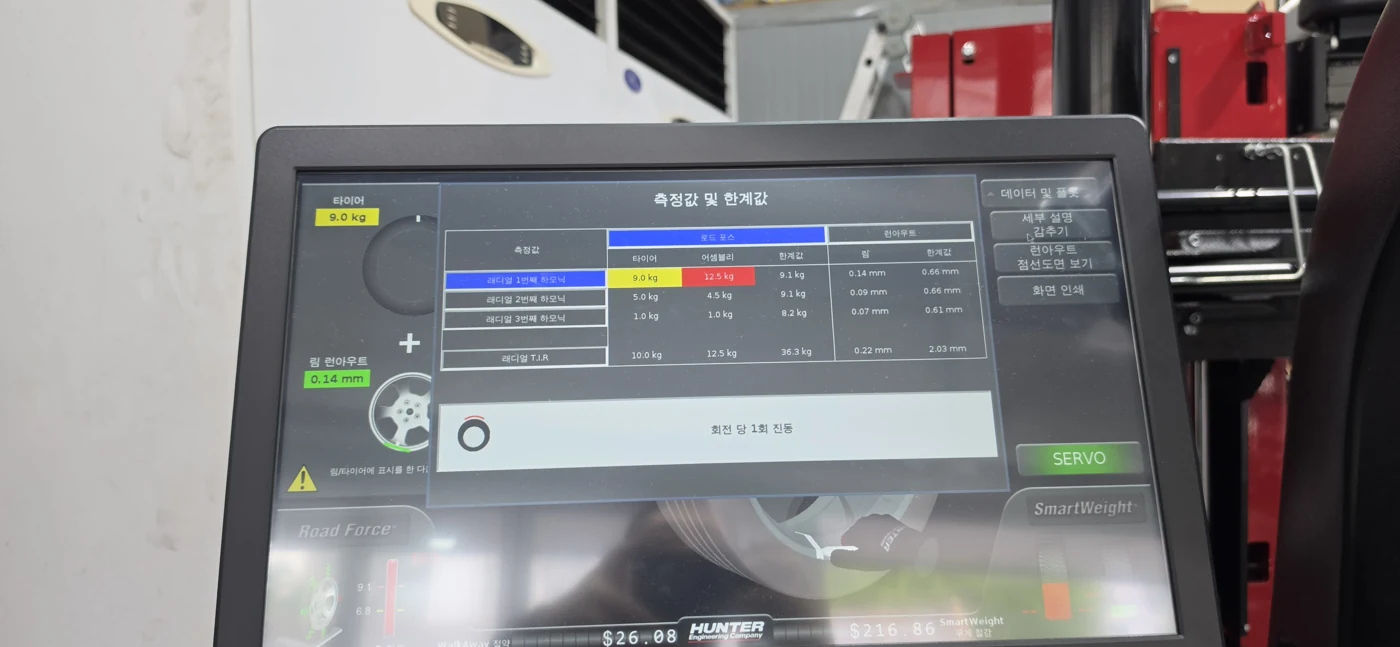
View the four-wheel Road Force records
| Measurement ID | Displayed value |
|---|---|
| 1 | 6.0 kg |
| 2 | 7.5 kg |
| 3 | 6.5 kg |
| 4 | 1.0 kg |
Values from the final summary screen. Numbers are equipment measurement IDs; kg is the display’s force unit.
Wheel placement was also compared. Hunter’s official overview describes matching and placement tools for vibration and tyre pull. Read more in the Road Force guide (Korean).
05
Work completed and follow-up repair
Pressure setting, front and rear alignment measurements, four-wheel Road Force testing, tyre/rim matching and wheel rotation were recorded.
Both inner and outer tie rods still need replacement. Alignment must be checked again once the replacement parts are fitted.
The later readings do not establish that the seized components have been repaired. After tie-rod replacement, alignment must be set again and steering-wheel centre and vibration checked on a road test.
06
Steering vibration and alignment Q&A
Is wheel alignment alone enough to fix steering vibration?
Wheel direction and the tyre/wheel assemblies need to be assessed together. This CLA had uneven front toe and Road Force findings to investigate. The speed at which vibration occurs and recent tyre work help guide the inspection.
How is Road Force testing different from wheel balancing?
Wheel balancing corrects rotating mass imbalance. Road Force testing loads the tyre and measures radial force variation (RFV) as it rotates. An assembly that balances without a load can still need assessment under load.
Does a seized tie rod always need replacement?
The seized location and condition determine the repair. For this car, replacement of the inner and outer tie rods on both sides was recommended. Parts were not available, so they were not replaced that day.
Are seizure and looseness the same fault?
No. Seizure prevents an adjustment point from moving; looseness means play in a joint. Seized tie rods were found on this car.
Should I use 41 psi at the front and 37 psi at the rear?
Those were the pressures set for this CLA. For another vehicle, follow its pressure label, tyre specification and passenger/load conditions rather than copying these figures.
How are inspection cost and time decided?
They depend on the vehicle, symptoms and whether tyre work or seized components need attention. The inspection scope and expected time are explained first. Parts replacement is quoted and agreed before work proceeds.
NHC MOTORS · SUWON · BY APPOINTMENT
Vibration or an
off-centre steering wheel?
Before deciding on new tyres or another alignment, we can inspect wheel direction, tyre/wheel condition and the adjustment components.
We explain the required work and estimate, then proceed with your agreement.
Tell us your vehicle, when vibration occurs, and any recent tyre or suspension work.
524 Maesonggosaek-ro, Gwonseon-gu, Suwon, South Korea