2023 · PERFORMANCE SUV DIAGNOSIS
BMW X6 M50i pulling and vibration: alignment and road-force inspection
On the post-work road test, it held its course comfortably.
The road test confirmed improved tracking and steering-wheel vibration. The owner was satisfied with the final driving settings.
The owner had visited five or six service locations because the rear of the vehicle felt unsettled and the driving feel was unsatisfactory. With the concern still present, the owner brought this X6 M50i to us for inspection. The intermittent side-to-side movement was described as a fishtail-like sensation, but that specific behaviour did not recur during this road test.
We did find a pull to the right, frequent steering corrections to stay straight and body movement after bumps. Vibration also reached the steering wheel, seat and body as speed increased. We examined wheel alignment and the wheel-and-tyre assemblies around those observed symptoms.
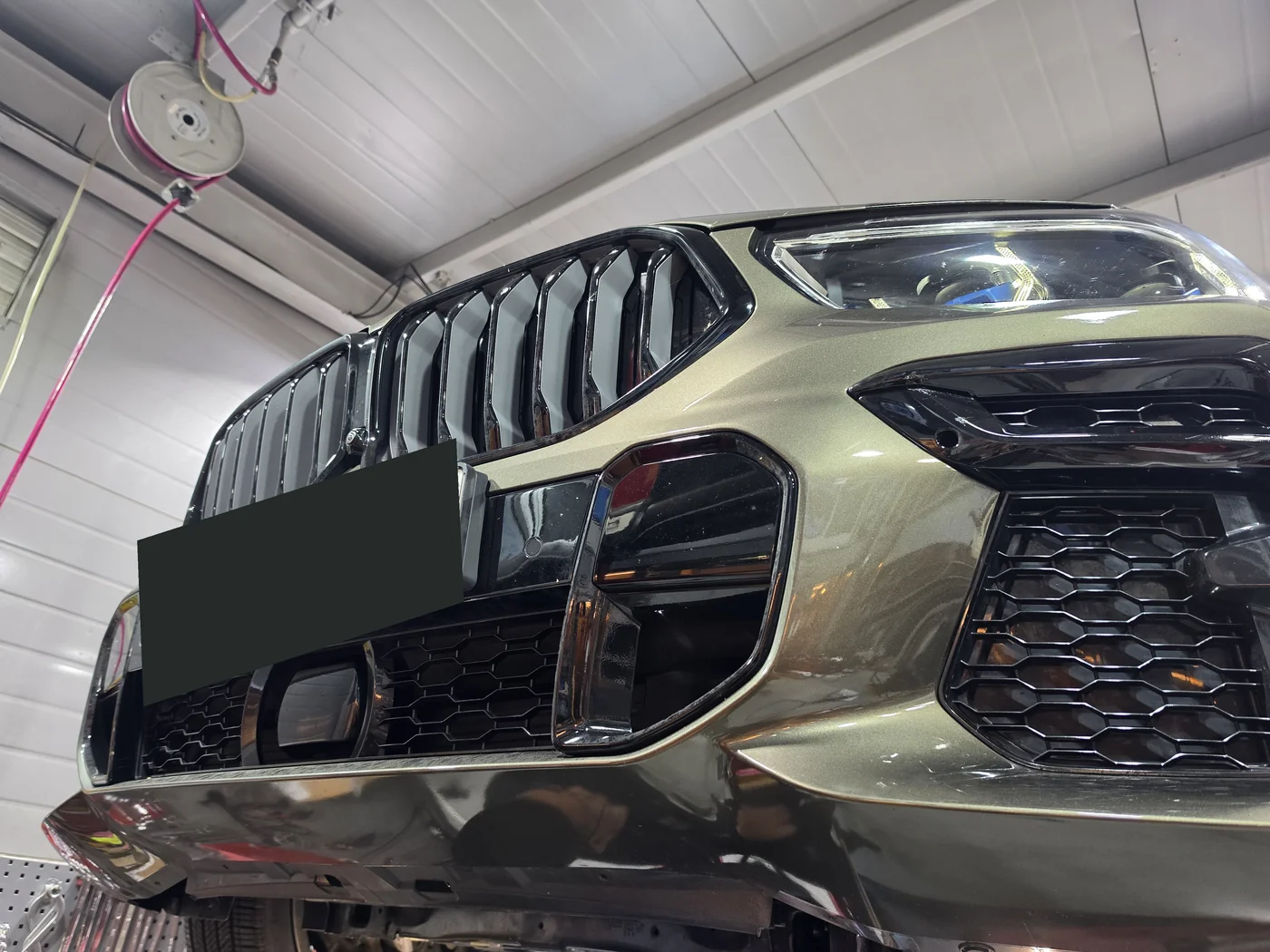
- Vehicle
- 2023 BMW X6 M50i · 22-inch wheels
- Reason for visit
- Intermittent rear-end movement; pulling and vibration found on the road test
- Work
- Alignment, road-force matching, mass balance, placement review and road test
- Result
- No pulling or vibration on the post-work test; road noise decreased
- Follow-up
- Separate wheel repair advised; recheck if intermittent rear-end movement returns
01
Checking the foundations of the V8 X6 driving feel
This vehicle is a 2023 BMW X6 M50i, an M Performance SUV coupé with a 4.4-litre V8. Everyday straight-line stability and steering feel matter alongside its engine performance.
BMW X6 M50i official model information
We assessed the pull to one side separately from the vibration that appeared as speed increased. Alongside alignment measurements, we carried out road-force measurements to examine the tyres as they rotated under load.
Wheel deformation was a separate issue that remained present. This visit included alignment correction, road-force measurement and matching, mass-balance adjustment and a review of tyre placement. We then selected the driving-mode settings and carried out another road test.
To investigate the causes of the pulling and vibration, we inspected the alignment together with the wheels and tyres.
02
Measured alignment changes, front and rear
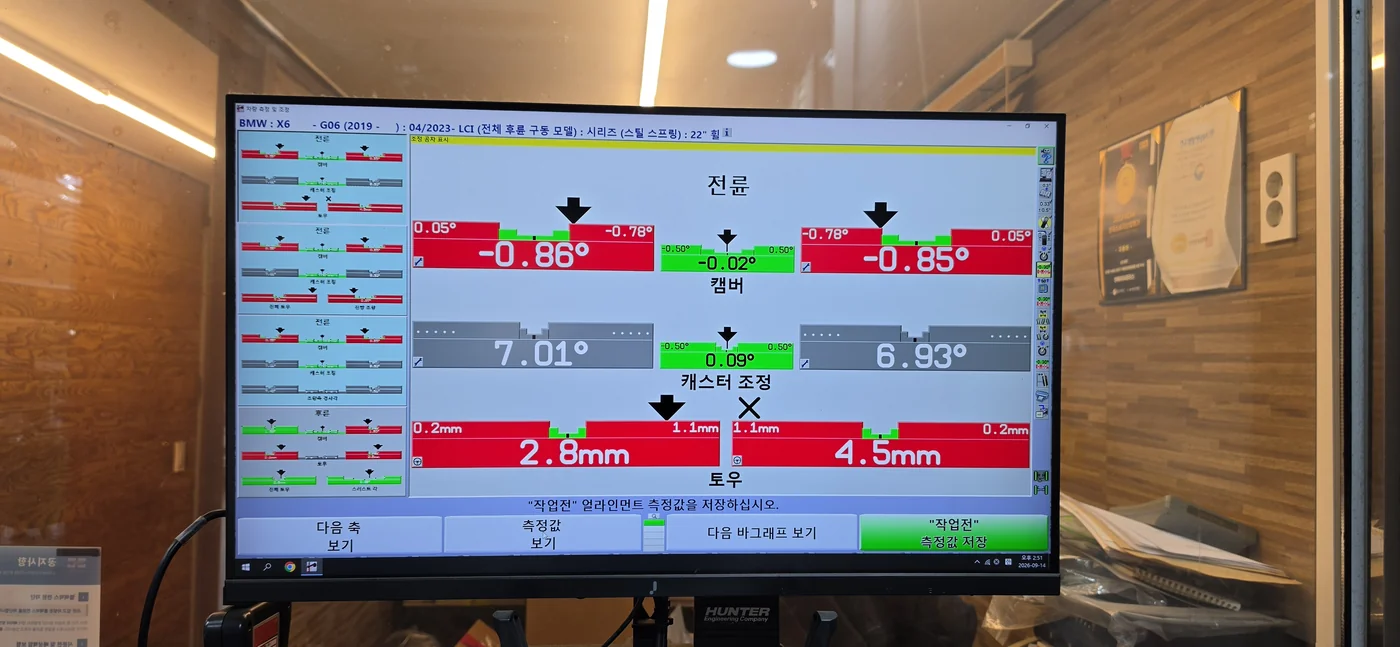
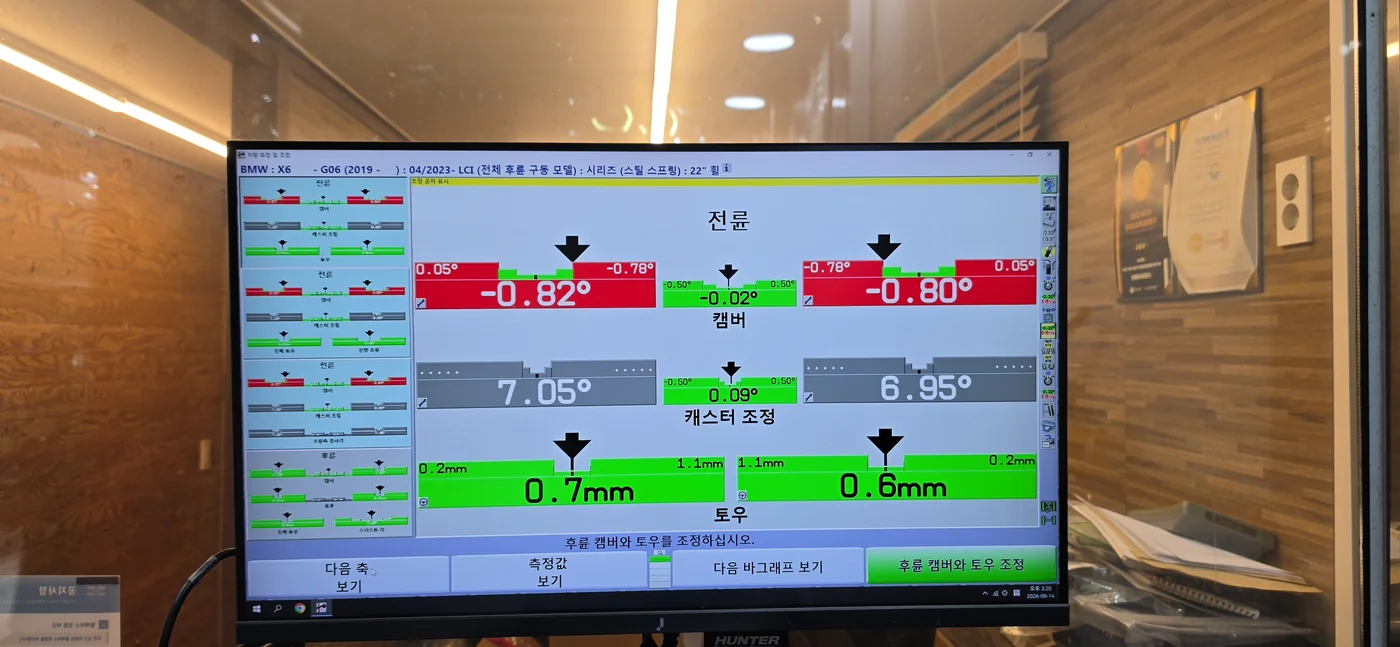
Front toe measured 2.8 mm on the left and 4.5 mm on the right: a pronounced inward angle with unequal readings. After adjustment, the readings were 0.7 and 0.6 mm, reducing the side-to-side difference from 1.7 to 0.1 mm.
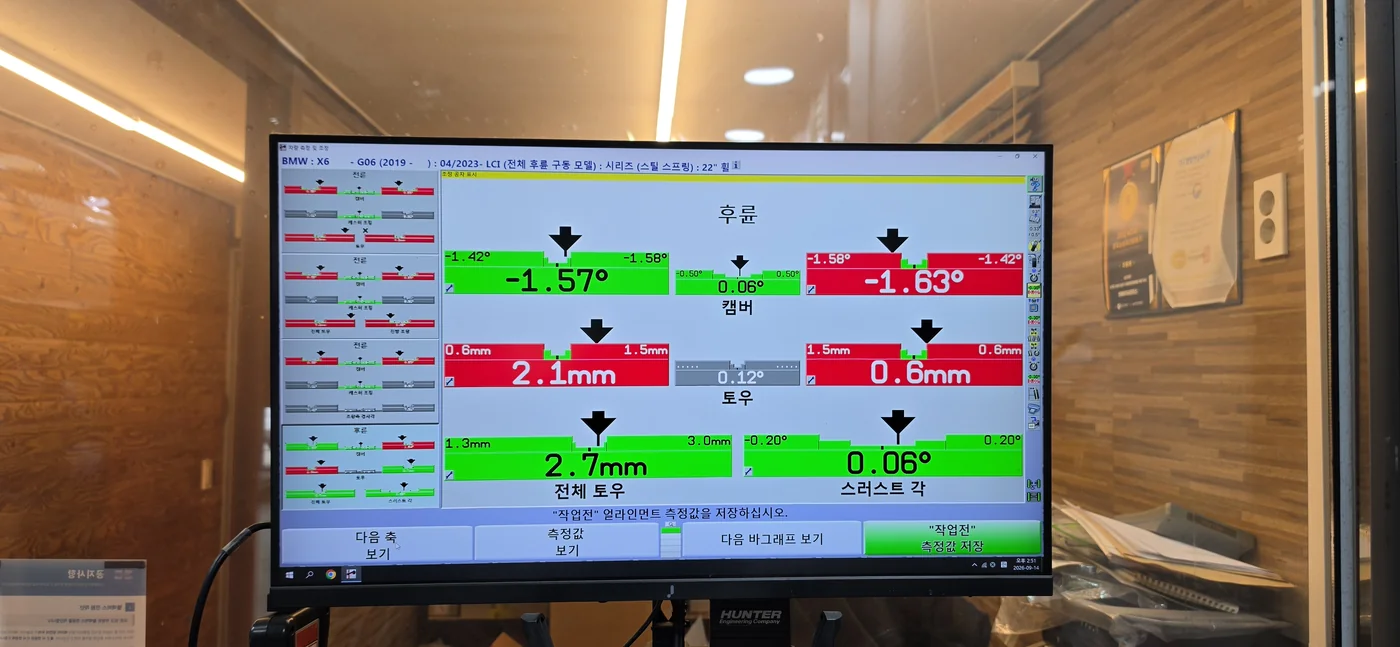
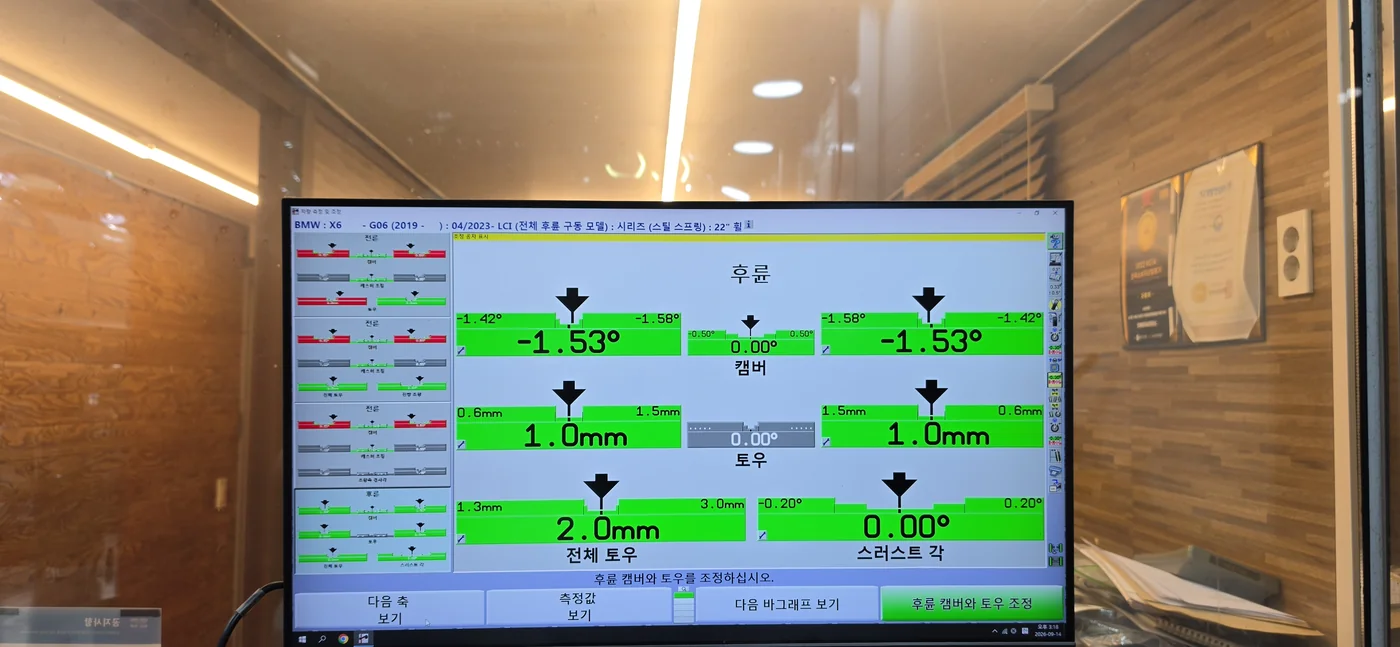
Rear toe changed from 2.1 and 0.6 mm to 1.0 and 1.0 mm, and thrust angle from 0.06° to 0.00°. Thrust angle describes the direction in which the rear wheels propel the car. We checked straight-line behaviour and steering response again after the alignment work.
TOE DIRECTION · BEFORE / AFTER
Four-wheel toe measurements and direction
Before work
Numbers show measured toe values in mm
After work
Numbers show measured toe values in mm
| Item | Before work | After work |
|---|---|---|
| Front toe L/R | 2.8 / 4.5 mm | 0.7 / 0.6 mm |
| Rear toe L/R | 2.1 / 0.6 mm | 1.0 / 1.0 mm |
| Front camber L/R | −0.86° / −0.85° | −0.82° / −0.80° |
| Rear camber L/R | −1.57° / −1.63° | −1.53° / −1.53° |
| Thrust angle | 0.06° | 0.00° |
L/R means left/right when seated in the vehicle. Values are transcribed from the measurement photos.
Original measurement screens
03
Checking weight balance and behaviour under load
Mass balancing corrects weight imbalance during rotation. Road-force measurement examines how force varies when a tyre rotates under load. We checked both aspects and carried out matching work to adjust the relationship between the tyre and wheel mounting positions.
During the work, a mass-balance screen indicated a 45 g correction, while a separate road-force measurement screen recorded RFV of 16.5 kgf. Grams describe the balance correction mass; kgf describes force variation under load. These are different measurements.
Three staff members repeatedly moved the wheel-and-tyre assemblies between operations, measuring and matching them several times. We also swapped the front tyres from side to side. After changing the combinations, we measured again to check their mounting and placement.
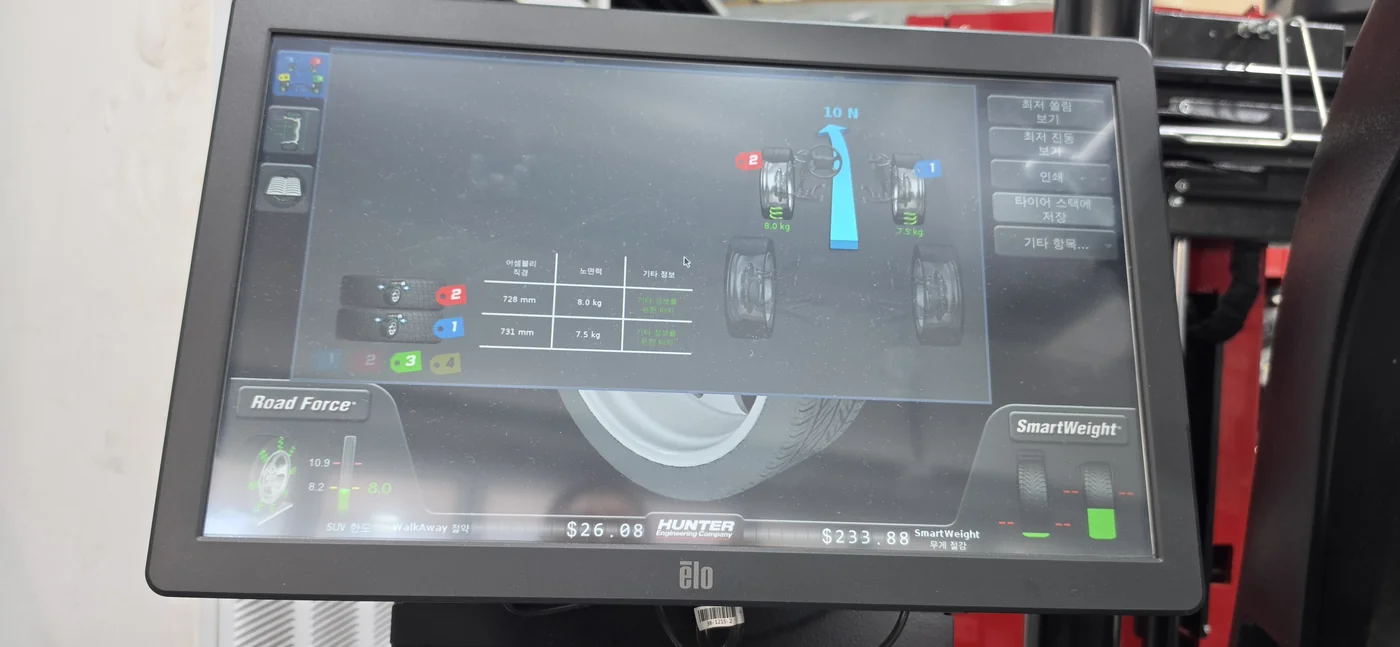
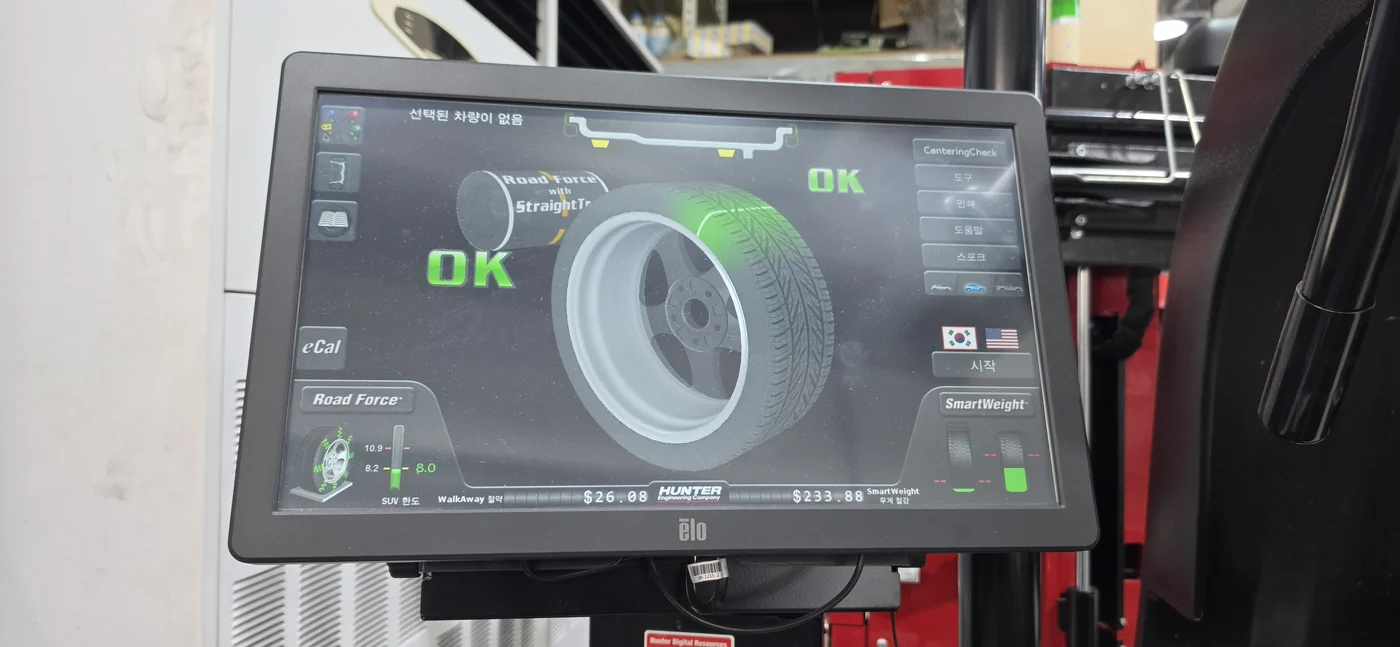
The final front-wheel placement screen showed RFV readings of 8.0 and 7.5 kgf. We also checked mass balance, reviewed the wheel-and-tyre combinations and placement, and assessed vibration on the road test.
Separate readings for balance correction and diameter
When reviewing placement, we also checked the assembly diameters shown by the equipment: 731, 728, 730 and 728 mm. We explained the observed diameter differences and advised assessing the driving feel after the placement changes, with these differences considered again at the next tyre replacement.
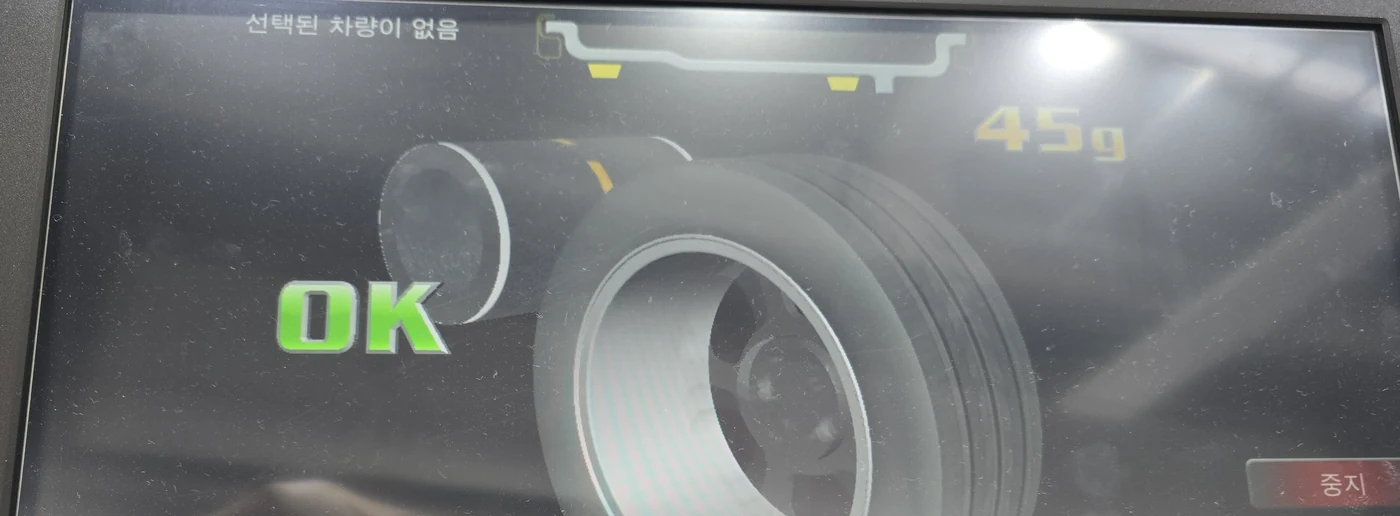
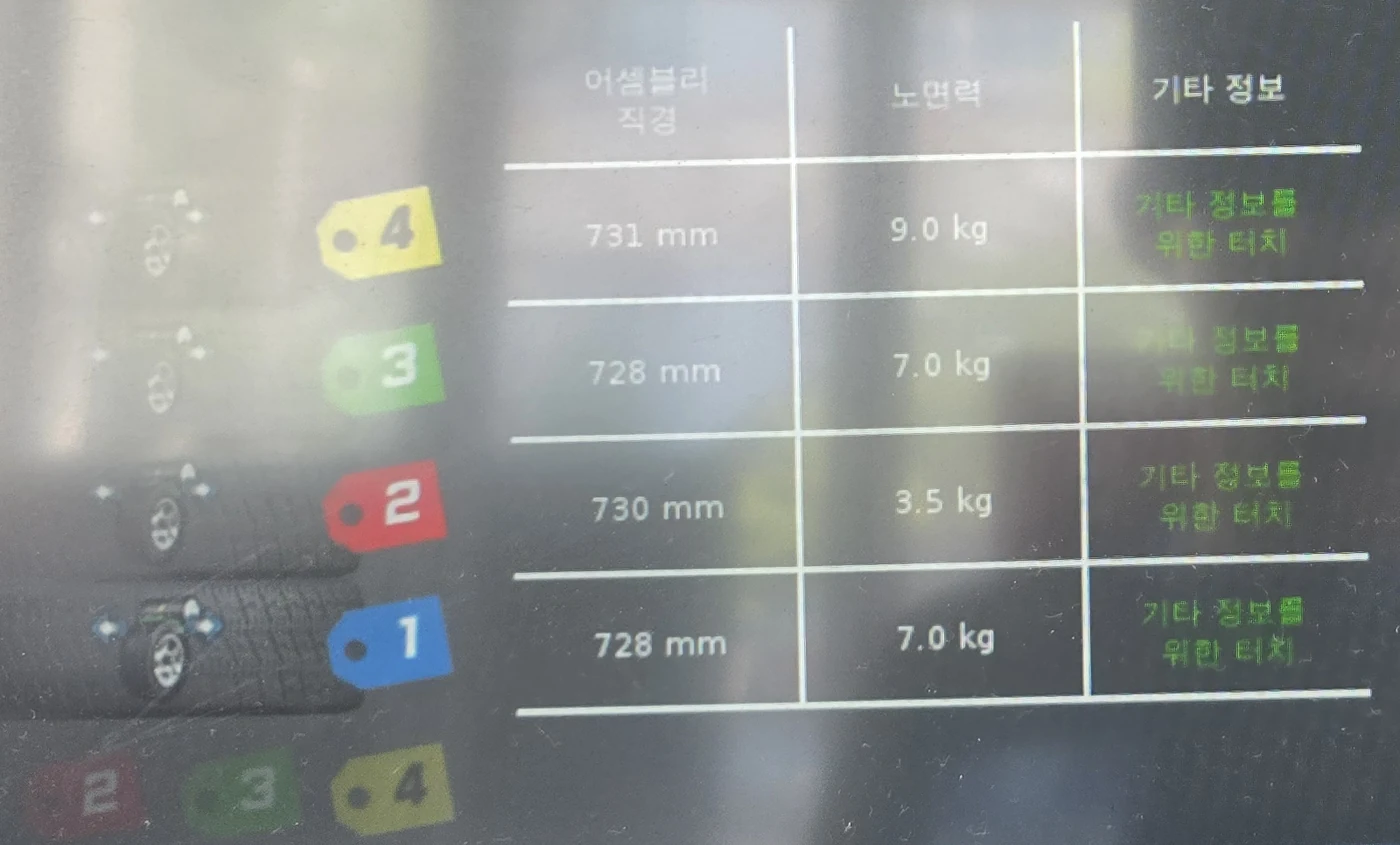
Readings from the final front-wheel placement screen. The equipment displays kg; force is expressed here as kgf.
04
A second road test to check the original complaints
Remaining pull or repeated steering corrections
Shaking through the steering wheel, seat and body
Road noise and the final driving settings
On the post-work road test, the previously observed rightward pull, difficulty maintaining a straight course and driving vibration were no longer present. Tyre road noise also decreased noticeably. These observations followed the combined alignment and balancing work, tyre-placement review and driving-mode settings.
The engine and transmission were set to Comfort, with suspension and steering set to Sport. The owner was satisfied with the driving feel in this configuration. We agreed to recheck the vehicle if the originally reported intermittent rear-end movement returns.
05
Driving improvements and the wheel repair still needed
The deformed wheel moved from the right-front to the left-front position. Its deformation was not repaired during this visit, and we explained the need for a separate wheel repair alongside the improvements confirmed on the road test.
Separate replacement was recommended for a component associated with securing the rear adjustment mechanism. Oil traces at the engine–transmission joint were also identified for follow-up inspection.
The current tyre sizes are 275/35R22 at the front and 315/30R22 at the rear. At the next replacement, we plan to discuss tyres suited to the owner's driving preferences. A broken retaining tab on the passenger-side mirror cover also remains a follow-up item requiring parts identification and ordering.
Actual complaints and measurements guide the work on a performance SUV. We use vehicle-appropriate procedures for other imported and Korean cars too, and explain the necessary work and follow-up care.
06
Questions about pulling and vibration
Does this case show that the fishtail-like symptom was resolved?
That sensation did not recur during this road test. The pulling, straight-line instability and vibration that we did observe were absent on the post-work test. We agreed to inspect the vehicle again if the originally reported behaviour returns.
Can alignment and balancing repair a deformed wheel?
Deformation of the wheel itself requires a separate repair. On this vehicle, the affected wheel changed position, but its shape was not repaired.
How does road-force measurement differ from mass balancing?
Mass balancing addresses weight imbalance in a rotating wheel-and-tyre assembly. Road-force measurement examines force variation as the tyre rotates under load. They assess different properties.
Do you use the same approach for other imported and Korean cars?
The measuring and adjustment methods are chosen for each vehicle. The principle is the same: establish the actual complaint, assess alignment together with the wheels and tyres, and determine the work needed.
Still pulling or vibrating?
Let us inspect it before you replace more parts
We will examine the fitted wheels, tyres and alignment, explain what needs adjustment or repair, and check the driving feel after the work.
We explain the scope of any repairs and the estimate before proceeding with your approval.
Call 031-258-1617Book on Naver524 Maesonggosaek-ro, Gwonseon-gu, Suwon · By appointment. Scope and estimate are explained before work.
Road-force work on video

A related NHC explanation video, separate from this X6 visit.