2012 · Suspension work and ongoing care
An X6 with over 200,000 km:
new dampers, ride-height tightening and alignment
Final tightening with the suspension at running height.
Bilstein dampers · Ride-height tightening · Wheel alignment
Bent-wheel repair and recurring oil leakage discussed for follow-up.
This 2012 BMW X6 30d has covered 202,193 km. The E71 combines an SUV body with a coupe-style roofline and remains distinctive today. On a long-owned vehicle, replacing a suspension component also calls for attention to surrounding parts and their fastening.
We replaced the dampers, completed the relevant fastenings at running height and adjusted the alignment. We also discussed the bent wheel found during tyre work and the history of recurring differential oil leakage.
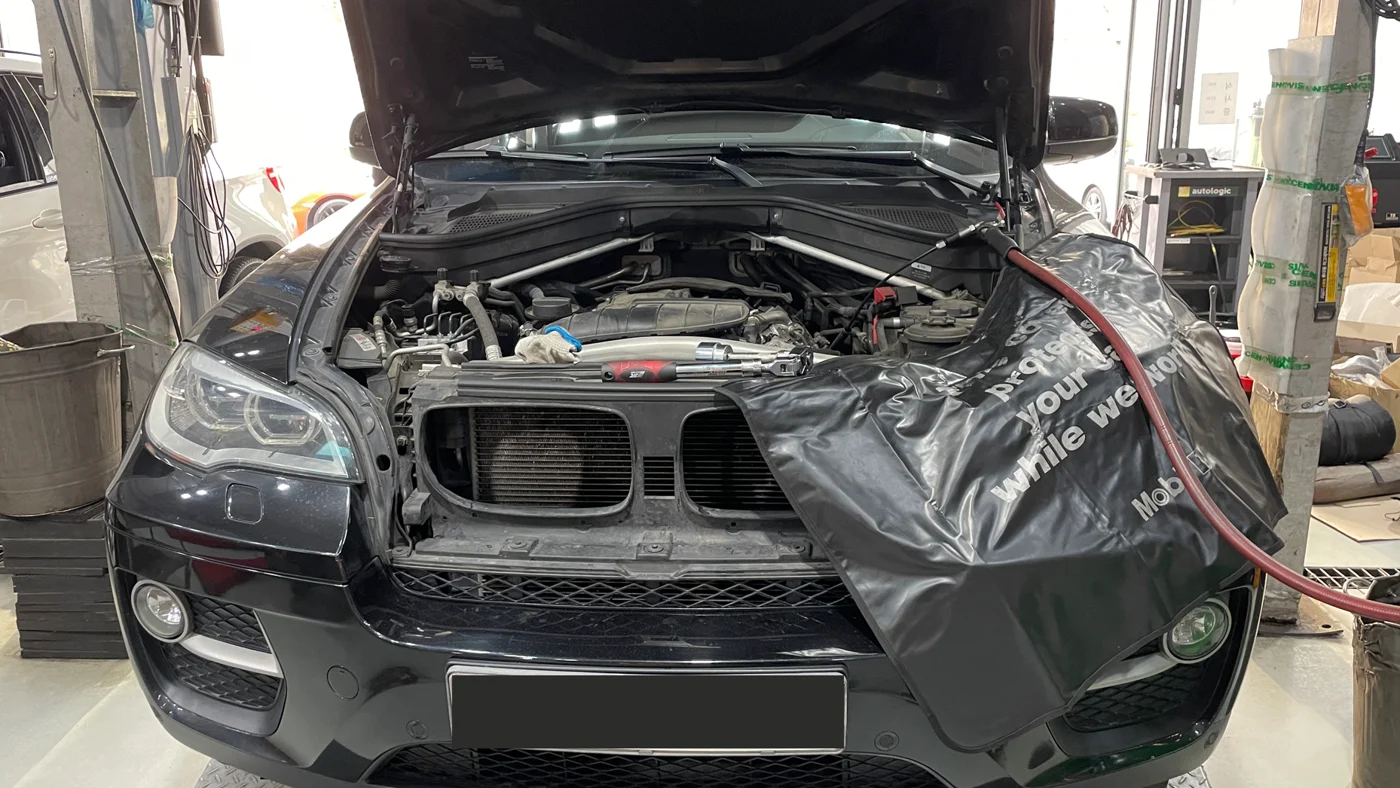
- Vehicle
- 2012 BMW X6 30d(E71) · 202,193km
- Work completed
- Bilstein dampers · Ride-height tightening · Alignment · Wheel/tyre matching
- Measurements
- Front toe 1.4 / 1.4 mm · Rear 1.1 / 1.1 mm · Thrust angle 0.00°
- Ongoing care
- Consider wheel repair · Rear tyre care · Further checks for recurring leakage
01
Bilstein damper replacement
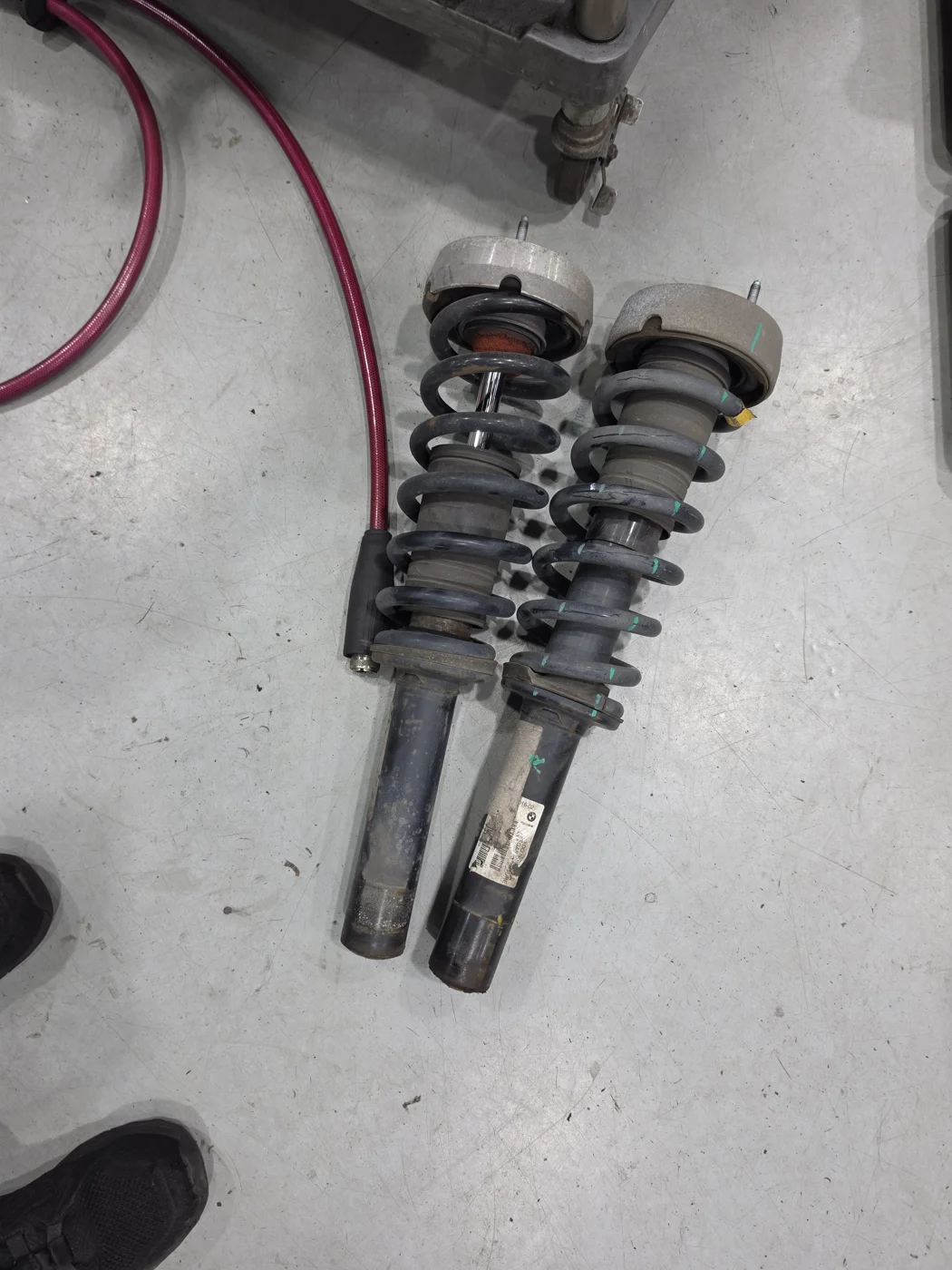
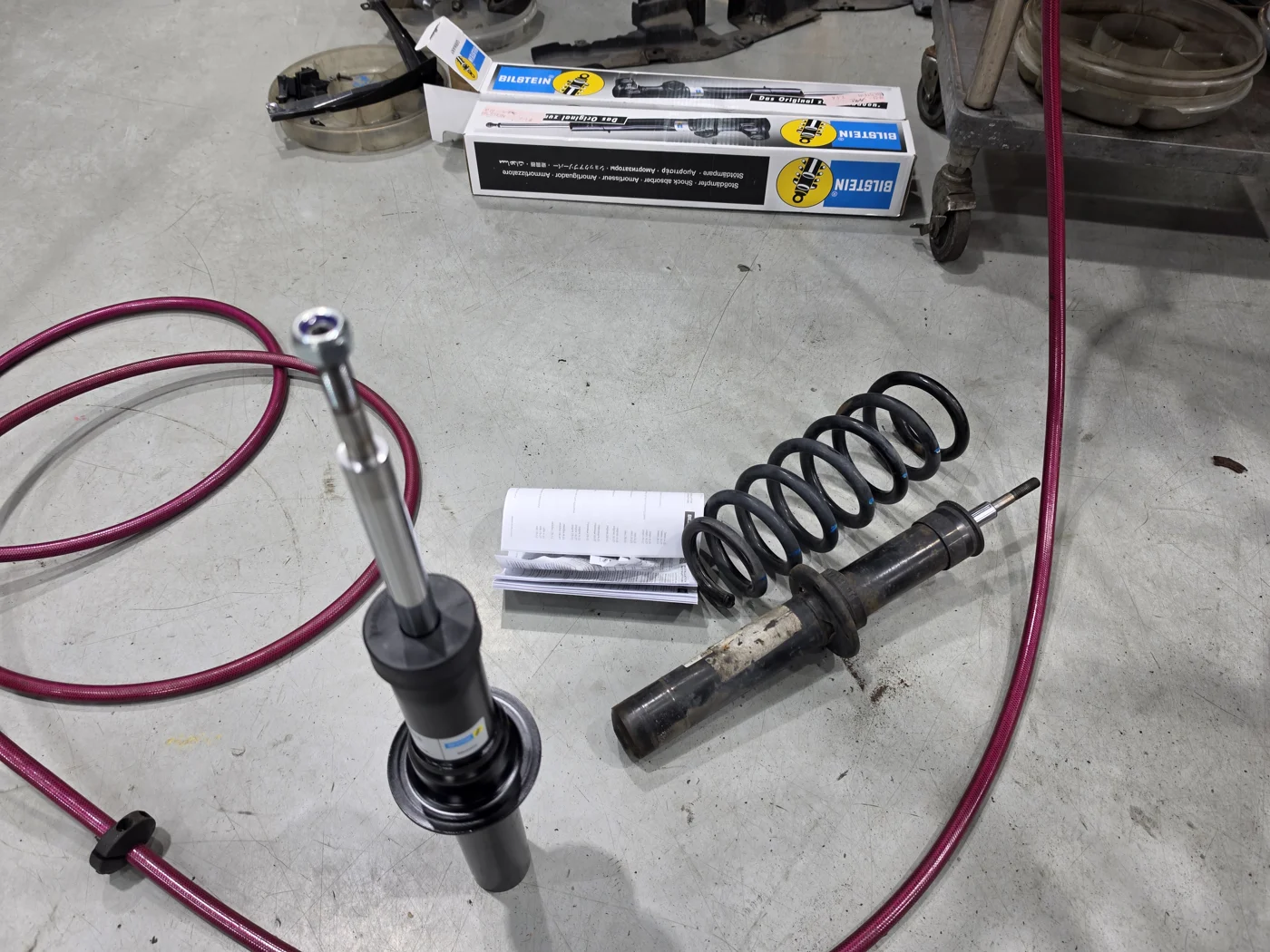
Dampers control spring movement. As damping weakens, body movement may take longer to settle after an impact and can place additional demands on surrounding components. We fitted Bilstein dampers to this X6.
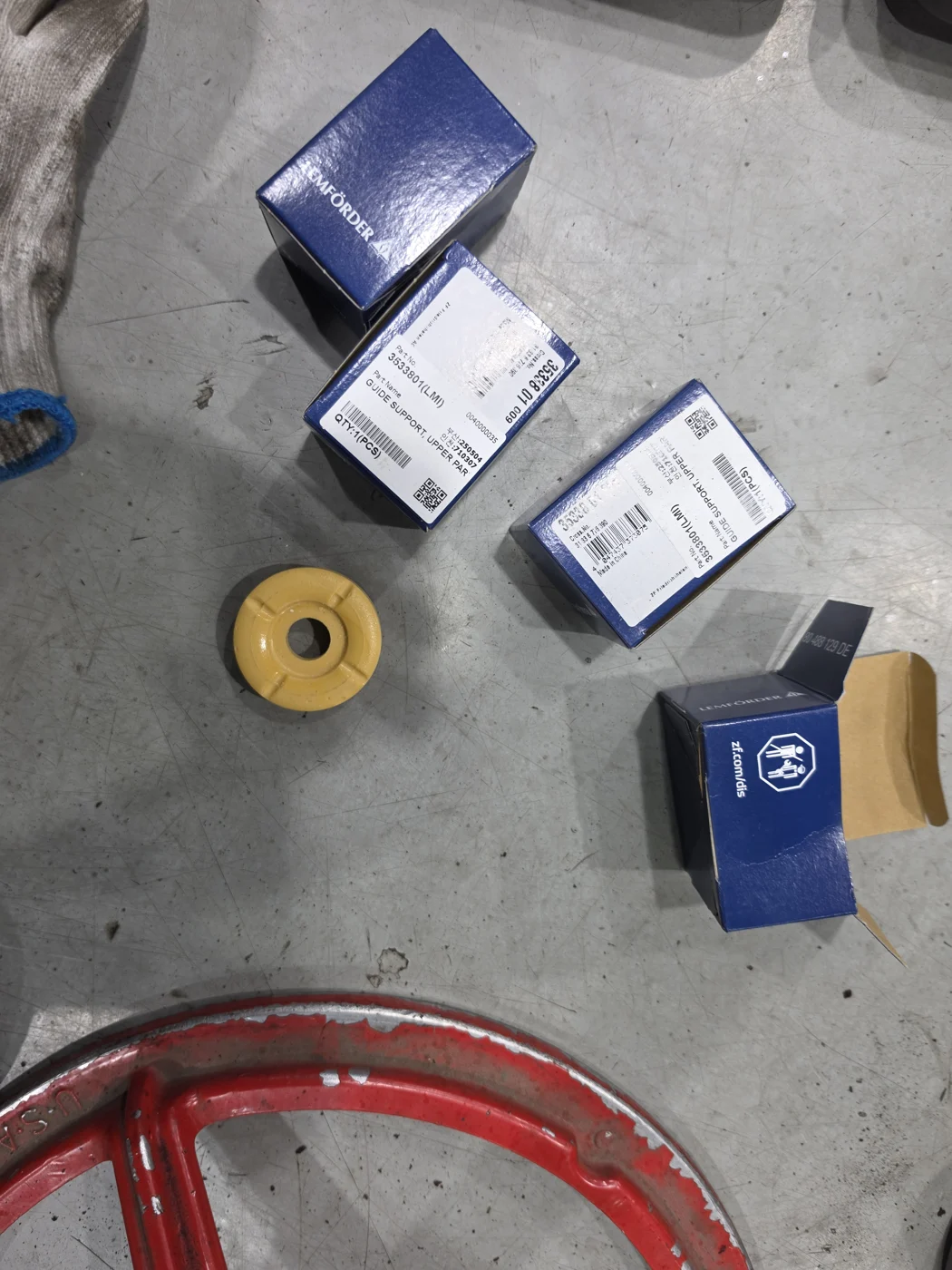
During disassembly, the springs and upper support areas are checked along with the dampers. After fitting the new parts, assembly condition and wheel alignment also need attention.
02
Why final tightening height matters
Suspension hanging on a lift is in a different position from suspension supporting the vehicle on the road. Relevant rubber-bushed connections must be tightened at the specified running height following the vehicle procedure. Tightening them at full droop can leave the bushings twisted when the vehicle is lowered.
We left the relevant final fastening work until the suspension was supporting the vehicle, rather than completing every fastening on the first lift. This less visible part of the work matters to both ride behaviour and bushing durability.
Check dampers and surrounding assembly
Avoid unnecessary torsional preload in the bushings
Check left/right toe and thrust angle
Range Rover ride-height and suspension tightening case shows this process in another vehicle.
03
Four-wheel measurements before and after
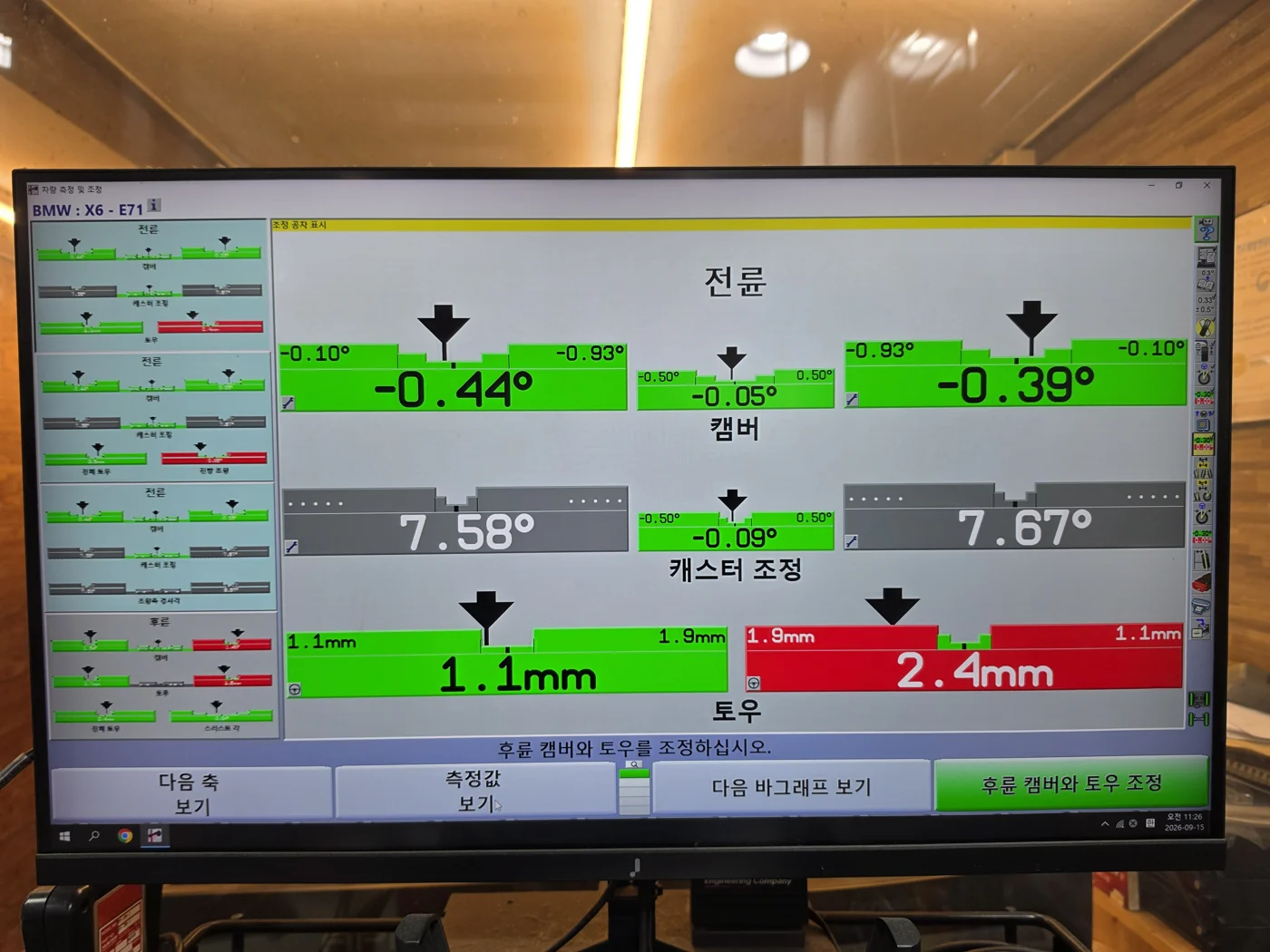
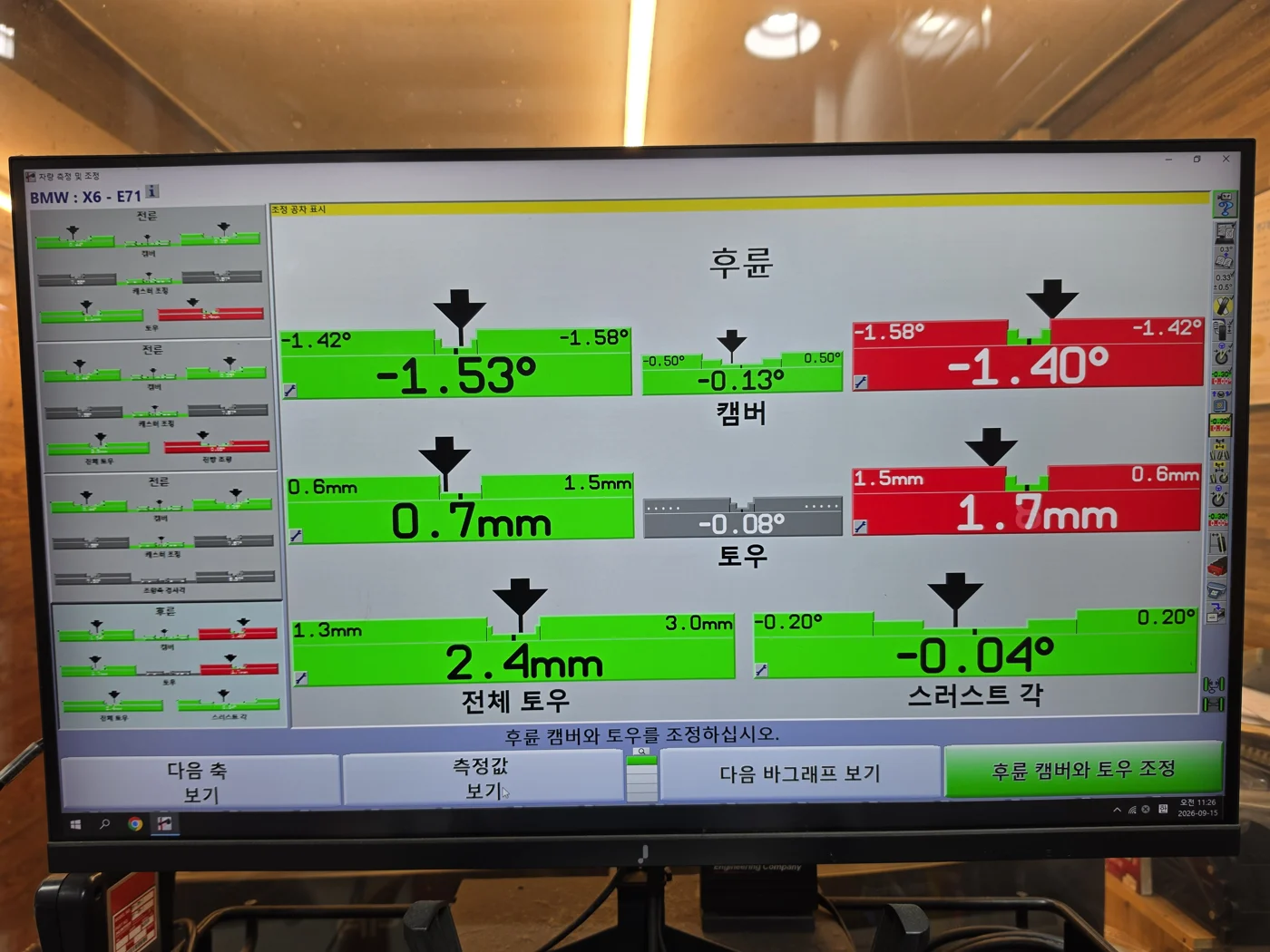
The before readings below were taken after the damper work, immediately before alignment adjustment. Right-front toe was 2.4 mm and right-rear toe 1.7 mm, both displayed in red. Right-rear camber also required attention.
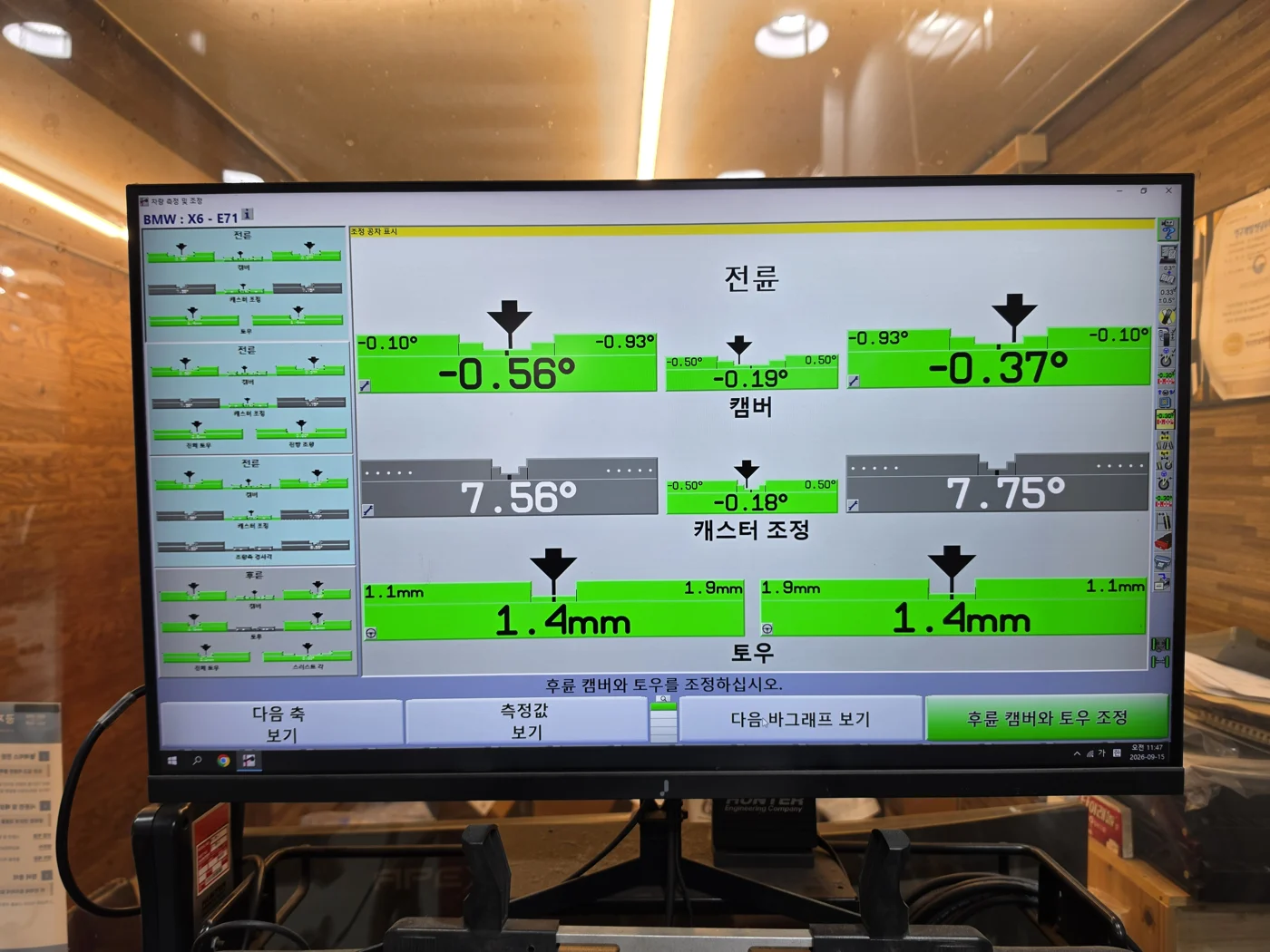
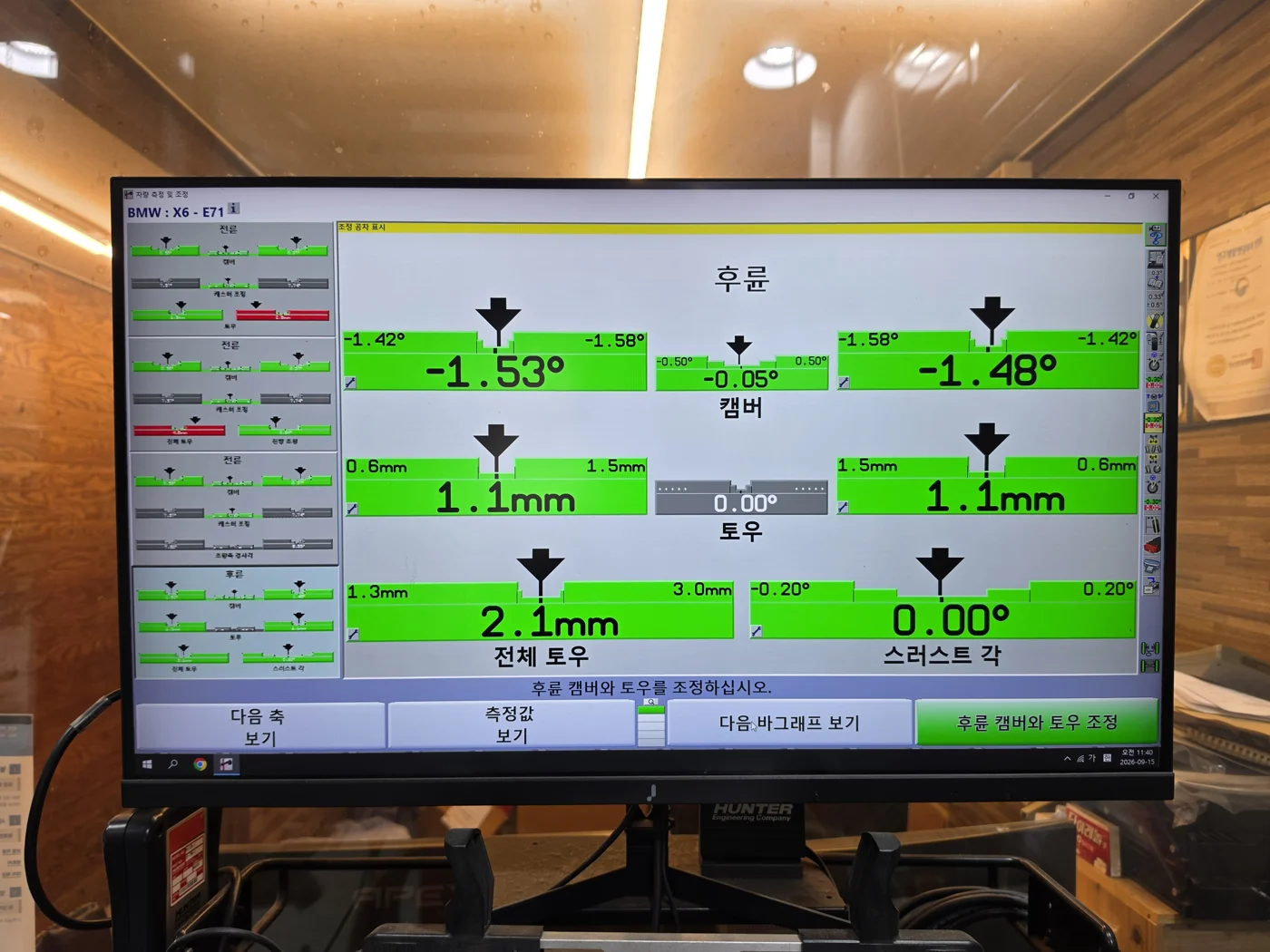
After adjustment, front toe was 1.4 mm on both sides and rear toe 1.1 mm on both sides. Thrust angle, which describes the rear wheels' direction of travel, changed from −0.04° to 0.00°. We based the adjustments on measurements, rather than judging suspension condition by vehicle age alone.
TOE DIRECTION · BEFORE / AFTER
Balancing left and right toe
Before adjustment
Actual toe readings · mm
After adjustment
Actual toe readings · mm
| Measurement | Before | After |
|---|---|---|
| Front toe L/R | 1.1 / 2.4 mm | 1.4 / 1.4 mm |
| Rear toe L/R | 0.7 / 1.7 mm | 1.1 / 1.1 mm |
| Front camber L/R | −0.44° / −0.39° | −0.56° / −0.37° |
| Rear camber L/R | −1.53° / −1.40° | −1.53° / −1.48° |
| Front caster L/R | 7.58° / 7.67° | 7.56° / 7.75° |
| Thrust angle | −0.04° | 0.00° |
L/R means left/right from the driver's position. Camber and caster are also recorded; the table does not mean that every listed item was separately adjusted.
04
Checking beyond a single low reading
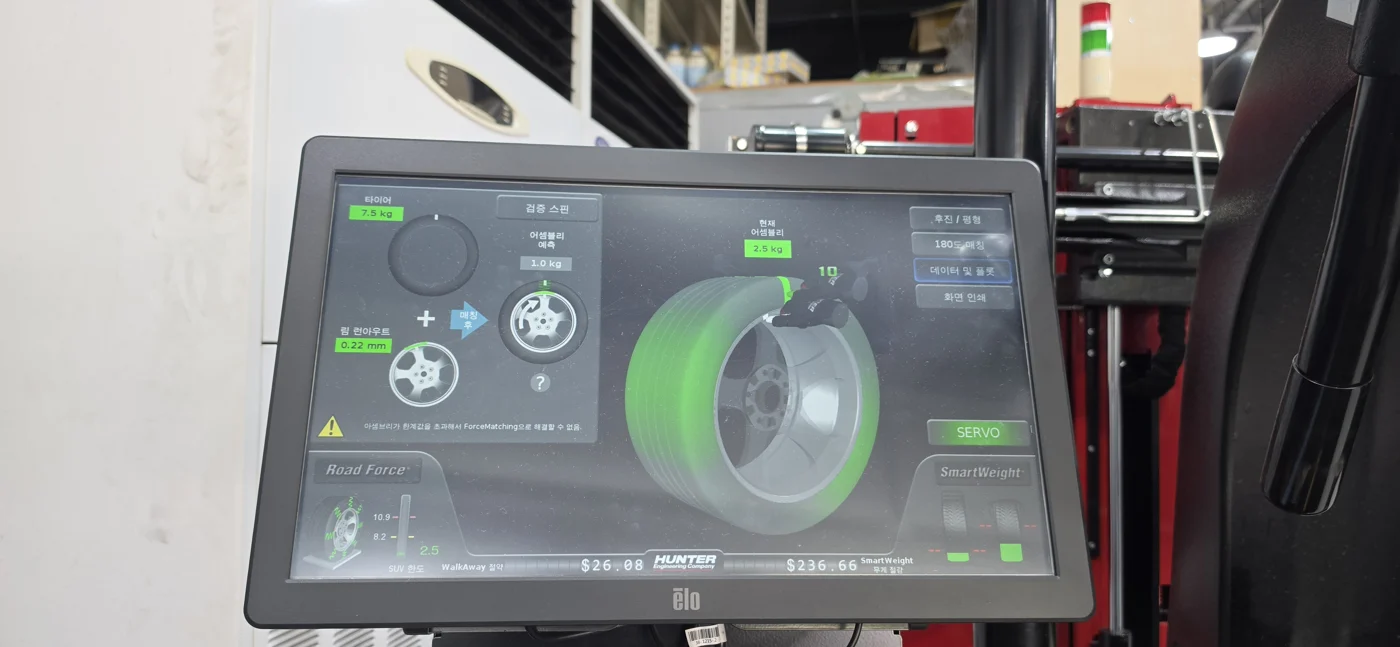
Tyre work also revealed deformation on the inside of a wheel. We optimised the wheel/tyre combination without repairing the wheel during this visit, and discussed wheel repair as a separate follow-up.
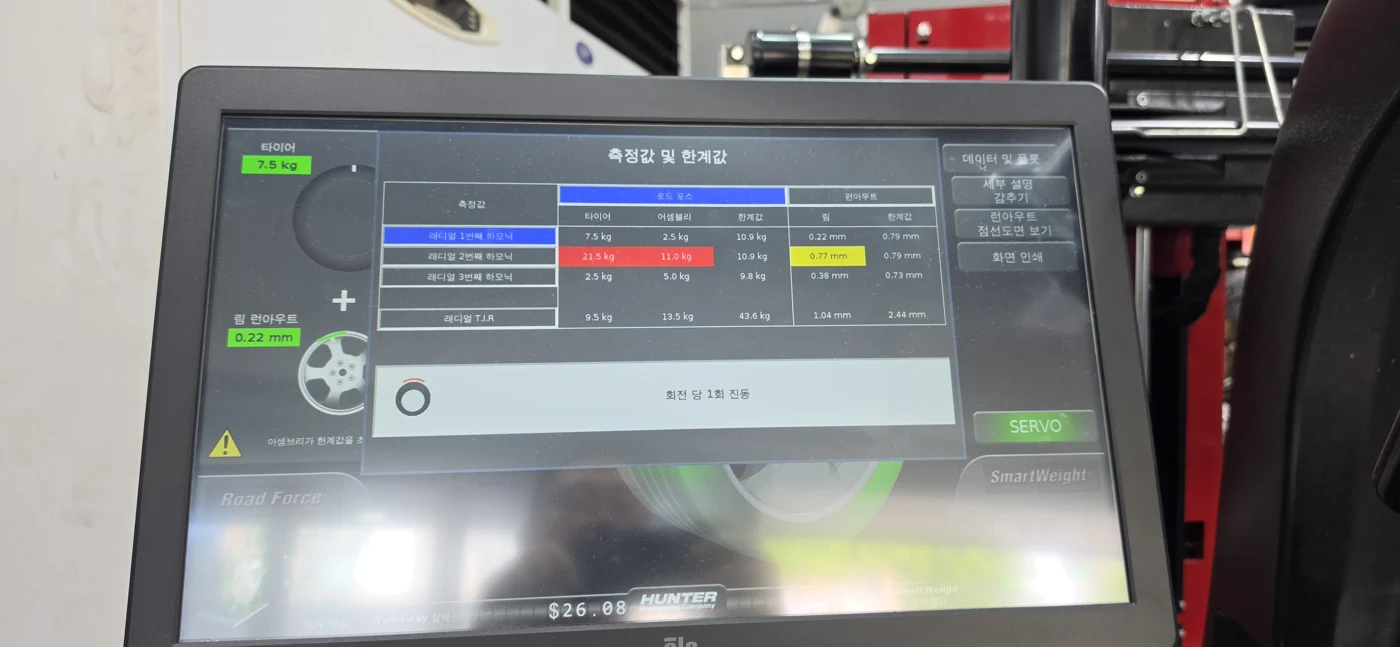
The current assembly's first-harmonic reading was 2.5 kgf. However, the detail screen showed 11.0 kgf for the second harmonic, slightly above that item's 10.9 kgf equipment limit. The lower headline reading alone does not establish that every wheel/tyre issue has been resolved.
Wheel/tyre matching and repairing a bent wheel serve different purposes. We explained what matching could achieve in the present condition and why wheel repair still deserved attention.
Current assembly · First harmonic
Second harmonic · Above the 10.9 kgf item limit
Discuss whether to repair the bent wheel
“I could have that done when I change the rear tyres.”
Whether to repair or replace a wheel depends on its damage and parts availability. The owner considered having the repair assessed alongside the next rear tyre replacement.
The reasons for checking wheel angles and tyre force variation separately are covered in our wheel alignment guide (Korean) and road-force balancing guide (Korean).
05
Planning the next service
We also discussed recurring differential oil leakage despite several previous seal replacements. Before replacing the seal again, the driveshaft-side play and sealing area warrant further inspection to determine the parts needed. Oil-leak repair was not carried out during this visit.
The completed work comprised damper replacement, ride-height tightening, alignment adjustment and wheel/tyre matching. Wheel deformation, rear tyre noise and recurring leakage were explained as follow-up items. Care for a high-mileage vehicle benefits from choosing the next job according to its actual condition.
NHC applies the same care to Korean daily drivers as to high-performance imports: vehicle-appropriate measurements and fastening procedures, with a clear explanation of the work involved.
06
Frequently asked questions
Is damper replacement the end of suspension work?
Assembly condition, fastening height and alignment need checking after replacement. Separate tyre or wheel problems also require attention.
Was the bent wheel repaired during this visit?
Wheel/tyre matching was completed during this visit. Repair of the bent wheel was discussed for consideration alongside the next rear tyre replacement.
Can a car with over 200,000 km still be aligned?
Age and mileage alone do not decide this. Component condition and play must be checked first. This vehicle recorded front toe of 1.4 / 1.4 mm and rear toe of 1.1 / 1.1 mm after adjustment.
What if oil leakage returns after a seal replacement?
The sealing area, shaft play and surrounding parts should be checked together. In this consultation we recommended further checks on the driveshaft side before deciding on replacement parts.
Caring for an older BMW?
Let us check which parts need attention.
We will assess the dampers, bushings, wheels and tyres together, explain what needs attention now and what can be planned, and help prioritise the work within your budget.
We explain the required scope and estimate before beginning the work with your agreement.
Call for service adviceBook on Naver524 Maesonggosaek-ro, Gwonseon-gu, Suwon · By appointment. Scope and estimate explained first.