NHC Motors / Service cases / Porsche Cayenne
PORSCHE CAYENNE GTS
Porsche Cayenne: why did new tyres make the drive less comfortable?
New tyres should make the drive better. On this Cayenne, they made it less comfortable. The owner and our workshop went back to the car time and again.
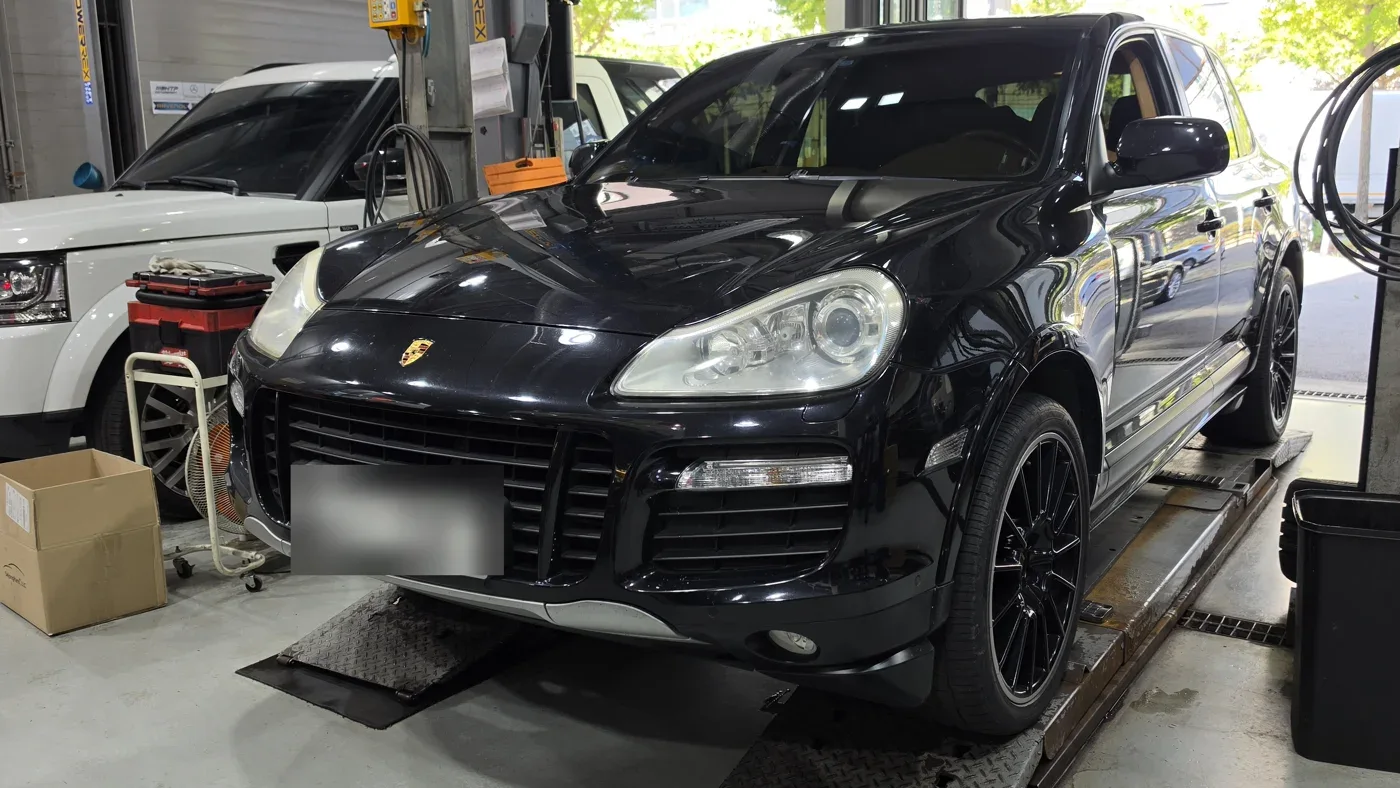
01 / After fitting new tyres
Are new tyres always as good as we expect?
Usually they are. But sometimes a car feels less comfortable after new tyres go on.
We see this once or twice every month: new tyres that do not feel right and need checking again.
This Cayenne belongs to a customer who regularly brings several vehicles to us. We fitted four new tyres the customer had bought elsewhere. Instead of feeling better than the old set, the car had vibration and pulling that made it uncomfortable to drive.
What happens if you assume the tyres must be fine because they are new and start looking elsewhere? You could replace suspension parts and still have the same problem. Finding the cause put both the customer and us through quite a few checks.
Watch the case video
02 / Measuring the tyres
All four new tyres were above our criteria
When we measured them, all four new tyres were above our criteria. Here are two readings from 23 September. With tyre and wheel assembled, the assembly RFV readings were 28.0kg and 16.5kg.
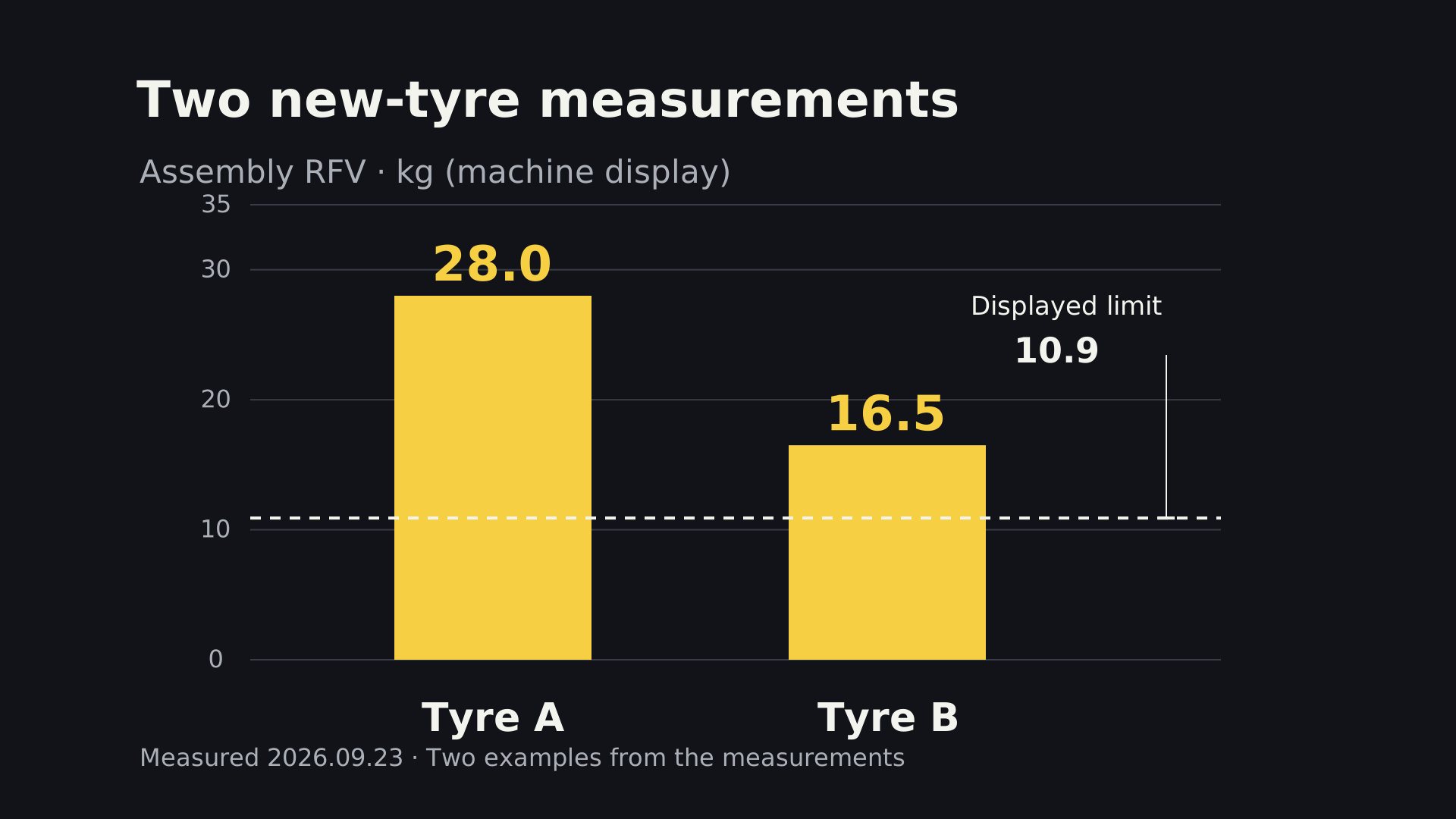
The dashed line is the 10.9kg limit shown on the machine screen at the time.
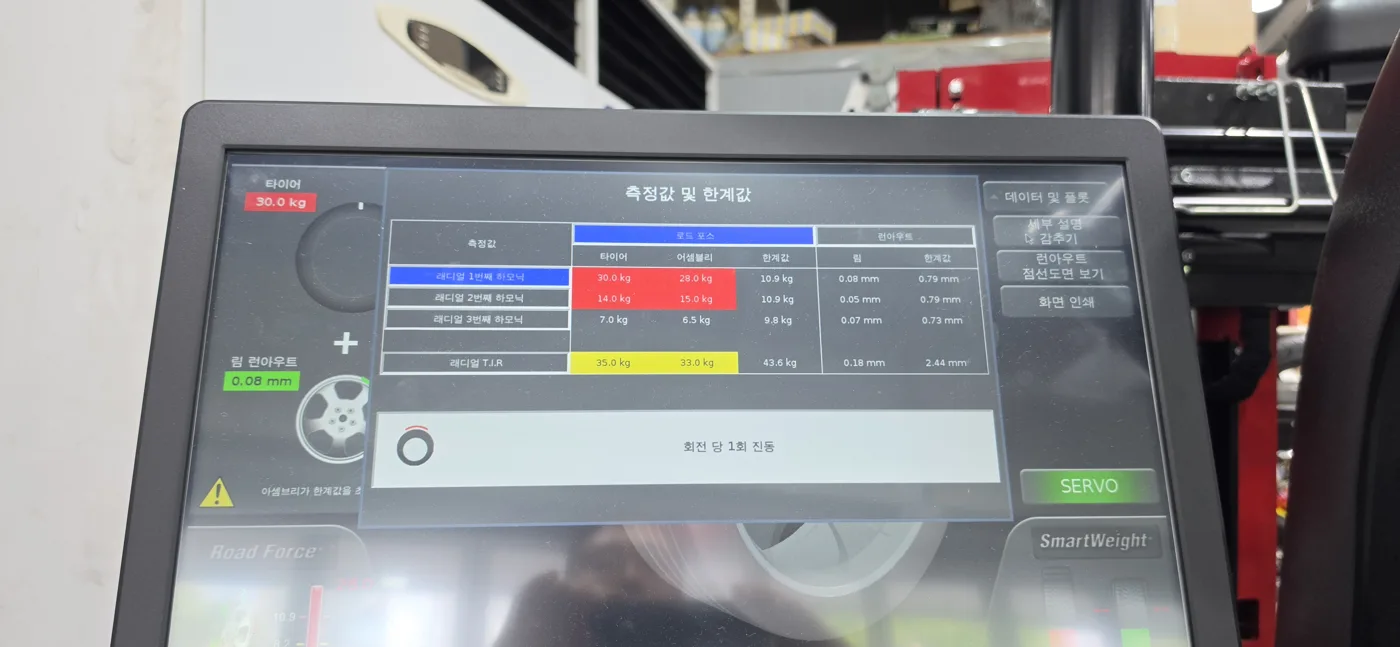
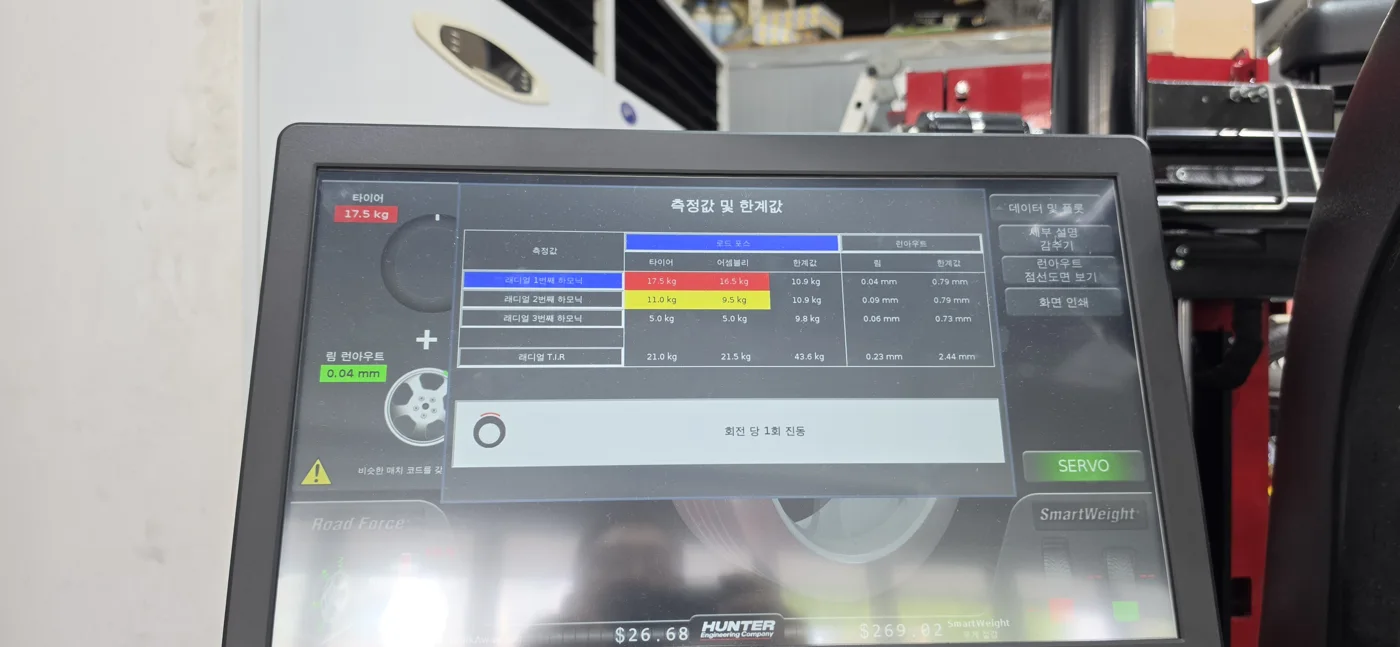
Adding weights to balance a wheel does not always remove the vibration. A tyre can still produce uneven forces as it turns under load. Road Force lets us measure that.
Pulling needs attention too. We looked at the sideways forces from the tyres, their positions, alignment and how the car actually felt on the road.
03 / Putting the old tyres back on
Every symptom disappeared
It was a baffling situation. You put on brand-new tyres expecting the car to feel better, and it feels worse instead. We adjusted it several times, drove it, and checked it again. Then we put the old tyres back on, and every symptom disappeared. Hard to believe, isn’t it?
The tyres the customer had been using felt better than the new ones. After all the trouble for both the owner and us, changing them back made the difference clear.

04 / Asking the tyre company to address it
A refund, then another new set
We sent the readings to the tyre company. We obtained a refund and fitted another new set. This time, we checked how the car drove again too.
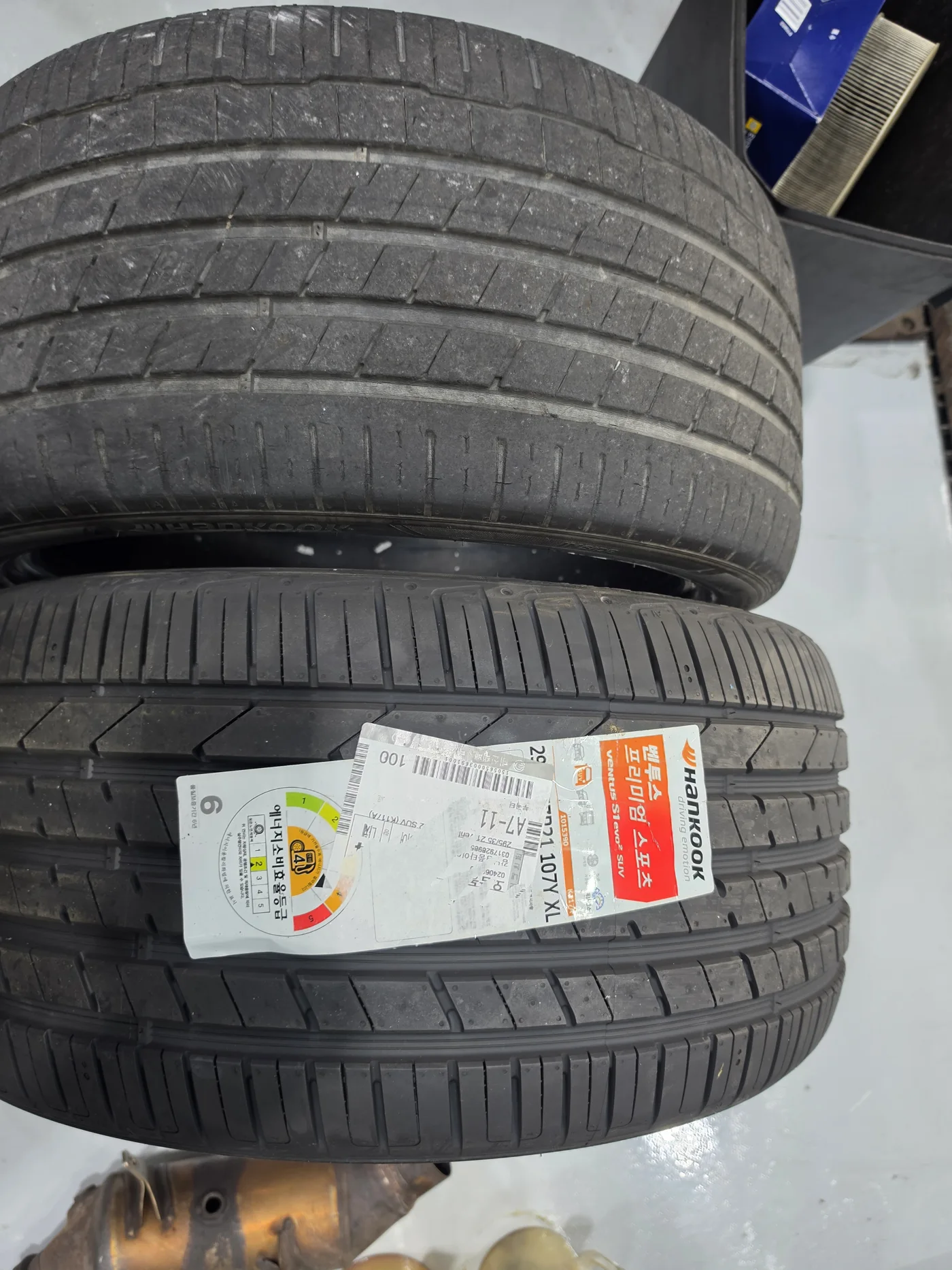
The job does not end when the tyres are fitted. If we check a tyre and find a problem, we send the readings to the supplier and pursue the warranty request. We do not want the customer left driving an uncomfortable car.
With tyres bought elsewhere, the fitter and seller are separate. Once the tyres have been fitted and driven on, there can be more to check and discuss between them. We had to remove and refit them several times here too.
Doing the same work repeatedly can add labour charges. Alongside the price, we would look at whether the tyres will be properly checked and fitted, and whether the workshop will help sort things out if a problem arises.
We have had new tyres replaced before, too
On an earlier job, we found that a new tyre was not in good condition before putting it on the car. We sent the readings to the supplier, received a replacement and checked it again.
See the readings and replacement process — Korean-language article →
05 / A message from the customer
The customer said it felt like driving a Boxster
After the work was finished, the customer sent us these messages. The Korean words below are from the original chat.
“핸들링 기가막힙니다 ㅎㅎ”
“마치 박스터타고 온 기분입니다”
“고속도로 주행은 예술입니다”
“감탄만 나옵니다”
After all the trouble the customer had been through, hearing this felt good to us too. Moments like this are why we keep checking even the small details, one by one.
Questions and answers
Can new tyres feel worse than the old set?
Sometimes they do. This Cayenne became less comfortable after the new tyres were fitted. Assuming they must be fine just because they are new can make the cause harder to find.
Why can the car still vibrate after balancing?
Adding weights balances mass, but the tyre can still produce uneven forces as it turns under load. That is why we also measure Road Force.
Why did you put the old tyres back on?
The discomfort started after the new tyres went on, so we wanted to see what happened with the previous set. Every symptom disappeared when we refitted them. We then obtained a refund and fitted another new set.
Is the Road Force number enough to explain pulling?
Pulling needs more than an RFV number. We also look at the sideways force from the tyres, their positions on the car, alignment and how the car actually feels on the road.
What should I consider when buying tyres?
Look at how they will be checked and fitted, and who will help if something goes wrong. When we identify a problem, we send the readings to our supplier and pursue the warranty request. With tyres bought elsewhere, fitting and seller support have to be coordinated separately, which can make things more involved.