NHC MOTORS · SERVICE RECORD
Mercedes-Benz GLK Engine and Transmission Mount Replacement with RFV Measurement and Alignment
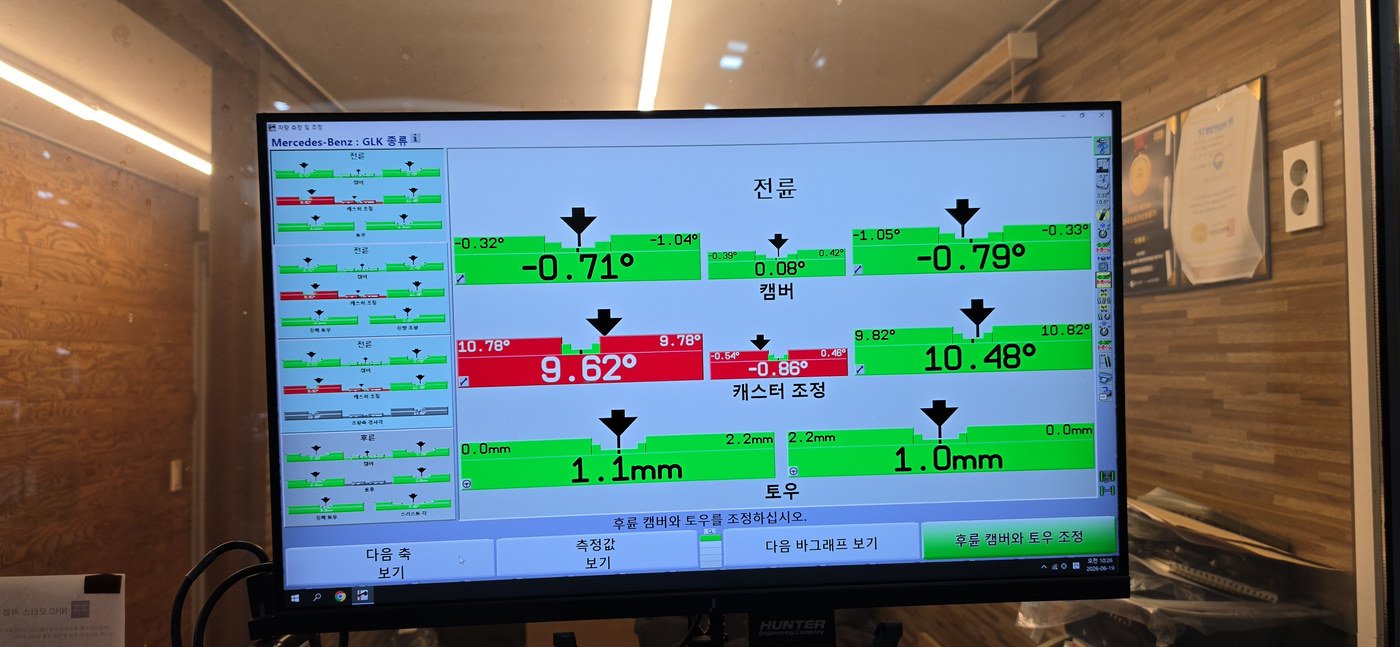
We replaced the engine and transmission mounts on a 2015 GLK and checked the wheel side separately with wheel and tire measurement and an alignment. Front camber and toe were adjusted; front-left caster of 9.62° remains in red and needs further checking.
Will replacing the engine mounts get rid of every vibration you feel in the car? Vibration passed from the engine and transmission into the body and vibration generated by the wheels while driving come from different places.
On this 2015 Mercedes-Benz GLK, we replaced the engine mount and the transmission mount, then measured weight imbalance and RFV on the wheels and tires removed from the car. In the alignment, front camber and toe were adjusted. Front-left caster of 9.62° remained in red after adjustment, so this item needs a further look at the suspension condition and adjustment range.
01 / NHC MOTORS
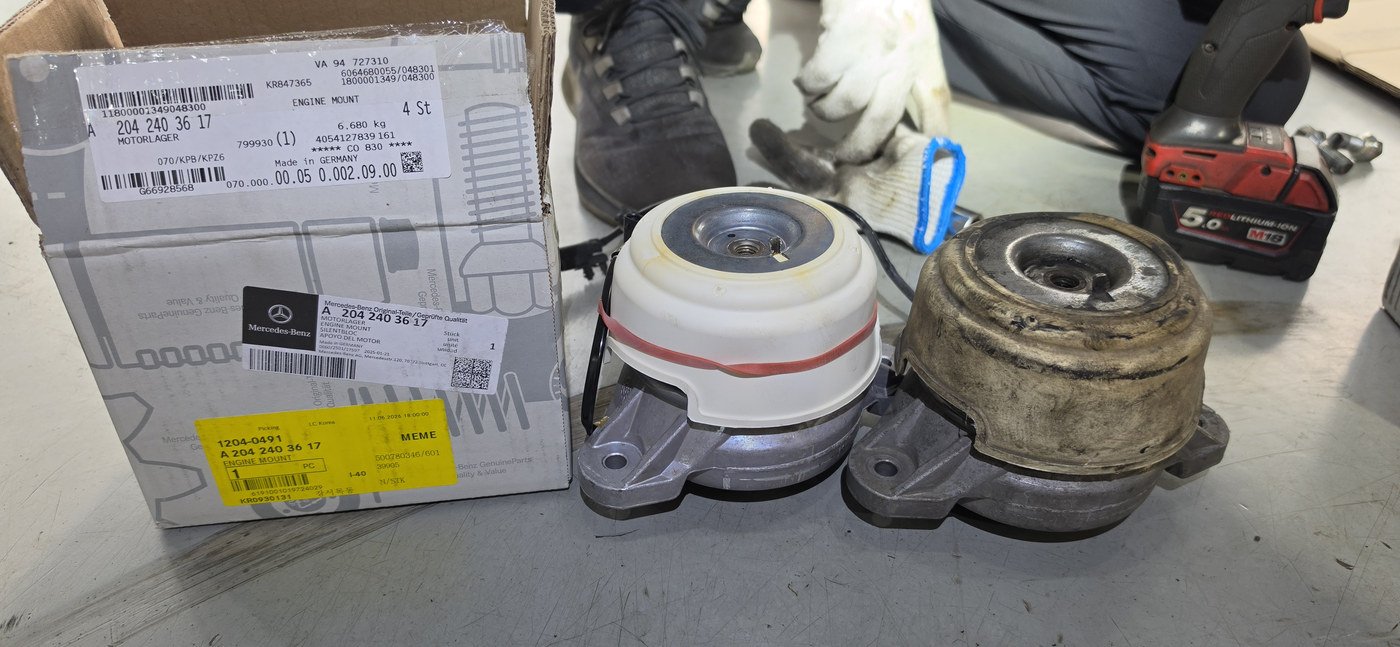
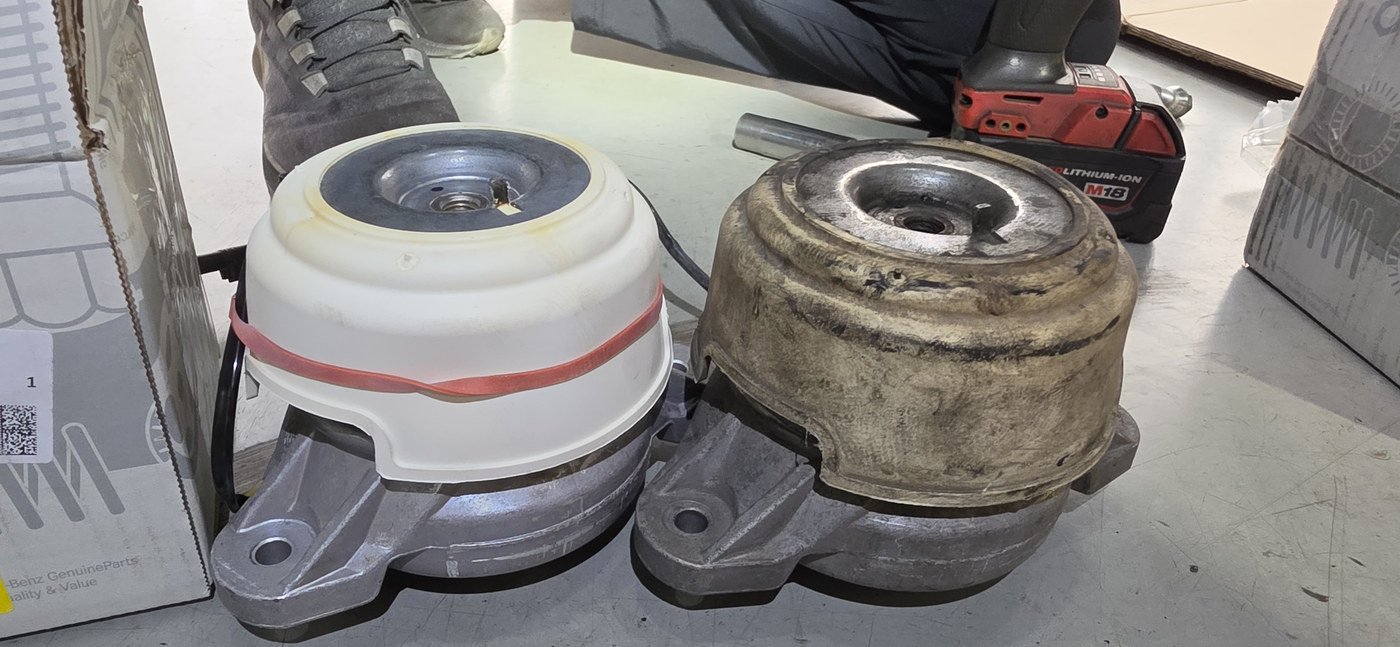
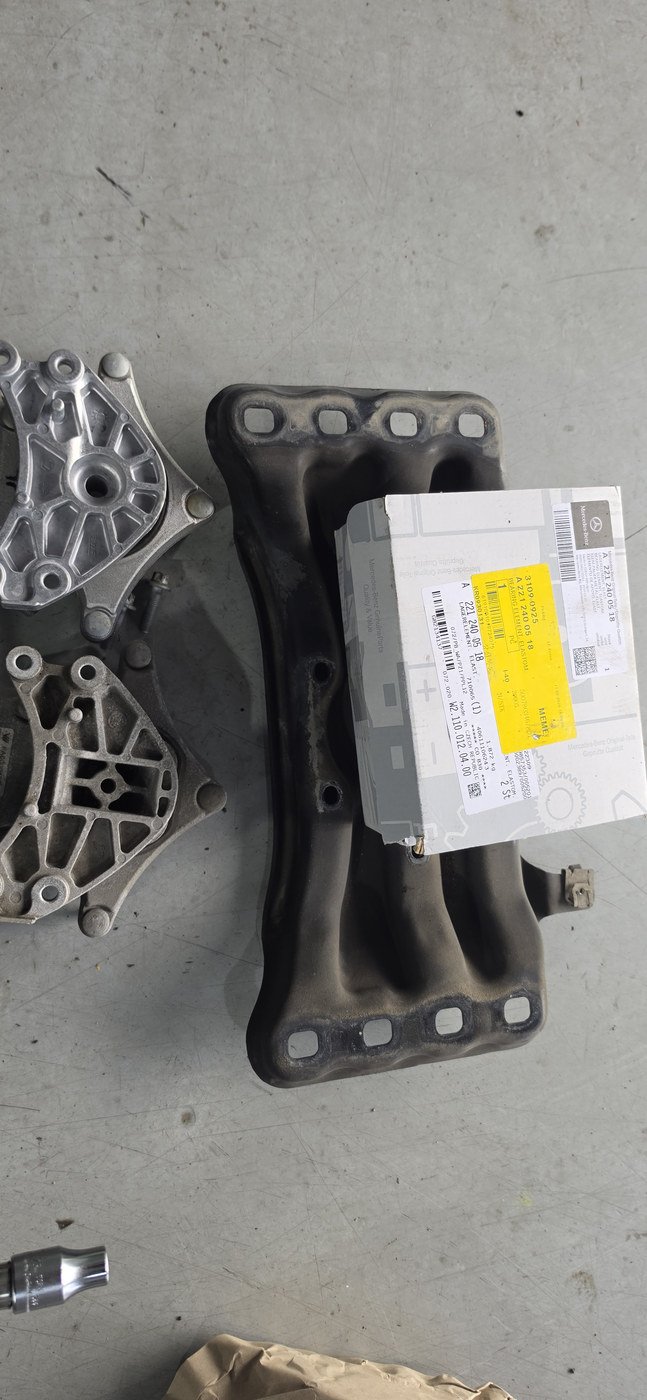
The engine mount was compared against the new part before replacement
The engine mount carries the engine's weight, and its inner damping material reduces how much engine vibration reaches the body. When that material hardens or cracks, it often shows up as shaking in the cabin at a standstill or a clunk when pulling away.
On this GLK, we removed the old engine mount and compared its shape and mounting points with the new part before fitting it. The engine has to be supported separately while the mount is out, and if the new mount doesn't seat properly, the engine can sit out of position and load surrounding parts, so getting the mounting position right matters.

02 / NHC MOTORS
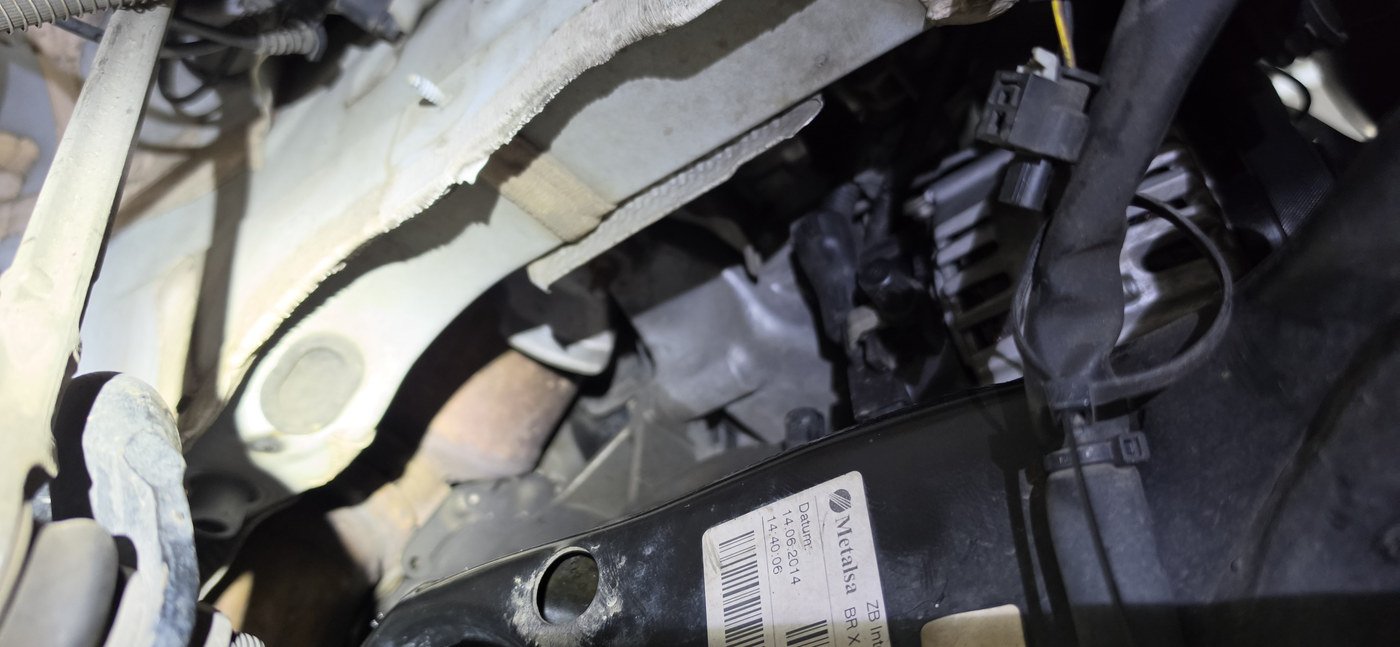
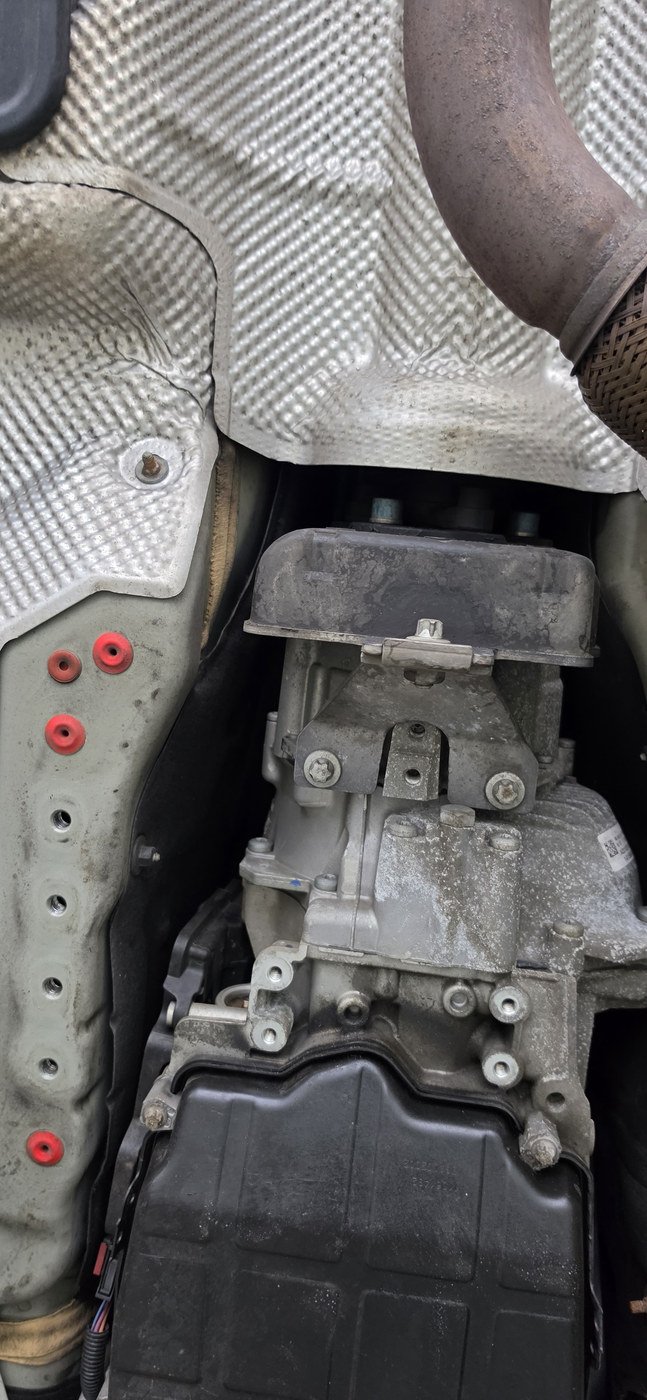
The transmission mount supporting the gearbox was also replaced
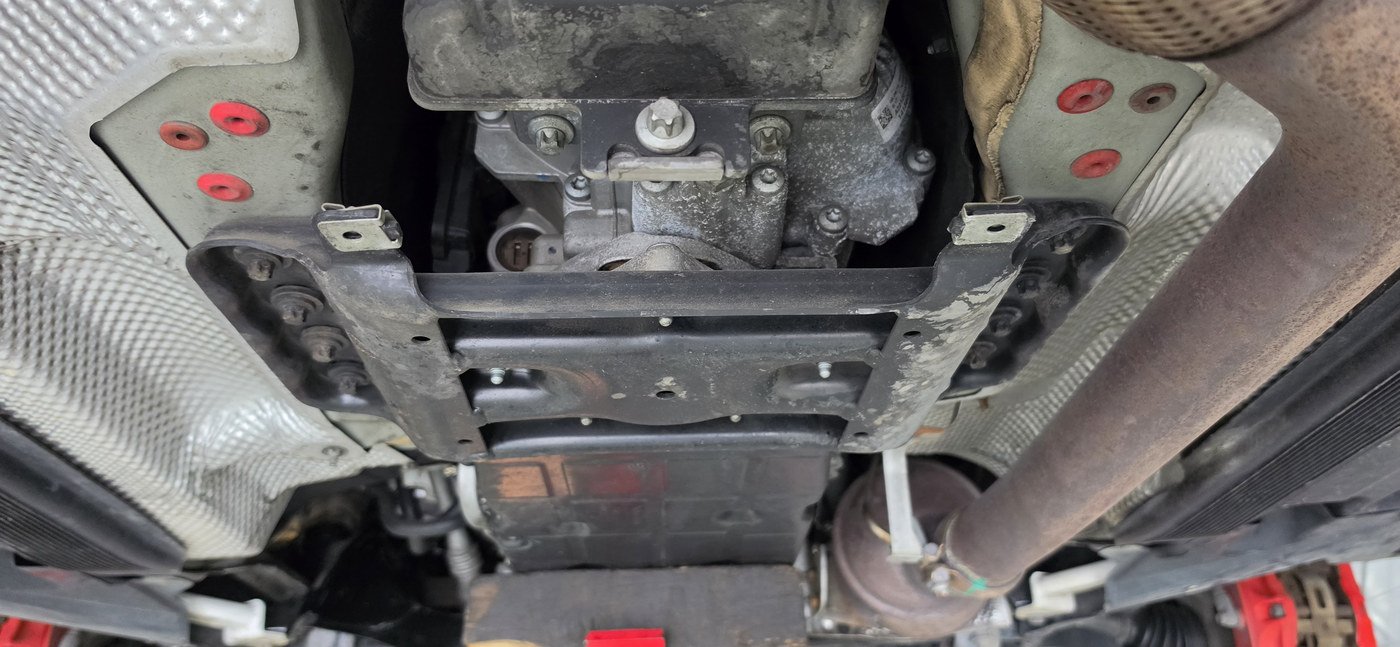
We replaced the transmission mount that supports the gearbox under the car. It sits in a different location from the engine mount, so we reached it separately from underneath.
The engine and transmission are joined and move as one unit. If even one support weakens, the whole assembly can move more, so we look at the engine-side and transmission-side mounts together.
03 / NHC MOTORS
Separately from the mounts, we measured wheel and tire weight imbalance and RFV
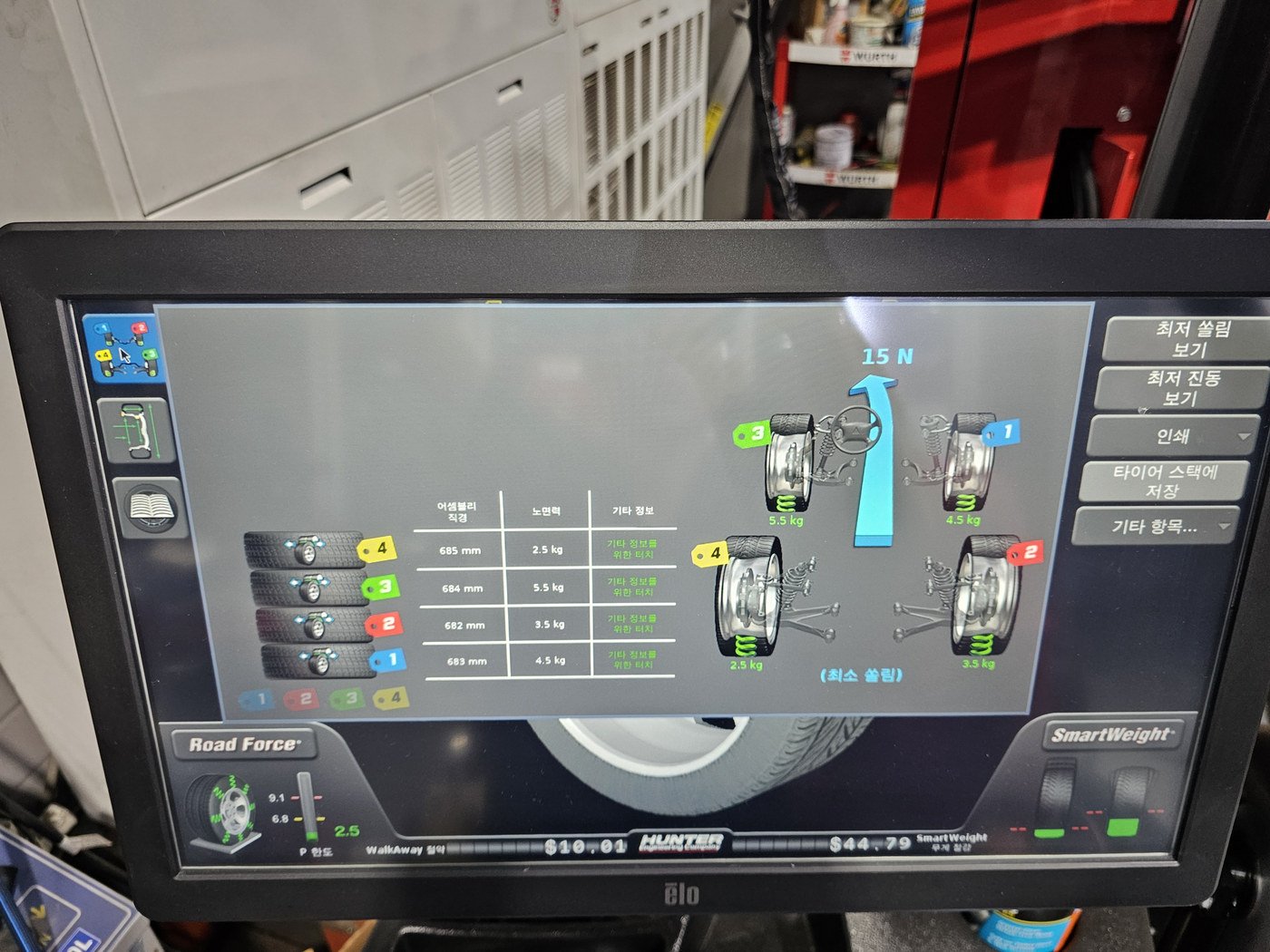
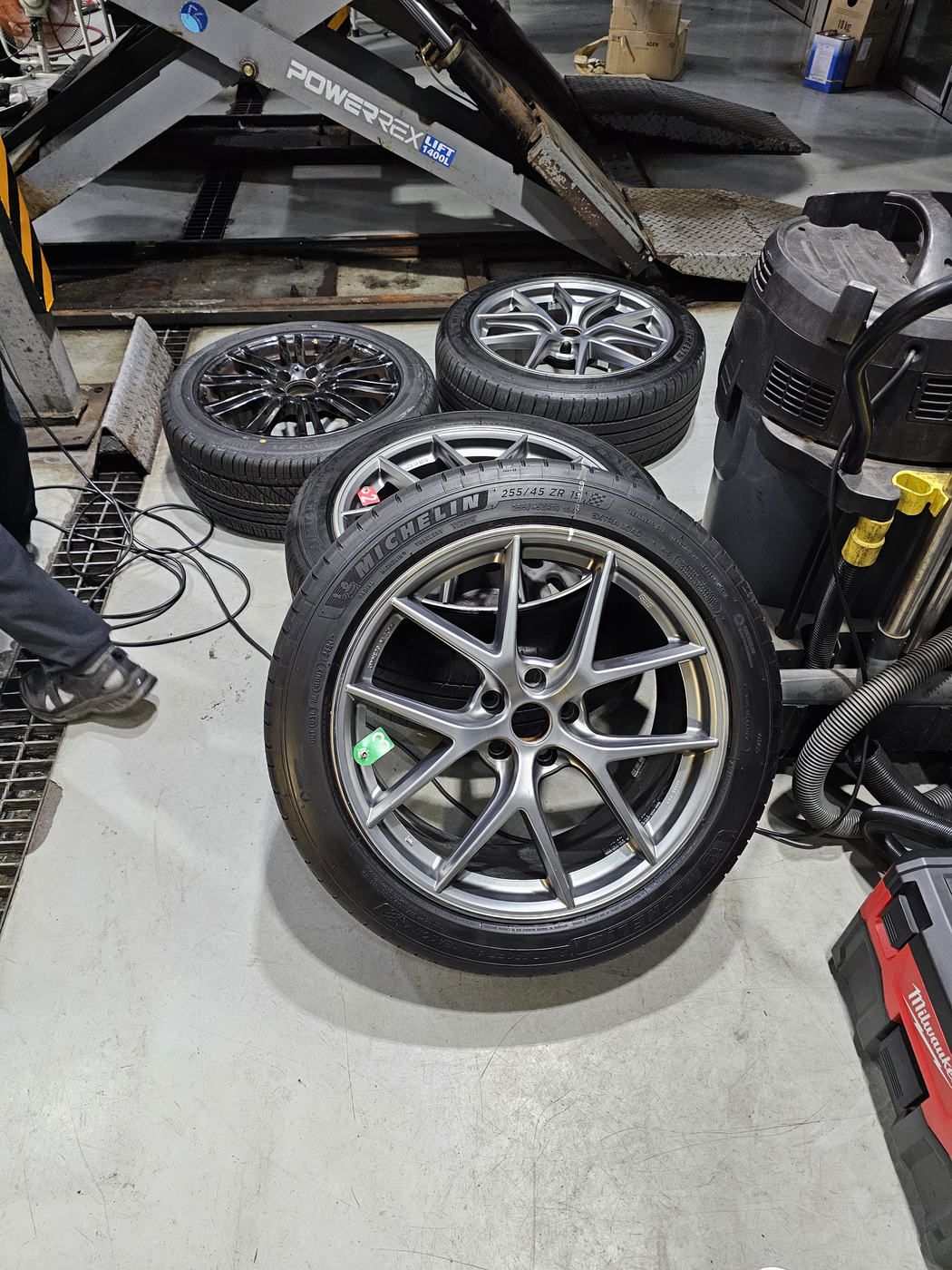
Vibration that grows with speed can come from the rotating wheels rather than the supports, so we removed the wheels and tires from the car and measured them separately on the machine. Along with weight imbalance, we checked RFV. RFV (radial force variation) shows how much the force the tire pushes back with changes over one revolution when a roller loads it and rolls it.
Even with the weight balance correct, a large variation in this force can cause vibration depending on speed. That is why we treat weight balance and RFV as separate items.
On June 10, 2026, four 255/45R19 Michelin Pilot Sport All Season tires were replaced and a HOFMANN 3D Optima high-speed vibration balance was performed. This was earlier work, separate from the RFV measurement in this case.
04 / NHC MOTORS
Front camber and toe were adjusted; front-left caster remained in red
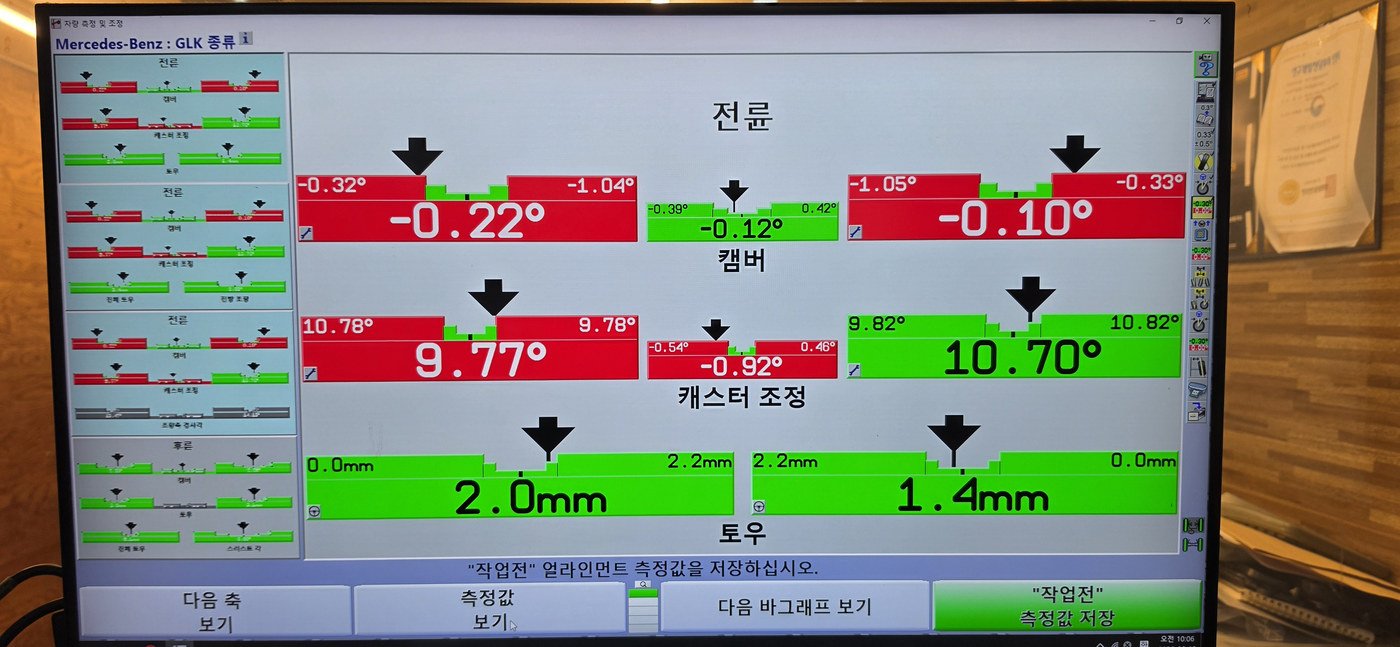
The alignment was measured and adjusted on HUNTER Premium Alignment equipment. Front camber went from -0.22° to -0.71° on the left and from -0.10° to -0.79° on the right, and front toe went from 2.0 mm and 1.4 mm to 1.1 mm and 1.0 mm.
Camber is how far a wheel tilts in or out when viewed from the front; toe is how much the fronts of the wheels point toward or away from each other when viewed from above. After this adjustment, the tops of both front wheels lean slightly further inward, and the left-right camber difference narrowed from 0.12° to 0.08°. On both wheels, the amount of toe-in was reduced.
After adjustment, front-left caster of 9.62° remained in red. Caster is the tilt of the steering axis viewed from the side, and it affects straight-line stability and how strongly the steering wheel returns to center. On some vehicles the direct adjustment range is small, so caster cannot be set as readily as camber and toe. For this item, the vehicle's adjustment range and the condition of the suspension components need to be checked separately to decide whether further work is needed.
First, sort the vibration by when you feel it
Engine operation and engine/transmission mount condition
Wheel and tire weight balance and RFV
Suspension condition and alignment
Frequently asked questions
Will replacing the mounts also stop vibration while driving?
Mounts are supporting parts that reduce vibration transmitted from the engine and transmission. Vibration that increases with speed can come from the wheels and tires or from alignment, so we measure those separately.
Can the car still vibrate with new tires?
Even new tires can differ from one to another in how much their force varies under load. Weight balance and RFV are different items, so if there is vibration, we measure them separately.
What happens if a value is still red after adjustment?
We look at which item remains and that item's adjustment range. On this GLK, front camber and toe were adjusted, but front-left caster of 9.62° remained in red, so the suspension components and the adjustment range need to be checked separately.
Related reading
- Service case
BMW X3 20d: cracked coupling, used propeller shaft and transmission mount replacedSee the related service process and inspection guidance.
- Service case
GLK 220 vibration and chassis noise: inspecting the wheels and suspension togetherSee the related service process and inspection guidance.
- Guide
Wheel alignment inspection (Korean guide)See the related service process and inspection guidance.
- NHC video
Vibration inspection at NHC ▶ Watch on YouTube
Related NHC video featuring another vehicle.
If vibration remains after a mount replacement, we measure the wheel side separately
For vibration at a standstill, we look first at supports such as the engine and transmission mounts; for vibration that grows with speed, at wheel and tire balance and RFV; for steering pull or uneven tire wear, at alignment and suspension condition. If vibration remains after the mounts have been replaced, we will measure RFV and alignment values separately and explain which side the problem comes from. When booking, tell us the speed or situation in which you feel the vibration, and we will schedule the inspection around those conditions.
We explain the work and estimate before proceeding with your consent.
Call for service adviceBook via Naver031-258-1617 · NHC Motors, Suwon · By appointment
Published 2026-09-27