ALIGNMENT · ROAD FORCE
Hyundai Veloster JS: Where Does the Pull and Heavy Steering After Tuning Come From?
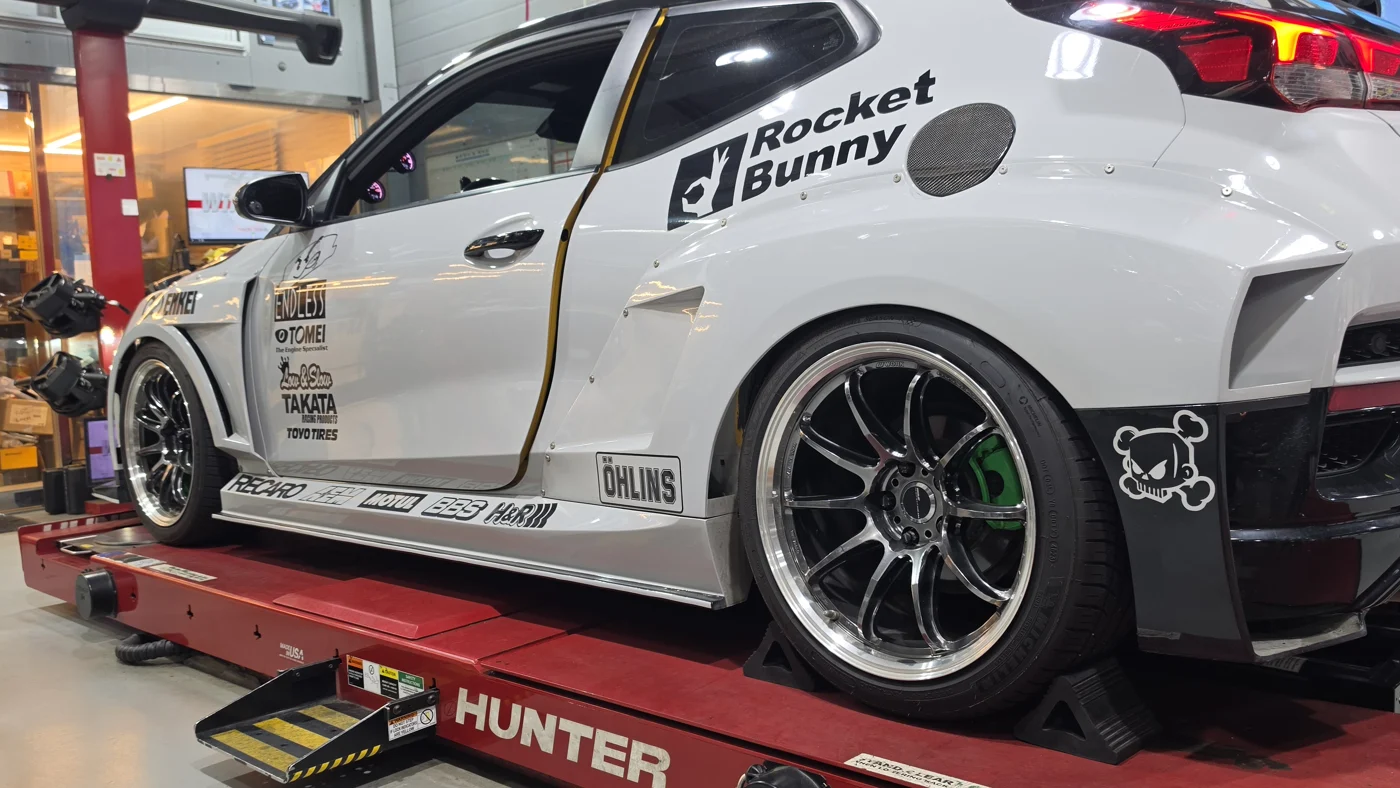
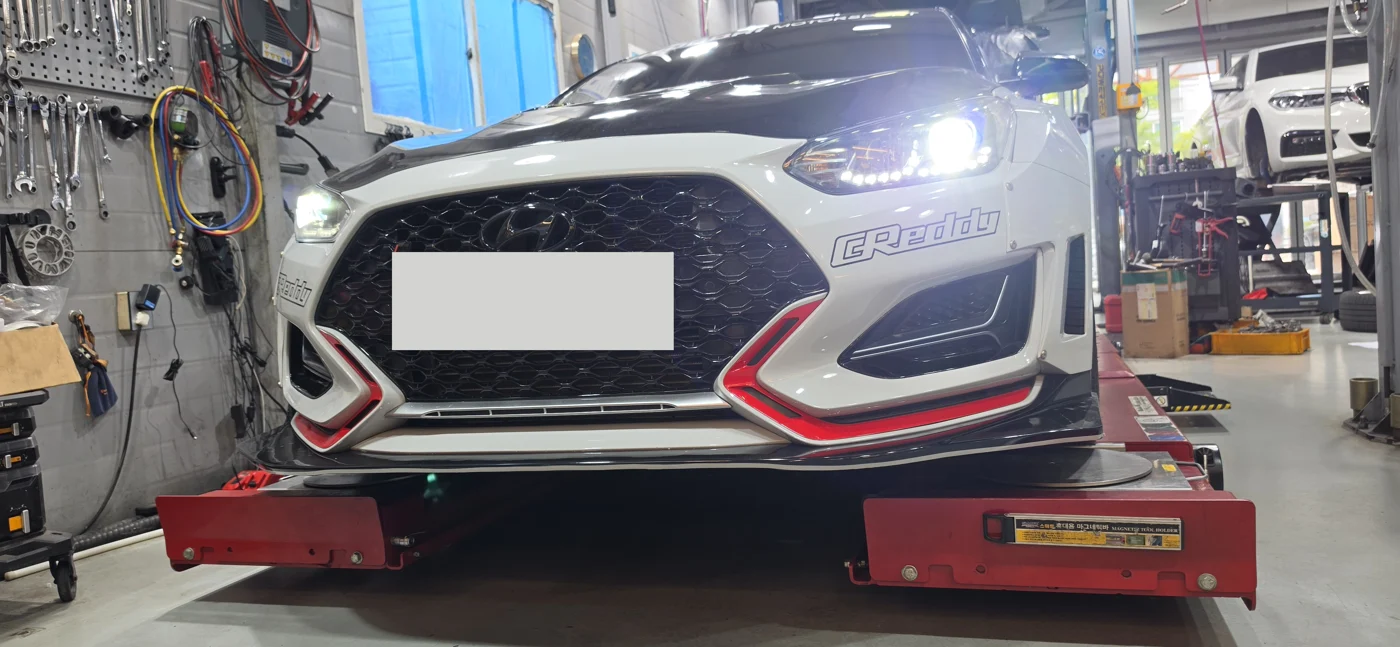
The owner liked the build, but daily driving was uncomfortable: a pull to the right, heavy steering and an unsettled response through corners. This 2019 Veloster JS has air suspension and a widebody conversion. We adjusted the alignment and tyre matching, then drove with the owner to assess the changes. The next stage will prioritise everyday comfort.
01 / NHC MOTORS
Deciding where to start
The concerns were ride harshness, a pull to the right, heavy steering and unsettled cornering. Despite the extensive modifications, the owner wanted a comfortable, predictable car for everyday use.
Initially we prioritised handling, then ride comfort, then appearance. Driving with the owner after the work changed that order. Comfort came first, with some compromise on appearance if needed.
“I want to reset it.”
Customer during consultation
02 / NHC MOTORS
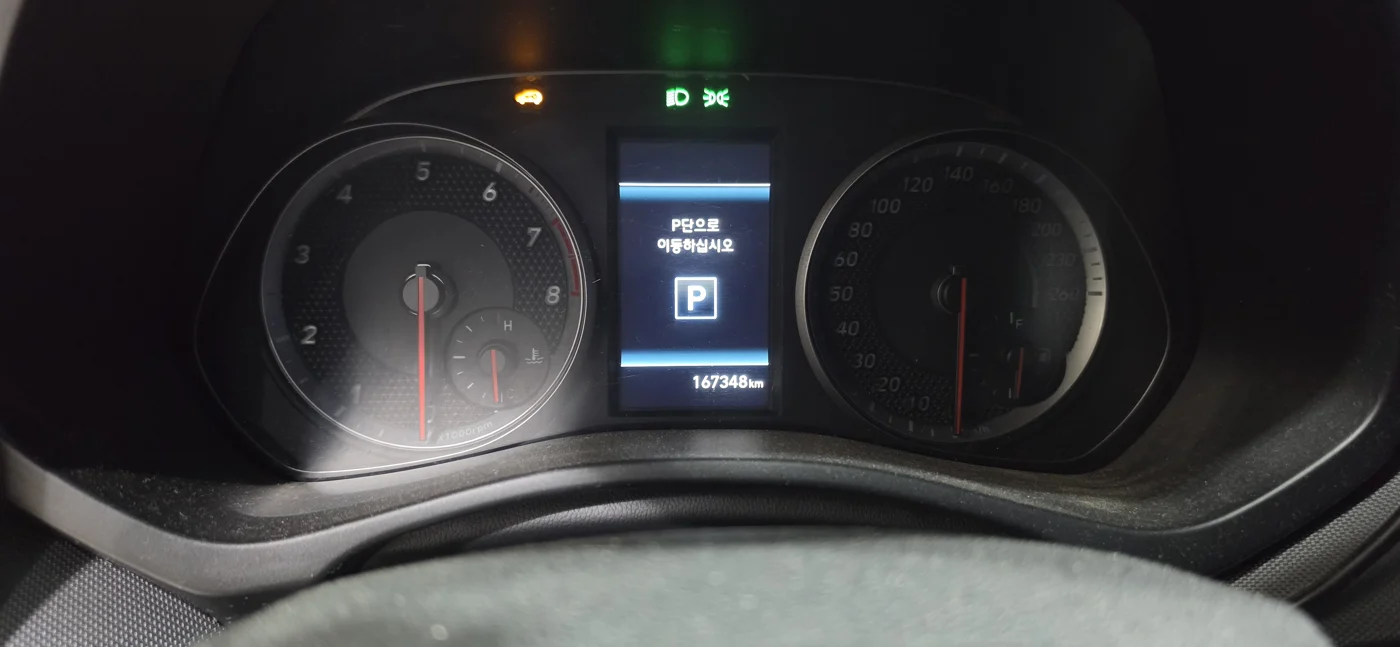
Checking the current wheel and tyre setup
The wheels are 9.5J at the front and 10.5J at the rear, with Michelin Pilot Sport All Season 265/35ZR18 tyres at all four corners. The front setup includes 15 mm spacers.
The front and rear tyres are the same size, but the wheels have different widths. With spacers and a lowered ride height, we checked the wheel-and-tyre configuration alongside the alignment readings.
03 / NHC MOTORS
Alignment measurement and what changed
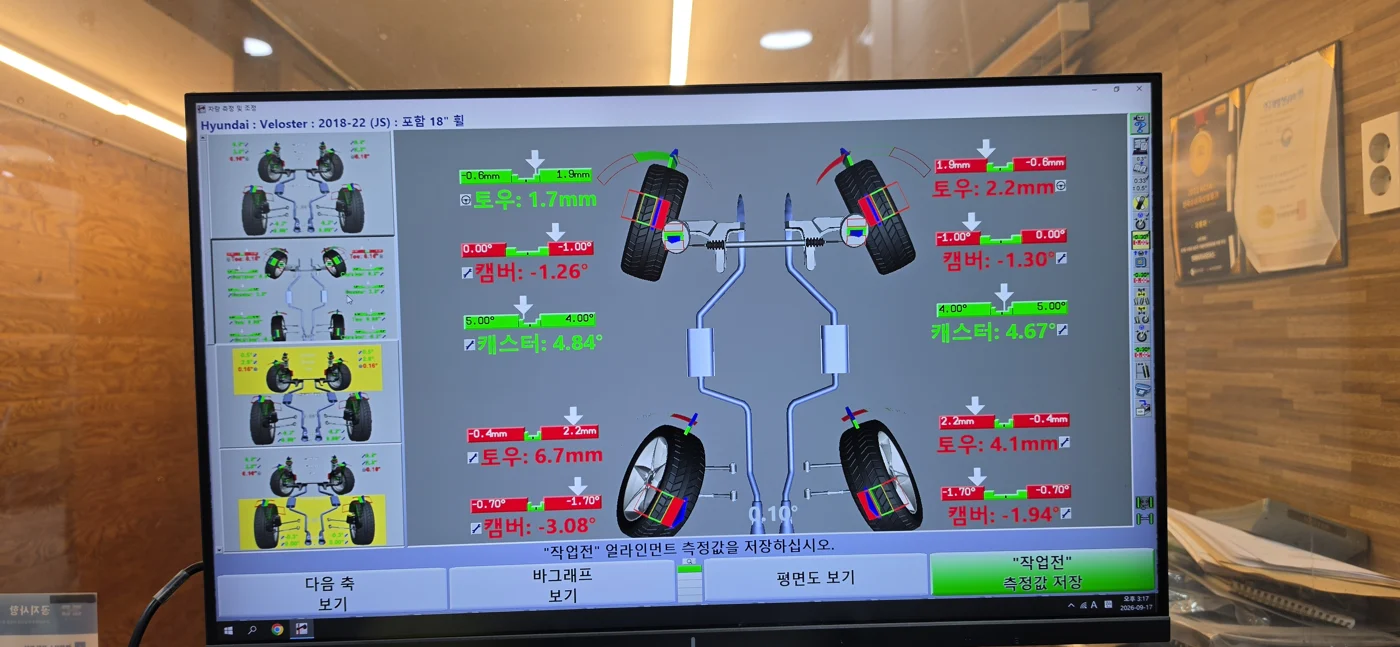
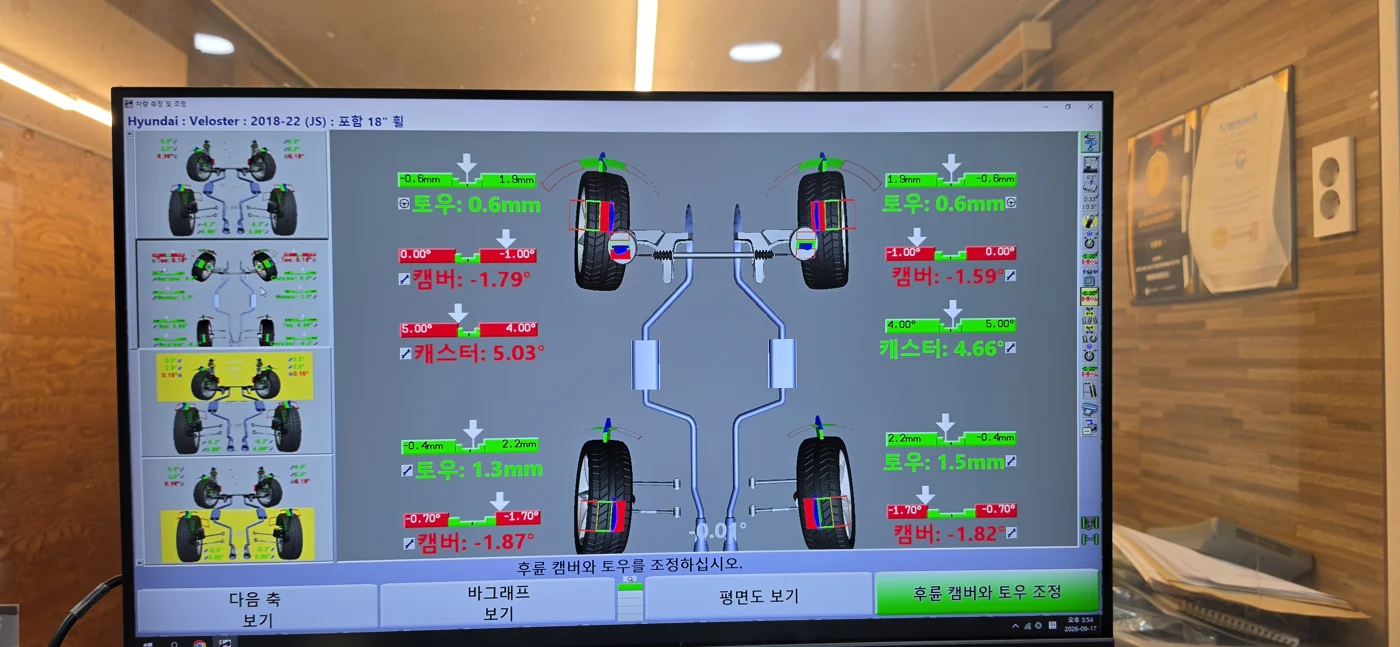
Rear toe initially measured 6.7 mm left and 4.1 mm right. After adjustment it was 1.3 mm and 1.5 mm. The thrust angle changed from 0.10° to -0.01°.
The ride height and wheel configuration differ from stock. We targeted approximately -1.8° rear camber for the current setup. This target was chosen for the current ride height and wheel configuration.
All four toe readings are within the equipment’s stock reference ranges. The four camber readings and front-left caster are outside those ranges. Further front-end setup and suspension travel checks are planned together.
Before
Rear toe 6.7 / 4.1 mm
After
Rear toe 1.3 / 1.5 mm
| Wheel | Toe before (mm) | After (mm) | Camber before (°) | After (°) |
|---|---|---|---|---|
| Front left | 1.7 | 0.6 | -1.26 | -1.79 |
| Front right | 2.2 | 0.6 | -1.3 | -1.59 |
| Rear left | 6.7 | 1.3 | -3.08 | -1.87 |
| Rear right | 4.1 | 1.5 | -1.94 | -1.82 |
04 / NHC MOTORS
RFV measurement and matching tyre to wheel
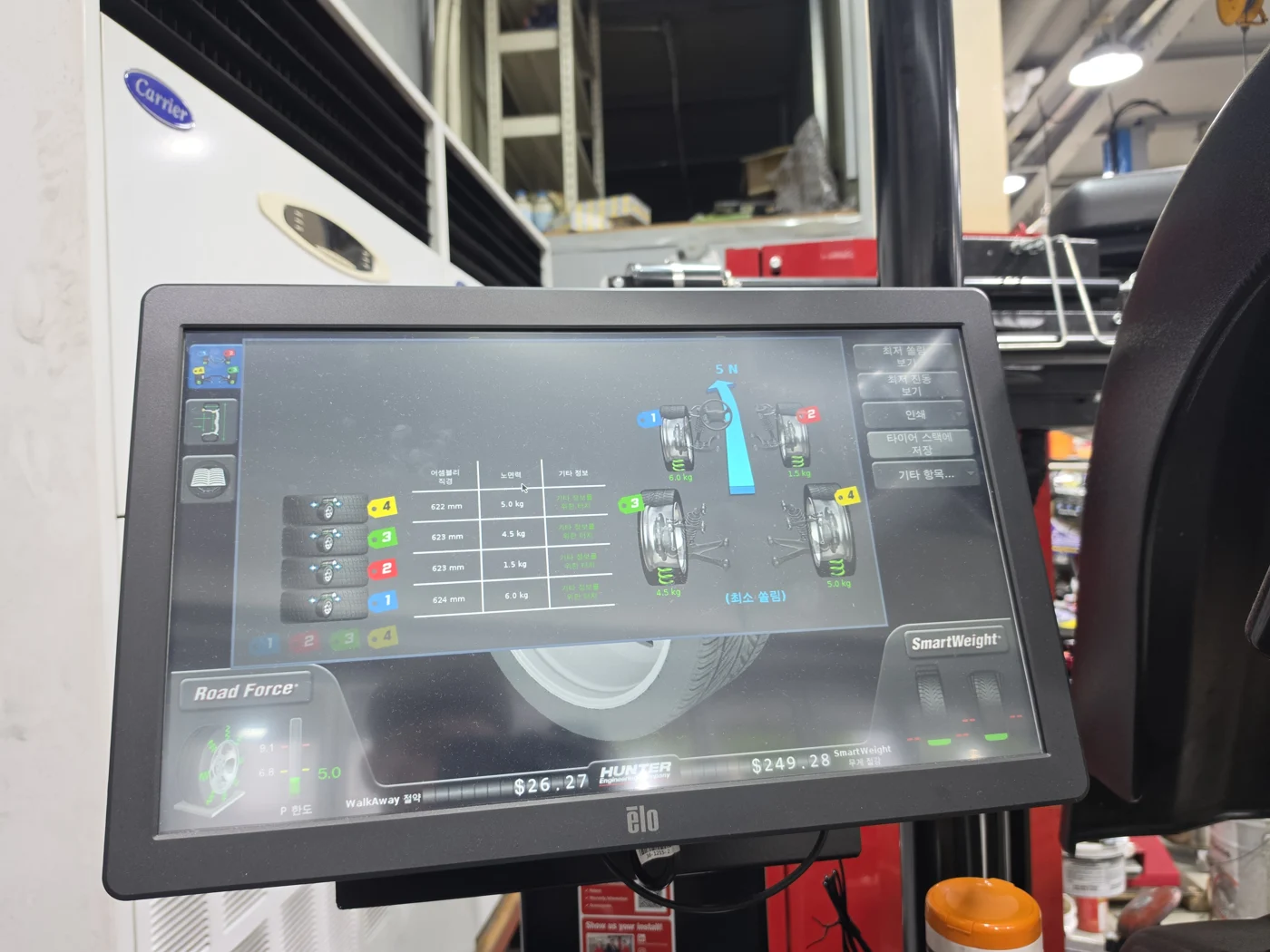
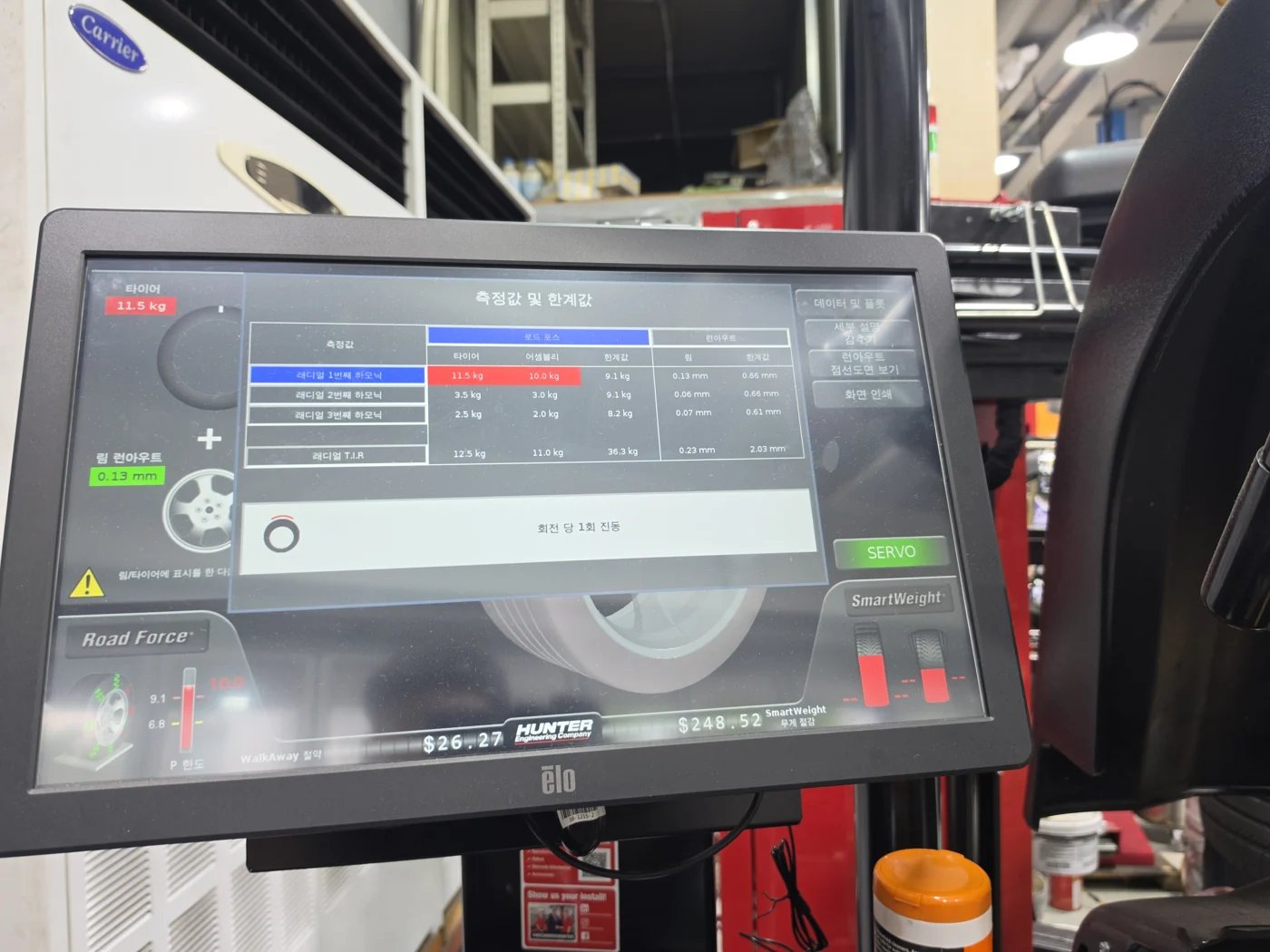
RFV is measured by pressing the assembled tyre and wheel against a roller and rolling it, reading how the load varies through one rotation. It is a different item from mass balancing with weights, so even a balanced wheel can be felt as vibration at certain speeds if its RFV is high.
The last screen recorded RFV of 6.0 kg for tag 1, 1.5 kg for tag 2, 4.5 kg for tag 3 and 5.0 kg for tag 4. We also reviewed the machine’s proposed minimum-pull arrangement.
Matching tyre to wheel position requires unseating the bead and reassembling. This work was done on a Hunter Revolution.
Tyre matching process · Video
Tyre matching process · Video
05 / NHC MOTORS
What was completed and what is still scheduled
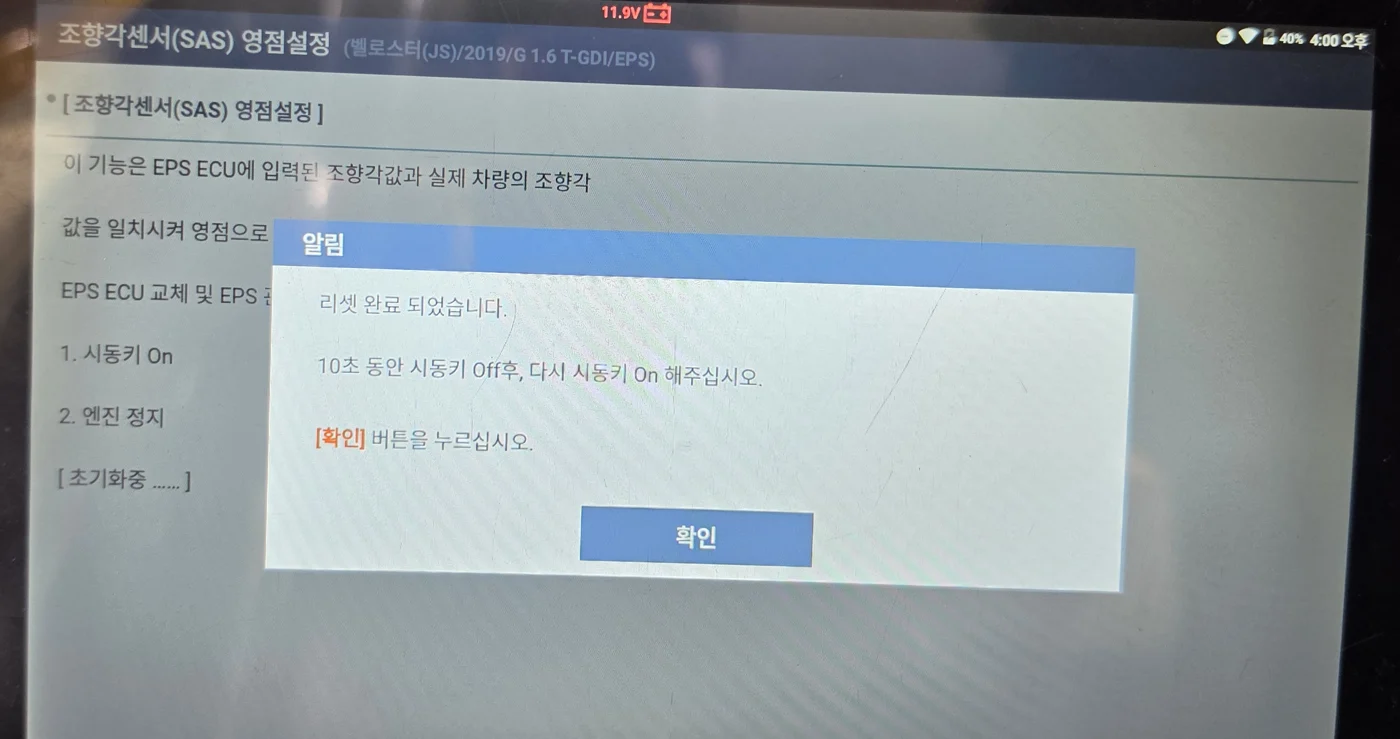
After alignment, we reset the steering-angle sensor with G-scan 3. We then reopened the measurement screen to confirm a zero reading, rather than relying only on the completion message.
The technician explained the bent tie rod to the owner using the recorded video and recommended replacement. It was not replaced during this visit. Tyre pressures were set to 34 psi front and 33 psi rear; the rear tyres had arrived at 31 psi.
We then drove with the owner. The technician noted less road noise and more natural lane-change and cornering responses. The owner also commented on the improvement.
Even now, it has already improved a lot.— Owner, during the post-service drive (translated)
Some front-end movement under acceleration and harsh impacts over uneven surfaces remained. Suspected lack of damper travel during the road test was included in the next inspection plan.
Tie-rod inspection during adjustment · Video
The next stage prioritises everyday comfort
The next stage is about comfortable commuting and predictable everyday driving. Wheel width, offset and tyre characteristics will be selected for that purpose, rather than for a more aggressive driving setup.
We will assess the existing suspension first, including ride height and available bump and rebound travel. Ride-height tightening where needed and tie-rod replacement are also part of the follow-up review. Further road testing will check the changes against the owner’s feedback.
Questions
Is wheel alignment alone enough for a modified car?
Ride height, wheel width, offset and suspension travel need to be considered together. We adjusted toe and RFV and calibrated the steering angle sensor on this visit, then recommended further review of the basic air-suspension setup.
Is the alignment within specification after adjustment?
The car’s ride height and wheel configuration differ from stock, so the setup was tailored to its current configuration. Toe is within the stock reference ranges; camber and front-left caster are outside them. Rear camber was targeted at approximately -1.8°, with further front-end and air-suspension checks planned.
Why can vibration remain after the wheels have been balanced?
Mass balancing with weights and RFV, measured by rolling the assembled wheel against a roller, are two different things. A balanced wheel with large load variation through a rotation can still be felt as vibration at certain speeds. On this car the final readings were 6.0 kg, 1.5 kg, 4.5 kg and 5.0 kg by tag, and it was addressed by unseating the bead and re-matching the tyre to the wheel.
A clear plan for service now and inspection later
We assess the car’s current condition and explain the service priorities and follow-up. The model, mileage and recent service history help us prepare.
We explain the scope of any repairs and the estimate before proceeding with your approval.
Call 031-258-1617Book on NaverBy appointment only · Gwonseon-gu, Suwon
Total inspection scope and booking information (Korean)