NHC MOTORS · SERVICE RECORD
Mercedes-Benz CLS400 Hub Bearing and Bent Wheel Repair with Alignment
On a 2017 CLS400, we replaced both front hub bearings and repaired bends in all four wheels. Wheel and tire load measurement and an alignment brought the toe into line, but the front camber still showed red.
You have had the wheel bearings replaced, the wheels repaired and an alignment done, yet red values remain on the alignment screen. How should you read that? Each of the three jobs corrects something different, and within the alignment, toe and camber have to be looked at separately.
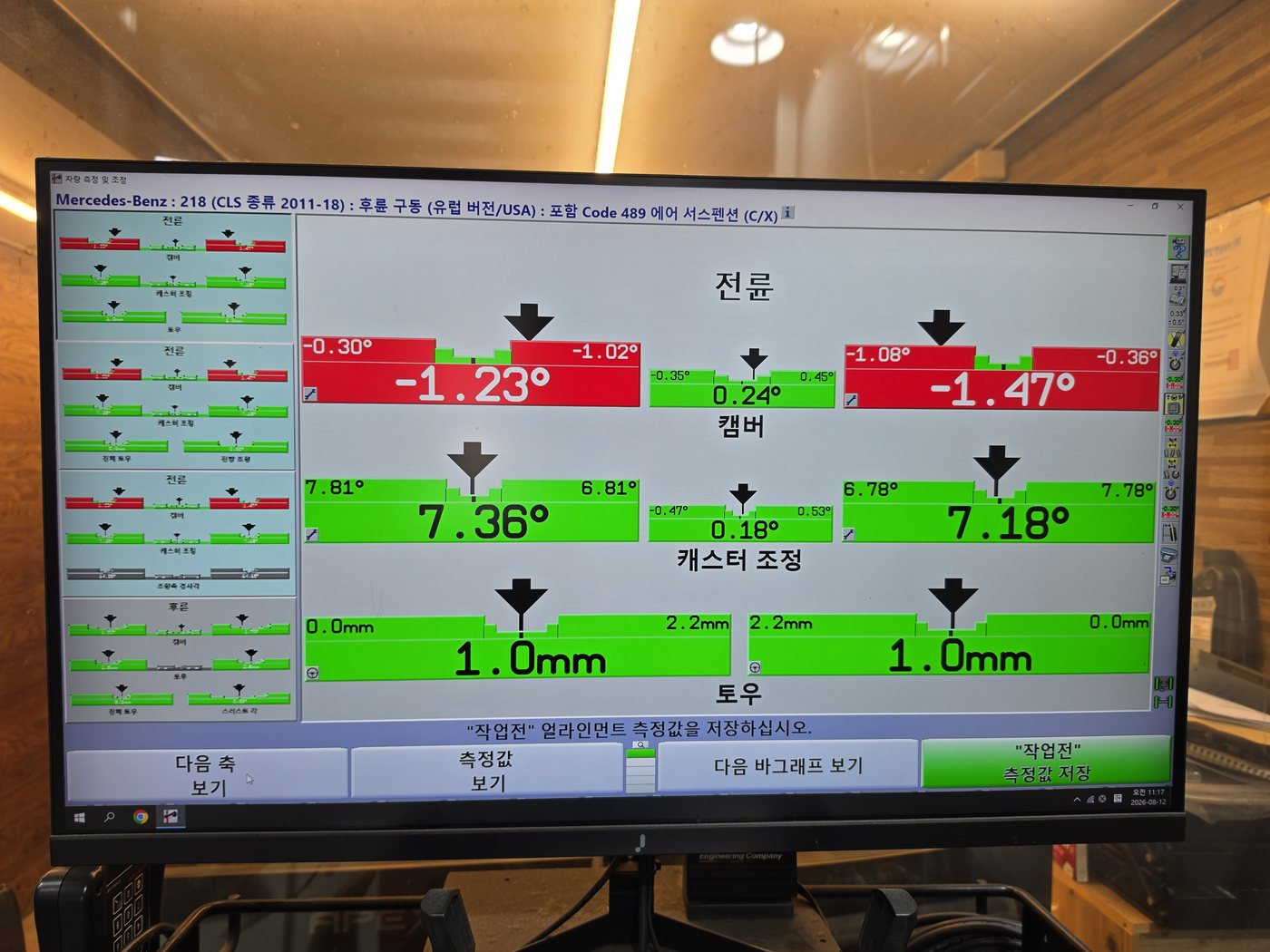
On this 2017 Mercedes-Benz CLS400, we replaced both front hub bearings and repaired bends in all four wheels. Together with wheel and tire load measurement and an alignment, we set the front toe from 4.7 mm on the left and -0.8 mm on the right to 1.0 mm on both sides. Front camber read -1.23° and -1.47° after adjustment and still showed red, so the suspension condition and tire wear need continued monitoring.
01 / NHC MOTORS
Both front hub bearings were replaced with new parts
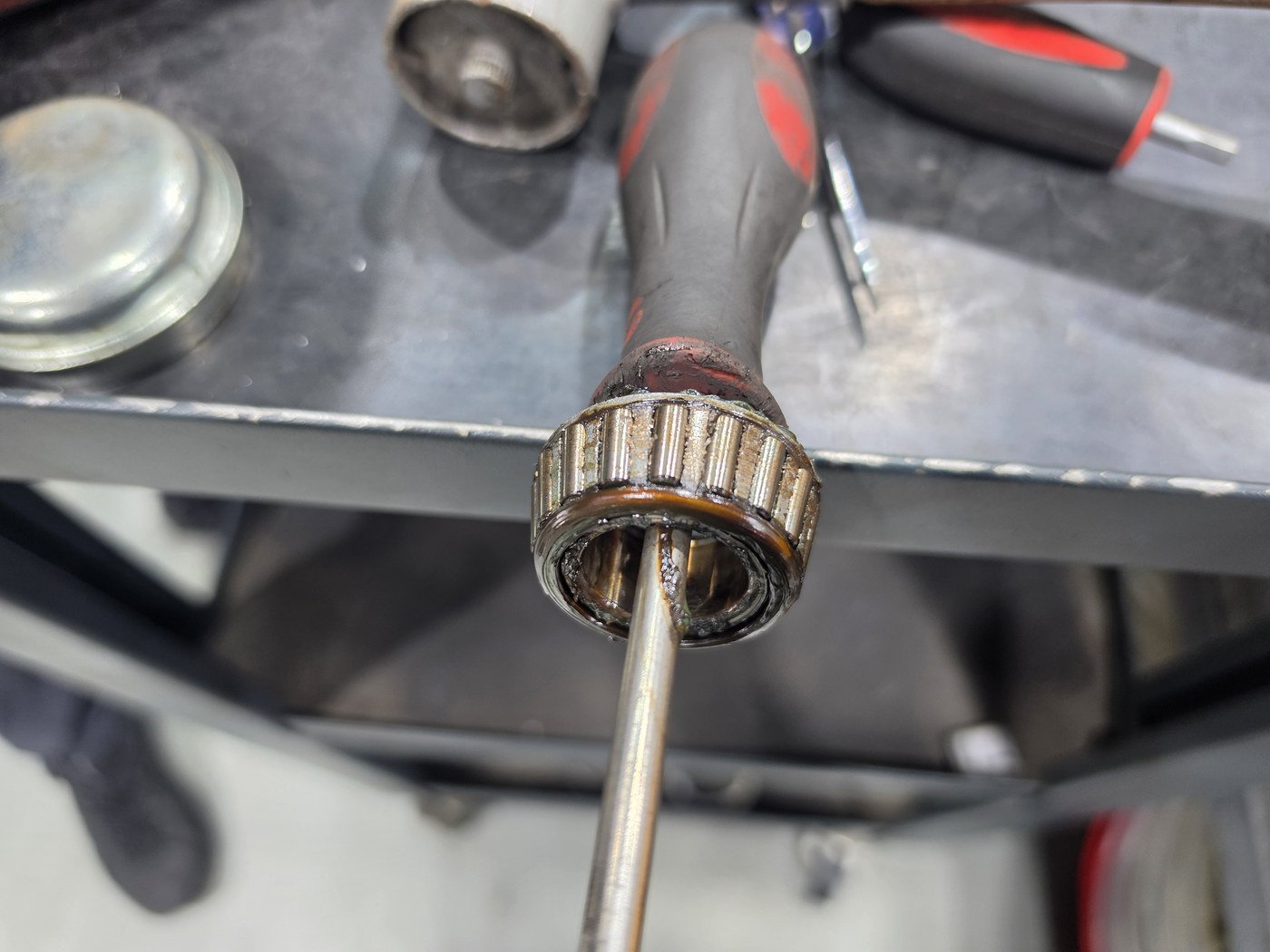
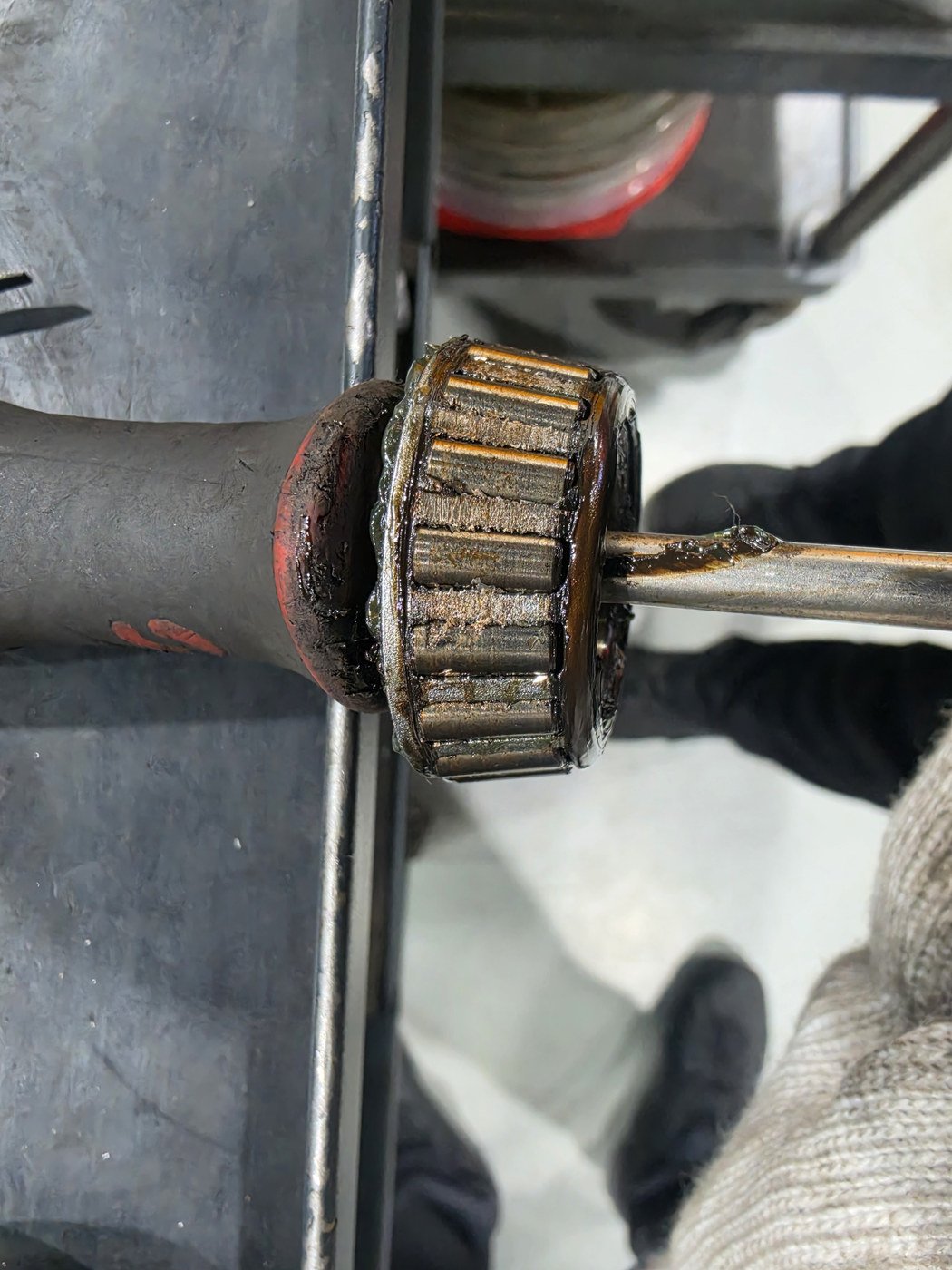
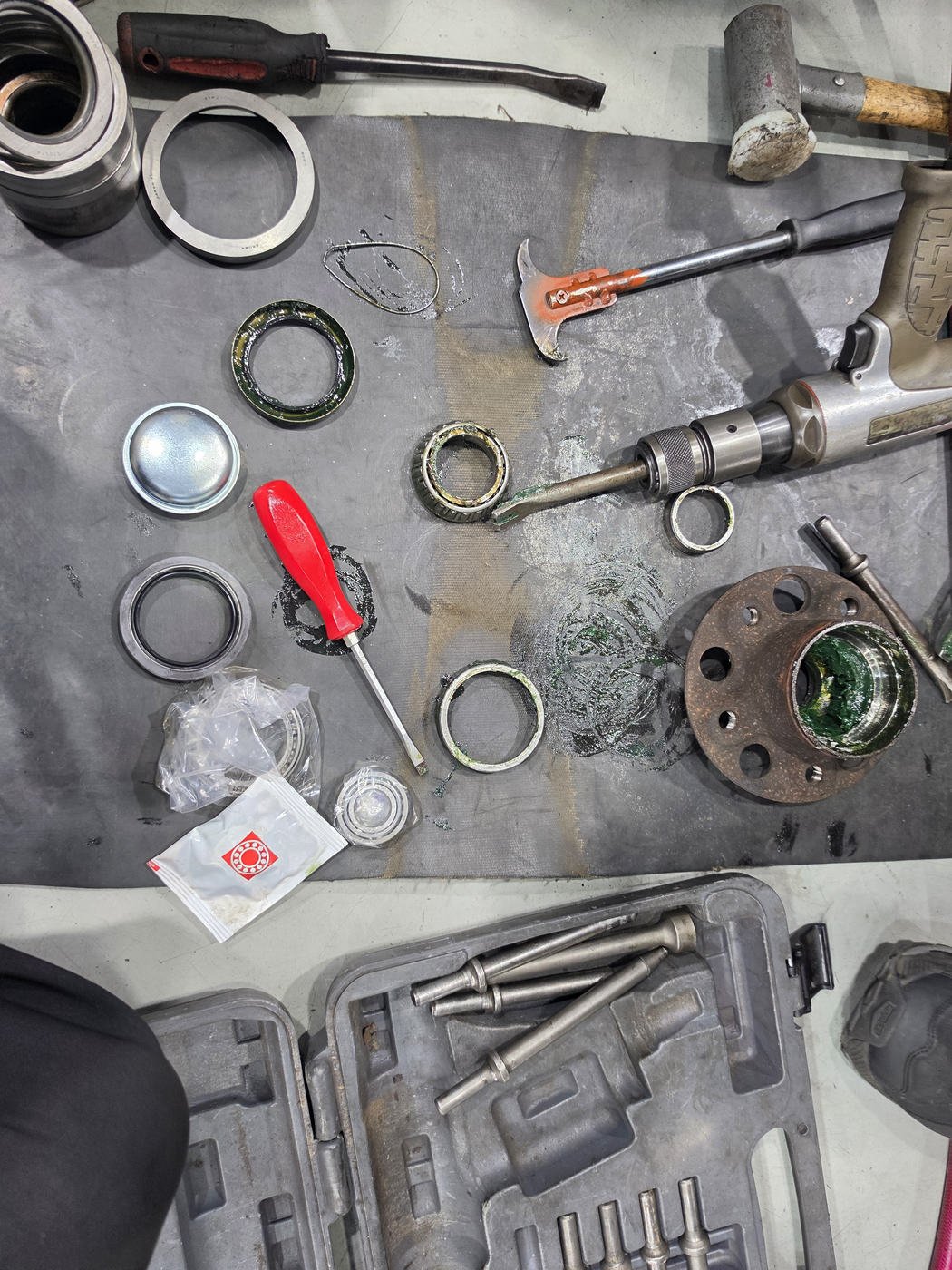
A hub bearing supports the hub so the wheel turns smoothly, while also carrying the car's weight and the sideways forces of cornering. On this CLS400, we removed the old bearings from both front hubs and fitted new ones, applying lubrication during assembly.
Worn bearings commonly show up as a humming noise that grows with speed, or a noise that changes when turning one way. Tire noise can sound similar. Wheel and tire vibration is a separate concern, so we measured the wheels and tires on equipment separately from the bearing replacement.
During the same visit, the engine oil was changed to PETRONAS 5000E 5W-40 and the oil filter was replaced with a new one.
02 / NHC MOTORS
All four wheels were straightened and the wheels and tires load-measured
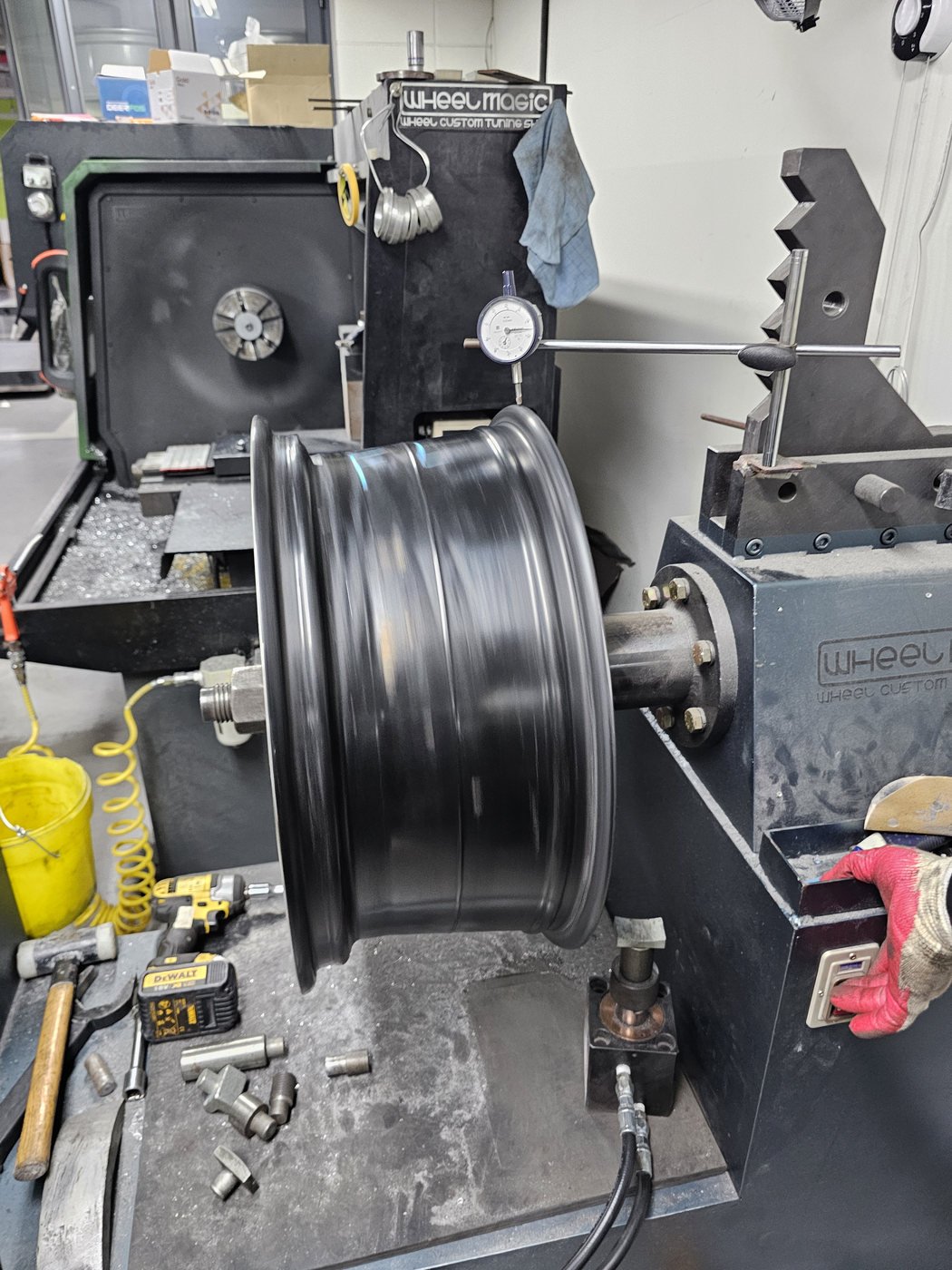
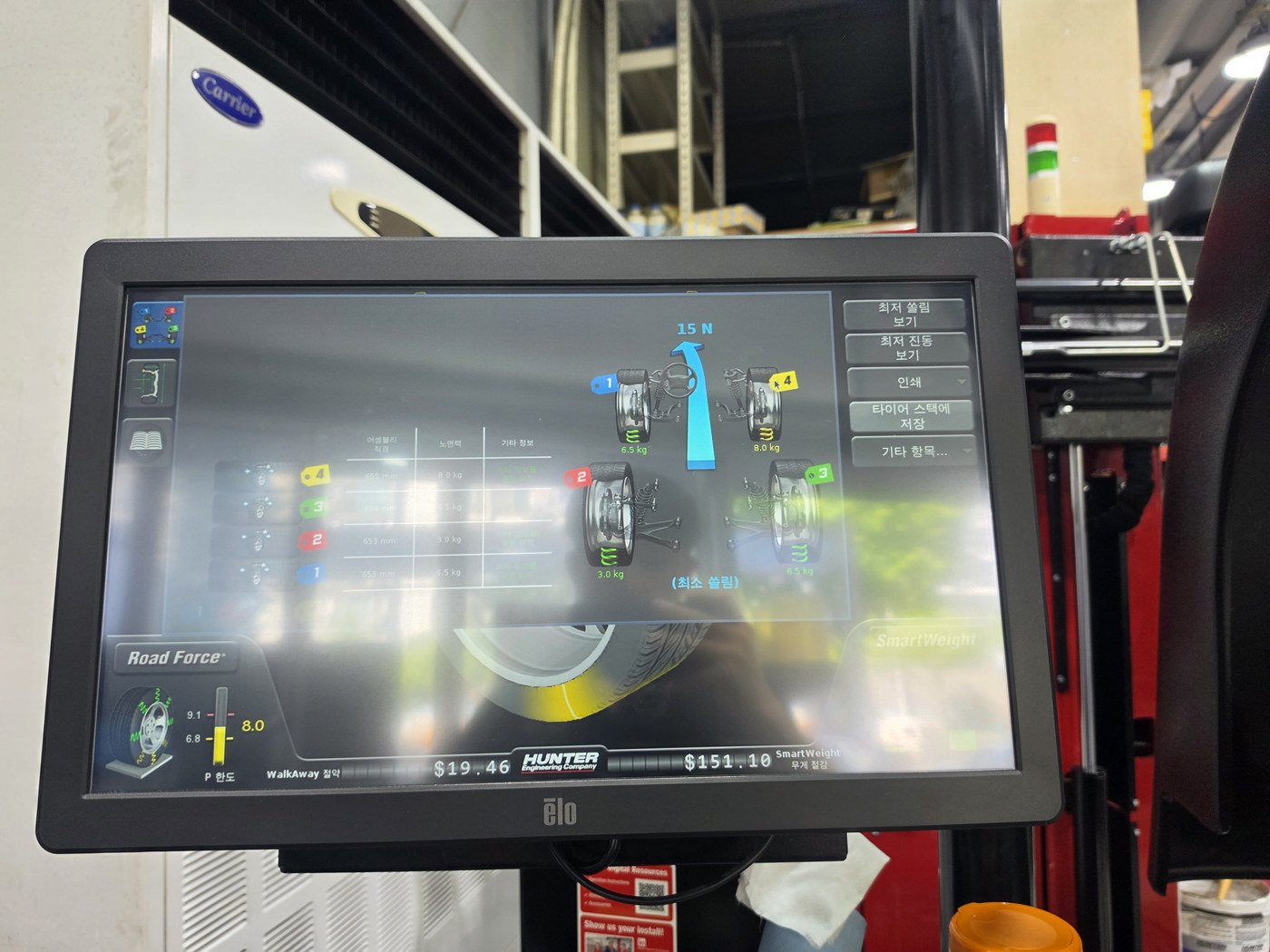
For all four wheels, we removed the tires, mounted each wheel on the equipment and repaired the bends (deformation). If a rim is bent, even after it is balanced with weights, the force changes at the bent section on every revolution, which can lead to vibration.
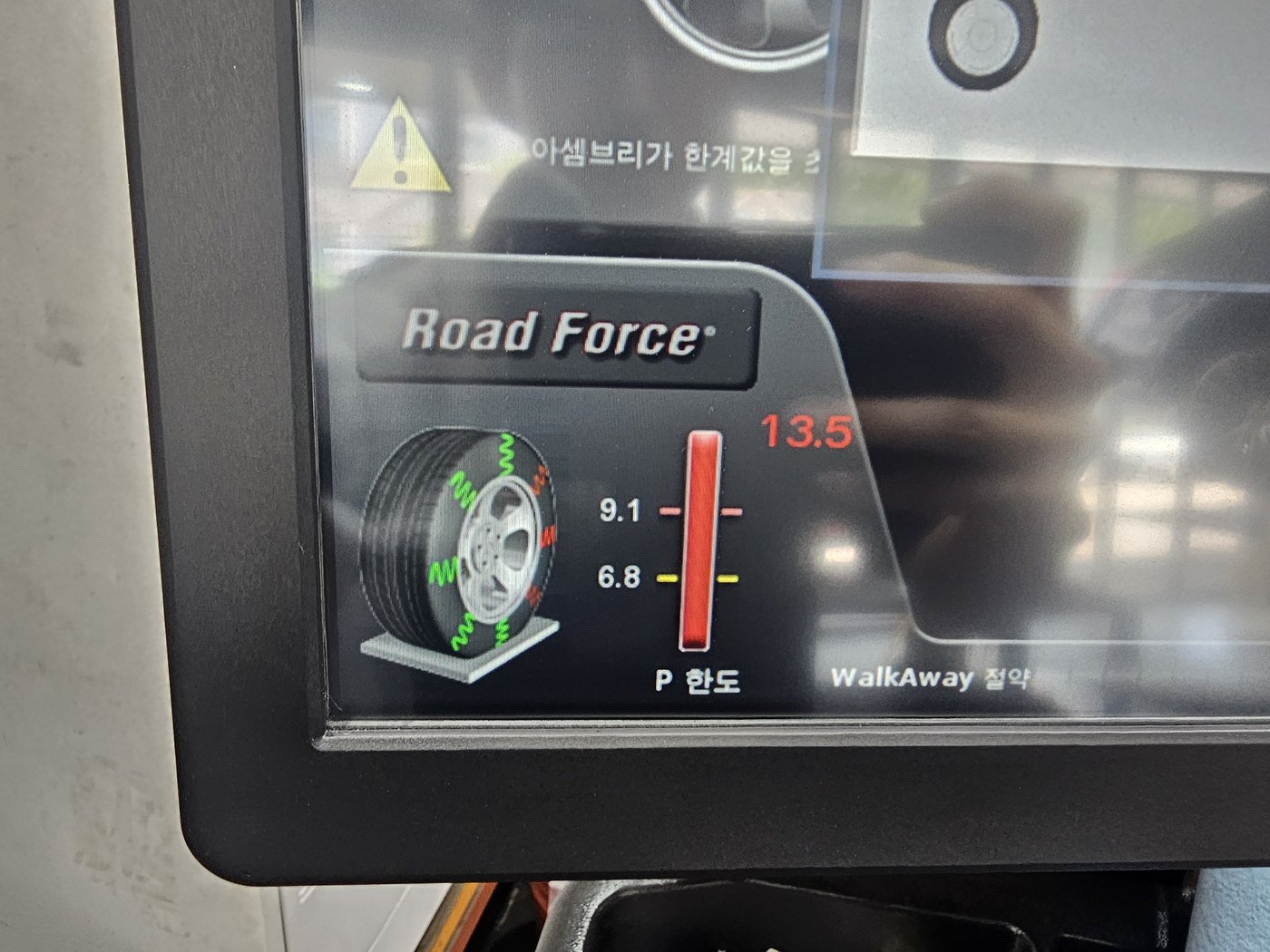
The wheels and tires were measured position by position on the balancer. Road force (RFV) measurement presses a roller against the tire to load it as if driving, and checks how much the force the tire pushes back with varies over one revolution. Weight balance, wheel shape and load variation each point to different causes, so one being in order does not mean the others are.
Tire pressures were set to 40 psi front and rear. Pressure changes how the tire meets the road and how it carries load, so we set it together with the wheel and tire work.
03 / NHC MOTORS
Front toe was set from 4.7 and -0.8 mm to 1.0 mm on both sides
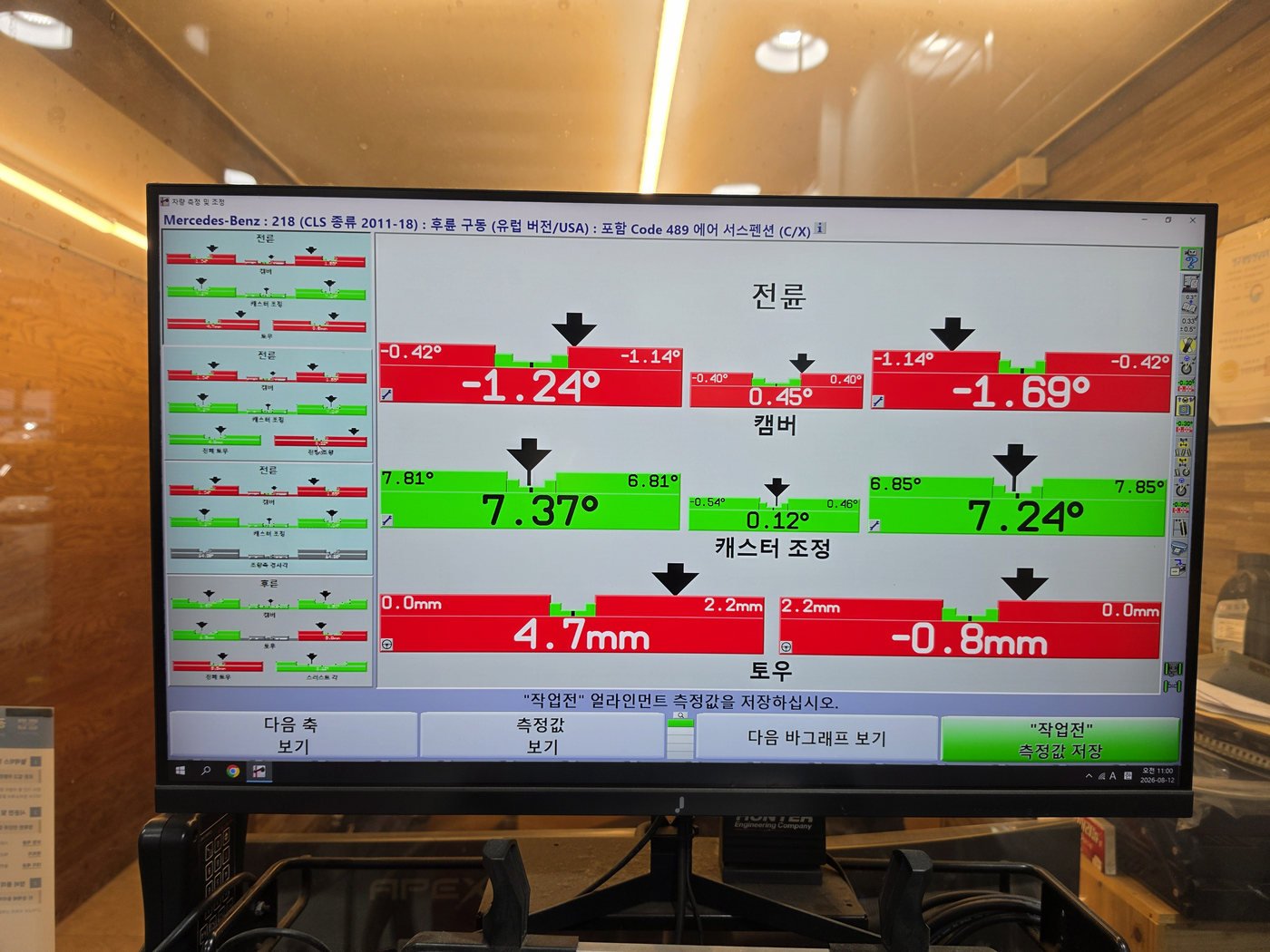
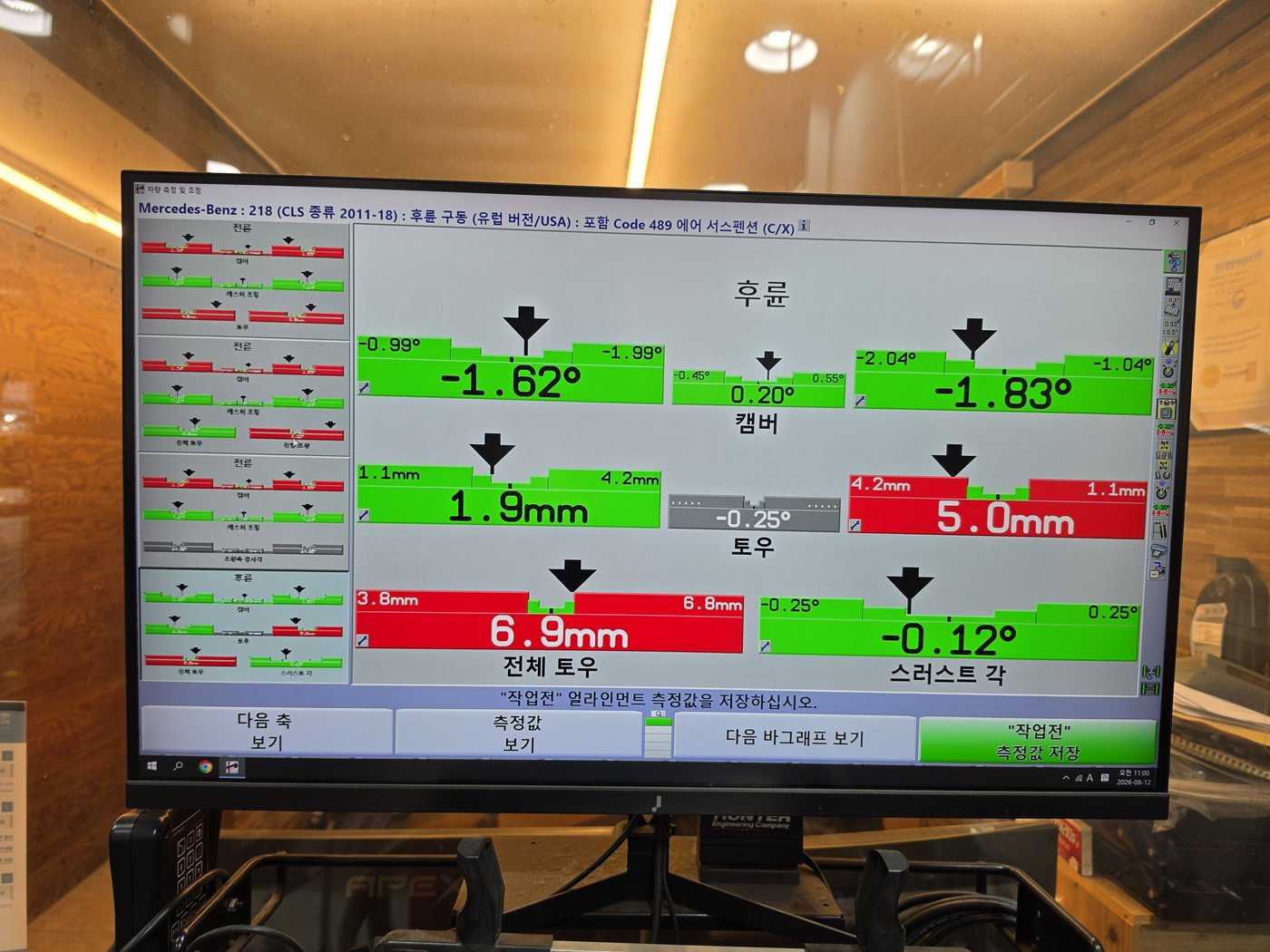
Before adjustment, front toe was 4.7 mm left and -0.8 mm right, a large left-right difference. Rear toe was 1.9 mm left and 5.0 mm right, with the right rear outside the standard range. Toe is how far the fronts of the wheels point inward or outward when seen from above; if left and right differ, the steering wheel can sit off center or the tires can scrub sideways and wear.
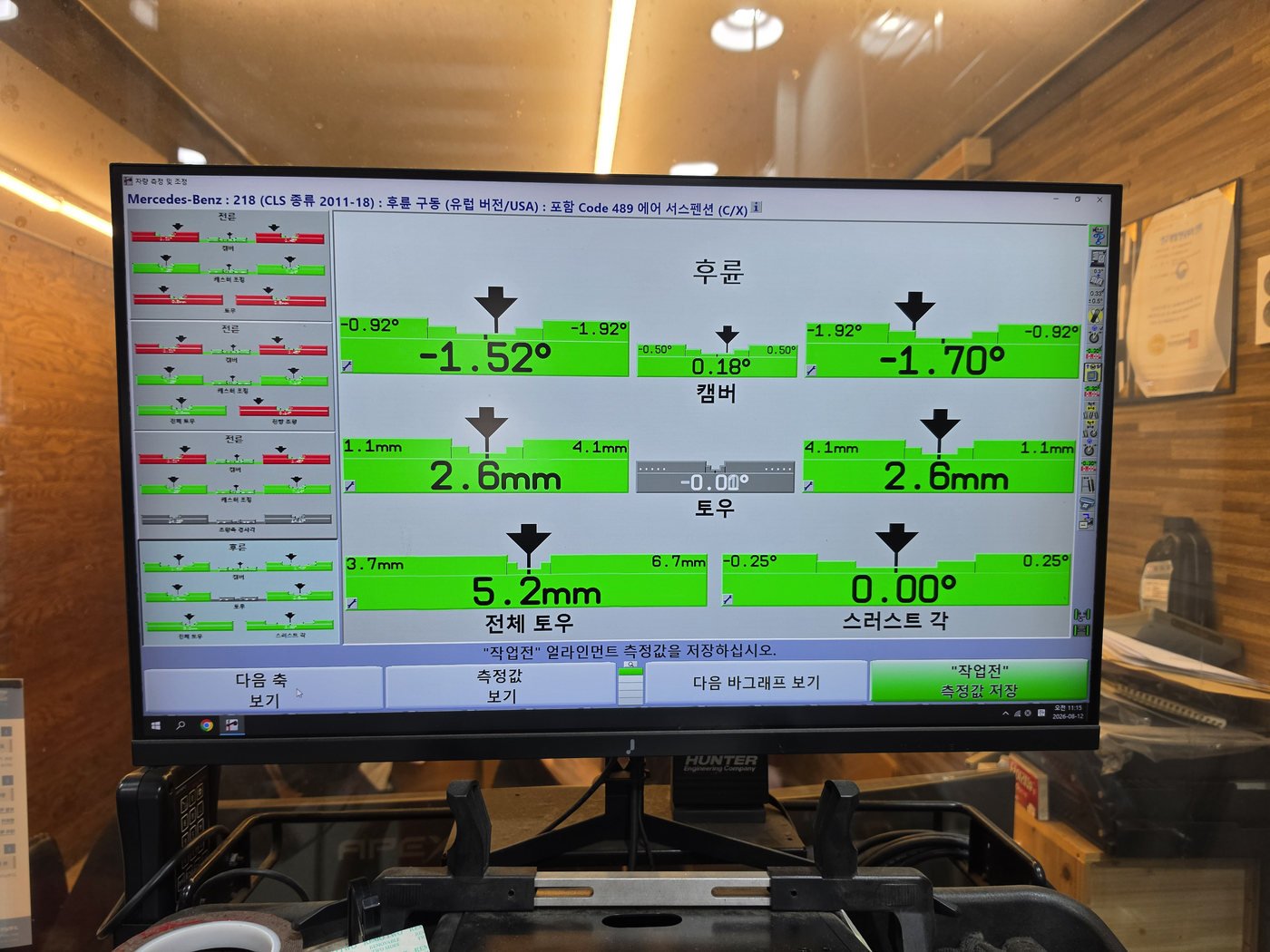
After adjustment, front toe was 1.0 mm on both sides and rear toe 2.6 mm on both sides, and the rear thrust angle read 0.00°. The thrust angle is the angle between the rear wheels' direction of travel and the vehicle centerline; 0.00° means that direction matches the centerline. The rear has to be pointing straight before the front wheels and the steering center can be set to it.
04 / NHC MOTORS
The front camber red reading remained, separate from toe
Front camber read -1.24° and -1.69° before adjustment and -1.23° and -1.47° after, and still showed red once the toe was set. Camber is the angle at which the top of the wheel leans inward or outward when seen from the front.
Toe is adjusted by tie-rod length, but camber has only a narrow adjustment range depending on the vehicle's design, and it is affected by the condition of suspension components. Correct toe does not mean camber is solved as well. For the remaining front camber, we will compare the available adjustment range, the condition of the suspension components and wear on the inner and outer edges of the tires to decide whether further work is needed. If one shoulder of a tire starts wearing first or the steering feel changes, this is the first item we will recheck.
CLS400 toe at all four wheels, before → after
Before adjustment
After adjustment
Wheel positions from above and measured toe values (mm)
| Wheel | Before | After |
|---|---|---|
| Front left | 4.7 mm | 1.0 mm |
| Front right | -0.8 mm | 1.0 mm |
| Rear left | 1.9 mm | 2.6 mm |
| Rear right | 5.0 mm | 2.6 mm |
Front L/R gap5.5 → 0.0 mm
Rear L/R gap3.1 → 0.0 mm
Frequently asked questions
What is the difference between replacing a wheel bearing and balancing a wheel?
A hub bearing is the part that supports the rotating part of the wheel; balancing corrects weight imbalance in the wheel and tire as they turn. On this CLS400, replacing both front hub bearings and measuring the wheels and tires were done as separate jobs.
If the bent wheels were repaired, why is road force measured separately?
Straightening a bent wheel and the force variation a tire produces under load are different problems. So, separately from the wheel repair, we load the wheel and tire with a roller and measure their condition.
What happens if red values remain after an alignment?
First we look at which item remains. On this car, the front toe was set to 1.0 mm on both sides, but front camber still showed red at -1.23° and -1.47°. For camber, we compare the adjustment range, the condition of the suspension components and tire wear to decide the next step.
Related reading
- Service case
CLS63 AMG: vibration through the steering wheel and seat at speedSee the related service process and inspection guidance.
- Guide
Wheel alignment inspection (Korean guide)See the related service process and inspection guidance.
- NHC video
Wheel and tyre vibration inspection ▶ Watch on YouTube
Related NHC video featuring another vehicle.
If camber is still out after an alignment, we check the suspension and tire wear together
If camber is still out after the wheel bearings and wheels have been dealt with, we will check, separately from the toe settings, play and bushing condition in the suspension components that affect camber, the available adjustment range, and wear on the inner and outer edges of the tires. If there is a particular speed or situation in which you notice noise or vibration, please tell us when you book. We will check the wheel and tire measurements and the alignment under those conditions.
We explain the work and estimate before proceeding with your consent.
Call for service adviceBook via Naver031-258-1617 · NHC Motors, Suwon · By appointment
Published 2026-09-27