Car Warning Lights — Read the Color First
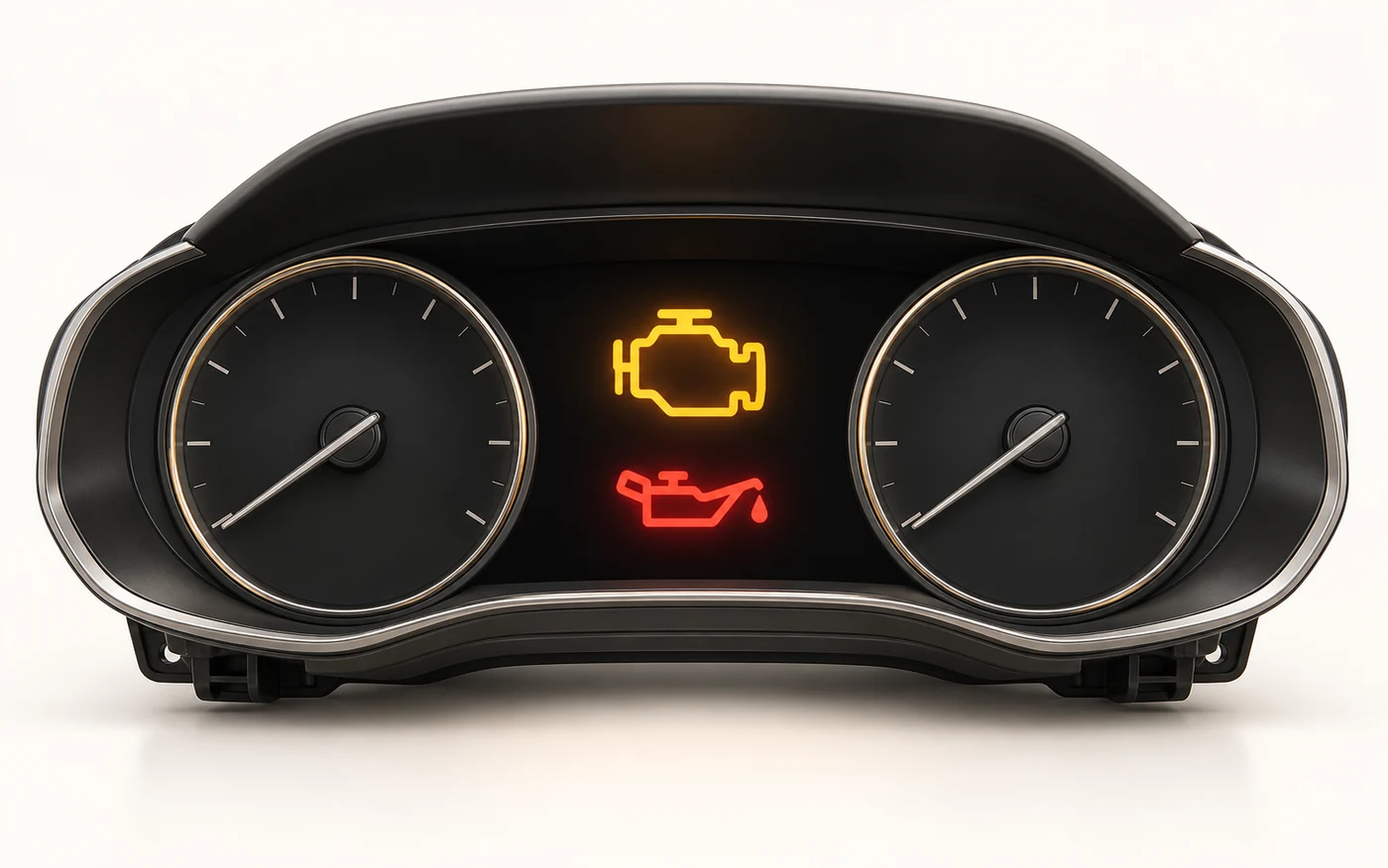
A warning light makes most people nervous. Some feel that sinking "here comes an expensive repair."
But it is actually a good sign. Your car is telling you before a big failure happens.
Once you know the color, you can tell how urgent it is. Let's go through it in order.
Contents
A light isn't something to fear
Feeling nervous is natural. So is worrying about the cost.
But shift your view for a moment. This is a signal that warns you before a big failure.
That's why drivers abroad often watch these lights closely, and even welcome them — they got a chance to prevent something. Modern cars flag small issues early, while a part is still a cheap fix.
Color comes first
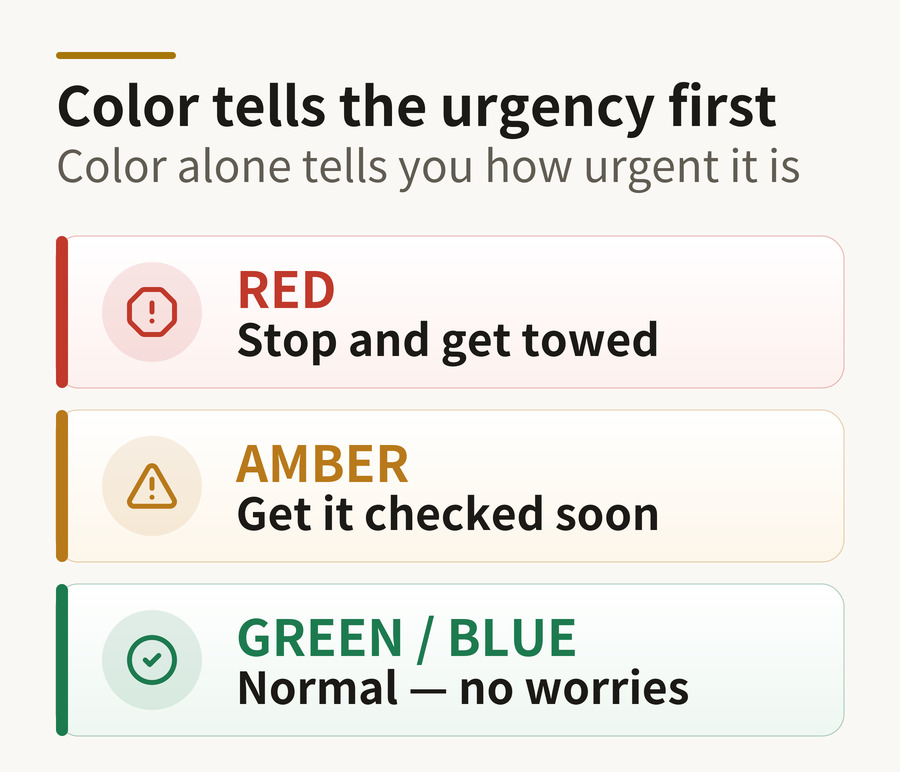
There are dozens of shapes, but only three colors.
Red is danger. The car is not safe to drive, so stop and get it towed.
Amber is caution. Not an emergency, but have it checked soon.
Green and blue are normal — a feature is simply on, not a fault.
Just like a traffic light: red stops, amber warns, green goes. That one rule gets you halfway there.
Red — stop and call
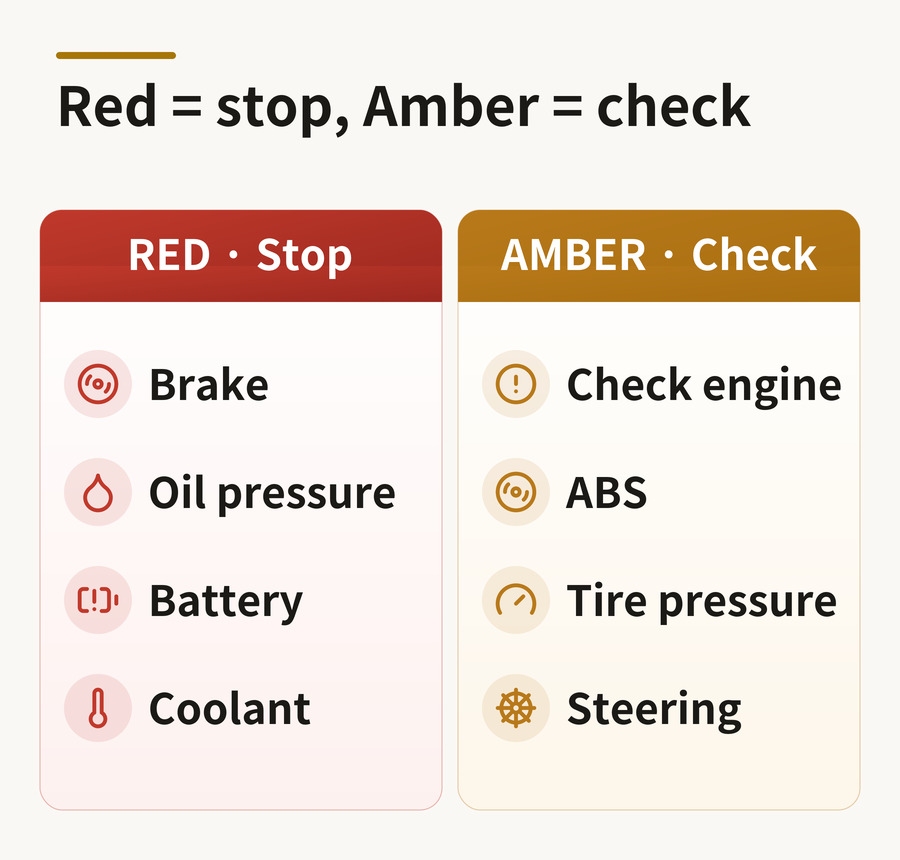
The red lights are the ones tied straight to safety.
The brake light, if it stays on after releasing the parking brake, is a braking-system signal. If it comes on while driving, don't brake hard — slow with engine braking and stop gently.
The oil pressure light means low pressure. Keep driving and the engine gets hurt, so stopping comes first.
The charge light (battery shape) and the coolant temperature light both mean you should not keep going.
The common thread: if a red light is on and you feel the car struggling, don't push it — pull over.
Towing is the cheaper ending
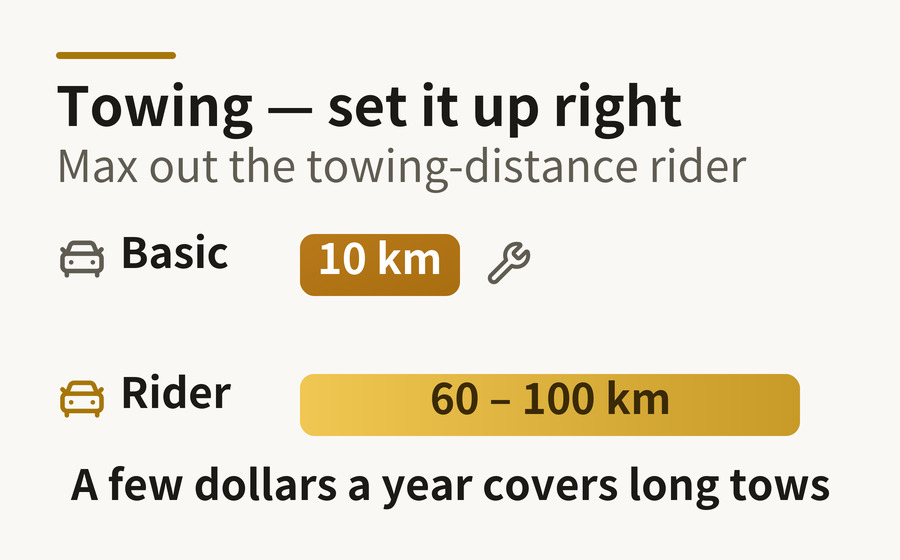
Many people hesitate over towing. But in Korea it is easy to use.
Most car insurance roadside plans include towing, usually 5 to 6 times a year.
One thing to set up: the free distance is often around 10 km, so max out the towing-distance rider when you sign up.
It costs little per year. Without it, a long tow gets expensive. Limits vary by insurer, so check your own policy once.
Stopping and calling is almost always cheaper than squeezing out a few more kilometers. We often see a hose that would have been a small job turn into an engine repair.
Amber — get it checked
Amber lights aren't a stop-now situation. But don't put them off — get them checked.
The check-engine light is an engine, fuel, or emissions signal. Interestingly, an unclosed fuel cap can trigger it — just retighten it. Otherwise, and especially if it flashes, look at it before the exhaust system is harmed.
The ABS light means the anti-lock function has an issue. Normal braking still works, but it can weaken during hard braking on a wet road.
The tire (TPMS) light means low pressure. It comes on so often now that we cover it below.
The actual dashboard symbols
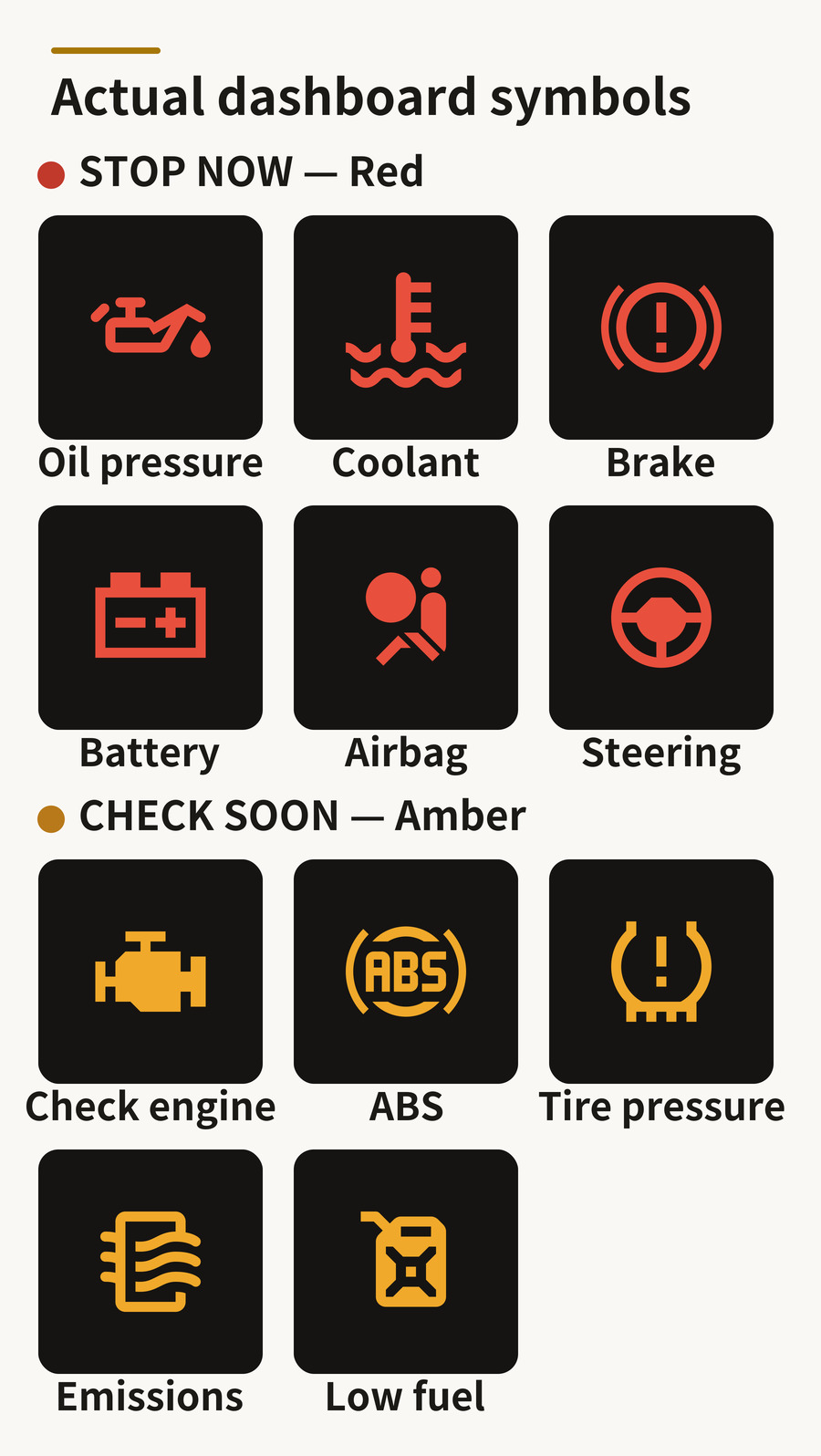
Shapes stick better than words. Here are the symbols you actually see, in order of urgency.
Five reds to stop for: oil pressure, coolant overheat, brake, battery charge, airbag. They tie straight to safety and the engine, so don't push through them.
Oil pressure and coolant overheat are the most urgent — driving on either hurts the engine. The red brake light is a braking signal, so stop gently rather than hard.
Diesel cars have two more on the cluster: the glow-plug light (brief, before start) and the emissions (DPF) light. The DPF light means soot has built up; a 20–30 minute run on an open road often burns it off and clears it. If it keeps returning, it needs checking.
A scan doesn't erase a fault
One thing worth clearing up: the myth about the scan and light reset we do in the shop.
A scan reads the log stored in the car — it doesn't remove the fault. Clearing a light erases that record, not the problem.
And that record may be a current fault or the trace of a past one. Replace a part off a single scan and you might swap a good part or miss the real cause.
So we do the work twice if needed: clear it, drive again, and double-check whether the same code returns. That's how we get to the cause accurately.
A fault code is a starting point that shows the system, not the answer that names the part. The real diagnosis is checking the actual part and symptom after reading the code.
At a brand or import specialist center this diagnosis alone often runs well over 100,000 KRW. Ours is 40,000 KRW (44,000 KRW incl. VAT) — not a discount, just what it's worth.
Right diagnosis lowers cost
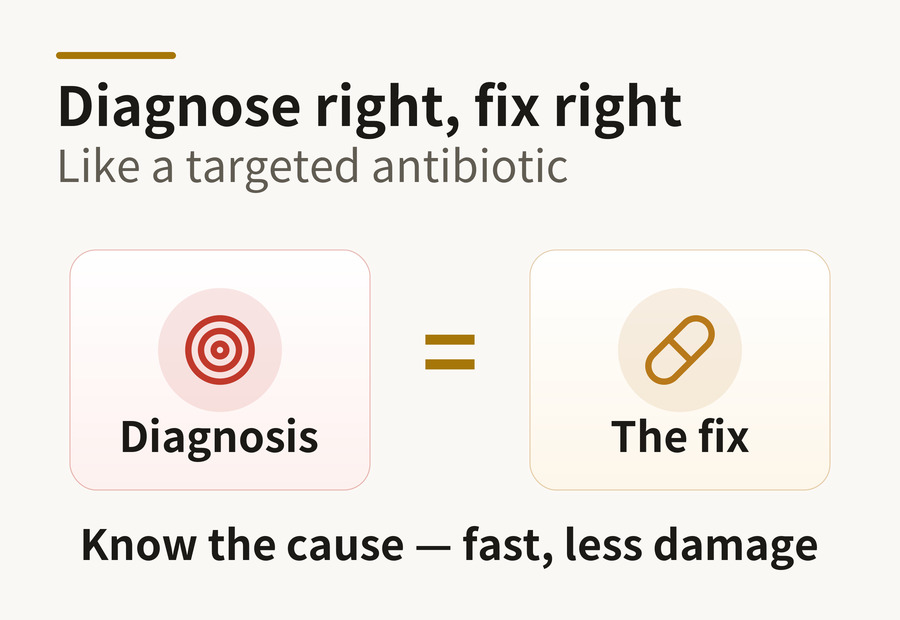
When doctors run a culture and use the antibiotic that matches, it works faster with less strain on the body.
Cars are the same. Pin the cause of a light and you fix only that part — no swapping good parts, no symptom that comes back.
In the end, an accurate diagnosis is what lowers your running cost. Guessing and replacing things is the expensive route.
Ignore it and it spreads
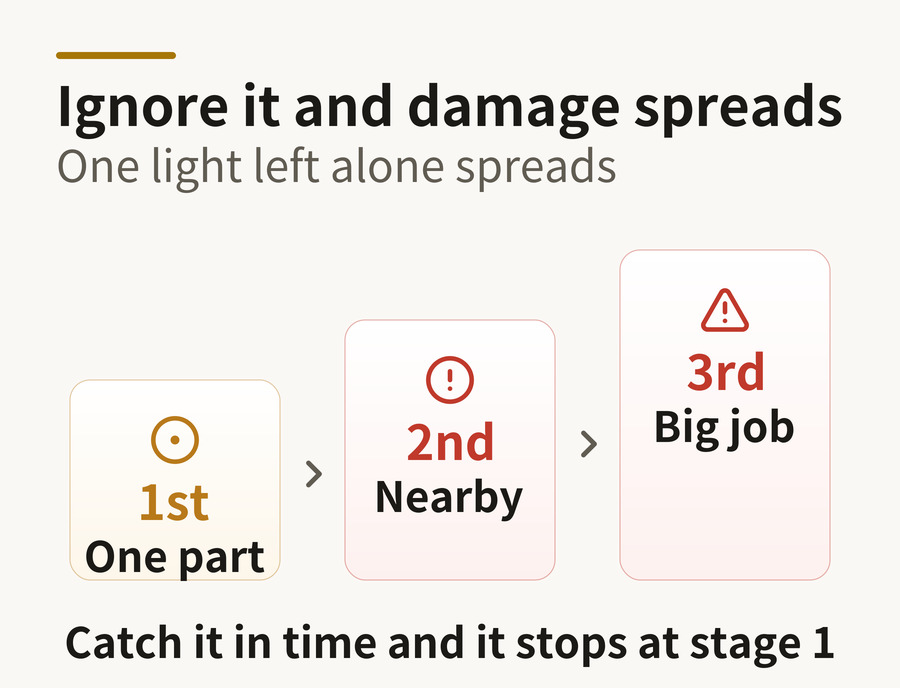
A warning light is a caution. Ignore it and keep driving, and that one problem often drags nearby parts down with it.
What starts as a single part spreads to a second and third, becoming a big repair. It's the saddest case we see in the shop.
So just checking the record and inspecting in time saves a lot of money.
The smartest approach
How you respond depends on the situation.
If it's a new car under warranty, that service was already paid for when you bought the car. Ask for it and get the check or replacement covered.
If the warranty has passed, look at whether the repair might do the car more harm than good, and maintain only what's needed, sensibly.
The common part is one thing: read the light and diagnose exactly what the fault is — that's what cuts your running cost the most.
A fault code does not identify a part to replace on its own
The affected system, symptoms and operating conditions need to be considered together. Routine servicing can also reveal issues before a customer reports a warning.
- BMW M5 — power-management codes and parked power use
Codes 030E08 and 030E06 prompted advice about possible discharge associated with the original dashcam. They do not establish the dashcam as the confirmed cause or mean the battery was replaced.
- BMW 320d GT — coolant checks during an oil-service visit
An empty coolant reservoir and nearby traces led to a borescope inspection. Further checks were advised to determine whether leakage was still active.
FAQ
Do I always have to go straight to a shop when a light comes on
Judge by color. Red means the car is not safe to drive, so stop and get it towed. Amber is not an emergency but means have it checked soon. Green and blue simply mean a feature is on, so no action is needed.
It's a red light — can I drive just a little further
We don't recommend it. Red lights often mean oil pressure, overheating, or brakes — all tied to safety. A hose that would have been a small job can become an engine repair after a few more minutes. In Korea insurance towing is easy, so it is better to stop and call.
Does clearing a light fix the fault
No. A scan and a light reset only read and erase the log stored in the car. That entry may be a current fault or the record of a past one. So we clear it, drive again, and double-check whether the same code returns before we act on the cause.
Does a scan tell you exactly what's wrong
A fault code is a starting point that shows which system reported an issue. The code itself often does not name the failed part. We check the actual part after reading the code, and if needed reproduce the symptom on a road test to narrow the cause.
My tire (TPMS) light keeps coming on
Modern cars have mandatory TPMS, so even a small pressure drop triggers the light, especially in cold weather. Setting pressure to spec usually clears it; if it stays on, the sensor or a slow leak needs checking.
The check-engine light is on but the car feels fine
A loose fuel cap can trigger it — just retighten it. Otherwise it can be an engine, fuel, or emissions signal, and if it is flashing, have it checked before the exhaust system is damaged.
I'm worried about towing costs
Most car insurance roadside plans include towing, usually 5 to 6 times a year. The free distance is often around 10 km, so max out the towing-distance rider when you sign up. It costs little per year, and without it a long tow gets expensive. Limits vary by insurer, so check your policy.
Can I get warning-light diagnosis in Suwon, Korea
Yes. NHC Motors in Gwonseon-gu, Suwon reads fault codes by scan (40,000 KRW, 44,000 KRW incl. VAT). When a code doesn't pinpoint the cause, we narrow it with a road test and a physical parts check, and a Total Inspection covers the car system by system. Appointment only.
Worried about the coolant light
What coolant does, how to react to the warning, and how to manage it — heat management decides engine life.
Read the Coolant Guide →For battery warnings and repeat flat batteries, see the Korean battery guide — why a verdict needs numbers, and the risk of a swap without registration/coding (English version coming).
Pin the cause first
In Suwon we read fault codes by scan, and when a code doesn't pinpoint the cause we narrow it with a road test and a physical parts check. NHC Motors is at 524 Maesong-gosaek-ro, Gwonseon-gu, Suwon, by appointment only.
Call +82-31-258-1617 Book on NaverNHC Motors has serviced import and domestic cars in Gwonseon-gu, Suwon for nearly 30 years. Its wheel-alignment and Total Inspection technologies are registered as two Korean patents (No. 10-2552759, No. 10-2646528), with two USPTO applications and two PCT international applications in progress. It holds Venture Business certification (Innovation Growth, first certified 2023, recertified 2026) and is registered in the U.S. federal SAM.gov system. It operates a Hunter HawkEye 3D alignment system.