NHC MOTORS / Maintenance Cases / BMW M5
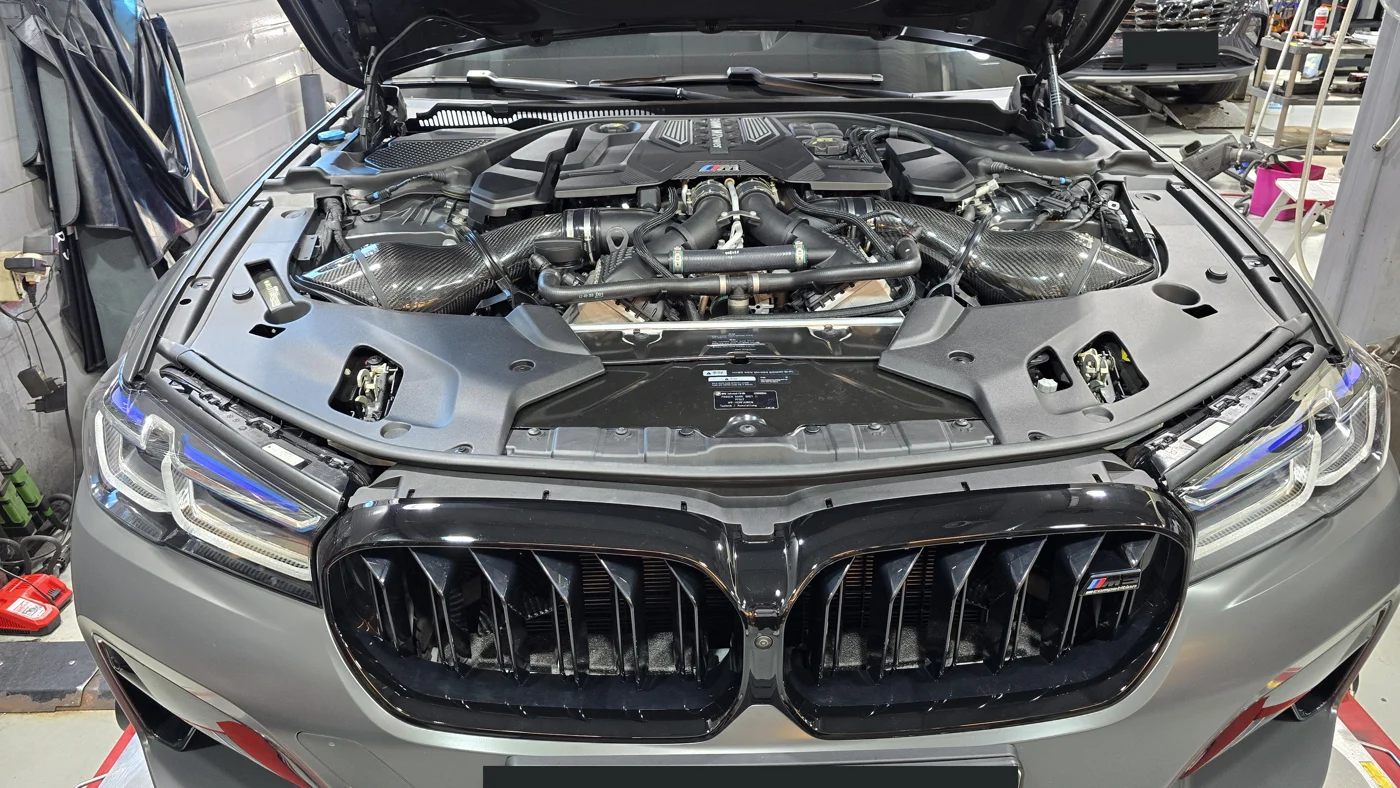
BMW M5 F90 · 2020 · annual service 21,503 km
BMW M5, annual service and
a return visit after wheel repair
At this year’s annual service, this M5 showed 21,503 km. We serviced the engine and driveline fluids and found a wheel condition that needed the attention of the shop that fitted the wheel.
After wheel repair, we measured road force and lateral force and adjusted the custom alignment for the current wheels and tires. The technician felt better straight-line stability after adjustment. One rear tire remains scheduled for a recheck after driving.
In This Article
Yearly service based on condition and history
This is a 2020 BMW M5 F90, serviced with us each year since 2022. It showed 21,503 km at this year’s annual service, 1,314 km more than the previous record.
We check condition and service history to decide which work is needed. At the initial visit this year, we serviced the engine and driveline fluids and inspected the replaced wheels. The car later returned after wheel repair for a road force recheck and custom alignment adjustment.
The front toe was set to 1.0 mm per side in 2023. In 2024 it measured 0.1 / 1.4 mm. See the yearly alignment readings and photos in the five-year record.
Interior protection during service
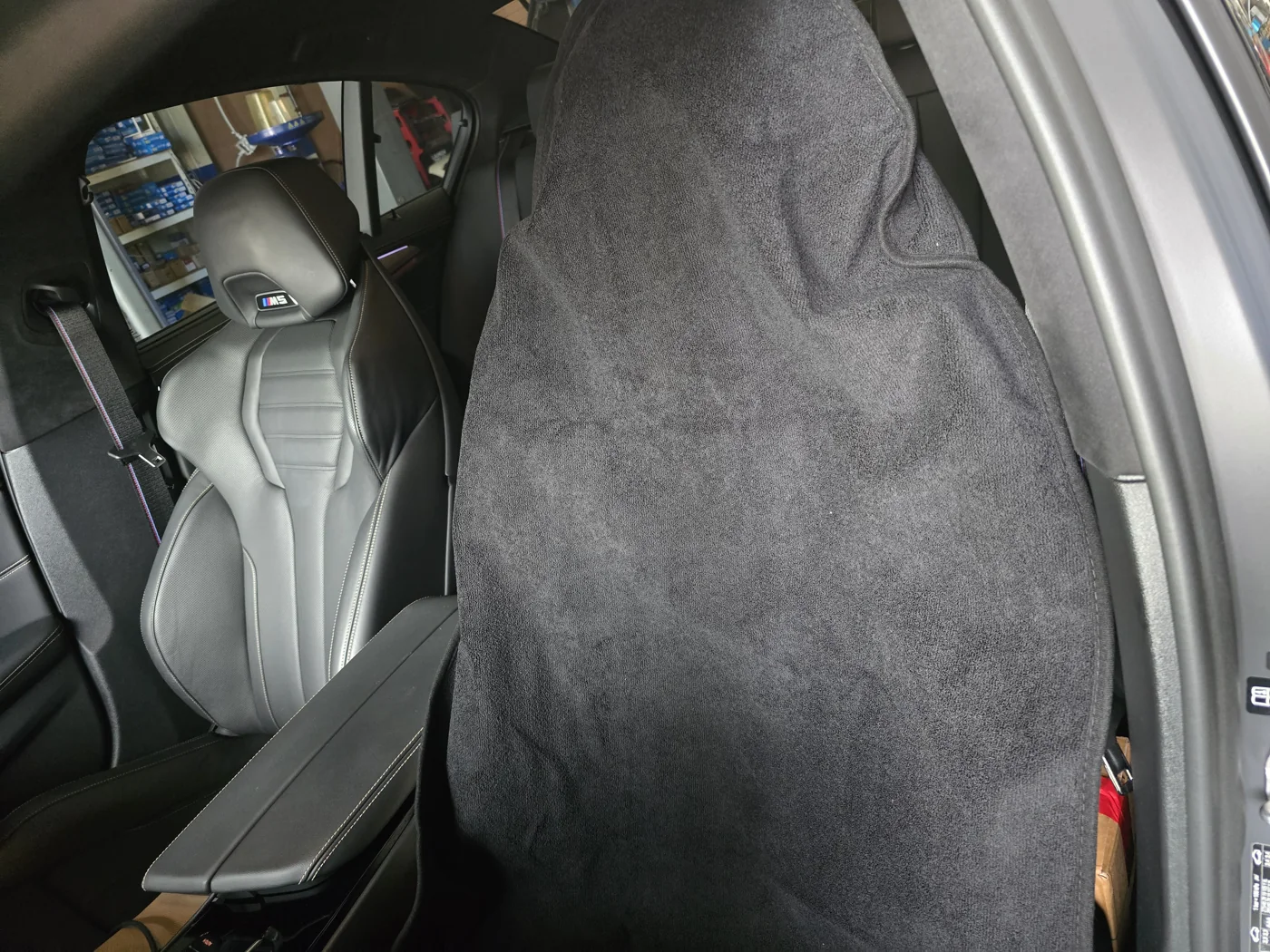
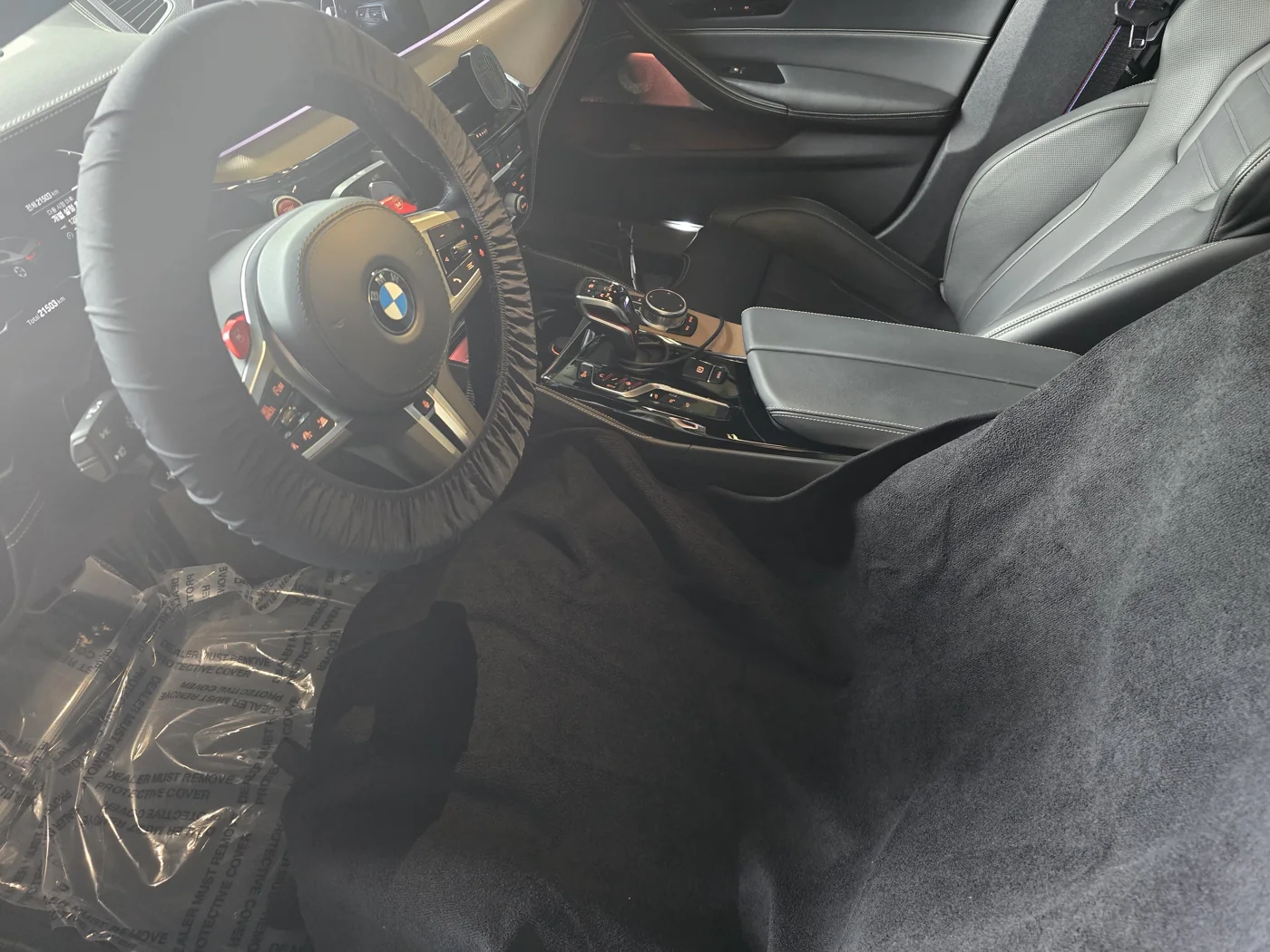
We fit M5 seat and steering wheel covers during service. NHC purchased these covers to keep the interior clean and protected, without the owner needing to ask.
We Checked the Engine Oil and the Drivetrain Oils Separately
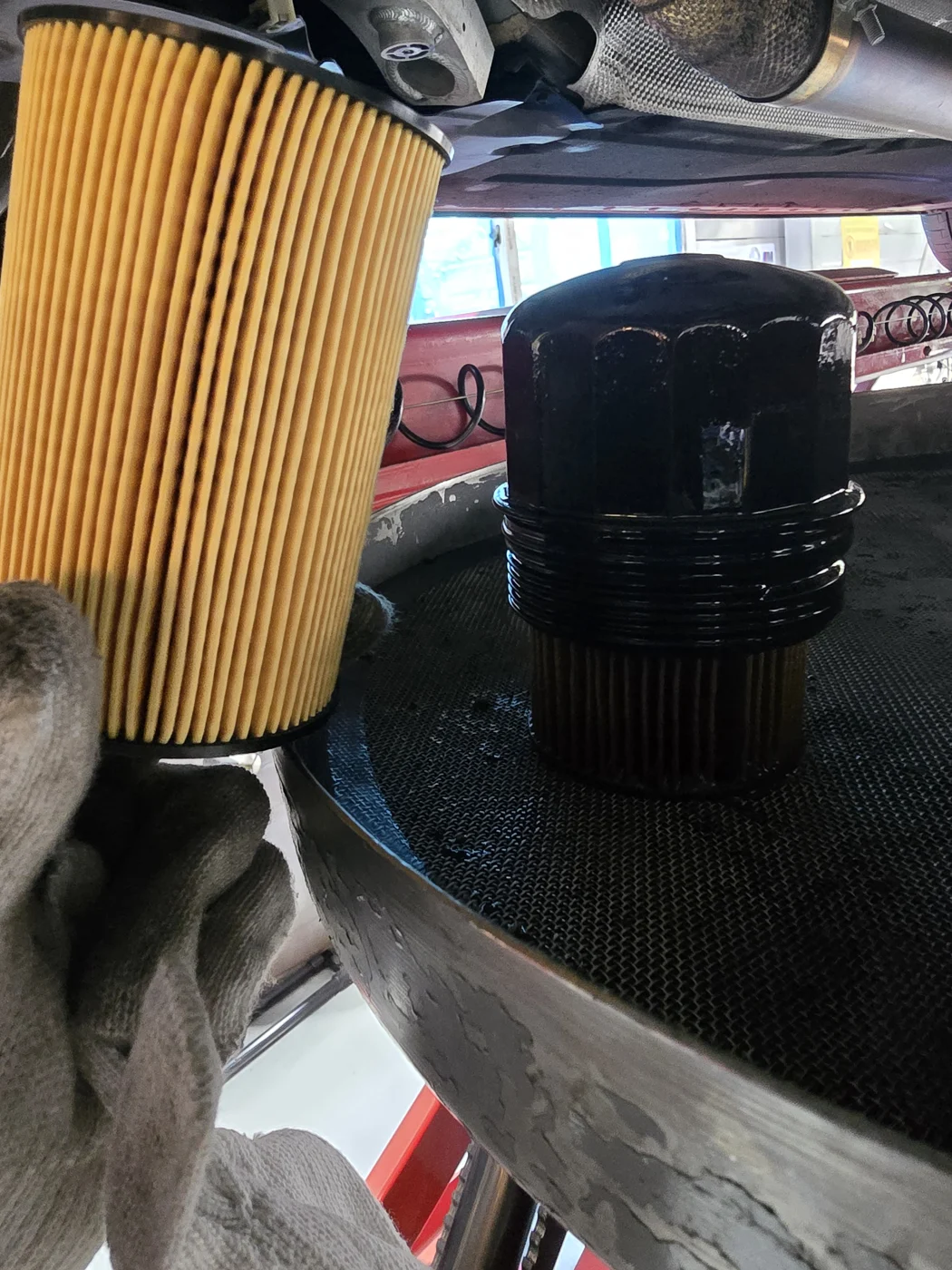
We replaced the engine oil, the oil filter, and the cabin filter. In the technician's on-site assessment, the drained engine oil was no worse than at the previous service. The transfer case oil was dirtier than expected.
“The transfer case oil was a lot dirtier than I expected.”Assessment from the technician who inspected this M5
Oil condition comparison
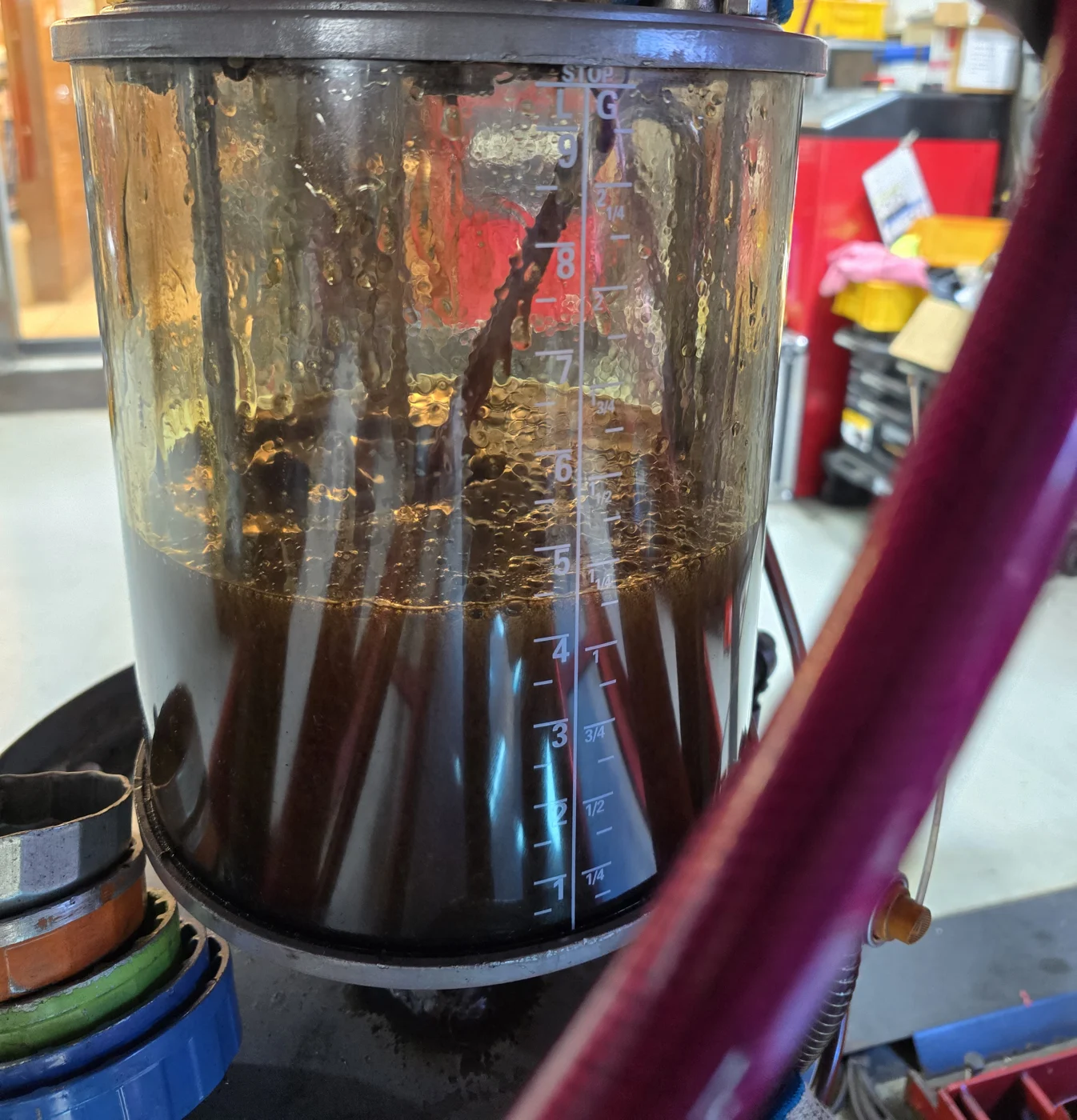
We drained the oil into containers to compare color and contamination.
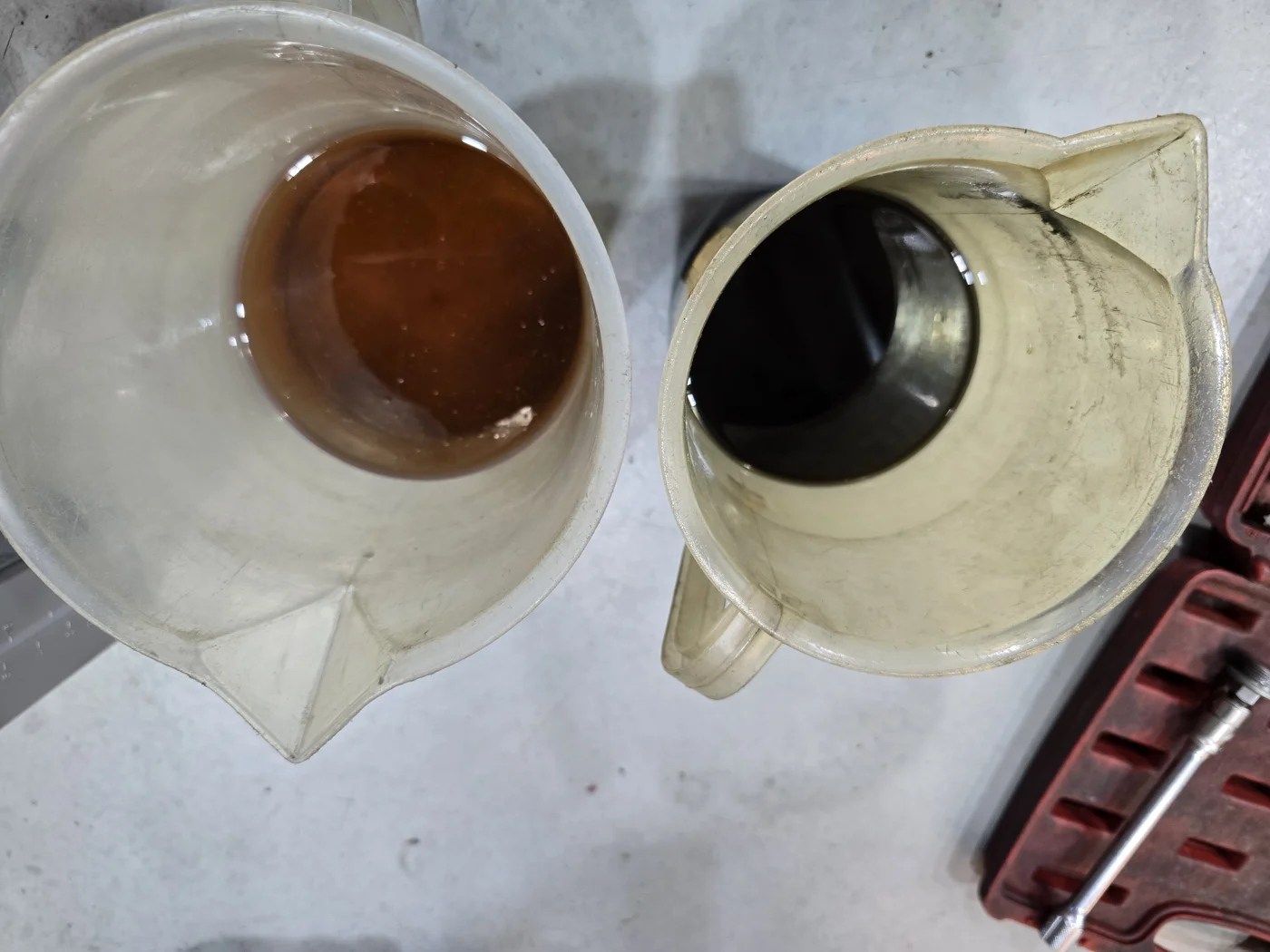
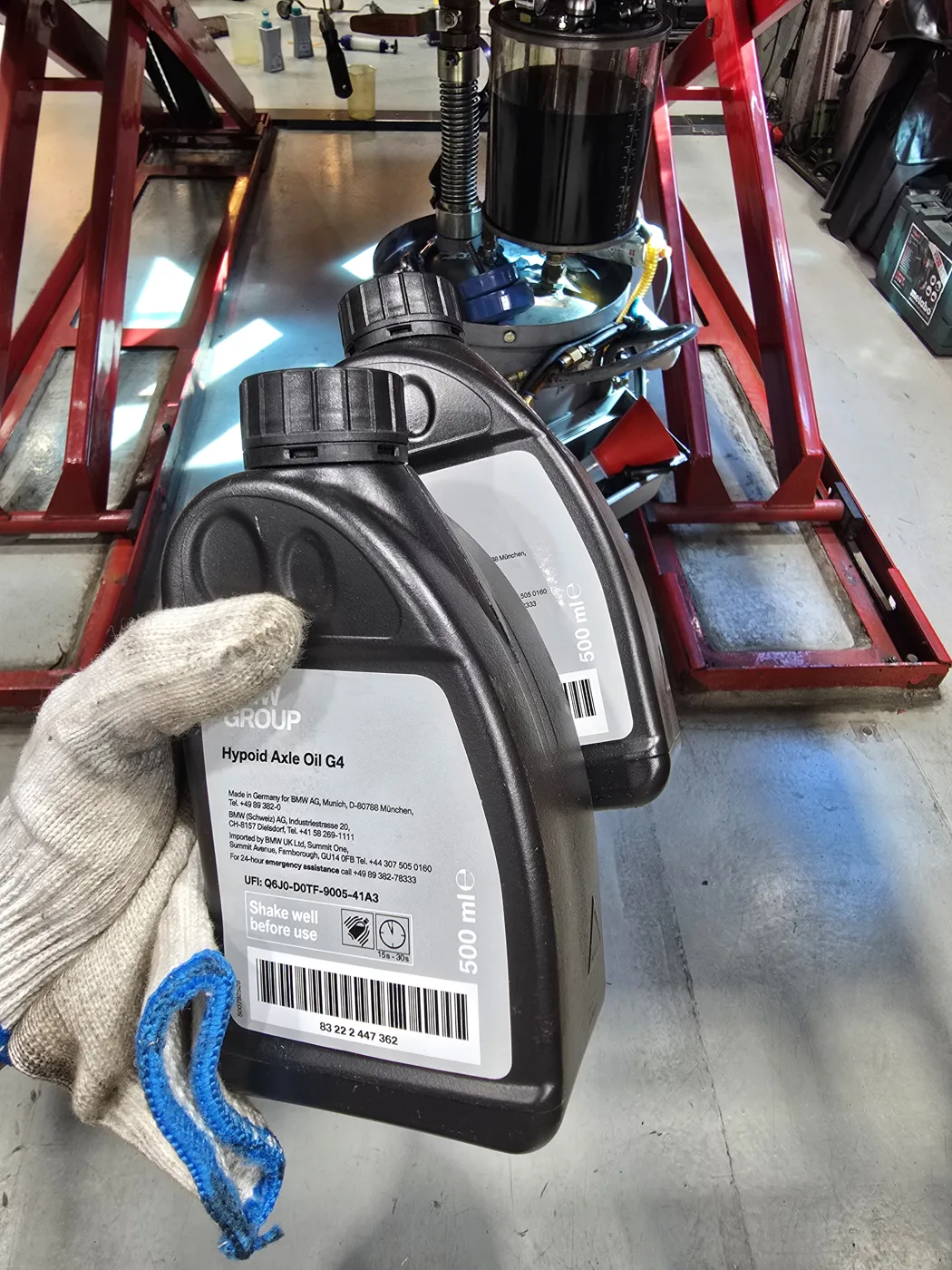
This service extended to the transfer case and both the front and rear differentials. We select the product according to where it goes, and review the previous change record together with the condition of the oil drained this time.
We used MOTOREX FS 0W-40 engine oil, carried out a ring-cleaning treatment with BG EPR, and added BG MOA engine oil treatment.
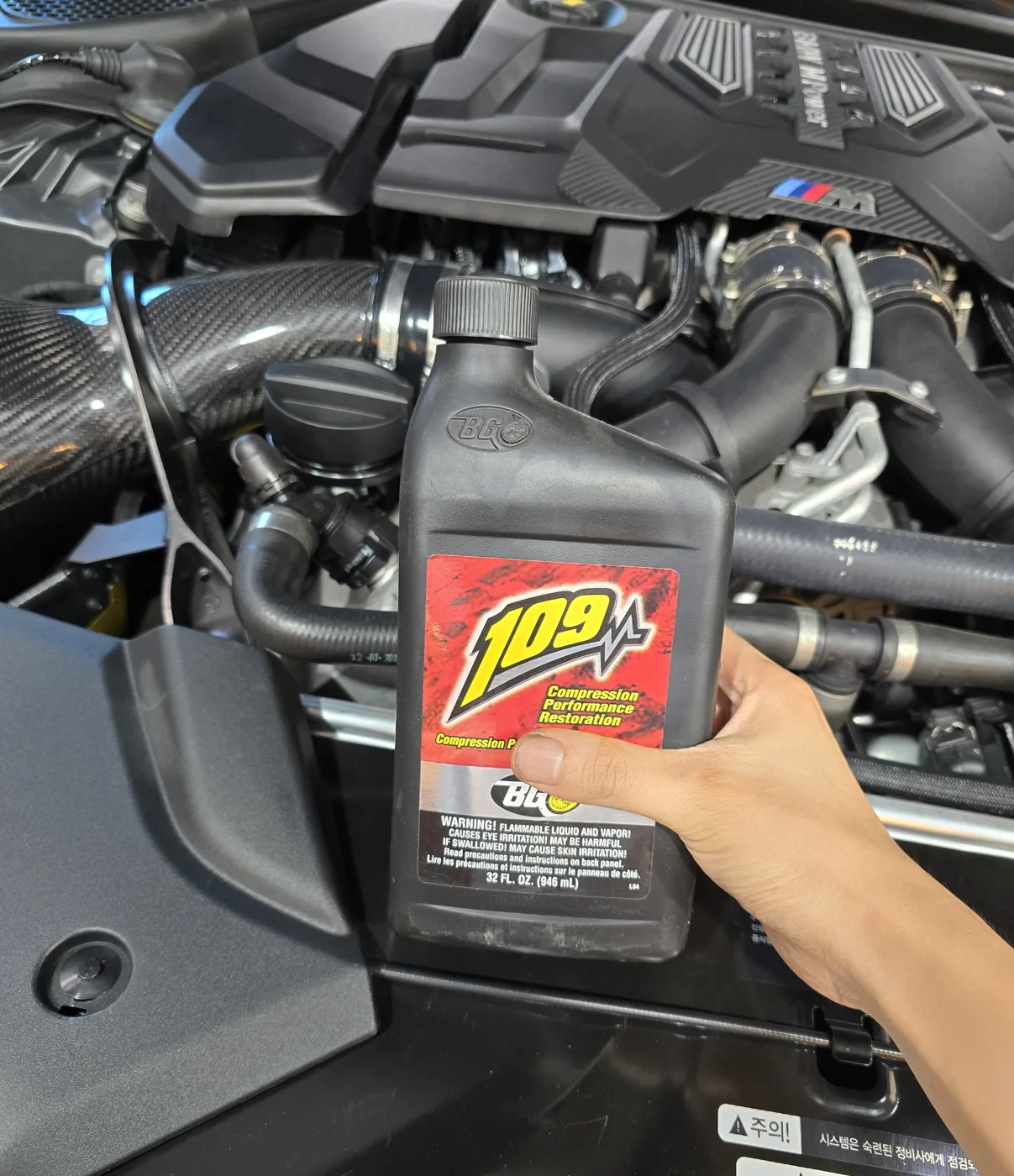
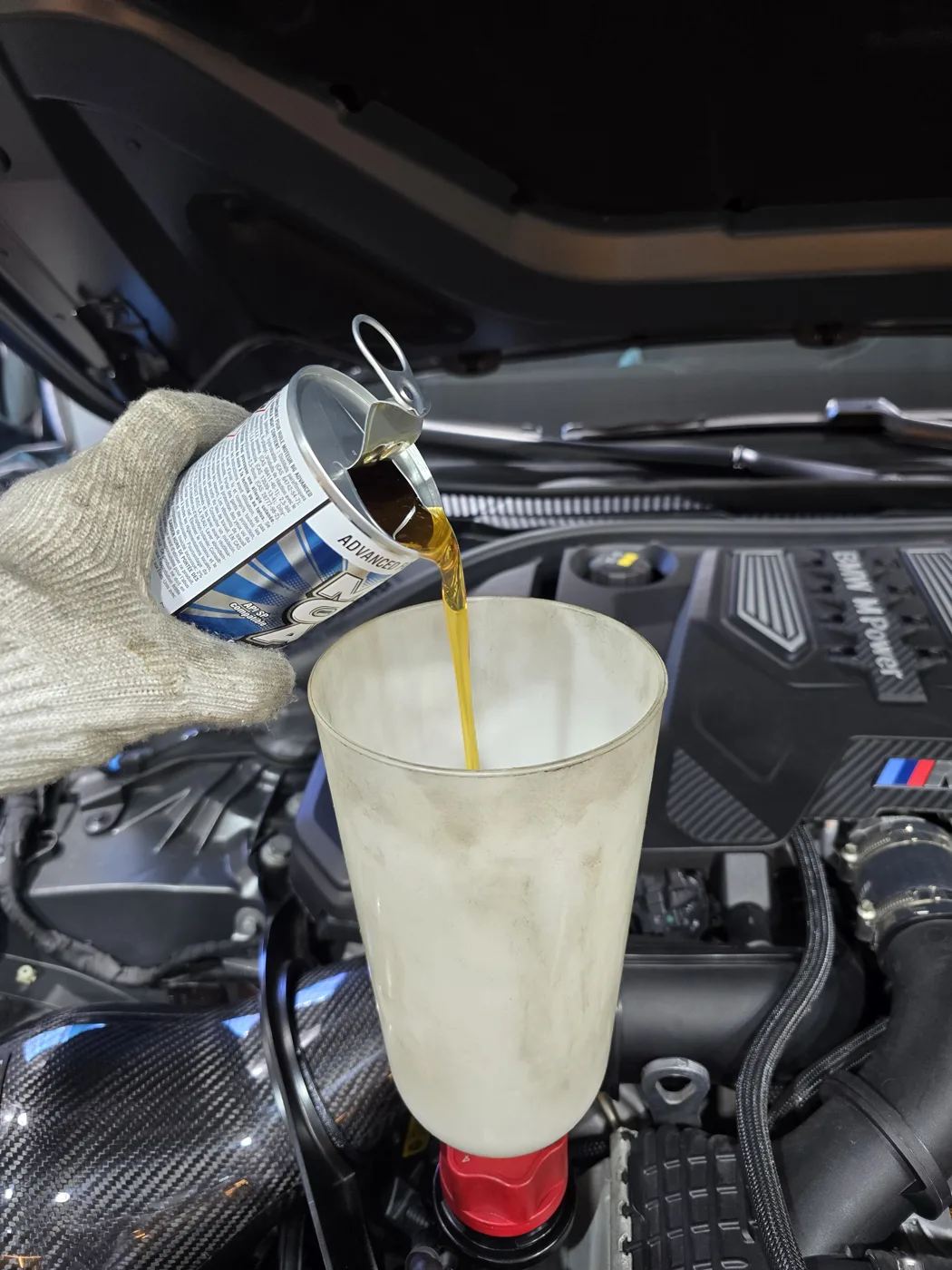
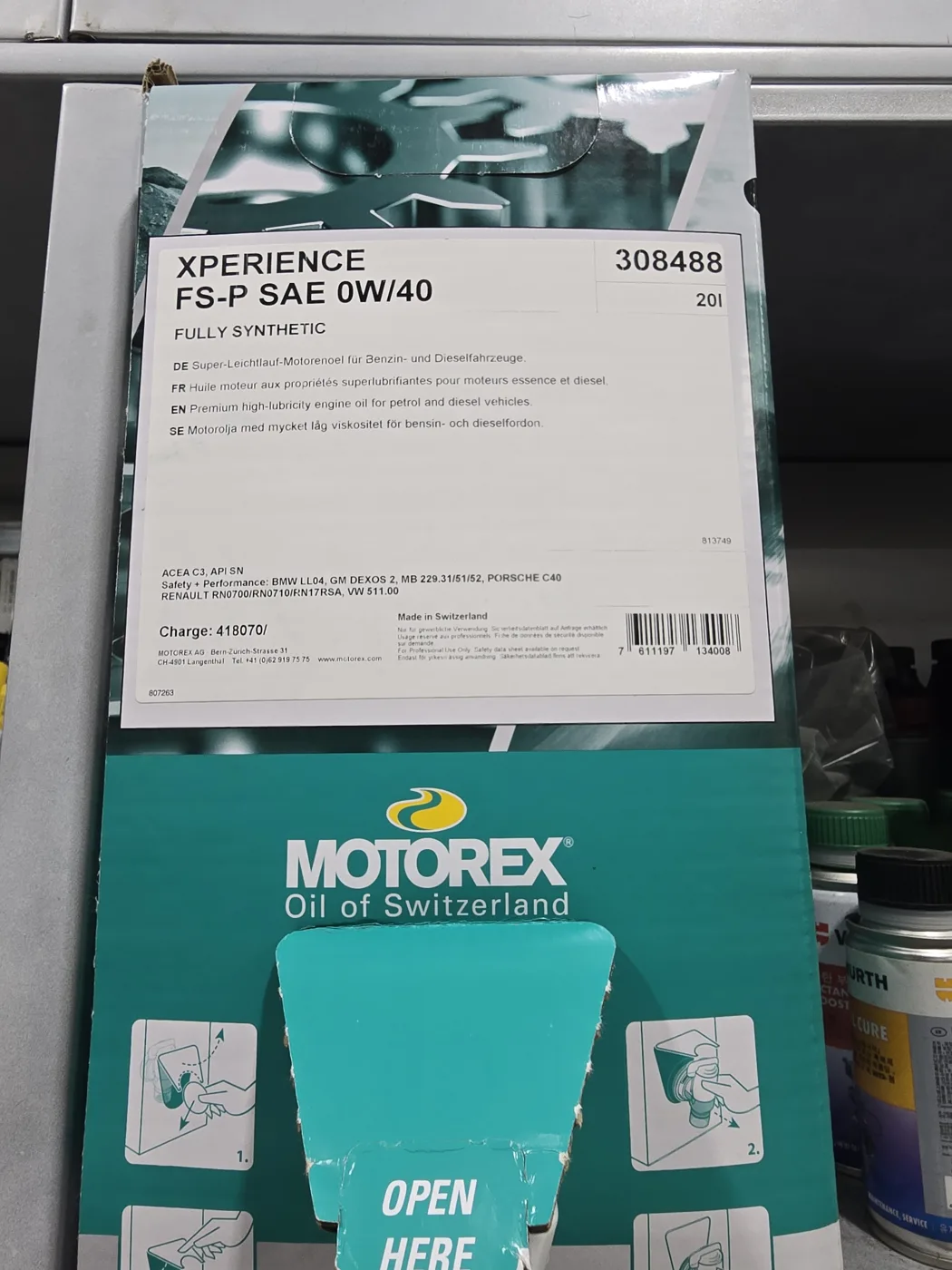
| Location | Product used |
|---|---|
| Engine | MOTOREX FS 0W-40 |
| Transfer case | BMW DTF 1 |
| Front differential | MOTOREX · G2 |
| Rear differential | BMW G4 |
Factory dashcam and battery drain while parked
The factory dashcam was suspected as a source of battery drain, so we recommended replacing it. As the owner has a dedicated parking location, we also advised switching parking mode off.
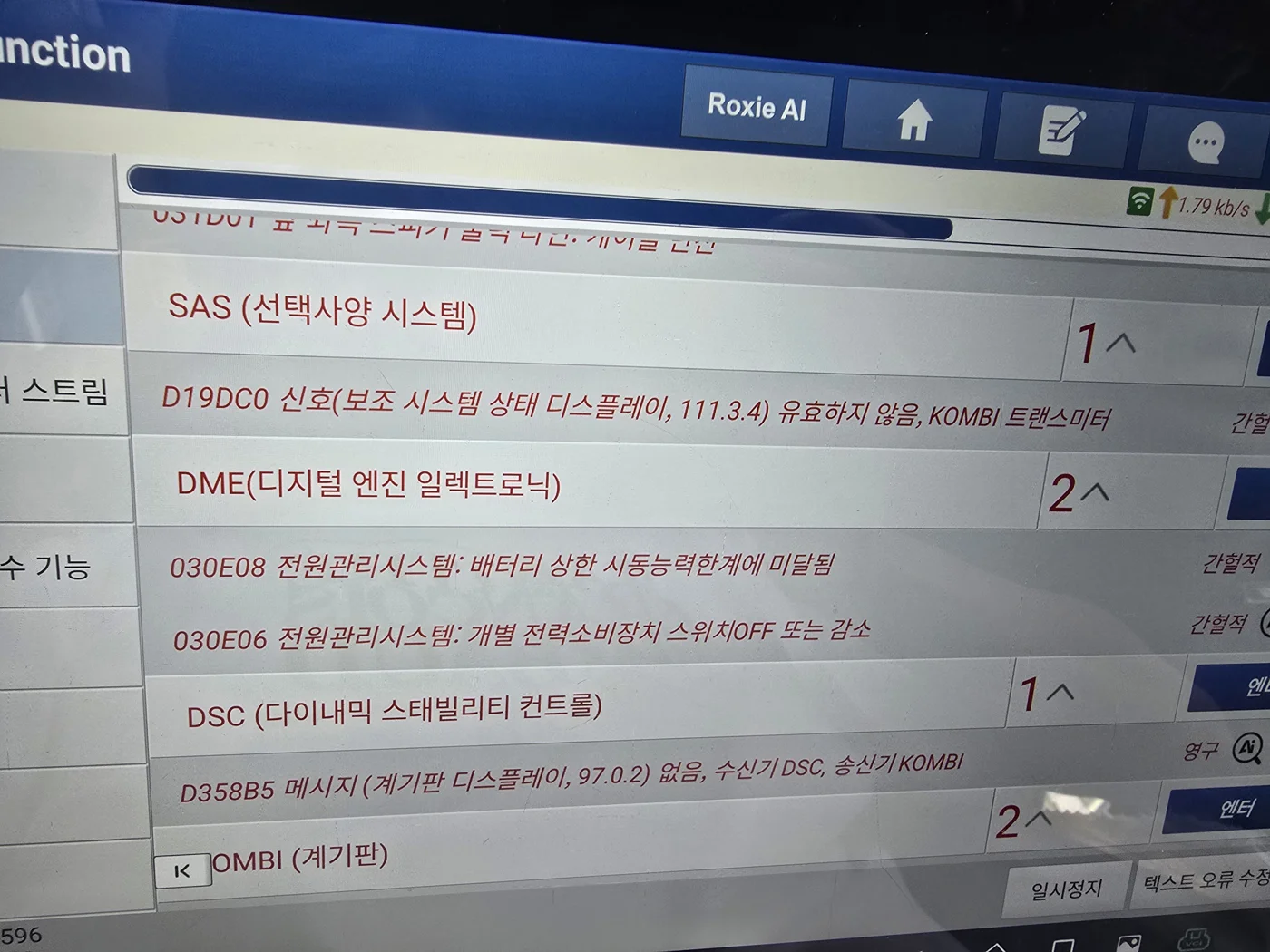
The diagnostic scan recorded power-management codes 030E08 and 030E06. These findings formed part of the assessment behind the dashcam replacement and parking-mode advice.
The initial wheel inspection at the annual service
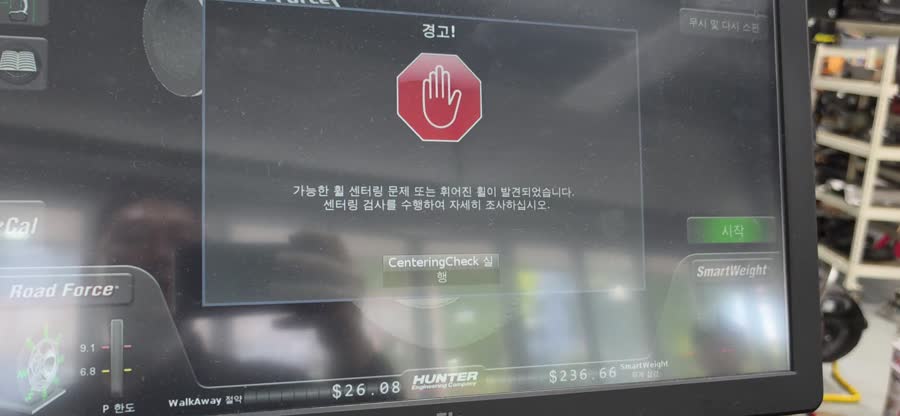
At this year’s annual service, we checked the replaced wheels. Vertical movement appeared during rotation, and the equipment warned of a possible centering problem or bent rim.
The movement remained after the mounting was checked. We explained the findings to the owner and recommended inspection and action by the shop that fitted the wheel. The return visit after repair is described below.
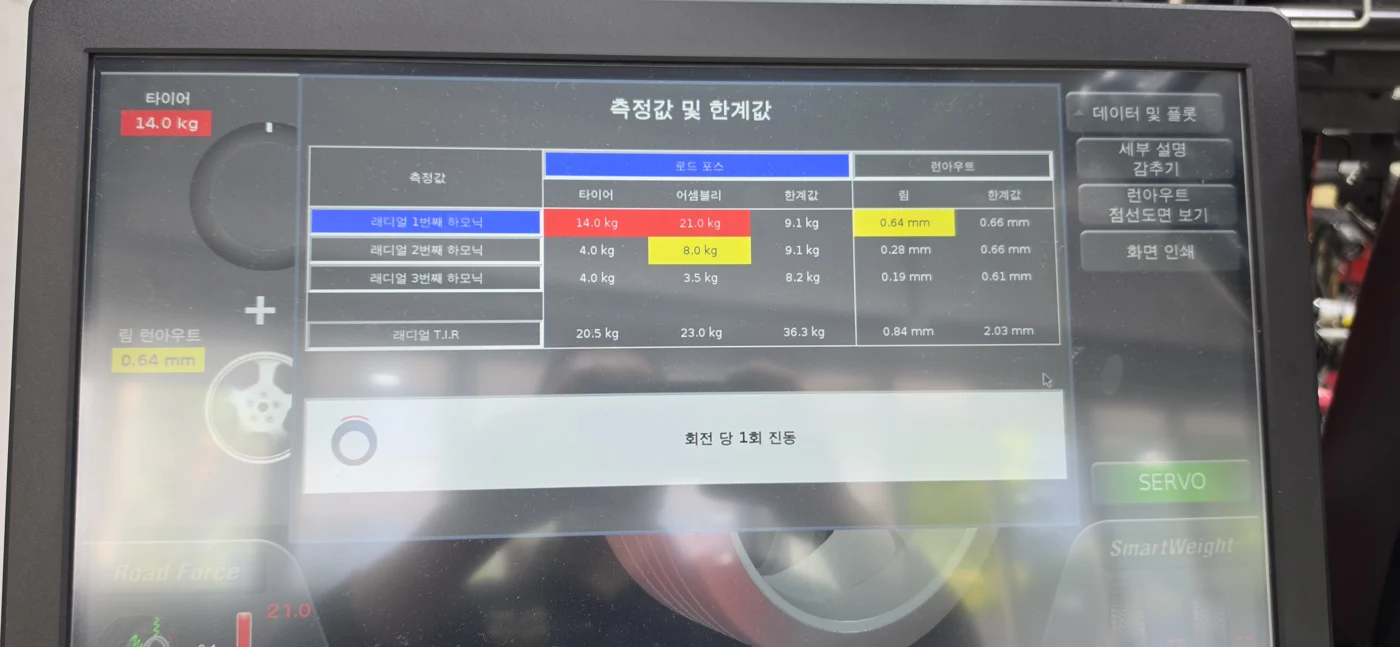
This road force screen is an initial inspection record from before repair. It is not a like-for-like before-and-after comparison with the readings from the return visit.
| Measurement item | Measured value | Equipment display limit |
|---|---|---|
| Road Force · Radial 1st harmonic | 21.0 kg | 9.1 kg |
| Rim runout · Radial 1st harmonic | 0.64 mm | 0.66 mm |
Road force is the variation in force under load, while runout is the dimensional deviation as the wheel turns. In the photo, the road force exceeded the display limit, but the rim runout of 0.64mm is within the display limit. Each item is compared with its own display limit.
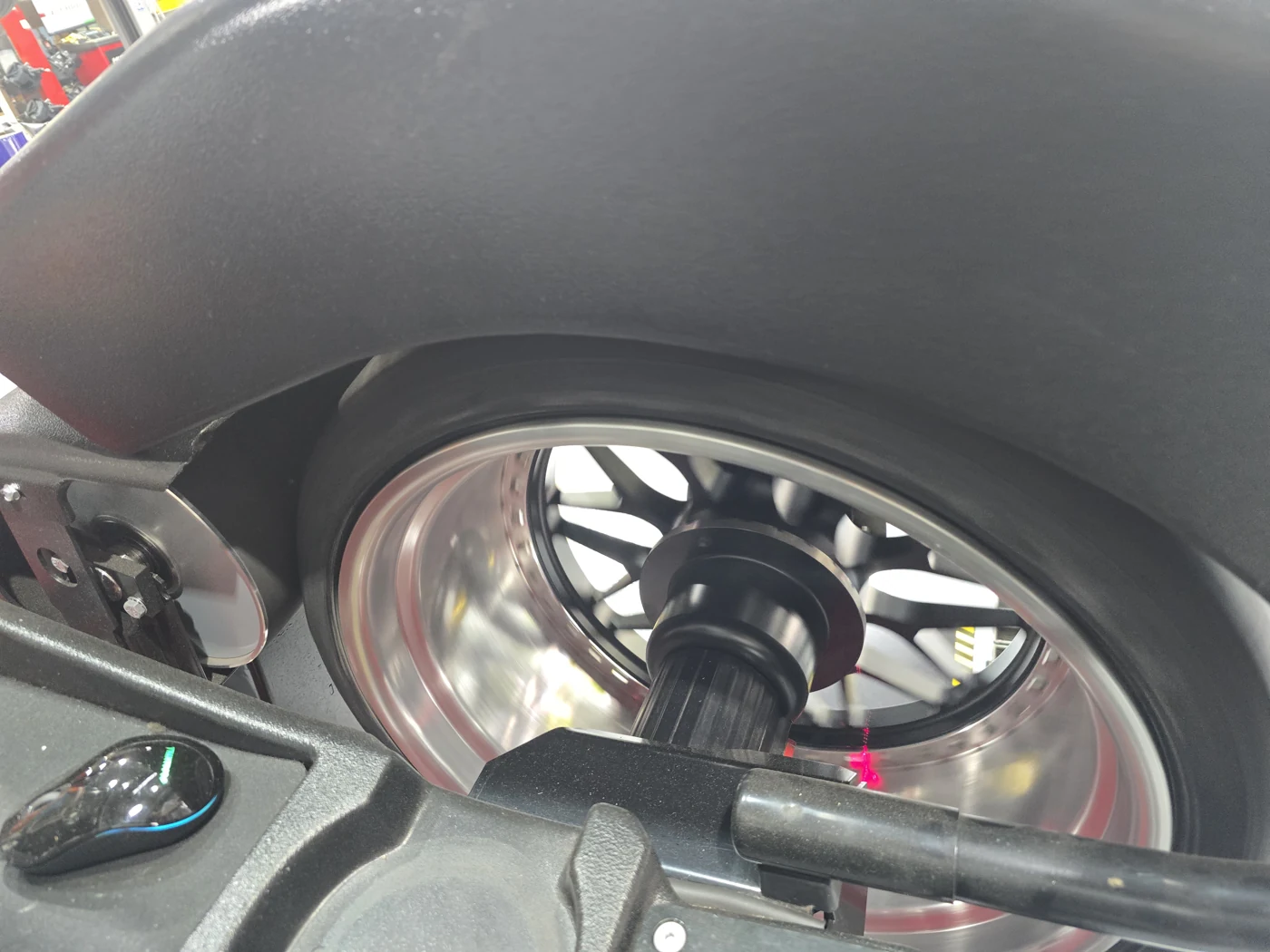
Wheel rotation and driving vibration
In general, uneven wheel and tire rotation can cause steering shake or body vibration at certain speeds. For this M5, the initial inspection led to wheel repair and a return visit to measure all four assemblies.
After wheel repair, we rechecked road force and alignment
The M5 returned after the wheel had been repaired. We measured road force again, checked lateral force and optimized the wheel and tire positions. We then reset the custom alignment for the current wheel and tire setup.
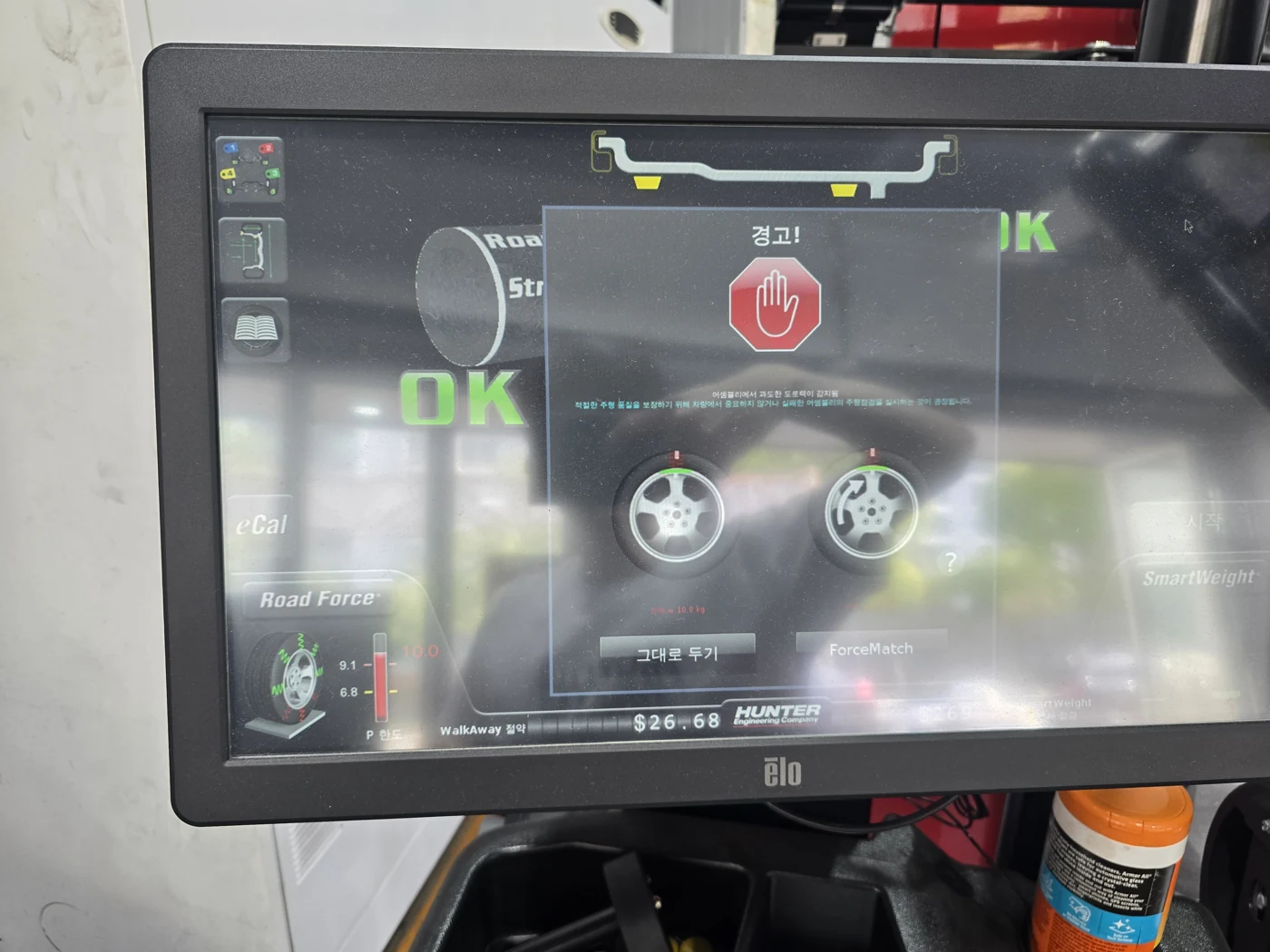
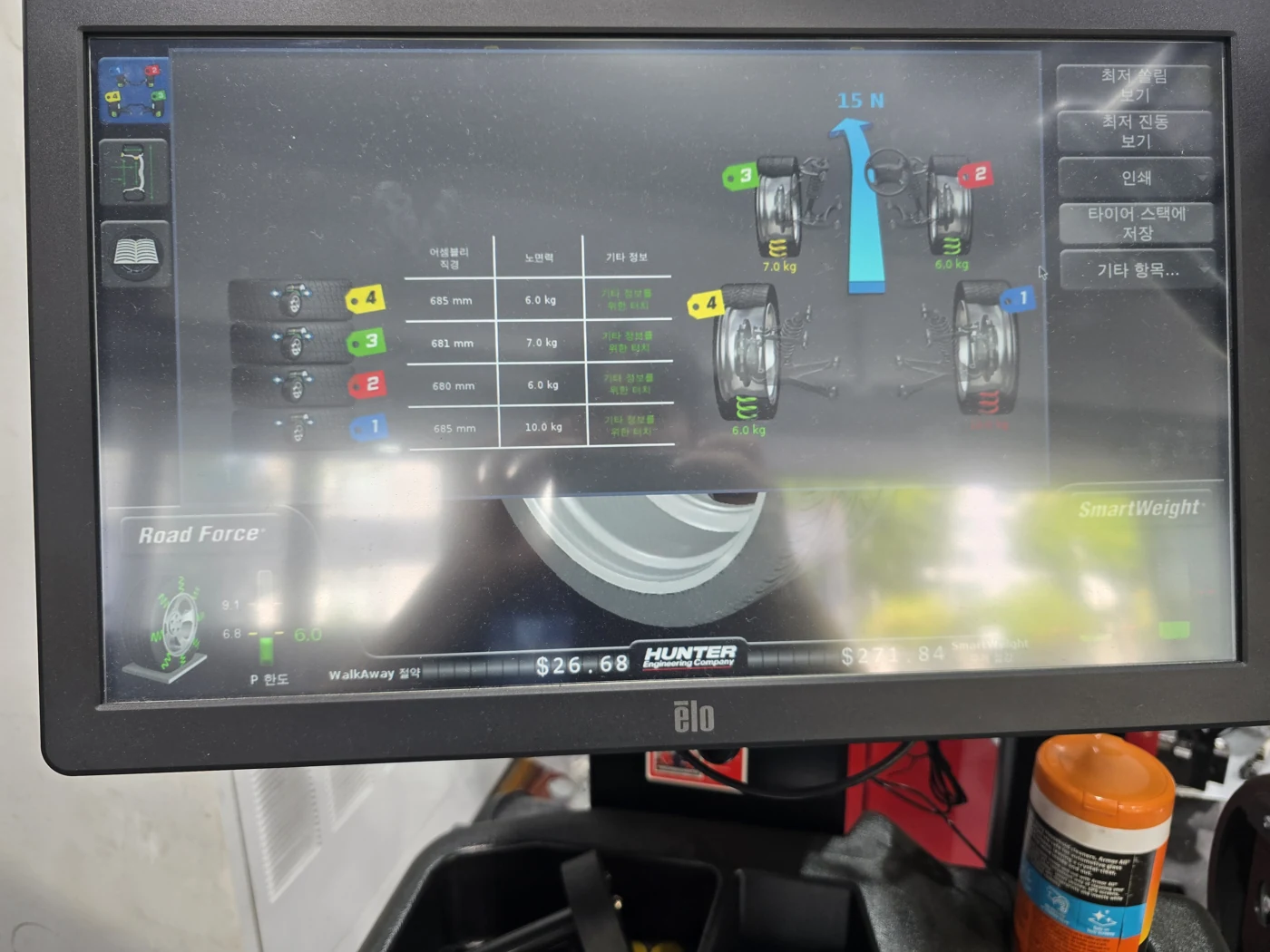
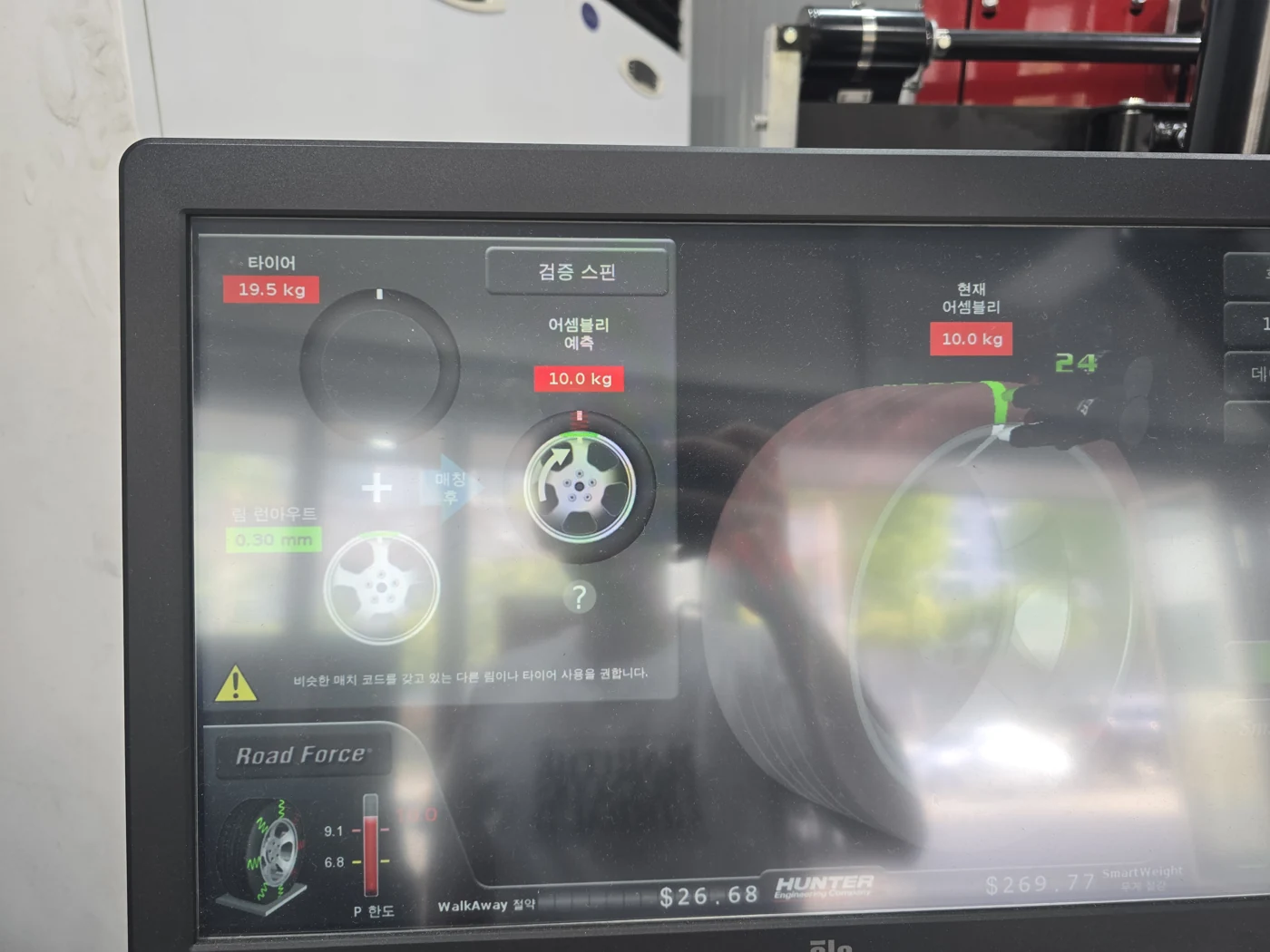
The road force readings were good overall in the technician’s assessment. One rear tire remained short of NHC’s expected result after repeated matching. Separately, equipment ID 1 showed 10 kg in red during the recheck. The readings below are for the four assemblies at this return visit. The earlier 21.0 kg reading is a separate record and is not paired with one of these values as a before-and-after comparison.
| Equipment ID | Road force reading |
|---|---|
| 4 | 6 kg |
| 3 | 7 kg |
| 2 | 6 kg |
| 1 | 10 kg |
One rear tire will be checked again after driving
We will check the tire again after driving to assess whether it had deformed while driven in its previous mounting condition or whether the tire itself is responsible.
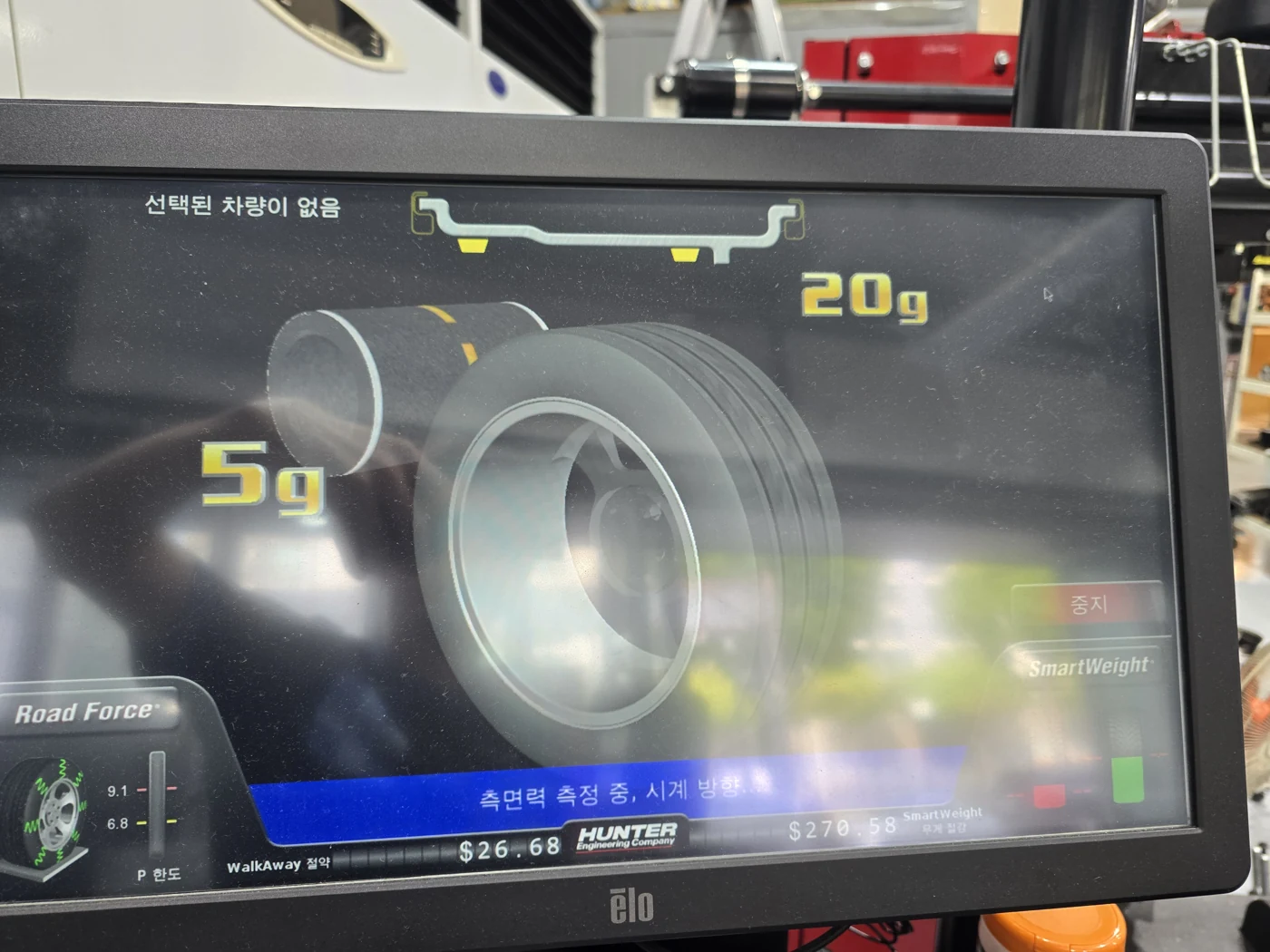
We measured all four assemblies and checked conicity (lateral force), the tire characteristic that can pull the car to one side. We used the measurements to optimize their positions for vibration and straight-line behavior. Changing positions does not repair an individual tire’s force variation.
Custom alignment for the current wheels and tires
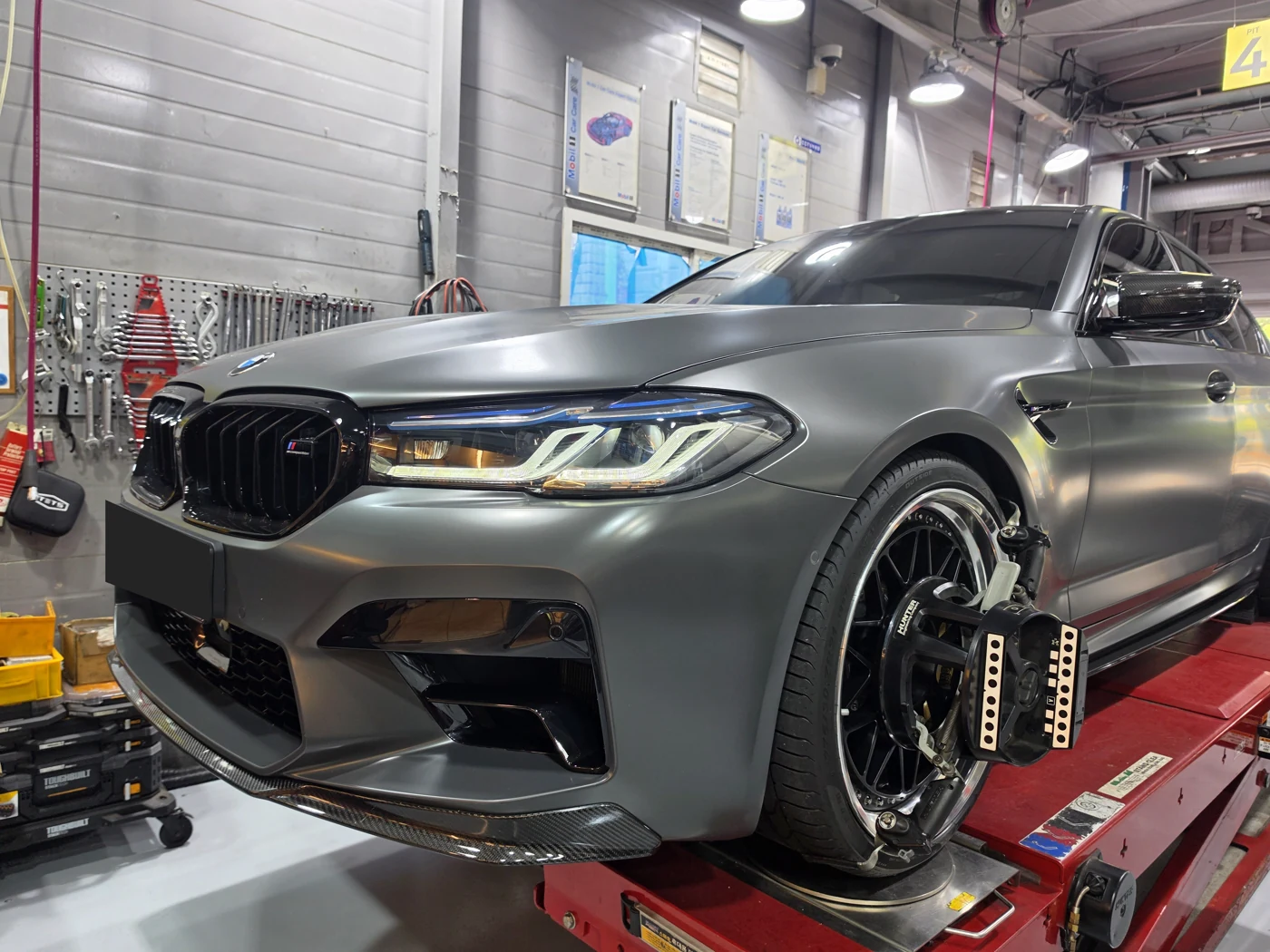
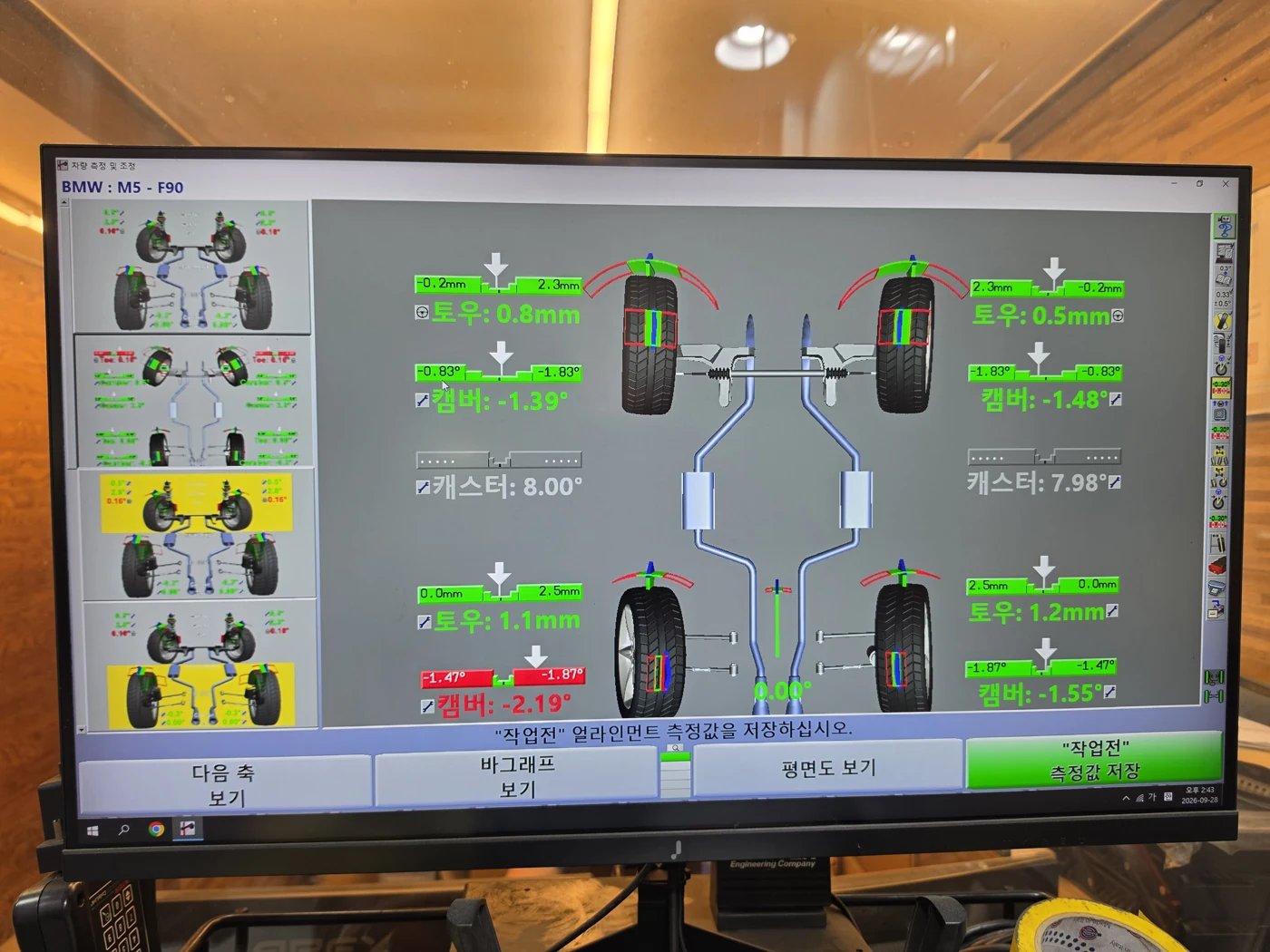
We adjusted the alignment for the changed wheel and tire setup. These are the values on the initial full-view screen and the final full-view screen from this adjustment session.
Toe compared with the selected final setting
Before adjustment
Outline: final setting · numbers: measured toe, mm
After adjustment
Outline: final setting · numbers: measured toe, mm
| Measurement | Before | After |
|---|---|---|
| Front toe, left / right | 0.8 / 0.5 mm | 1.0 / 1.0 mm |
| Front camber, left / right | −1.39 / −1.48° | −1.44 / −1.37° |
| Front caster, left / right | 8.00 / 7.98° | 7.93 / 7.95° |
| Rear toe, left / right | 1.1 / 1.2 mm | 1.6 / 1.6 mm |
| Rear camber, left / right | −2.19 / −1.55° | −1.56 / −1.55° |
| Thrust angle | 0.00° | 0.00° |
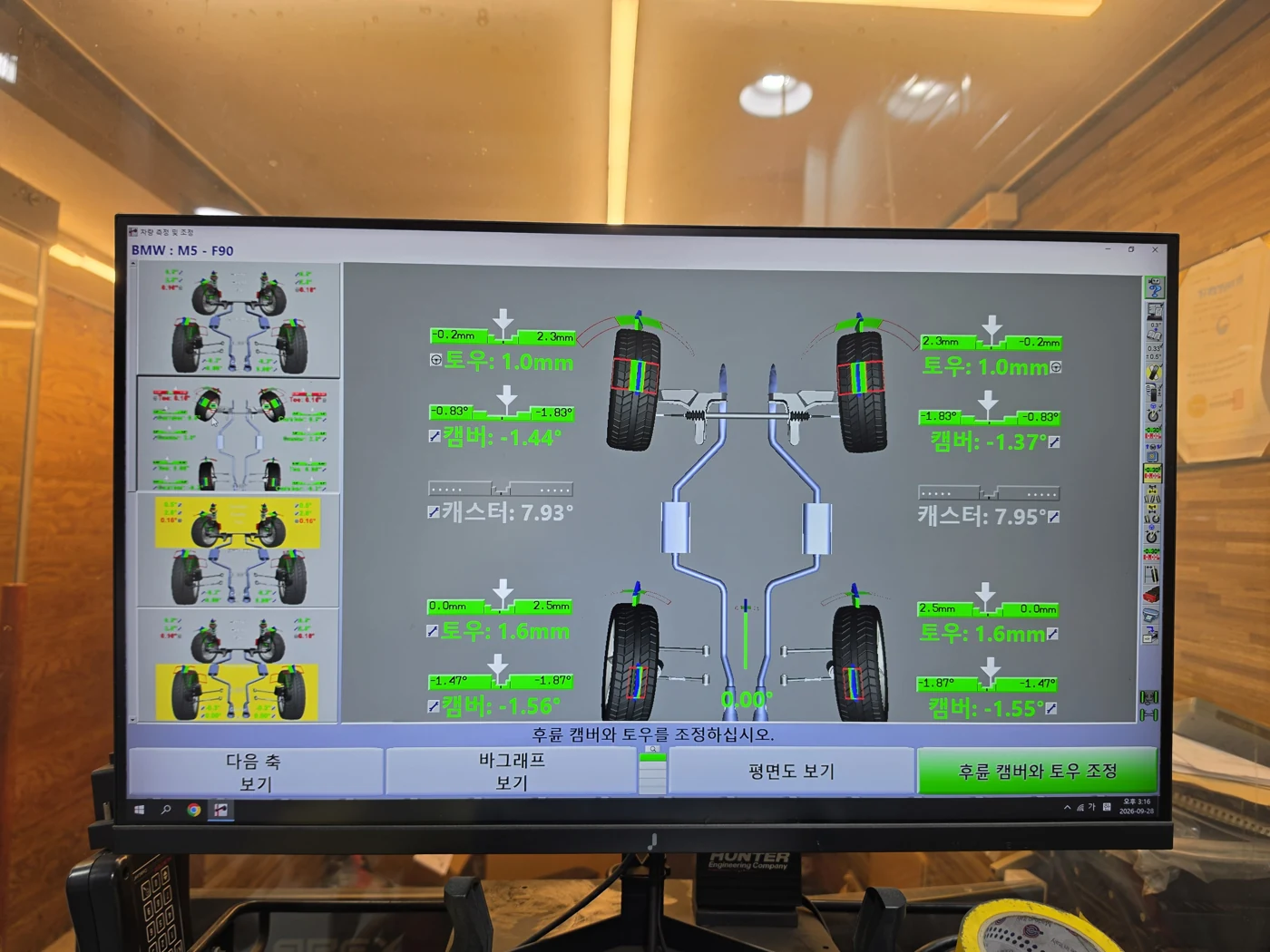
Our impression is that straight-line stability is better than before.
The plan is to drive the car in this condition and re-measure the one rear tire. Tire replacement has not been decided. If shaking is felt, the speed at which it starts can help guide the next check.
This year’s work and the next check
| Category | Status |
|---|---|
| Oil and filters (annual service, 21,503 km) | Engine oil and filters, transfer case and front/rear differential fluids |
| Power management | Dashcam replacement and parking mode OFF recommended; cause suspected |
| Initial wheel inspection | Alignment work and Road Force measurement; shop that fitted the wheel action recommended |
| Return after wheel repair | All four assemblies measured for road force and lateral force; positions optimized |
| Custom alignment adjustment | Settings adjusted for the current wheel and tire setup |
| Next check | Re-measure one rear tire after driving |
Frequently asked questions
Does low mileage mean every fluid needs replacing each year?
No. The scope differed from year to year for this M5. We consider elapsed time, use, previous changes and current condition.
What is planned for the one rear tire after wheel repair?
One rear tire remained at the edge of NHC’s expected range. The cause has not been confirmed, so it will be re-measured after driving for further assessment. Tire replacement has not been decided.
Does changing positions improve the individual tire’s reading?
Changing positions does not repair the tire’s own force variation. We optimized positions using all four measurements, considering vibration and straight-line behavior.
Are road force and rim runout the same measurement?
No. Road force is force variation under load; runout is dimensional variation during rotation. Each reading should be compared with the display limit for that measurement.
If shaking appears after changing wheels or tires
Tell us the wheel and tire change history and the speed where shaking appears. We will explain which measurements are needed.
We explain the scope of the required work and the estimate first, and begin only after you agree.
Call for a service consultationBook via Naver031-258-1617 · NHC Motors, Gwonseon-gu, Suwon · By appointment only
Wheel alignment information