JAGUAR XJ · DAIMLER 4.2 · 140,134 km
Daimler 4.2: treating pulling and brake judder together
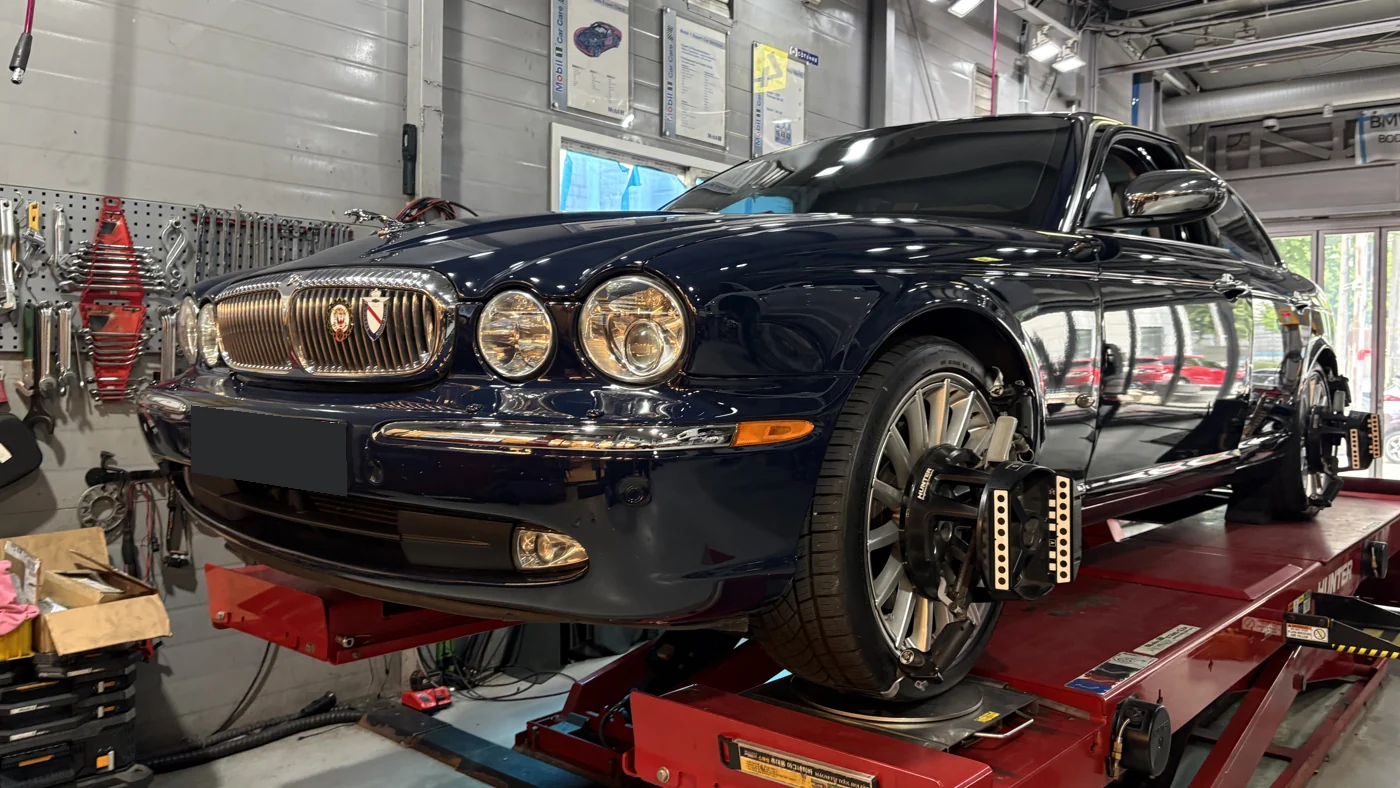
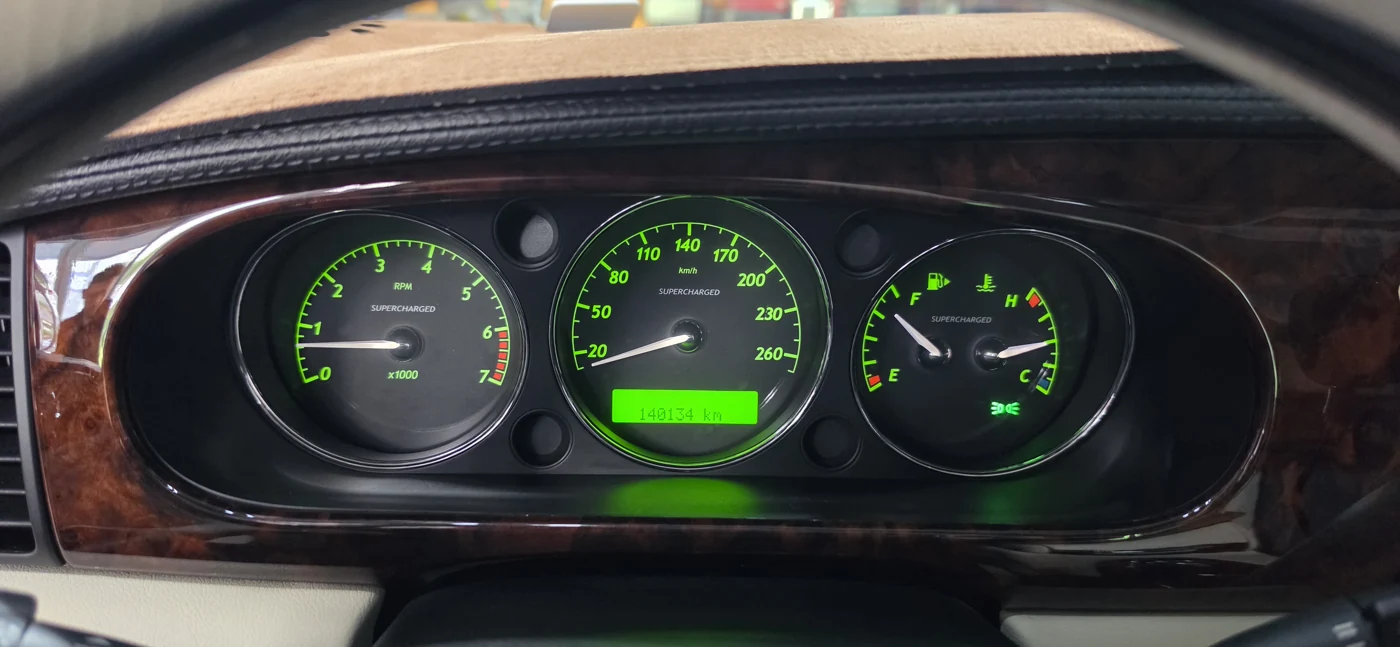
A long-standing customer brought this Daimler 4.2 in for an engine oil change and inspection. The odometer read 140,134 km. Pulling and brake judder on the road test led us to examine the alignment, wheels, tyres and brakes.
- Visit
- Engine oil change and inspection; pulling and brake judder found on the road test.
- Work
- Oil and filters, bent-wheel repair, road-force checks and positioning, alignment and brake-disc machining.
- Result / care
- Pulling and brake judder were reduced on the final road test. Rear-left camber remains an item for the next inspection.
01
A Daimler with the character of a British luxury saloon
Four round headlamps, a bonnet mascot, a fluted grille and a wood-trimmed instrument panel give this Daimler its familiar British luxury-saloon character.
The X350 generation of the Jaguar XJ combined traditional body lines with an aluminium body and air suspension. Daimler is the British marque Jaguar acquired in 1960.
This visit began as routine maintenance and expanded to address symptoms found on the road test. We checked suspension height first, then examined alignment, wheel shape, tyre behaviour under load and judder during braking.
Model background: Jaguar Daimler Heritage Trust on the X350 · Jaguar and Daimler history
02
The requested oil and filter service
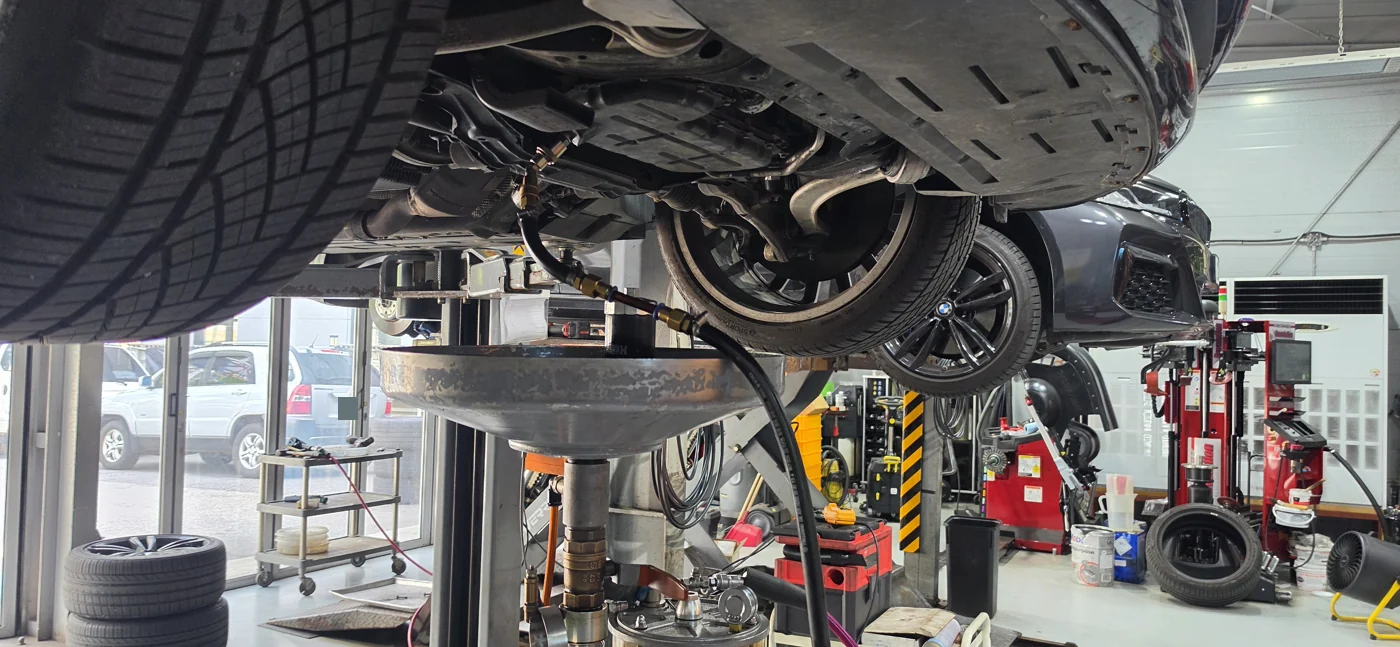
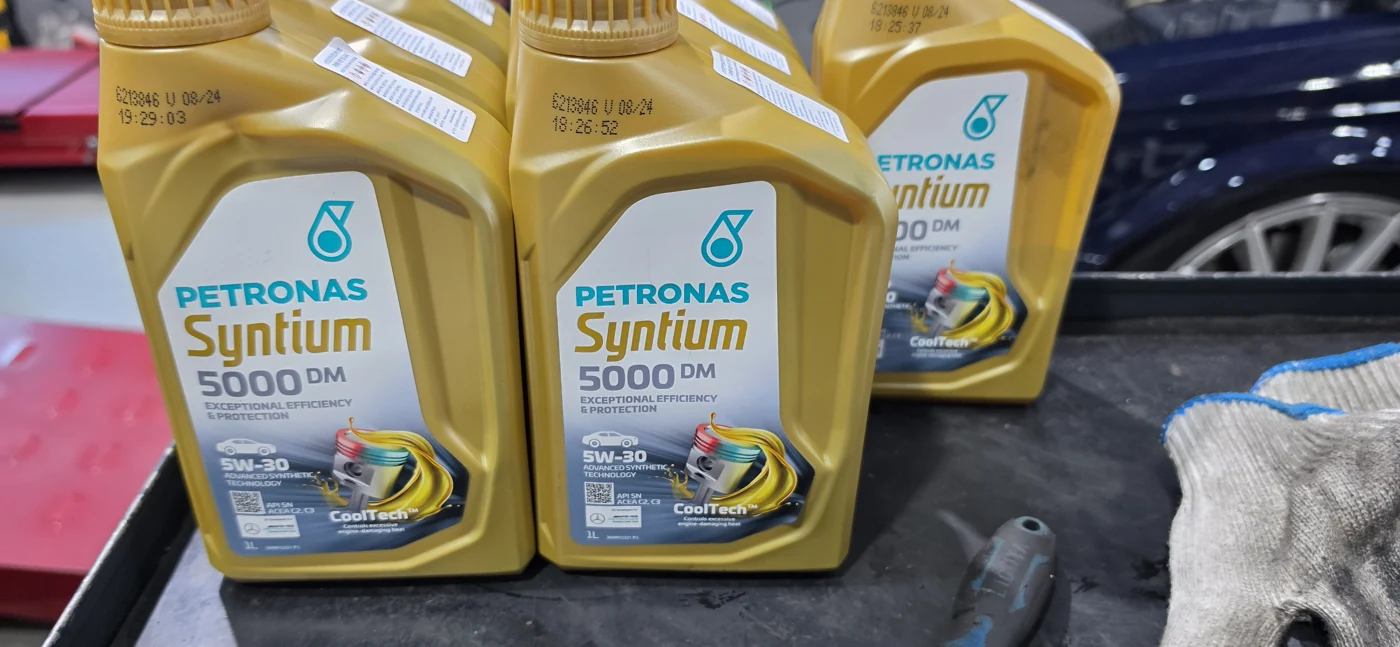
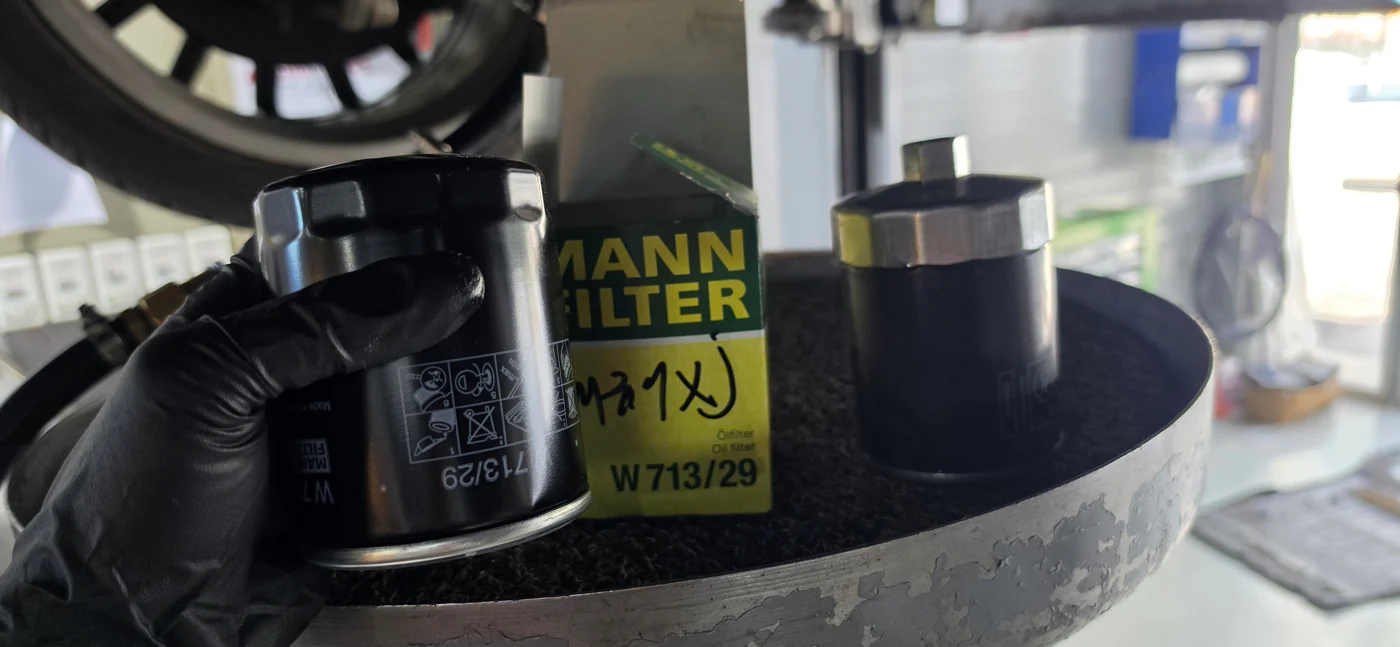
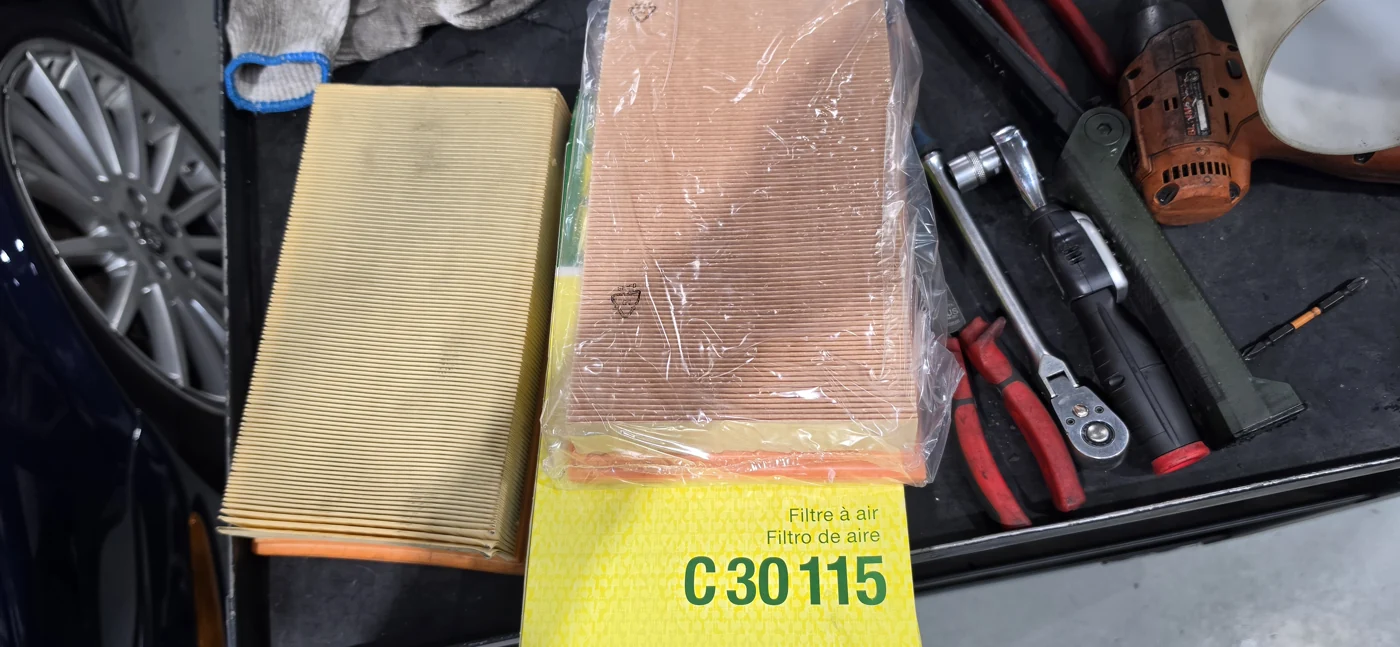
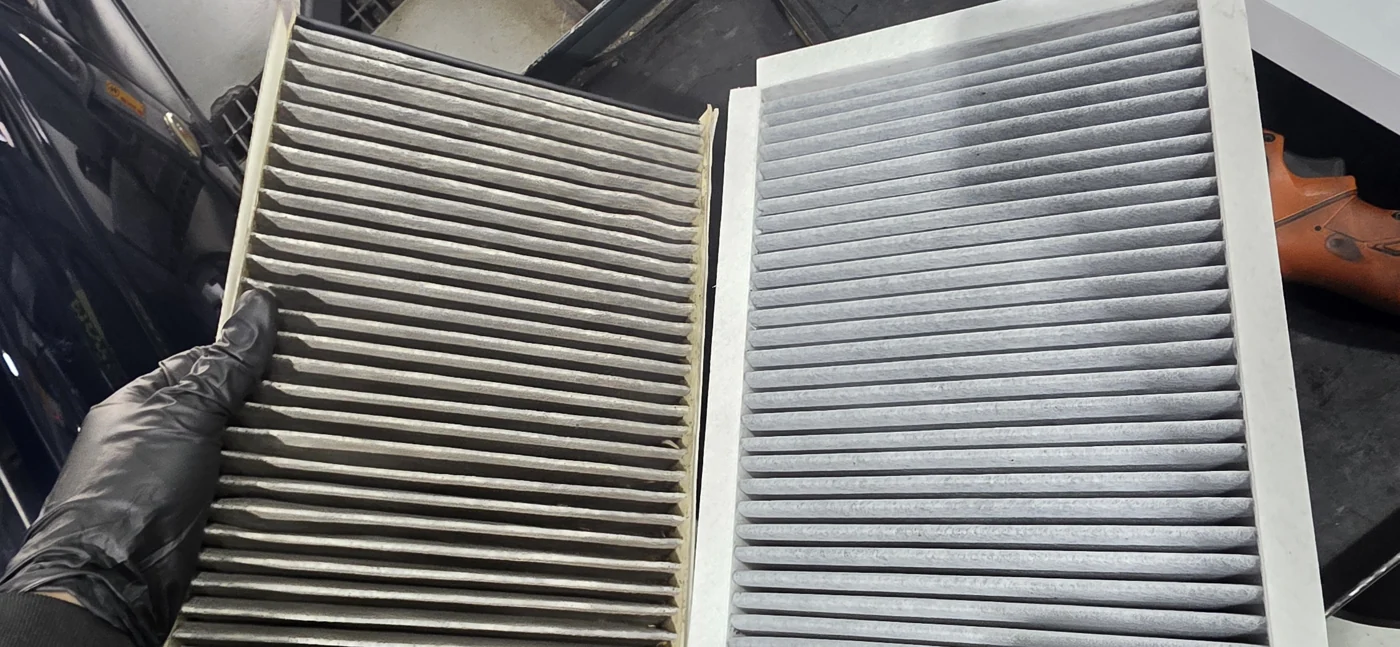
We changed the engine oil and oil filter, using PETRONAS Syntium 5000 DM 5W-30 and a MANN W713/29 filter. The engine air filter and cabin filter were also replaced.
03
Repairing the bent wheel and checking its rotation
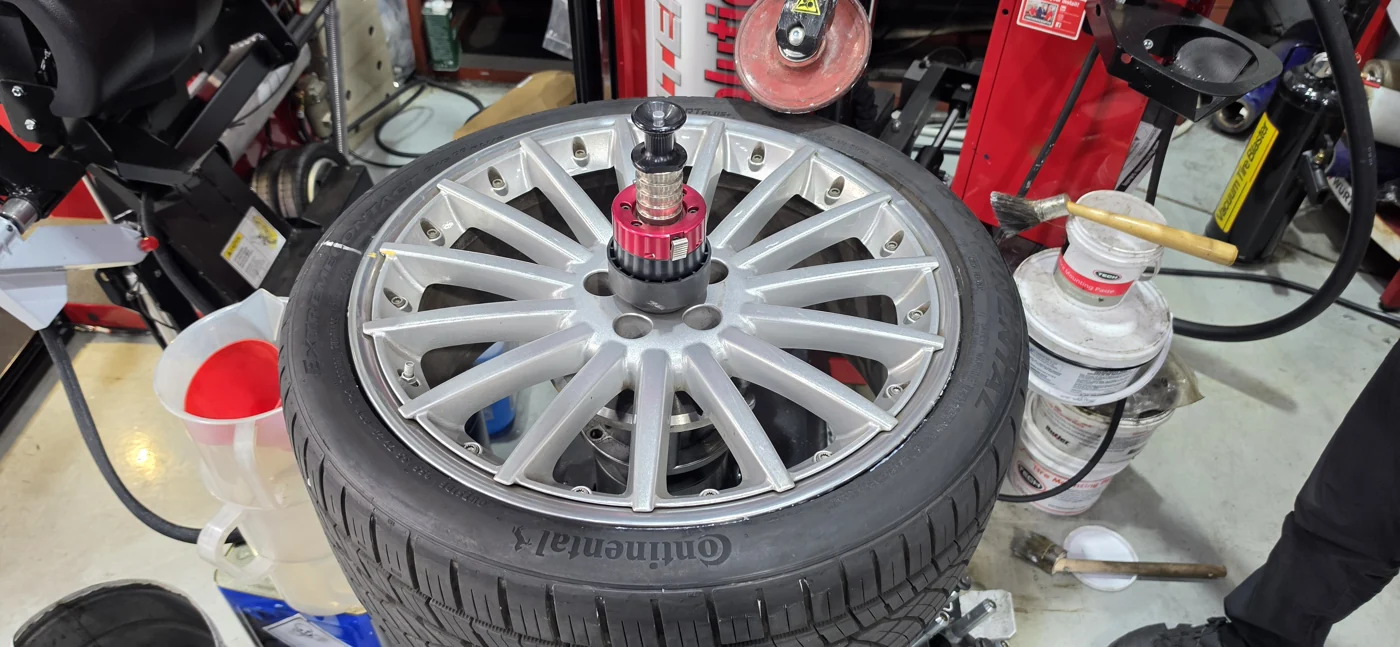
While investigating the pull, we checked the wheels and tyres and found a bent wheel. Adjusting wheel alignment and correcting a deformed rim address different issues. We repaired the bent wheel, then rotated it again to check its condition.
These videos record the wheel before and after repair. Compare the movement of the rim against the measuring point.
04
Looking beyond mass balance at force variation under load
Ordinary wheel balancing measures mass imbalance in a wheel-and-tyre assembly. RFV measures radial force variation as the tyre rotates under a load applied by a roller. An OK mass-balance result can coexist with a problem found under load.
After the wheel repair, we scanned all four wheel-and-tyre assemblies. We checked their road-force readings and optimised their positions using the equipment’s minimum-pull arrangement. Pull-related positioning also considers lateral force; it is not determined by RFV numbers alone.
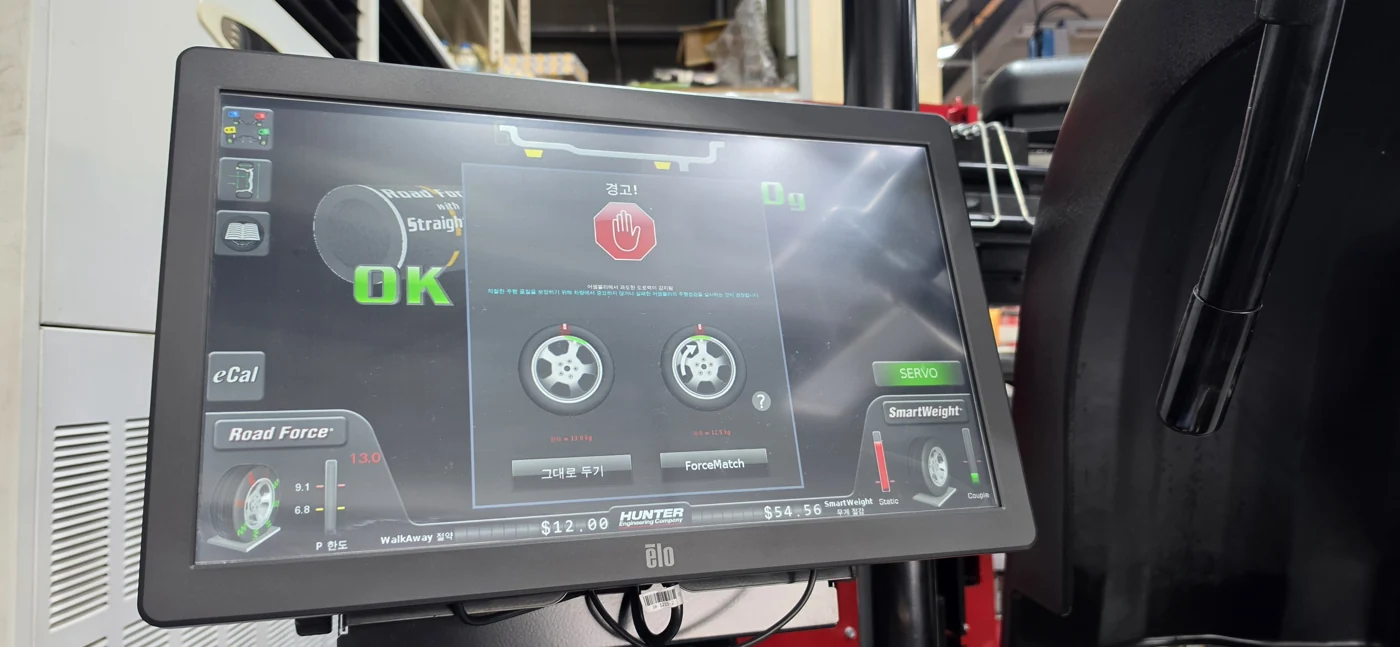
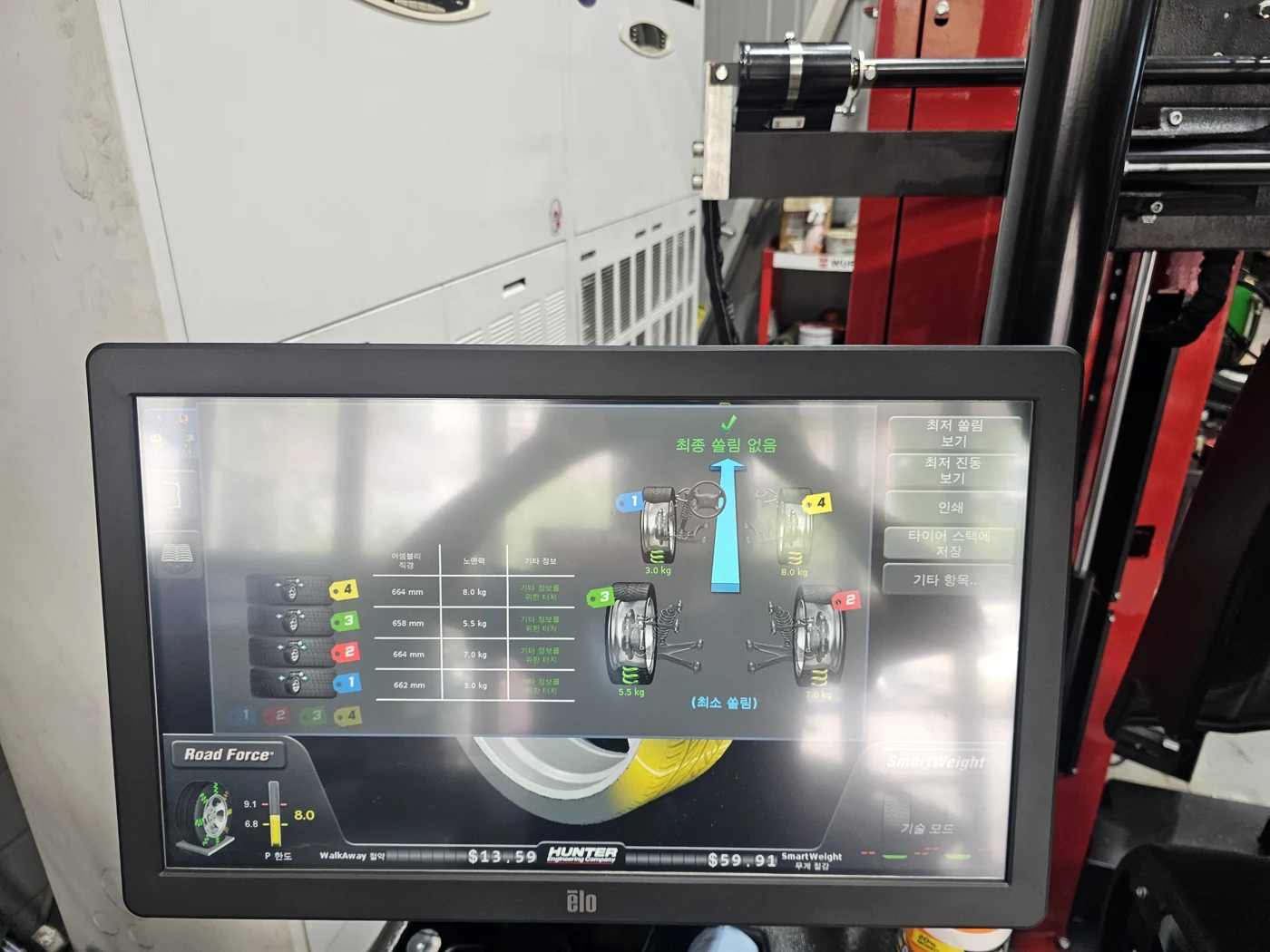
These are final RFV readings by scan number. The equipment’s kg display is expressed here as kgf, a unit of force. They are separate from balance weights in grams. The on-screen “no pull” result describes the equipment’s positioning calculation, not a guarantee on every road surface.
05
Adjusting toe at all four wheels
Before adjustment, all four toe readings were outside the ranges selected on the alignment equipment. We checked suspension height and adjusted the alignment. The figures below compare the initial readings with the last measurement screen.
Four-wheel toe: the change to the final settings
The tilt shows deviation from the final settings, not the actual direction of the wheels. Large numbers are measured toe values. Dashed outlines mark the final settings.
Before
All four wheels differed from the final settings
After
Zero deviation from the settings; actual toe shown above
Deviation is shown at a common enlarged scale. Parallel outlines in the after panel do not mean zero toe or physically parallel wheels.
| Measurement | Before | Final |
|---|---|---|
| Front toe L / R | 3.3 / 2.1 mm | 0.8 / 1.0 mm |
| Rear toe L / R | 4.1 / 3.1 mm | 1.3 / 1.1 mm |
| Front camber L / R | -0.31° / -0.81° | -0.49° / -0.68° |
| Rear camber L / R | -1.30° / -1.13° | -1.66° / -1.24° |
| Front caster L / R | 6.60° / 6.75° | 7.03° / 7.20° |
| Thrust angle | 0.04° | 0.01° |
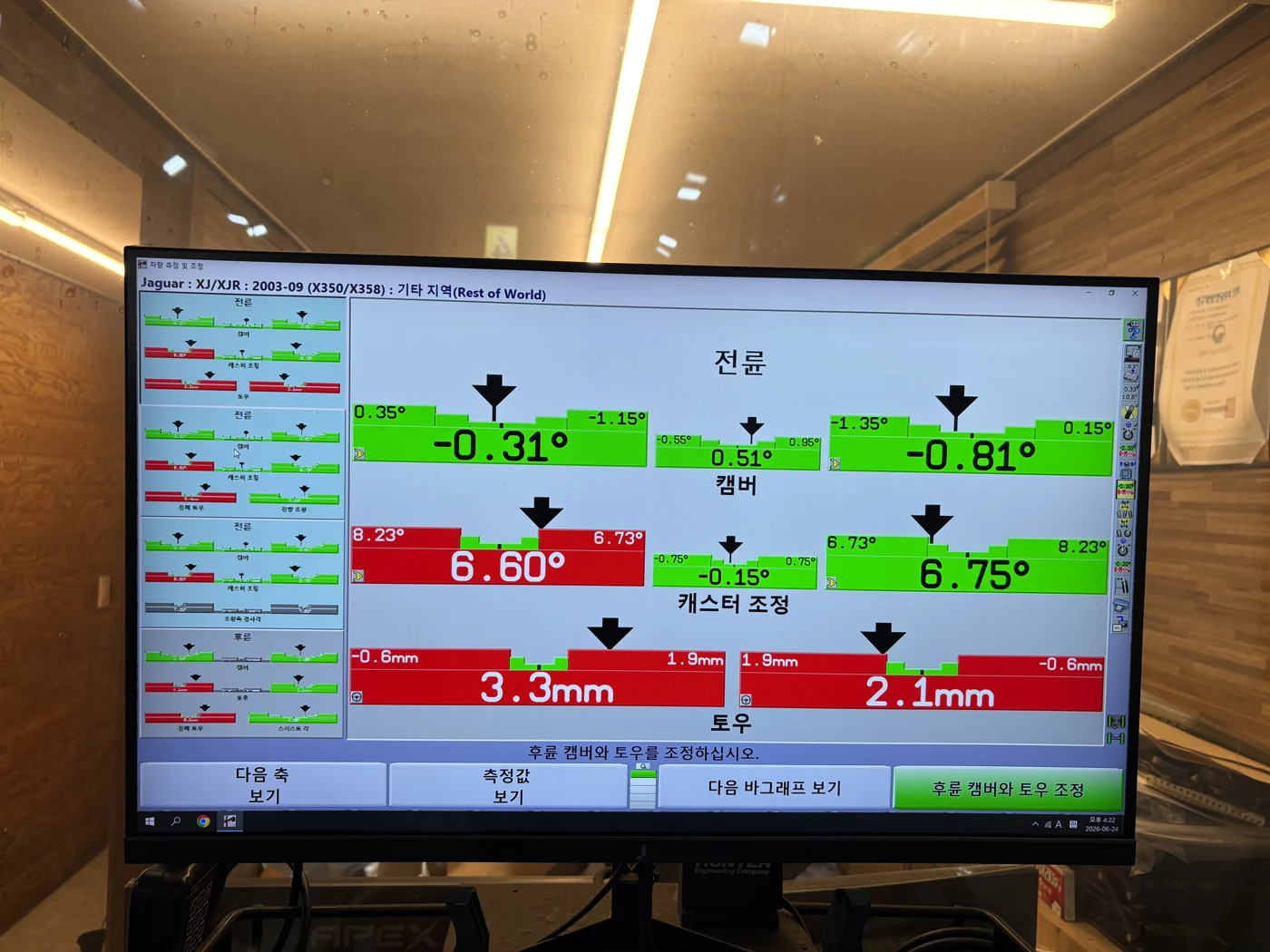
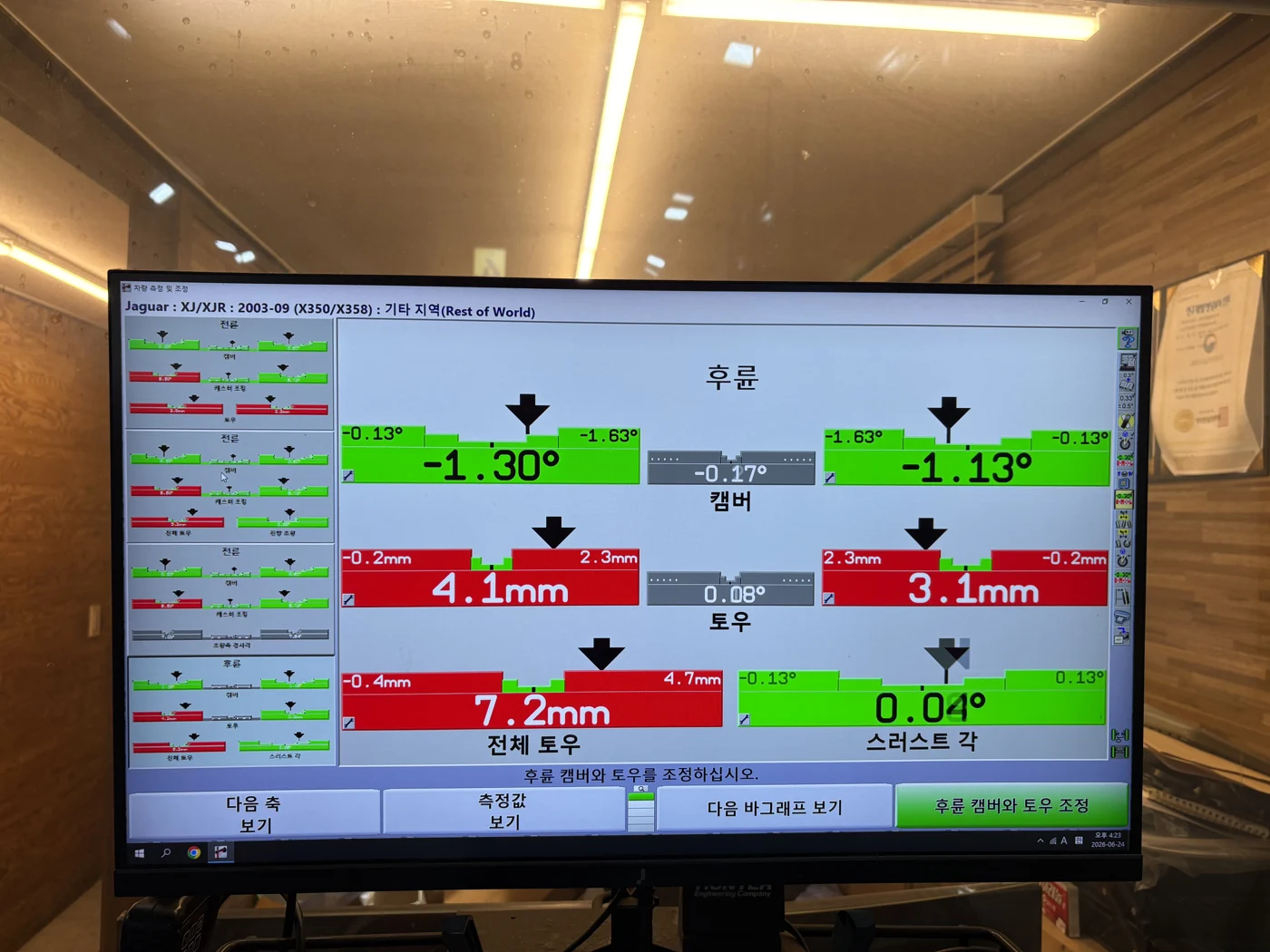
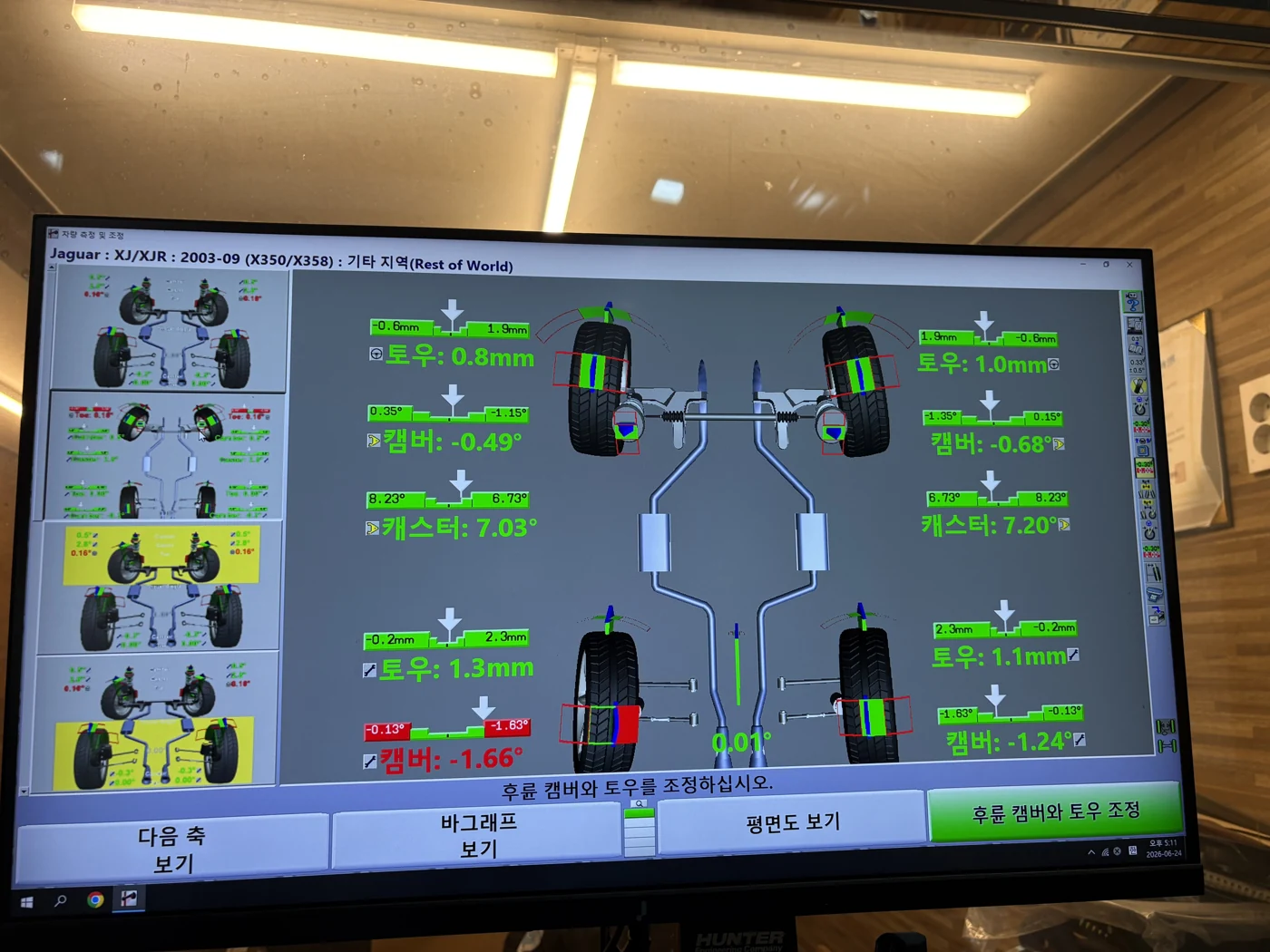
All four toe readings came within the displayed ranges. Rear-left camber, however, remained at -1.66°, beyond the displayed limit of -1.63°. The toe results and the remaining camber reading need to be considered separately.
06
Brake judder addressed, with a camber reading still to watch
We machined the brake discs to address judder under braking. After the wheel, tyre and alignment work, the final road test confirmed reduced pulling and brake judder. The customer also noticed a substantial difference in ride quality.
Rear-left camber remains an item for the next inspection. We recommend checking it together with the tyre’s inner-edge wear and the suspension condition.
Daimler service questions
Why did an oil-change visit lead to alignment and brake work?
Pulling and brake judder were felt during the road test. We checked suspension height, alignment, wheels and tyres, and machined the brake discs to address the judder.
Does an OK mass-balance result also mean RFV is OK?
They are different measurements. Mass balancing checks mass imbalance; RFV checks radial force variation with a roller applying load to the tyre. During this job, the equipment displayed an OK mass-balance reading alongside an RFV warning.
Were all alignment readings within range afterwards?
All four toe readings came within the displayed ranges, but rear-left camber remained outside at -1.66°. We recommend checking camber, the tyre’s inner-edge wear and the suspension condition at the next inspection.
Find the work that helps a cherished car drive well
If your car pulls or judders, we will look at alignment and ride height, wheels and tyres, and brakes together. We will explain what needs attention now and what should be monitored, and help you set a maintenance order that fits the car’s condition.
We explain the scope of any repairs and the estimate before proceeding with your approval.
Call 031-258-1617Book on Naver524 Maesonggosaek-ro, Gwonseon-gu, Suwon · By appointment. We explain the required scope and estimate after inspection.