NHC MOTORS · SERVICE RECORD
BMW X6: four new tyres, wheel alignment and the change in front and rear toe
We fitted four all-season tyres and carried out Road Force balancing on the front wheels. Two alignment screens taken later the same day show how the left and right toe readings changed.
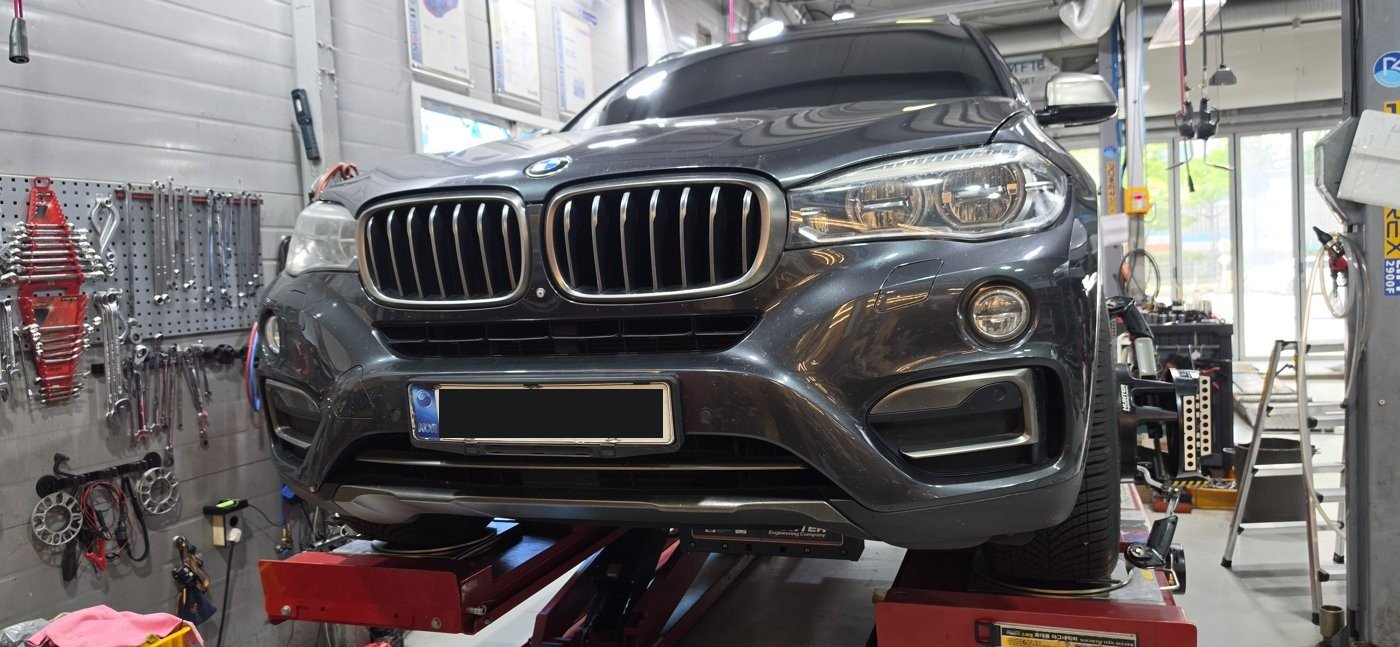
On this 2015 BMW X6, we replaced two 275/40R20 and two 315/35R20 all-season tyres. We also carried out Road Force vibration balancing on the front wheels and set the nitrogen-filled tyre pressures to 35psi.
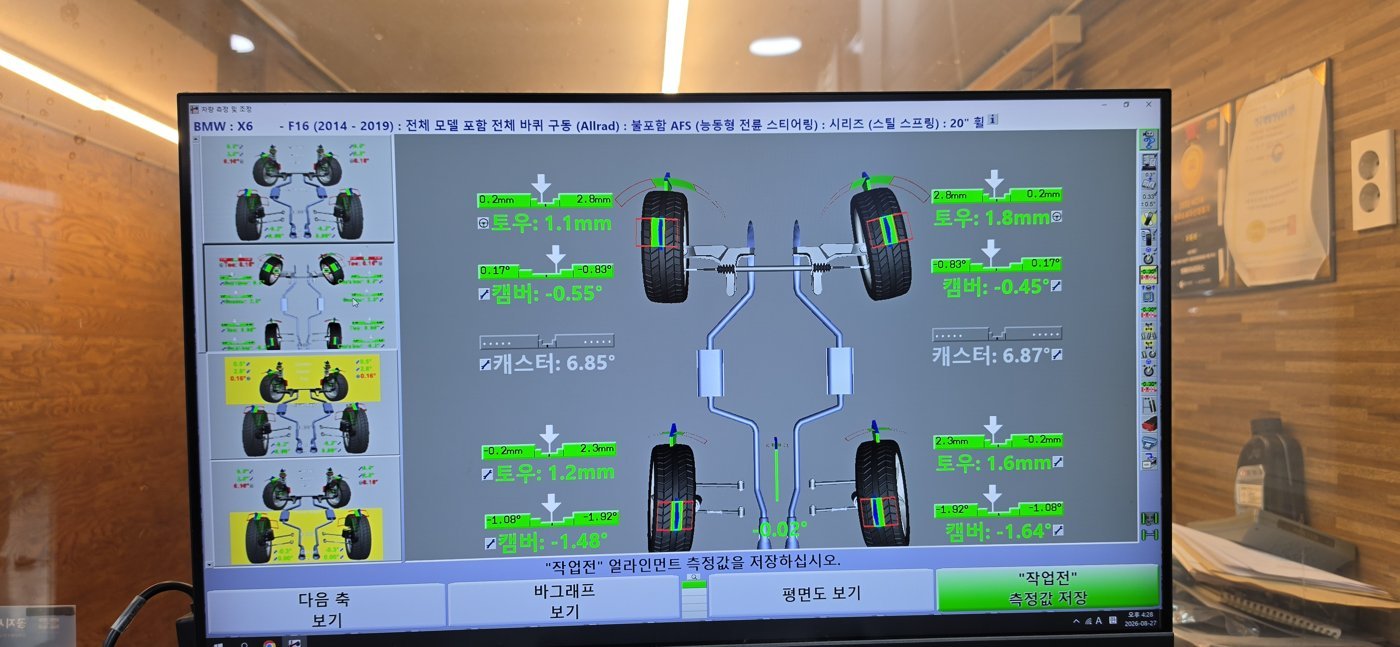
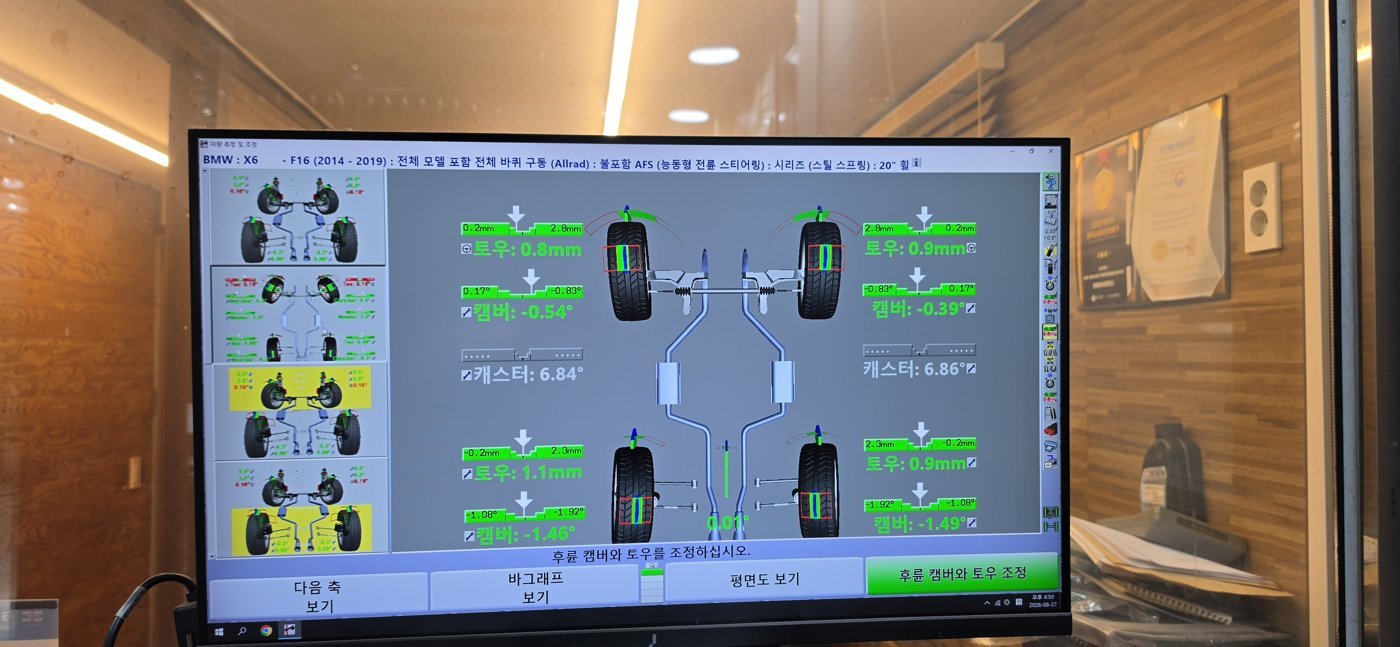
The first alignment screen showed front toe of 1.1mm left and 1.8mm right, and rear toe of 1.2mm and 1.6mm. All four readings were within the green range, but they differed from side to side. A later screen taken during adjustment showed 0.8/0.9mm at the front and 1.1/0.9mm at the rear. The readings below compare two points during the adjustment.
01 / NHC MOTORS
The first screen was green, but the left and right toe differed
Initially, front toe measured 1.1mm left and 1.8mm right; rear toe measured 1.2mm and 1.6mm. All four readings were within the alignment equipment's green range. Green means each value is inside that range, not that the two sides match. With new tyres being fitted, we looked at the relationship across both axles and adjusted the alignment.
We checked camber too. At the front it read -0.55° left and -0.45° right; at the rear it read -1.48° and -1.64°. Toe describes the direction a wheel points when viewed from above; camber is its tilt when viewed from the front. Both help explain how the four wheels sit relative to one another.
02 / NHC MOTORS
Rear camber and toe changed during adjustment
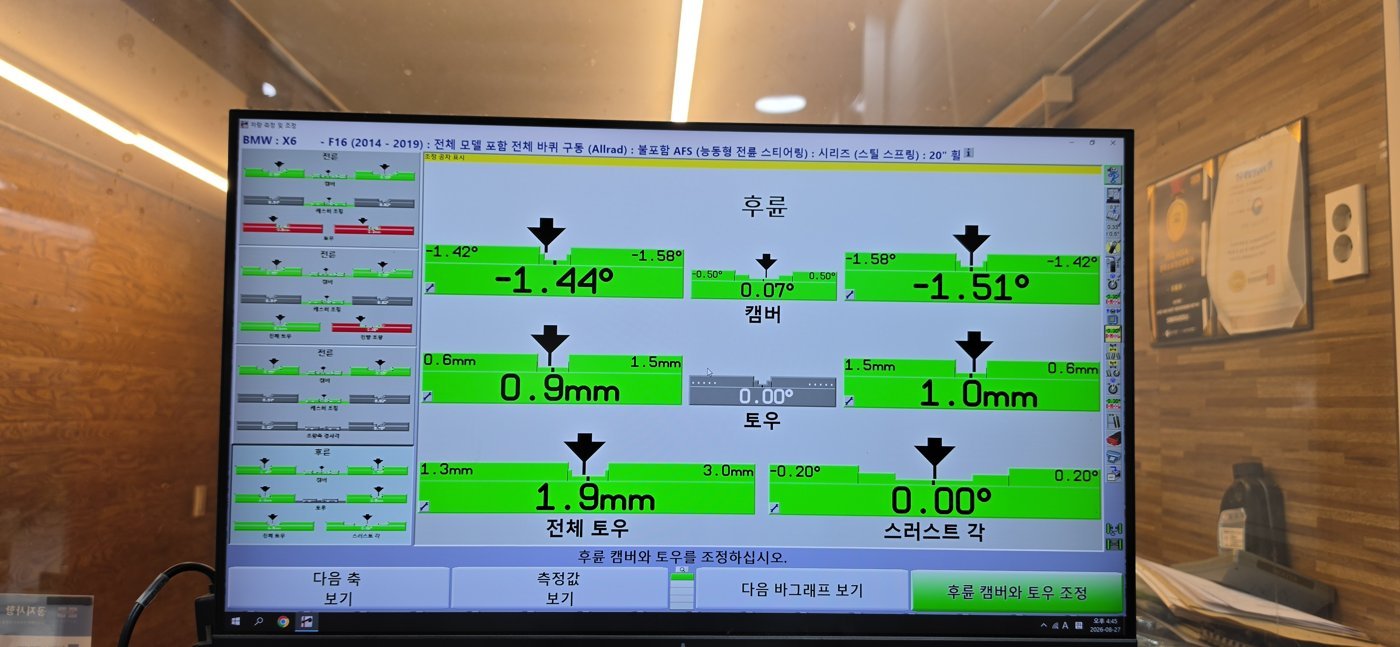
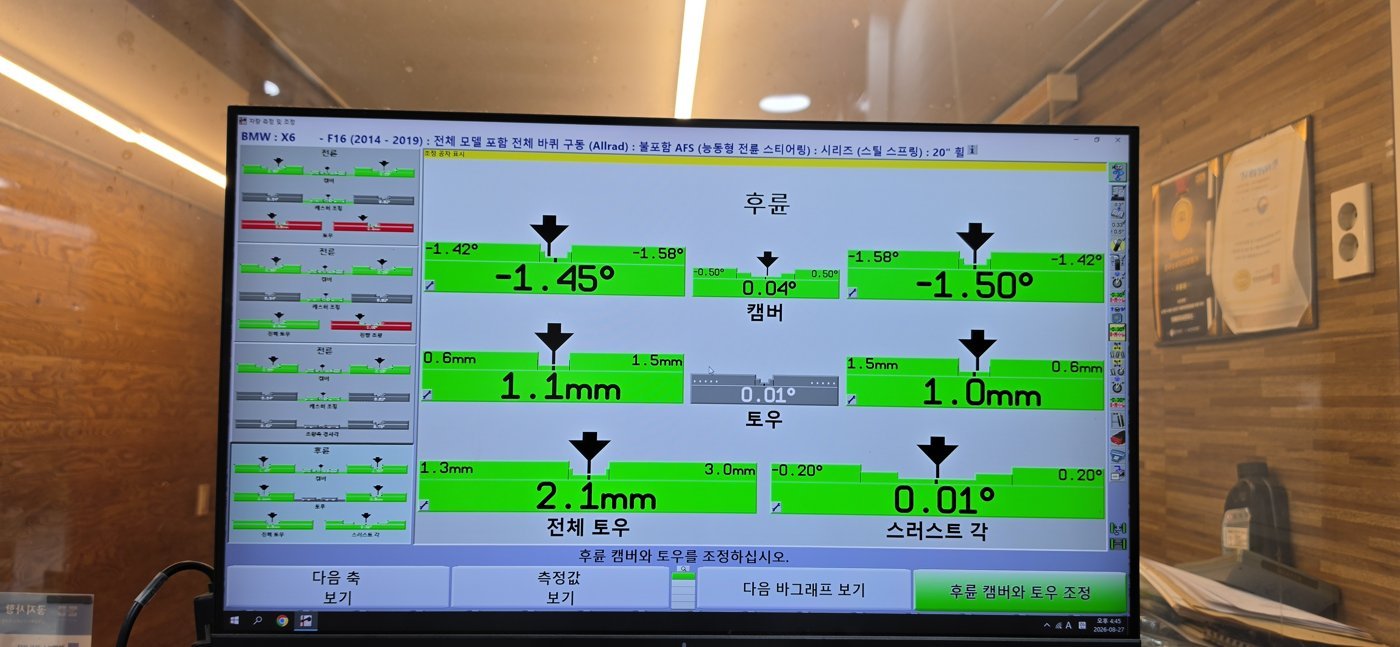
We worked from the detailed rear-axle screen, checking camber and toe together. The rear wheels influence the direction the car tracks, so their readings provide a reference when checking front toe and steering-wheel centre. Moving one setting can affect the other, so both are rechecked during adjustment.
On the later screen taken during adjustment, rear camber reads -1.46° and -1.49°, with rear toe at 1.1mm left and 0.9mm right. Compared with the first screen's -1.48°/-1.64° camber and 1.2/1.6mm toe, the side-to-side differences are smaller. The screen still carries a prompt to adjust rear camber and toe.
03 / NHC MOTORS
The later front-toe readings were closer together
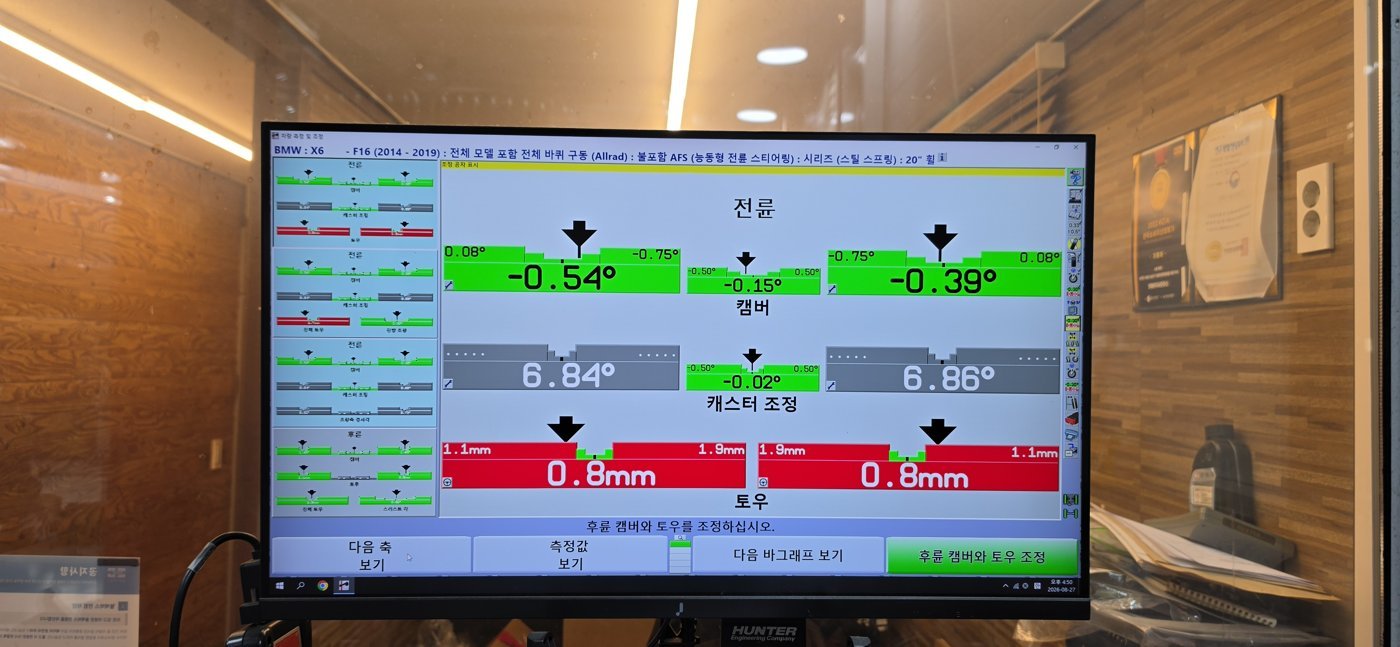
After the detailed front-axle screen, the later screen taken during adjustment shows front toe of 0.8mm left and 0.9mm right. The gap between the two readings narrowed from 0.7mm on the first screen to 0.1mm on this later one.
The toe values were not set to zero. We adjusted the relationships between the four wheels within the vehicle’s permitted ranges. Steering-wheel centering and vibration also need to be checked under the relevant speed and road conditions.
04 / NHC MOTORS
New tyres, front Road Force balance and what to check on the road
We fitted two 275/40R20 and two 315/35R20 4SEASONS GEN-3 tyres and used the Hunter Road Force machine on the front wheels. Tire pressure was set to 35/35 psi with nitrogen. RFV measures force variation with a roller applying a load to the tyre.
If steering-wheel centre or vibration is a concern, note the speed and road conditions where it happens. The numbers on an alignment screen alone cannot describe how the car feels on the road.
We also added BG 245 diesel fuel-system treatment and DFC PLUS fuel conditioner. These were separate fuel-system maintenance items, not an effect of the tyre or alignment work.
Four-wheel toe, two screens during adjustment
First screen
Front L/R difference 0.7 mm · rear 0.4 mm
Later adjustment screen
Front L/R difference 0.1 mm · rear 0.2 mm
Frequently asked questions
Do green alignment readings always need adjustment?
No. We look at the left-right relationship, both axles, tyre wear and any actual driving concern. This X6 started with toe readings in range, and the later screen shows a smaller left-right difference.
Is zero toe always best?
Alignment should follow the specification for the vehicle. The later X6 screen taken during adjustment shows front toe of 0.8/0.9mm. Those are not zero-toe readings.
How is Road Force balancing different from ordinary balancing?
Ordinary balancing addresses weight imbalance. Road Force presses a roller against the tyre to measure force variation under load as well. The front wheels of this X6 received Road Force balancing; whether a vibration remains must be checked at the speed where it occurs.
We assess the tyres and alignment together on an X6
If you are replacing tyres or are concerned about uneven wear or vibration, book a check. We will look at tyre condition, Road Force readings and the alignment measurements, then explain the work needed.
We explain the work and estimate before proceeding with your consent.
Call for service adviceBook via Naver031-258-1617 · NHC Motors, Suwon · By appointment
Published 2026-09-26