한국어 · NHC MOTORS / BMW 1 SERIES F40
ALIGNMENT · ROAD FORCE · STEERING
BMW F40: still pulling right after repeated wheel alignments
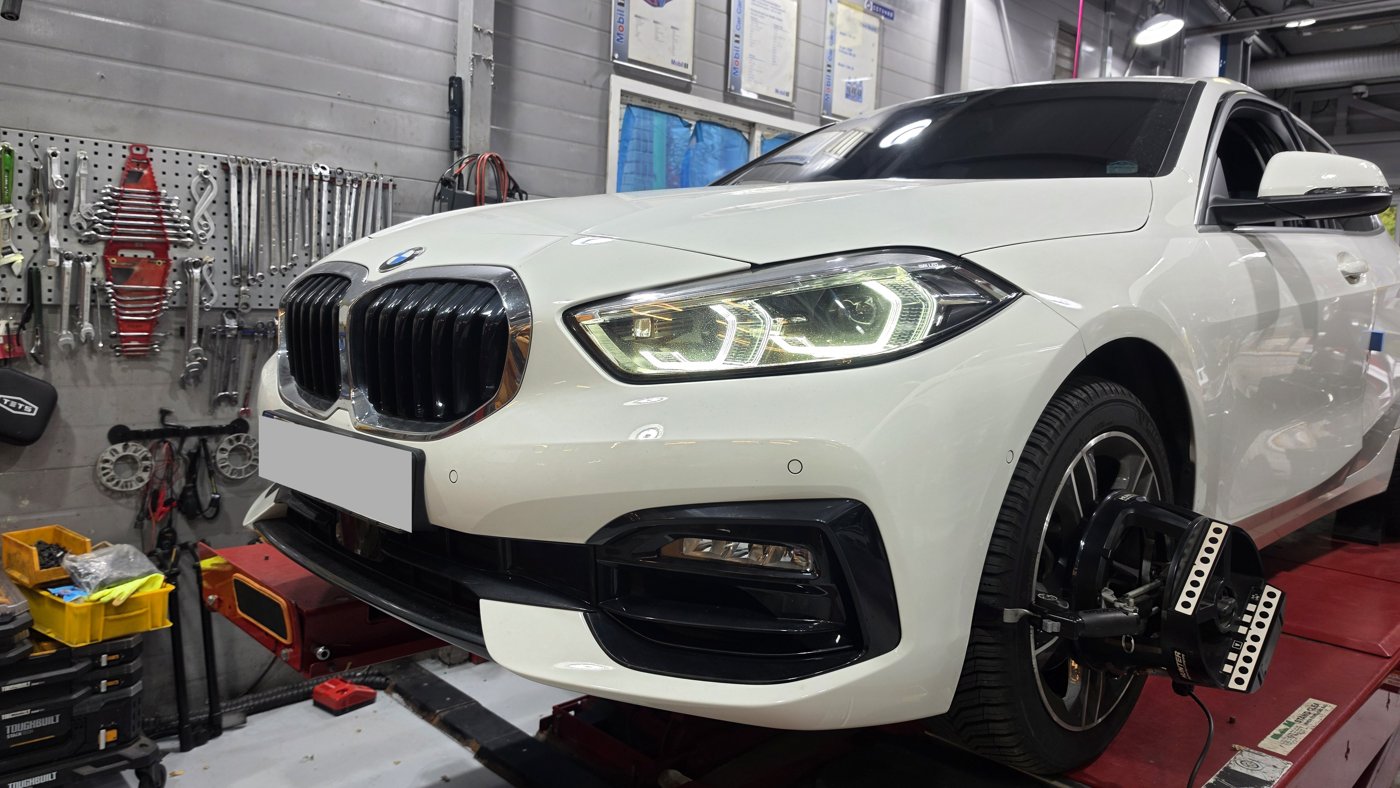
At least three alignment visits had left this BMW F40 pulling right with an off-centre steering wheel. The owner was considering another set of tyres or even another car. We drove together to check the symptoms, then examined the alignment and the security of its adjusters.
01 / BMW F40
A right-hand pull that persisted after repeated alignments
The owner bought this BMW 1 Series used in April and replaced the tyres. They said the alignment had been adjusted at least three times in six months because of a right-hand pull and an off-centre steering wheel. They had also explained the symptoms to a BMW service centre and requested an inspection, but were told there was no alignment fault.
Driving remained uncomfortable. The owner came to us wondering whether to buy another set of tyres or replace the car.
We began with a drive together. Even on a straight road, the steering needed frequent small corrections. In corners, the car tightened its line and required another correction. We confirmed the unsettled behaviour on the road before measuring the alignment.
Our guide to pulling that persists after repeated alignments (Korean) explains the checks involved.
02 / BMW F40
Checking front and rear alignment and the security of the adjusters
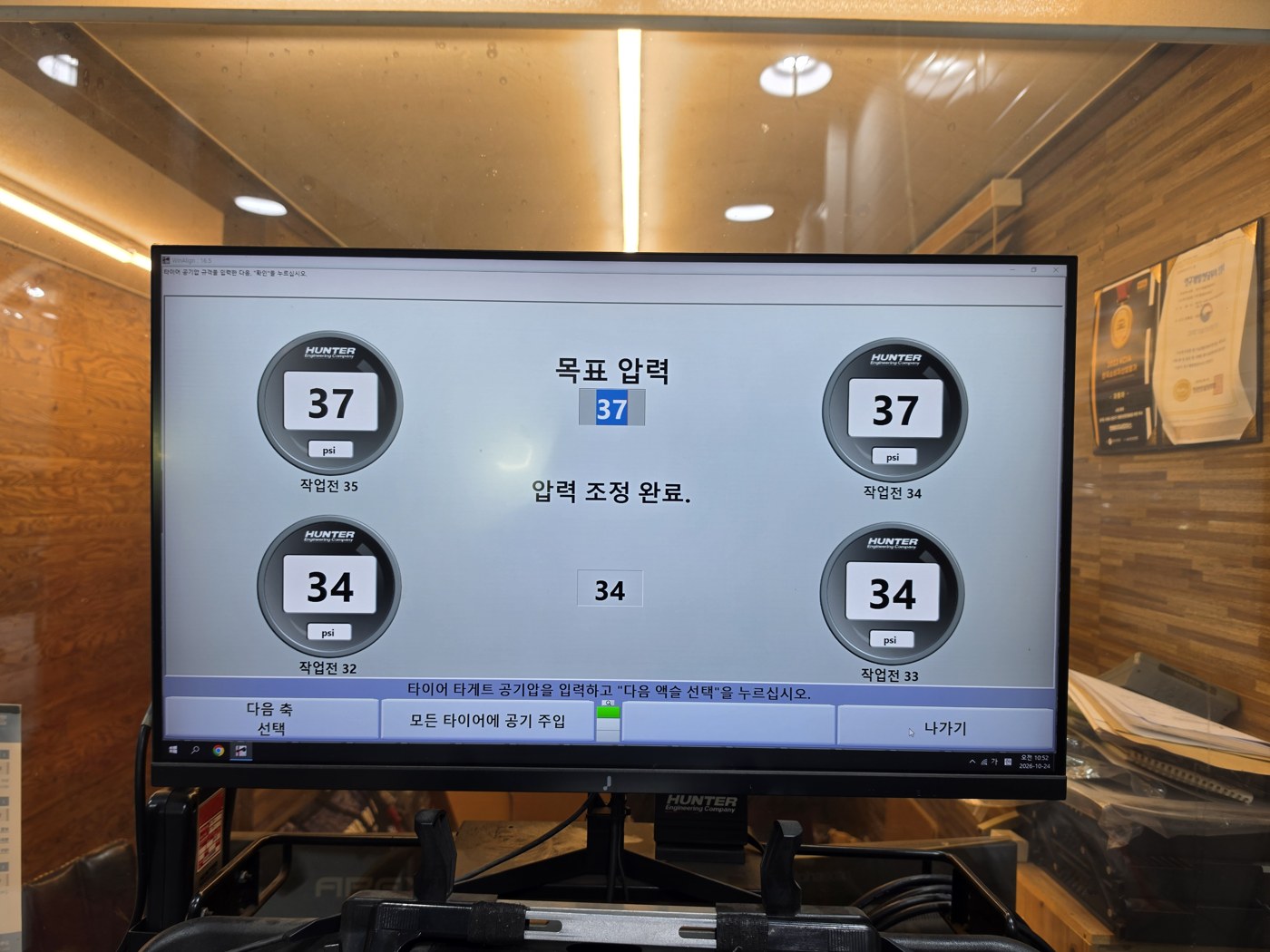
We first set the tyre pressures. The fronts were at 35 and 34 psi and the rears at 32 and 33 psi. We adjusted them to 37 psi front and 34 psi rear, fitted targets to all four wheels and checked camber and toe.
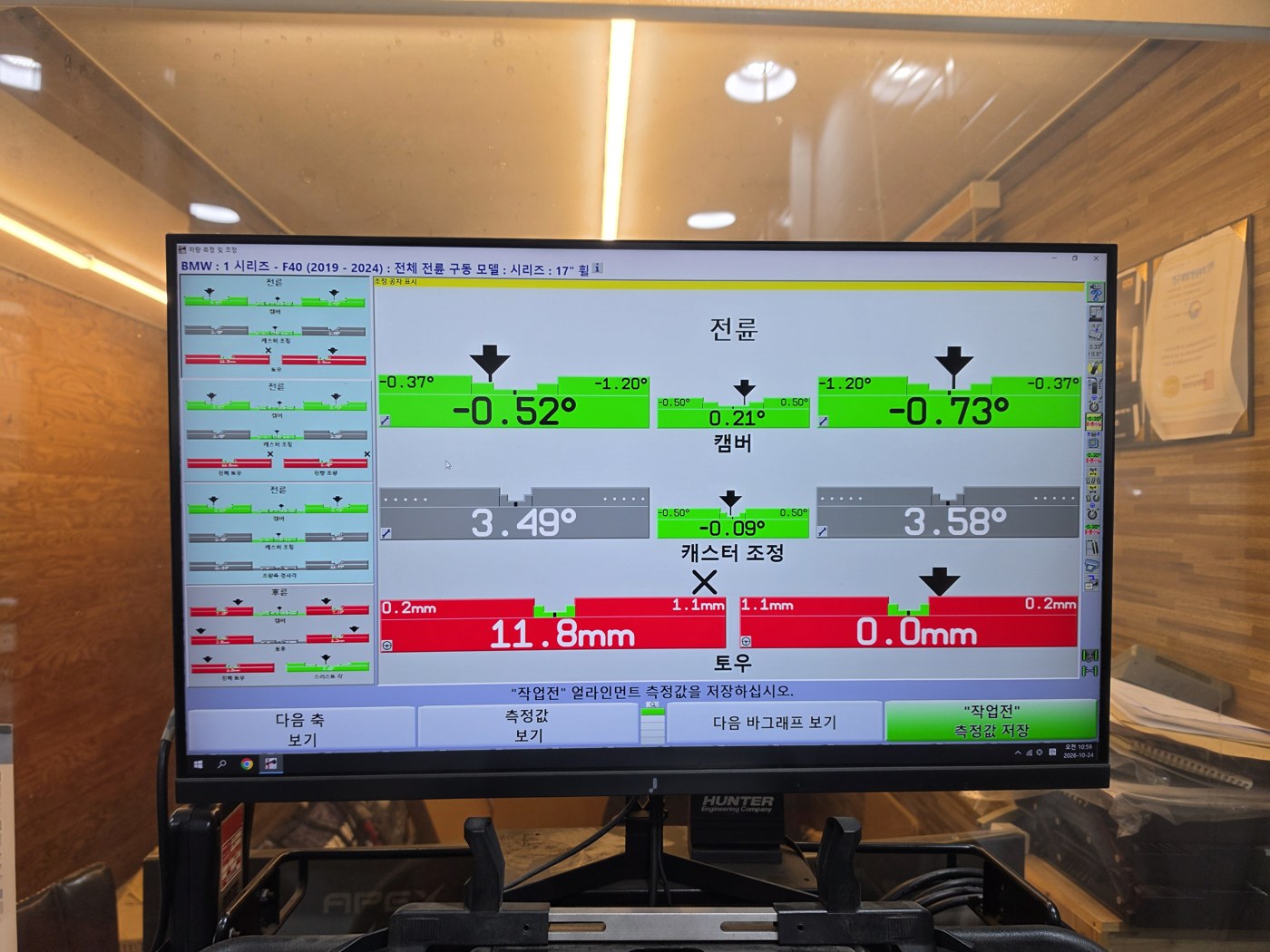
The first measurement screen showed front toe at 11.8 mm left and 0.0 mm right, a substantial difference. Rear camber and toe also needed adjustment. We checked the rear alignment as well as the steering centre and front wheels.
A loose driver's-side tie-rod locknut found during adjustment
While adjusting the front alignment, we found the driver's-side tie-rod locknut loose, with substantial movement at the adjuster. This nut secures the adjustment that holds the toe setting. If it is not secure, the alignment setting can change, so the adjuster's security must be checked alongside the readings.
Before adjustment
Initial recorded toe values
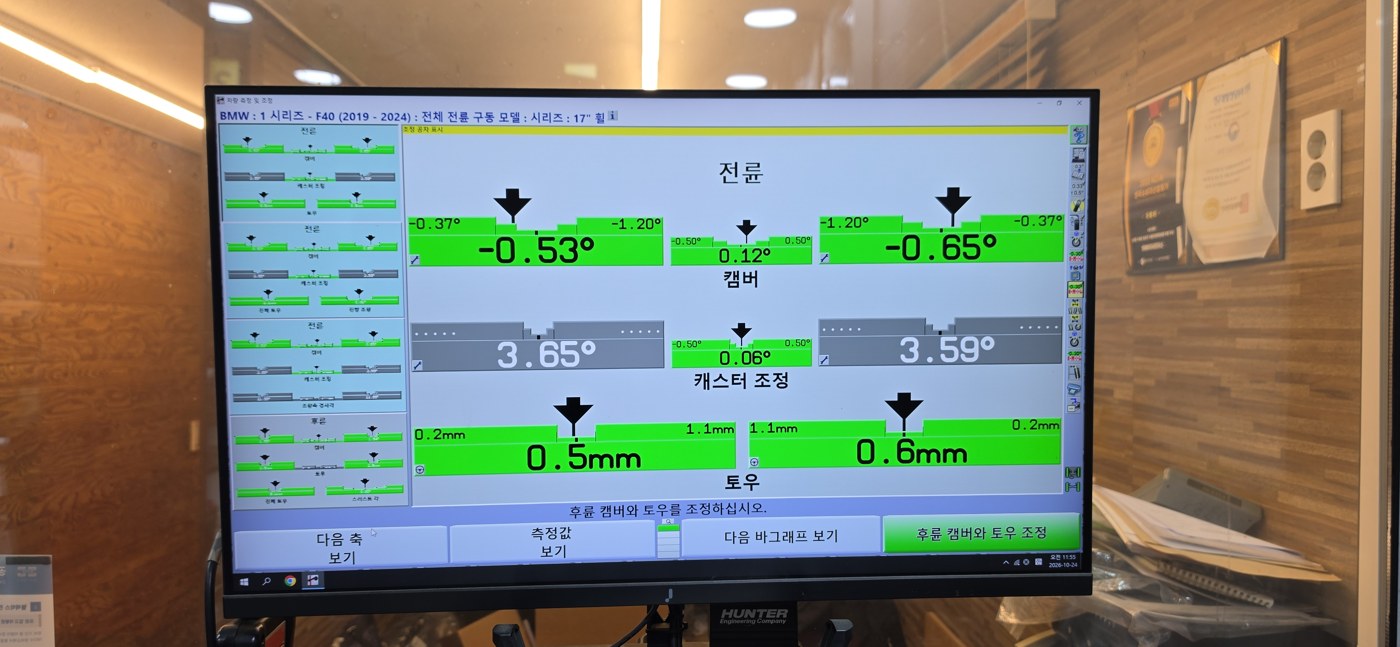
After adjustment
Front 0.5 / 0.6 · Rear 2.5 / 2.5 mm
| Measurement | Before | After |
|---|---|---|
| Front left toe | 11.8mm | 0.5mm |
| Front right toe | 0.0mm | 0.6mm |
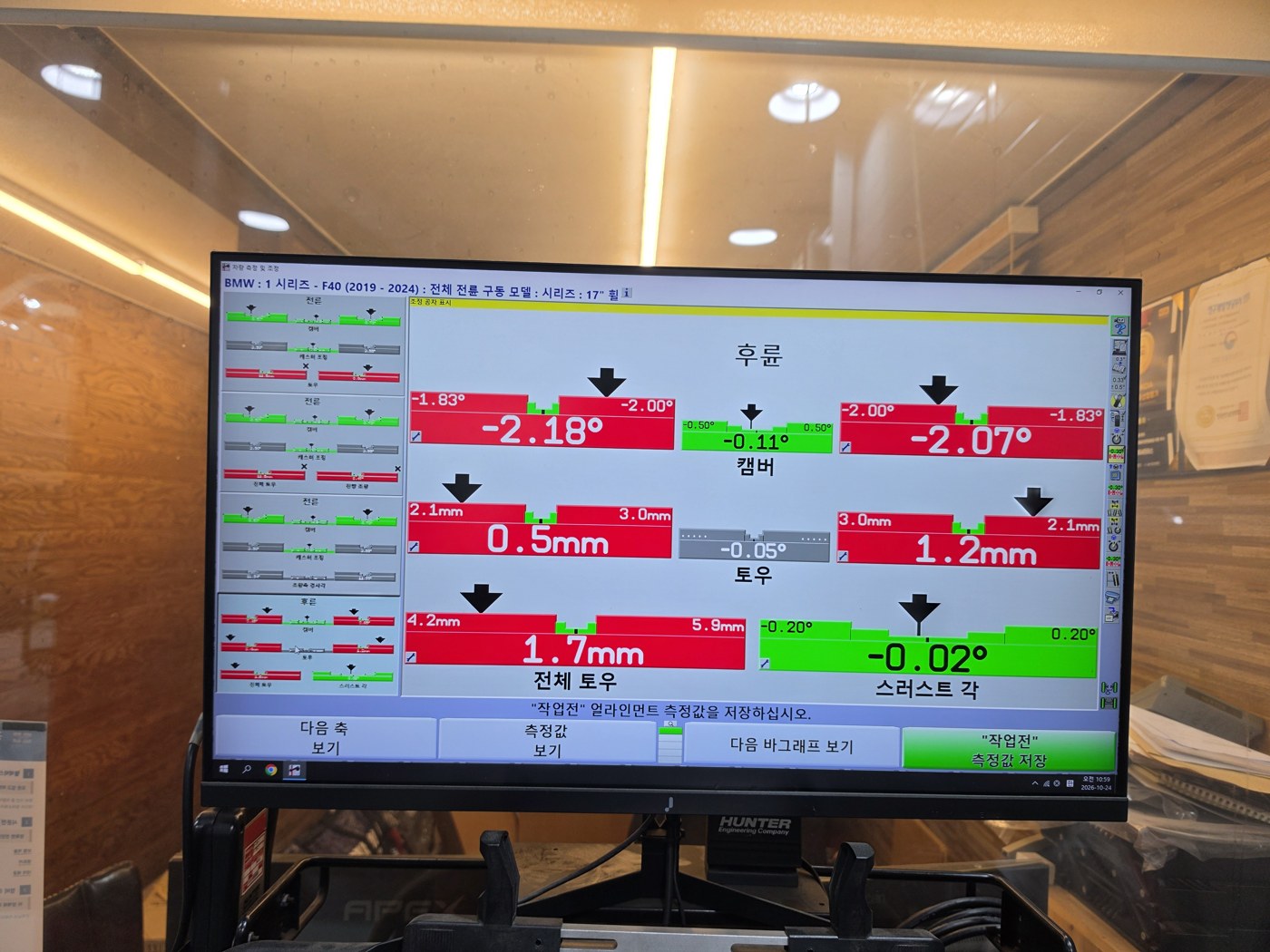
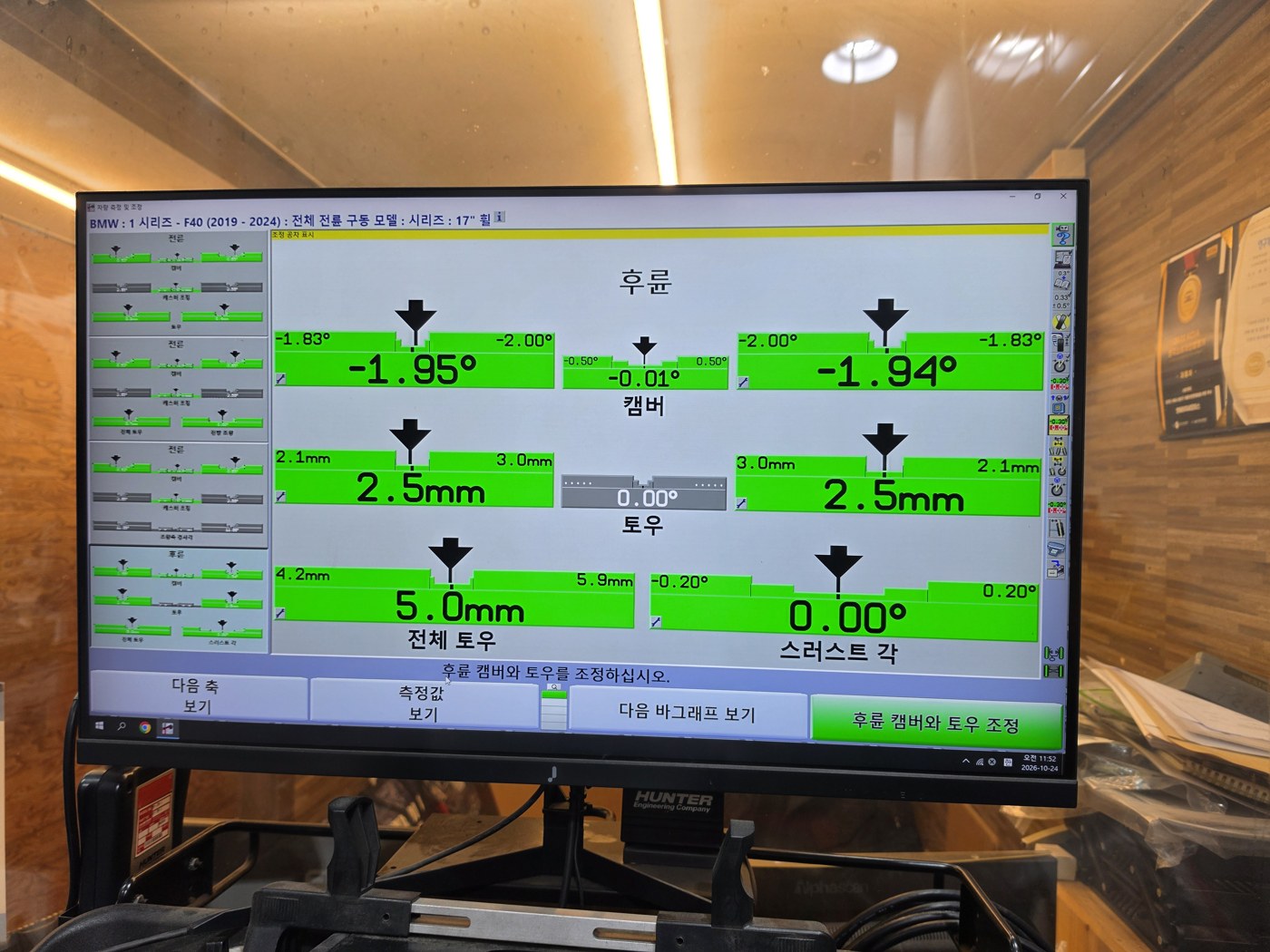
| Rear left toe | 0.5mm | 2.5mm |
| Rear right toe | 1.2mm | 2.5mm |
| Rear total toe | 1.7mm | 5.0mm |
| Rear left camber | -2.18° | -1.95° |
| Rear right camber | -2.07° | -1.94° |
| Thrust angle | -0.02° | 0.00° |
We adjusted front and rear toe and rear camber, and set the thrust angle. The table above records the before-and-after measurements. Toe is not simply set to zero: this car retained toe-in at both axles, with the front edges of the wheels pointing slightly inward.
Difficult adjustments call for precision
In our workshop experience, fine adjustment of rear toe on the BMW E46, F40 and some MINI models can take time. Working with the adjuster's design and response to make small changes requires experience.
On this F40, we repeatedly adjusted and remeasured, checking left and right toe together with thrust angle. Rear-wheel alignment also affects straight-line stability and steering feel. We took the time to confirm the final rear setting of 2.5 mm on each side and a thrust angle of 0.00°.
Actual alignment measurement screens
03 / BMW F40
Checking tyre-to-wheel fit and RFV separately from alignment
Separately from wheel alignment, we used the road-force machine to examine tyre-to-wheel fit and force variation under load. Conventional mass balance and RFV are different measurements. RFV is variation in radial force as a tyre rolls, mainly relevant to vibration. It must be distinguished from lateral force and pulling associated with tyre conicity.
The first-harmonic readings on the screen below are 9.0 kg for the tyre and 11.5 kg for the wheel-and-tyre assembly. Rim runout on the same row is 0.12 mm. We checked the tyre reading separately from the assembled reading.
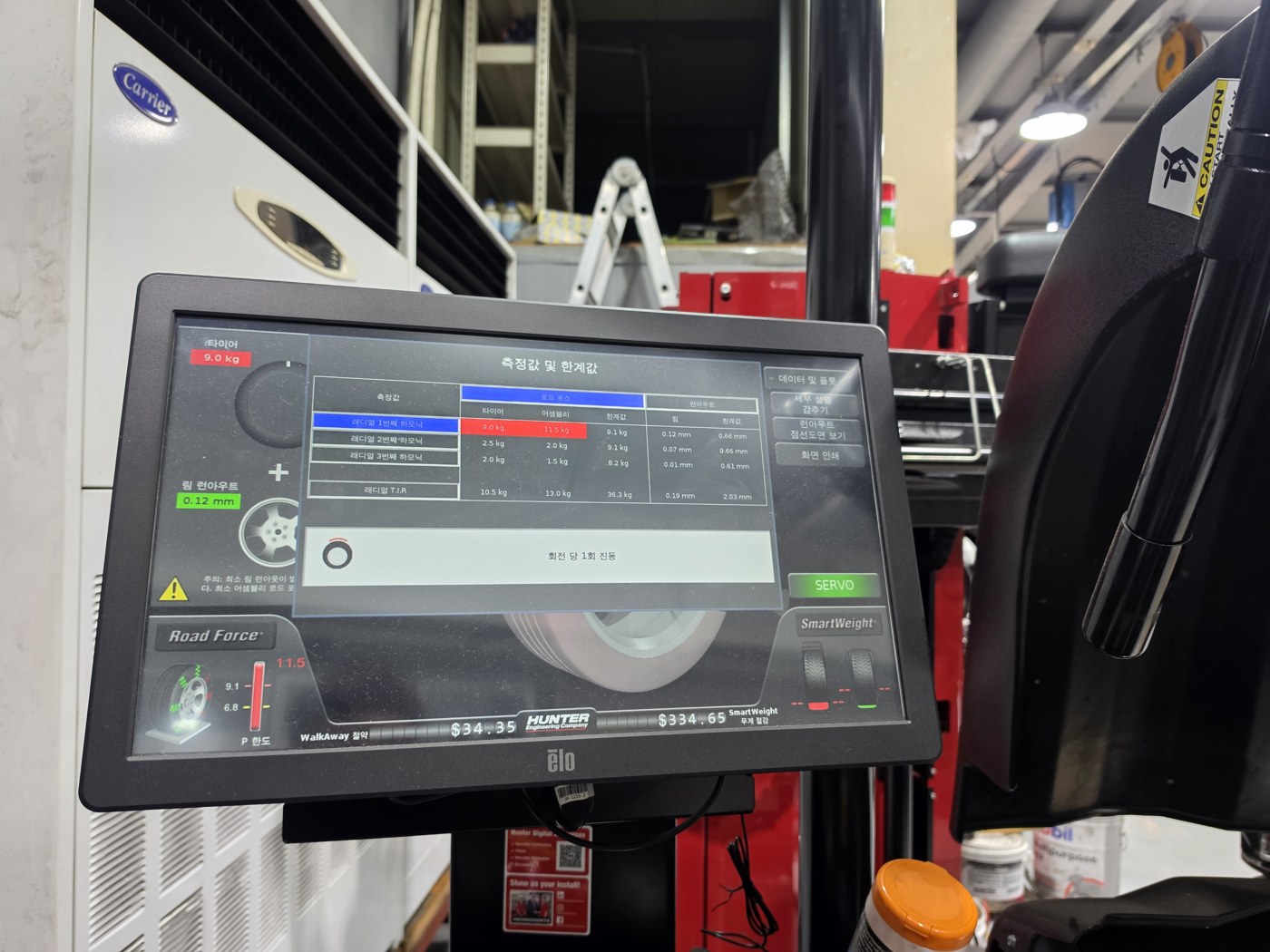
We dismounted and refitted the tyres to address how they sat on the wheels. We brought the four measurements together to review their placement, keeping the required rotation direction of these directional tyres.
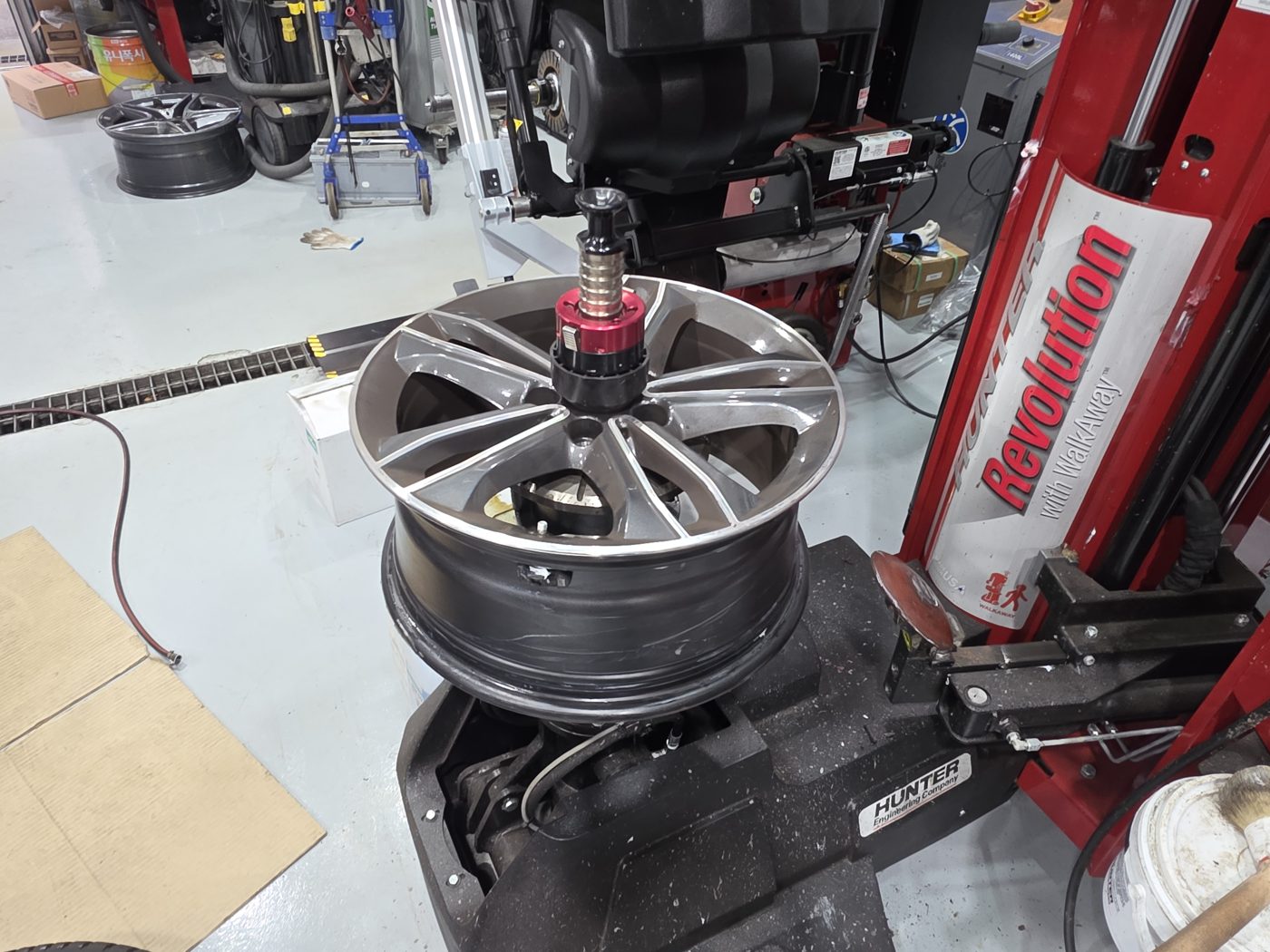
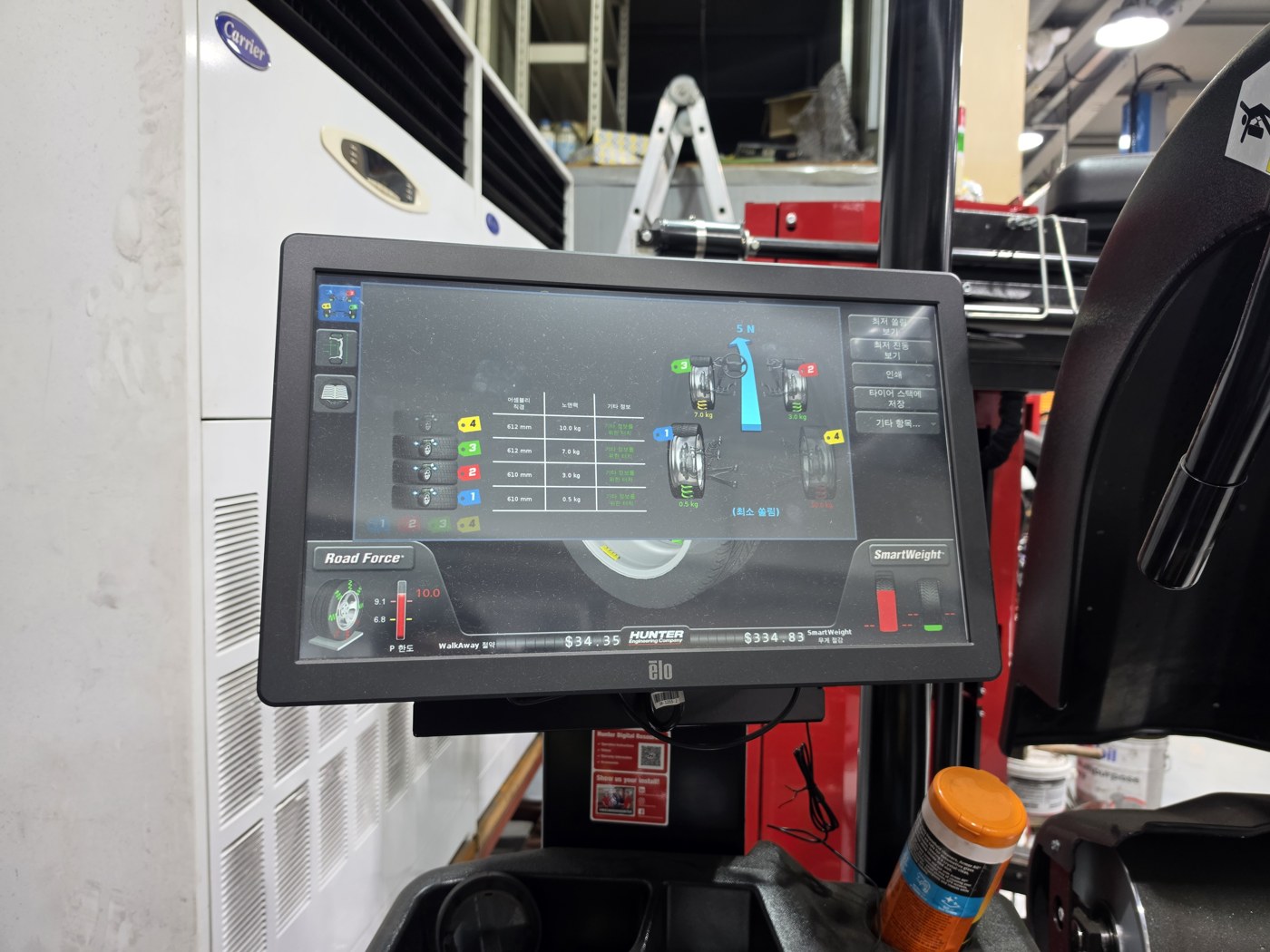
The road-force balancing guide (Korean) explains how RFV measurement differs from conventional balancing.
04 / BMW F40
Setting the electronic steering reference after wheel alignment
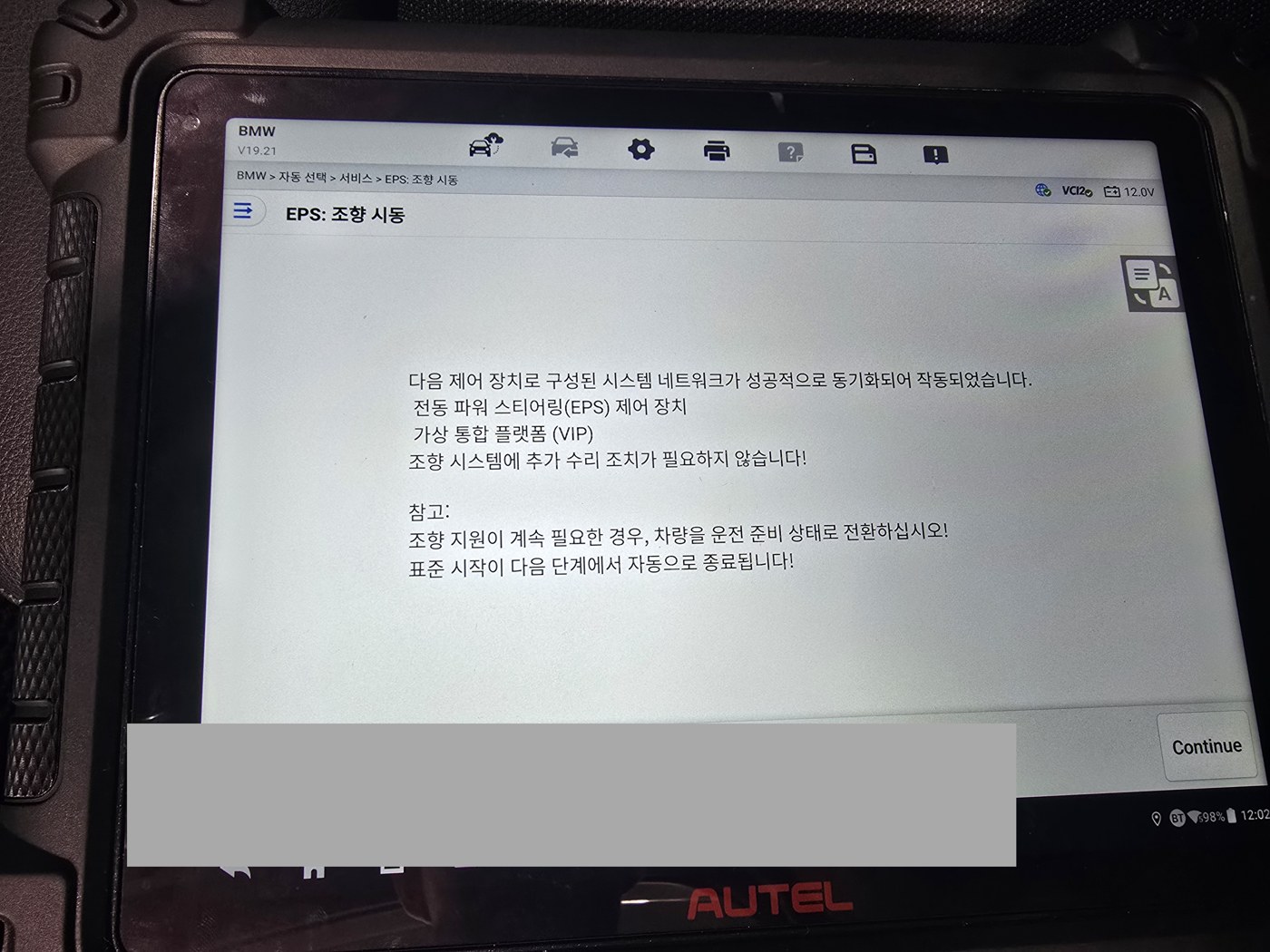
After setting the mechanical wheel alignment and steering centre, we set the electronic steering reference. We used the diagnostic tool's EPS commissioning function, labelled ‘EPS: 조향 시동’, to set the reference and synchronise EPS with VIP.
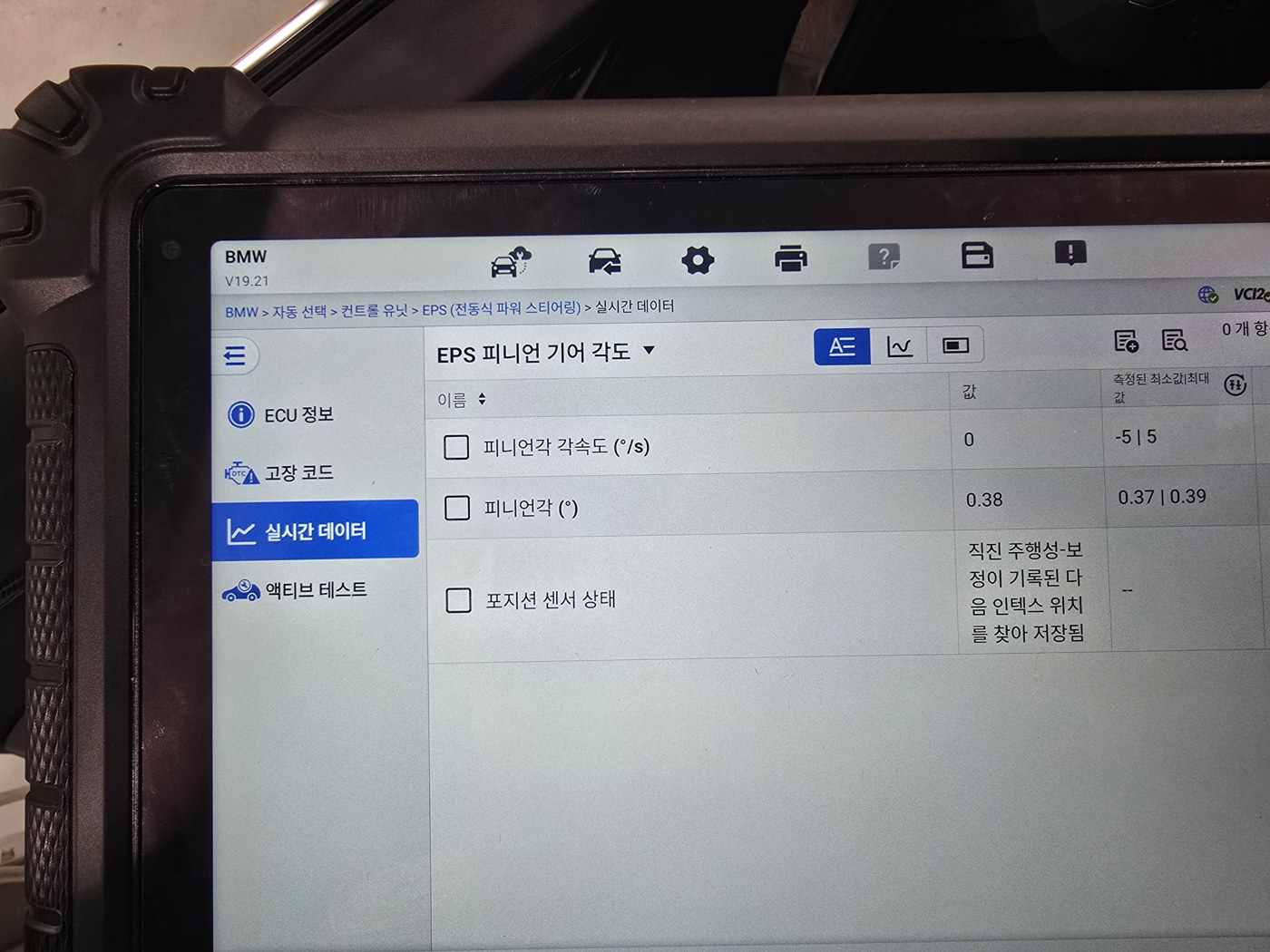
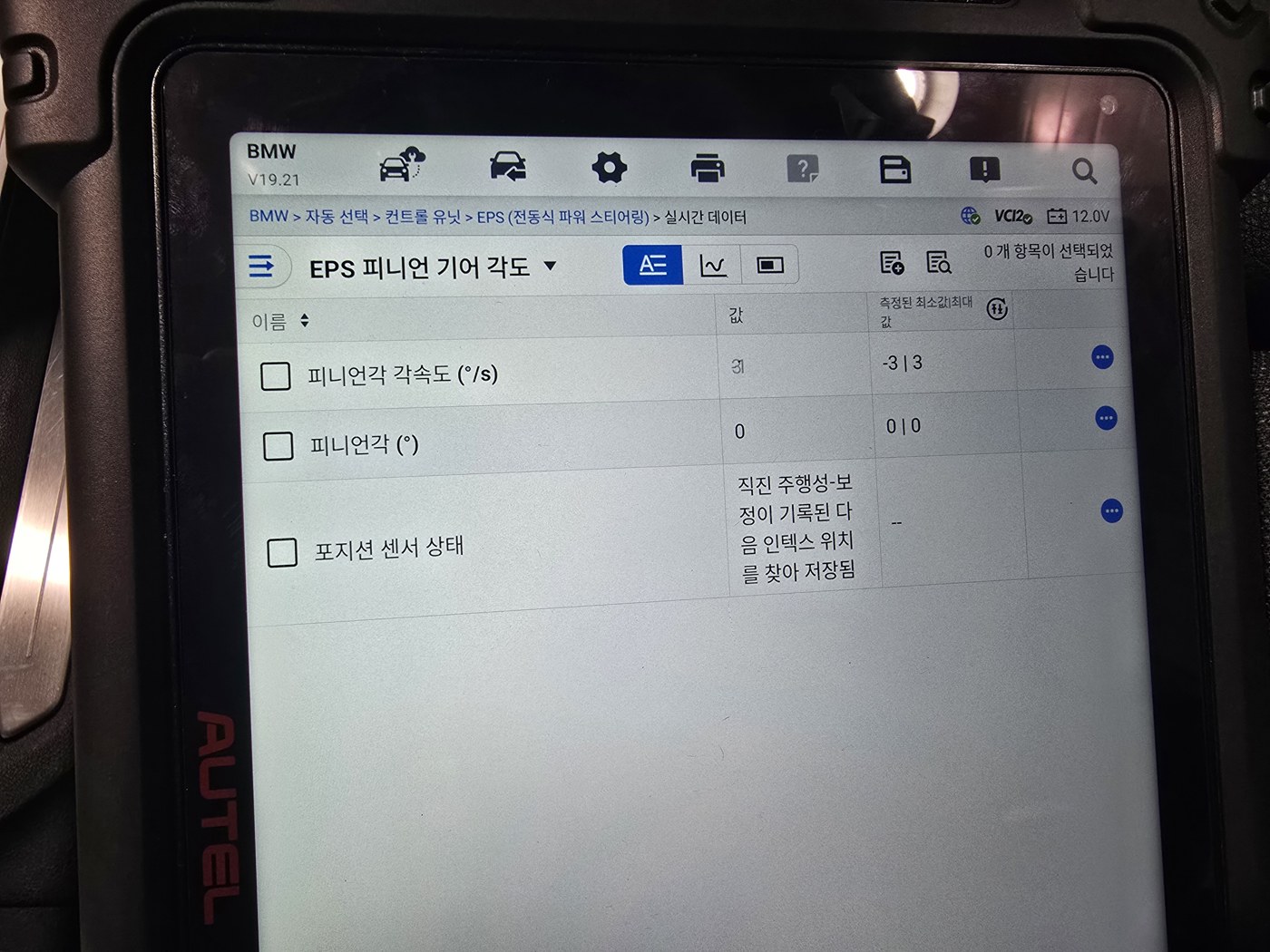
After setup, the pinion angle read 0° and EPS–VIP synchronisation was confirmed complete. We then checked steering centre and straight-line behaviour on the road.
View the synchronisation confirmation
05 / BMW F40
After the work
We confirmed the persistent right-hand pull and off-centre steering on the initial drive and measurements, and found the loose driver's-side tie-rod locknut during adjustment. We checked the alignment and adjuster security, inspected and refitted the tyres, reviewed their placement and set the electronic steering reference.
The final road test confirmed improvement in the right-hand pull and steering centre. We first checked the change on straights and through corners, then the owner drove the car. They said the arm tension caused by constantly correcting the steering was much reduced.
Both visitors left feedback after collecting the car. The accompanying family member wrote on Google about the more comfortable journey home:
“Driving was more comfortable on the way home, and my husband is really happy :)”
English translation of the Korean review below

On Naver, the owner described the repeated alignment visits and how they found us, then added:
“Finally, my car feels like a new car again :)”
English translation of the Korean review below

Frequently asked questions
Should toe simply be set to zero?
No. This car retained toe-in at both axles, with the front edges of the wheels pointing slightly inward. Toe is adjusted to suit the vehicle and the chosen setup, while also checking the balance of the rear settings and the thrust angle.
Tell us when the car pulls
Please share the model, mileage, when the car pulls, and any recent tyre or alignment work. Those details help us plan the checks.
We explain the scope of any repairs and the estimate before proceeding with your approval.
Call 031-258-1617Book on Naver031-258-1617 · NHC Motors, Suwon · By appointment