SUSPENSION · WHEEL ALIGNMENT
Audi TT Roadster: check all four wheels for precise steering
Steering response starts with more than the front wheels. This TT received suspension tightening, front and rear alignment, tyre road-force checks and steering-angle sensor calibration.
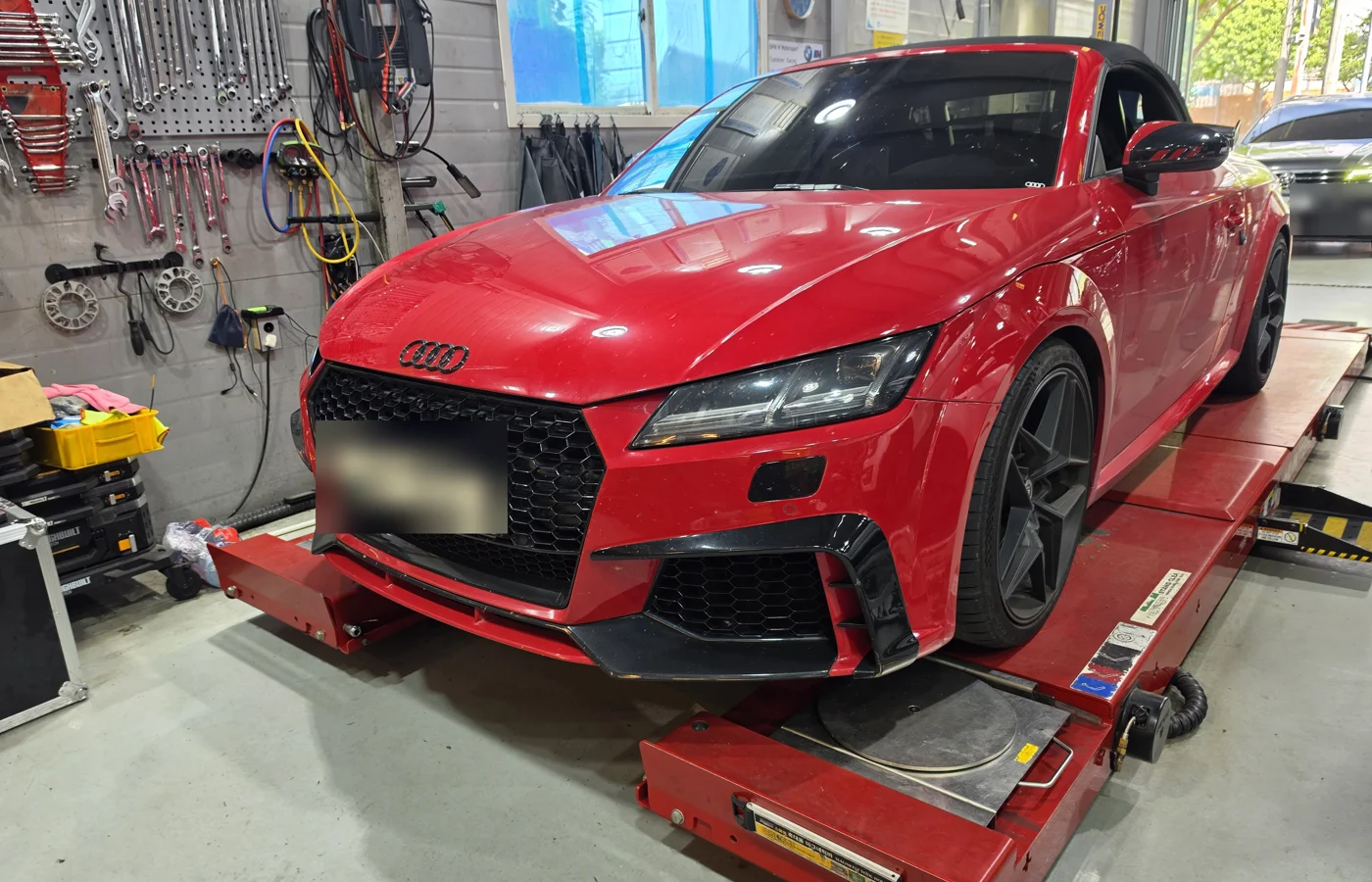
Vehicle: 2015 Audi TT Roadster 45 · 84,717 km
Findings: front-right and rear-left toe outside the displayed reference ranges
Work: suspension specification check, ride-height tightening, four-wheel alignment and steering-angle calibration
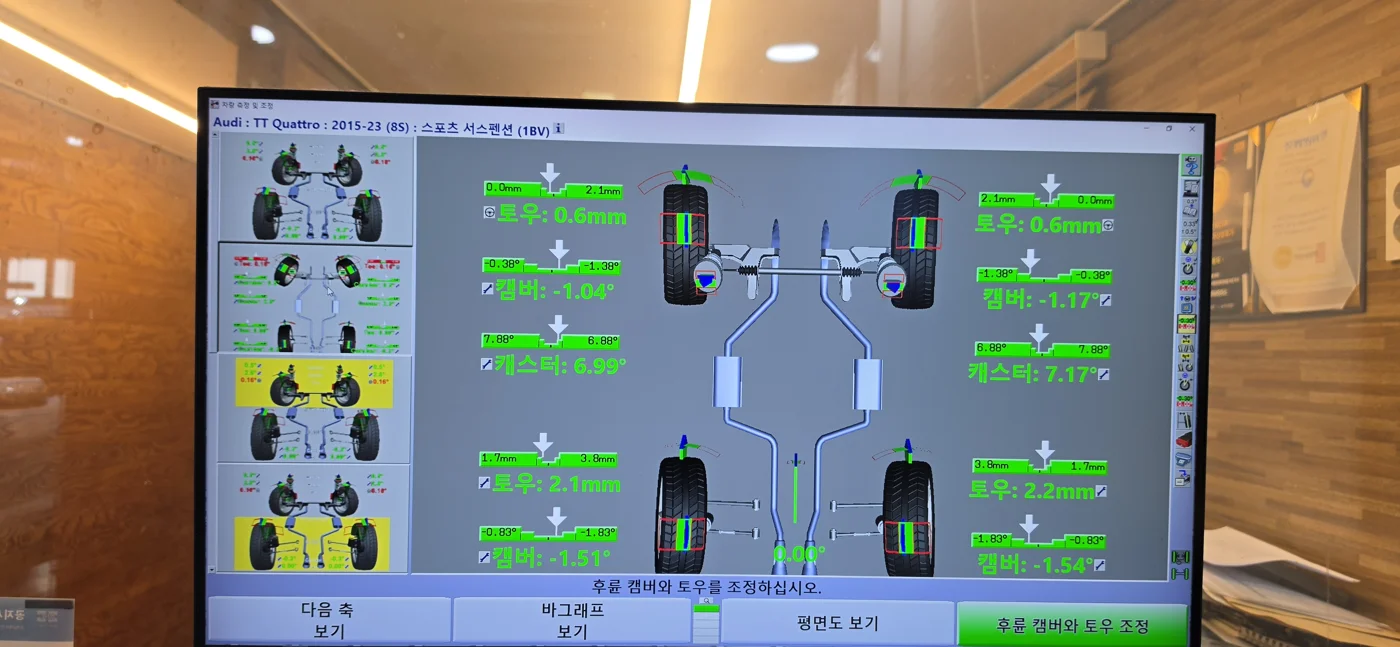
Result: front toe 0.6 / 0.6 mm; rear toe 2.1 / 2.2 mm
01 / NHC MOTORS
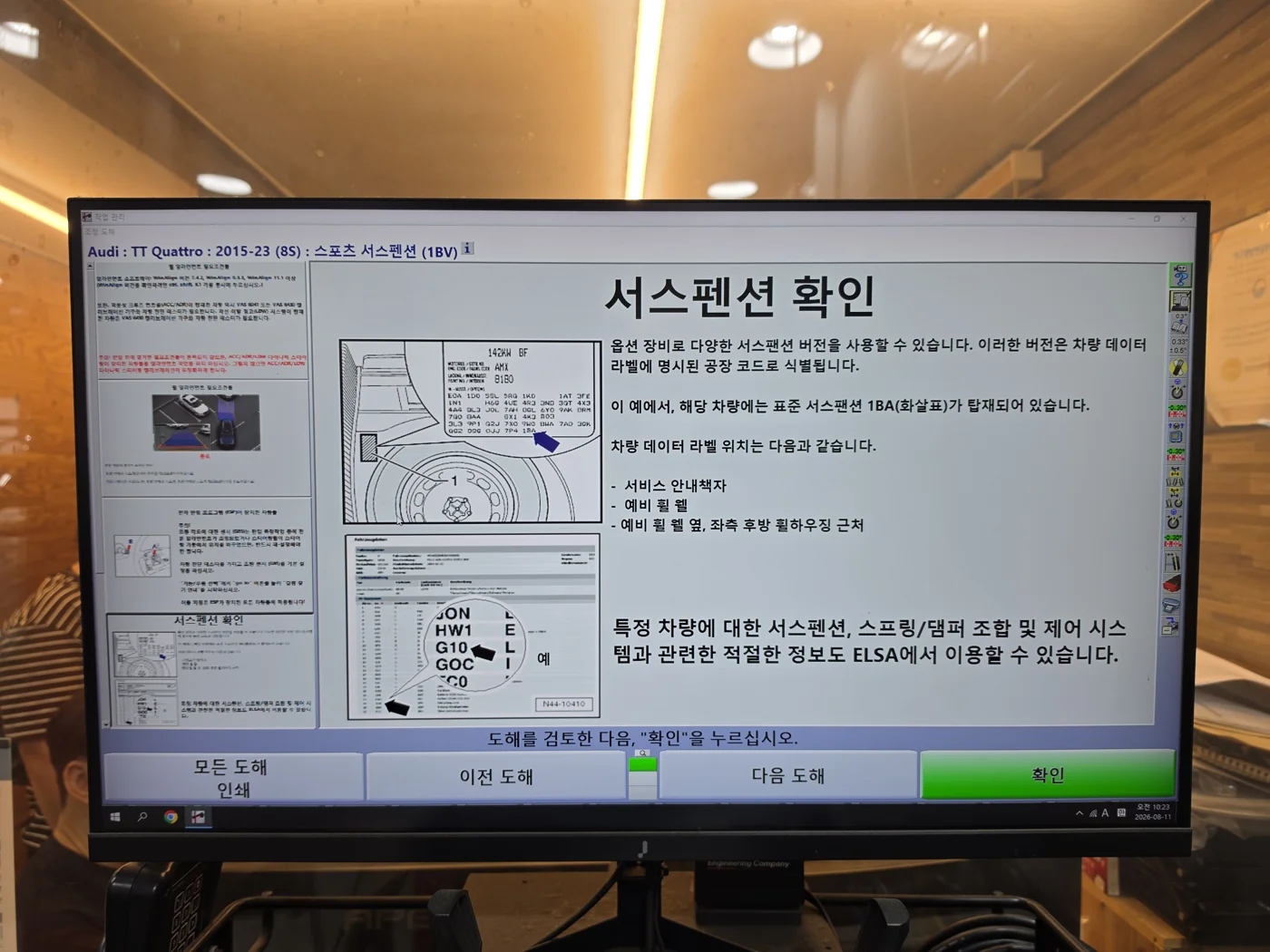
Start with the correct suspension specification
The TT is a compact roadster built around a responsive driving experience. Suspension specification matters when interpreting its alignment readings.
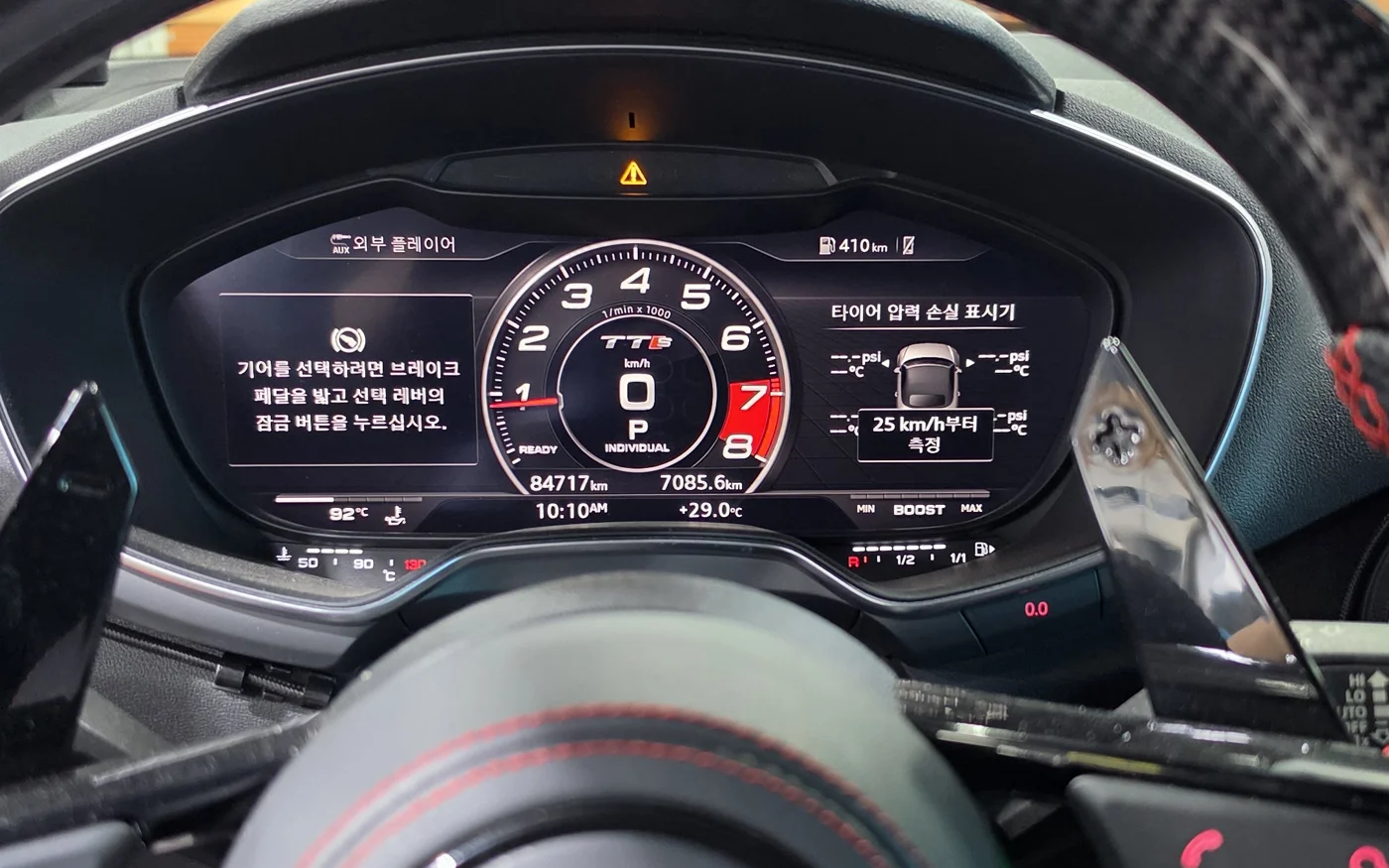
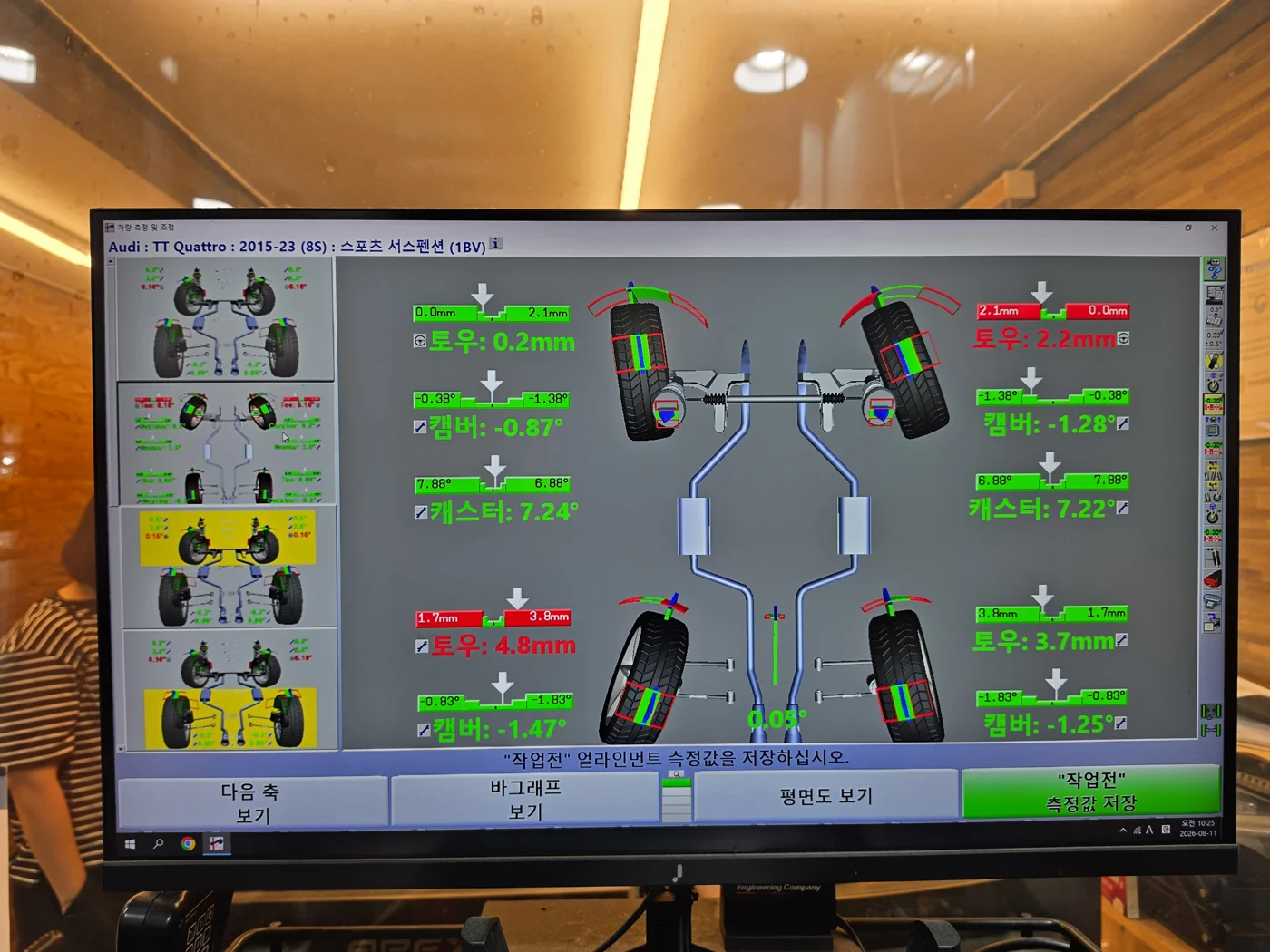
We checked the suspension information in the equipment and used the sports-suspension reference shown on the measurement screens. The initial front toe was 0.2 / 2.2 mm and rear toe 4.8 / 3.7 mm.
02 / NHC MOTORS
Let the bushes work from the correct position
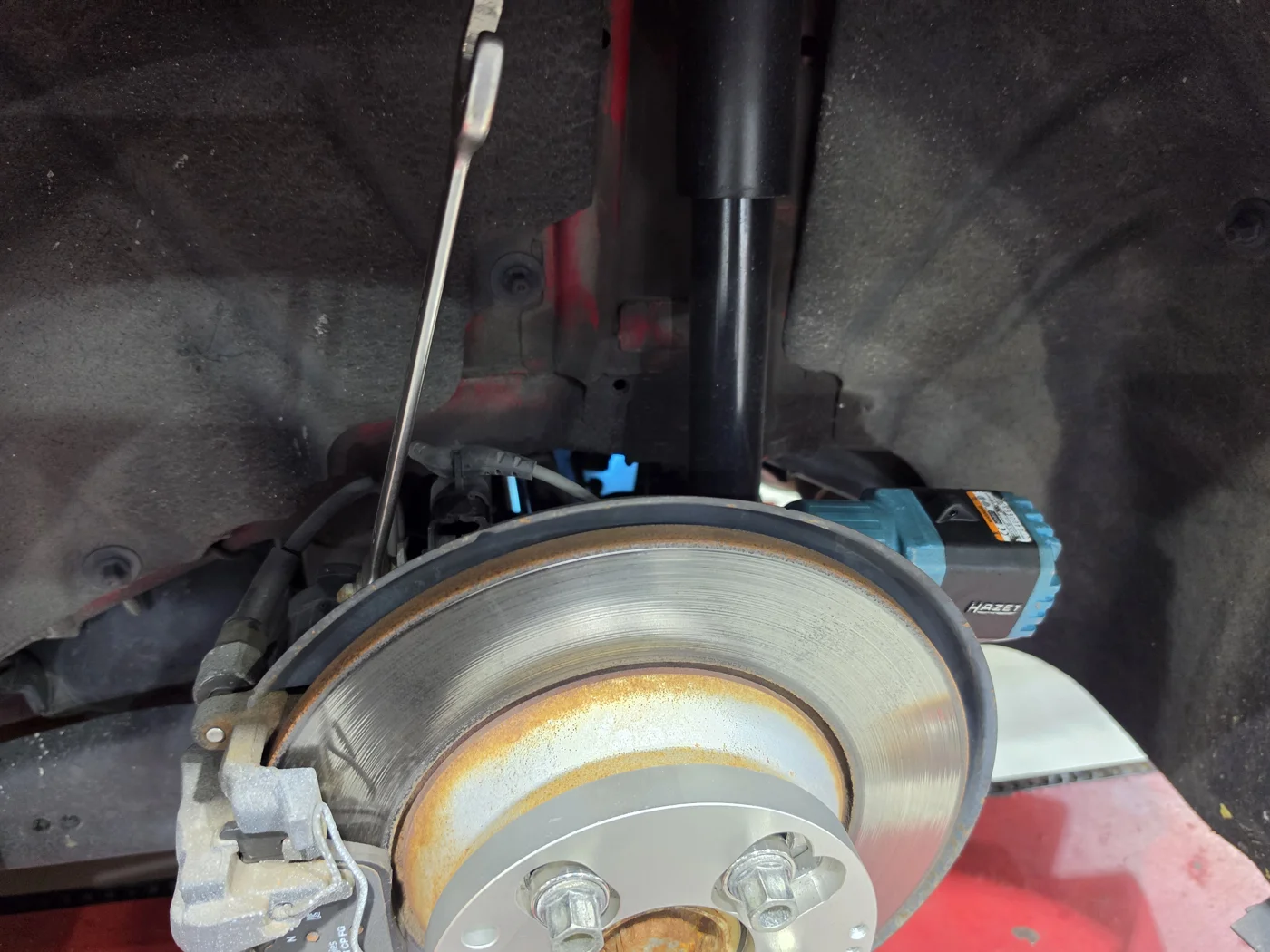
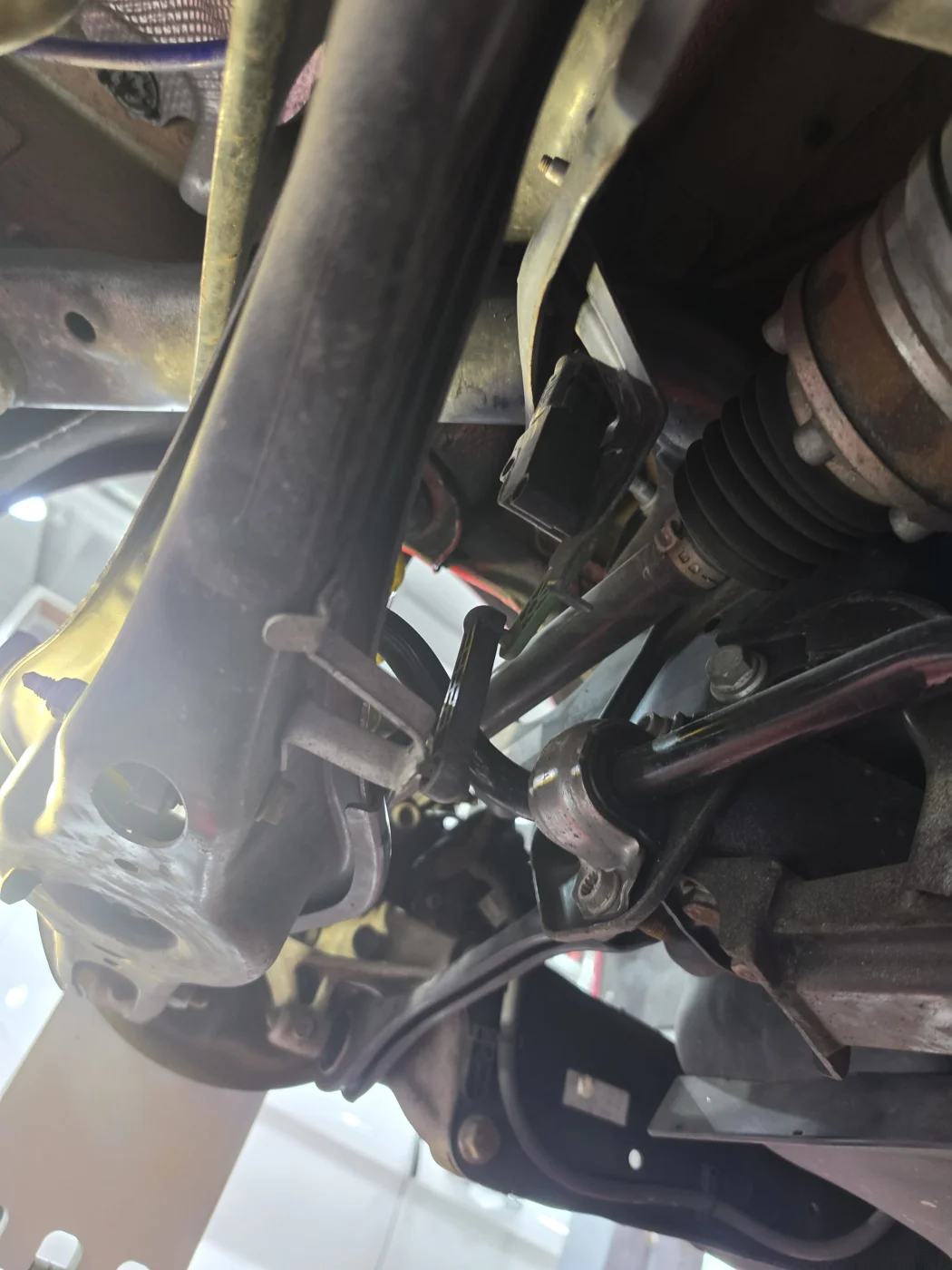
The rubber in bonded suspension bushes twists with suspension movement. If it is clamped in a hanging position, lowering the car can add unwanted twist before it even meets a bump.
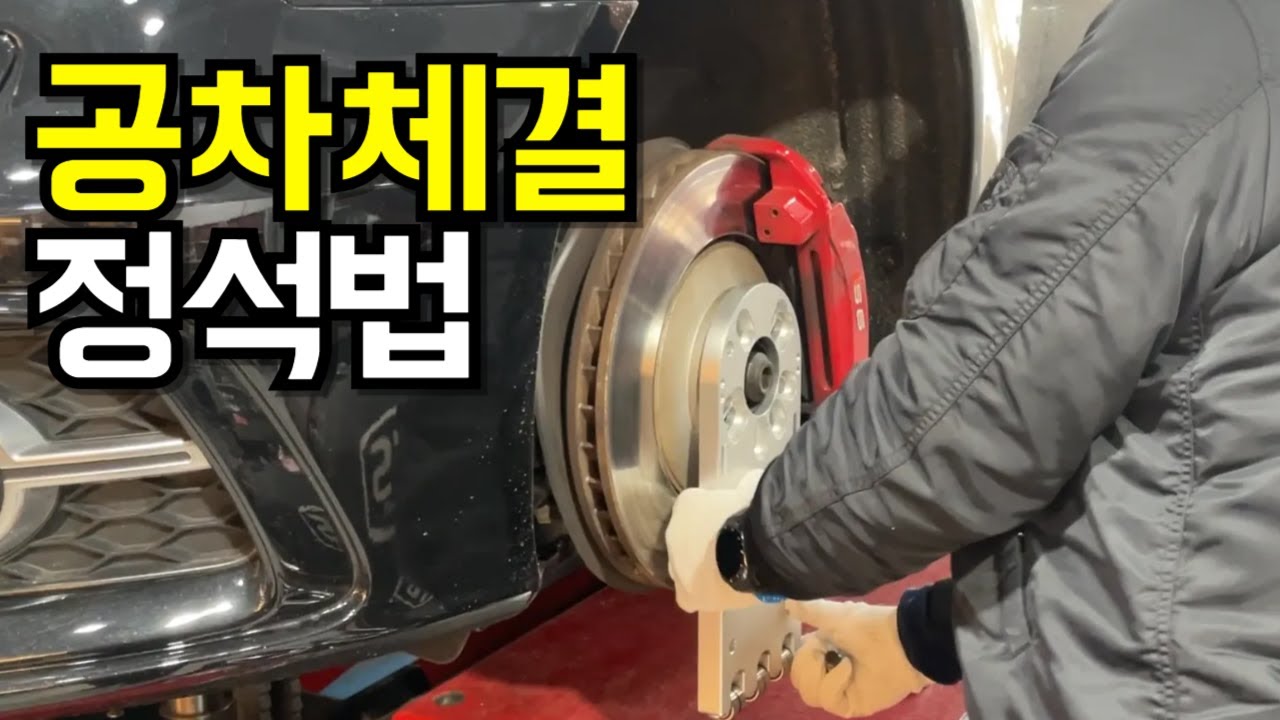
We included ride-height tightening in the TT’s suspension work, then continued with alignment. The procedure follows the relevant joint design and vehicle ride-height requirements.
03 / NHC MOTORS
Front and rear toe, before and after
The front toe readings finished at 0.6 / 0.6 mm; the rear at 2.1 / 2.2 mm. The rear-left reading had initially been 4.8 mm, outside the screen’s range.
The illustration uses the same exaggeration for both stages. The measurement photographs retain the camber, caster and thrust-angle readings as well.
Before adjustment
Toe readings · mm
After adjustment
Toe readings · mm
Toe direction and differences are exaggerated at the same scale in both views. Green: within the displayed toe range; red: outside. Camber is shown separately in the table.
| Wheel | Toe before (mm) | After (mm) | Camber before (°) | After (°) |
|---|---|---|---|---|
| Front left | 0.2 | 0.6 | -0.87 | -1.04 |
| Front right | 2.2 | 0.6 | -1.28 | -1.17 |
| Rear left | 4.8 | 2.1 | -1.47 | -1.51 |
| Rear right | 3.7 | 2.2 | -1.25 | -1.54 |
Caster L/R: 7.24° / 7.22° → 6.99° / 7.17°. Thrust angle: 0.05° → 0.00°.
04 / NHC MOTORS
Keep tyre force variation separate from alignment
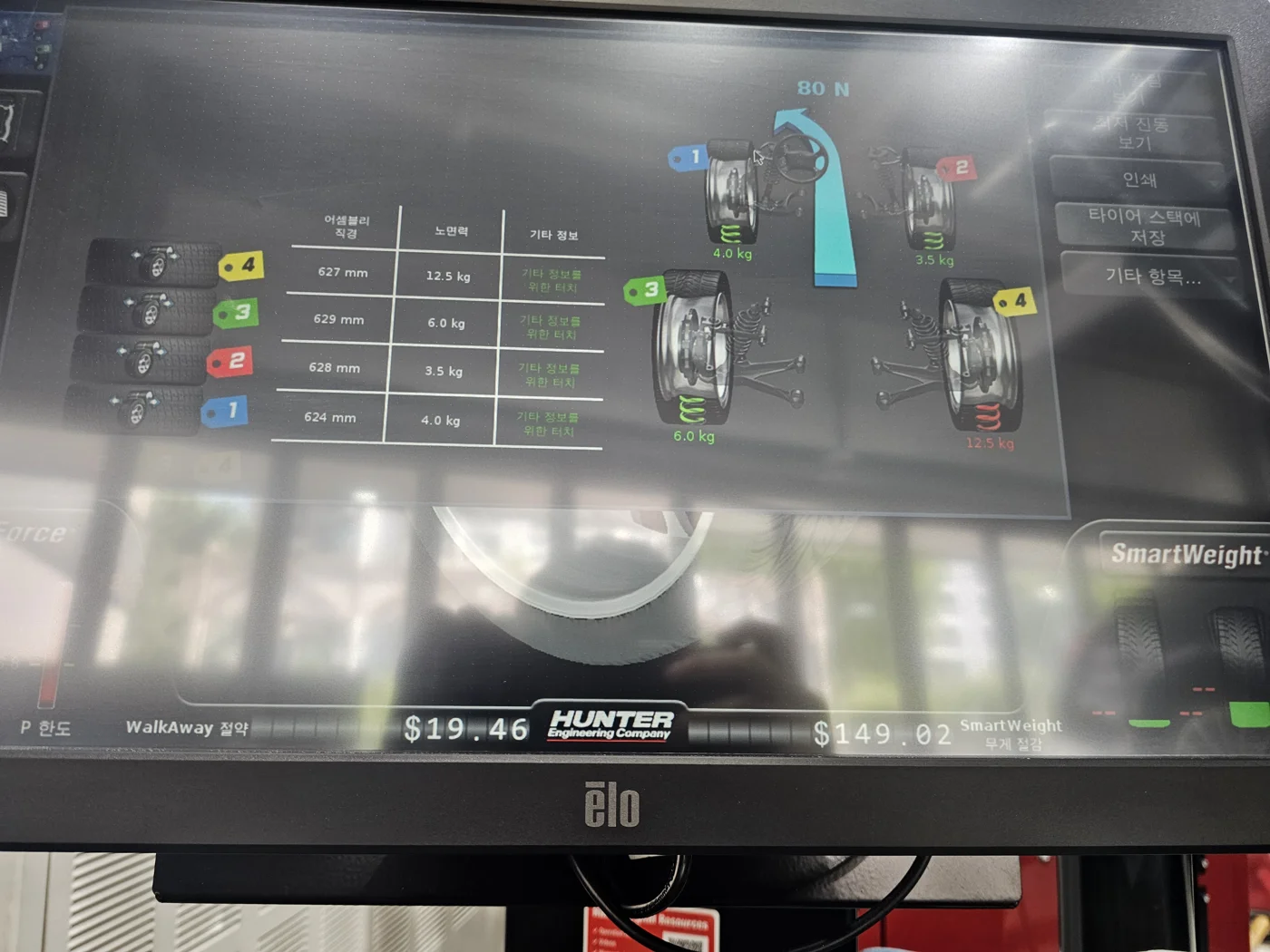
Road-force testing produced recorded readings of 4.0, 3.5, 6.0 and 12.5 kg for tyre assemblies 1–4. The 12.5 kg value is highlighted in red by the equipment.
A tyre-placement screen helps compare the assemblies, but it does not make every tyre satisfactory. Alignment geometry and the tyre’s behaviour under roller load need to be assessed separately.
05 / NHC MOTORS
Finish with steering-angle calibration
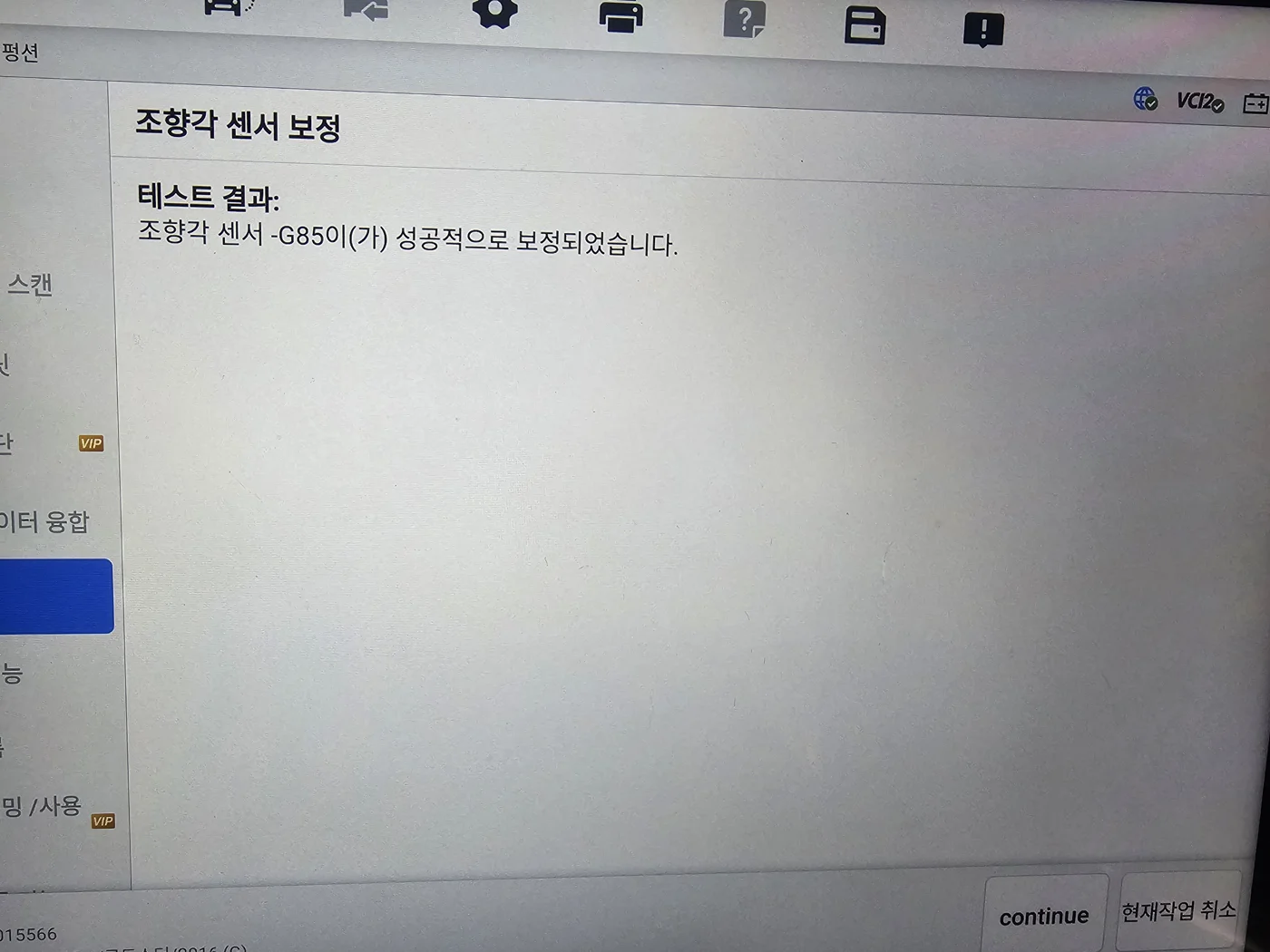
The diagnostic record confirms successful G85 steering-angle sensor calibration. The work therefore covered both the mechanical wheel positions and the sensor’s reference.
When booking, describe whether the concern is steering-centre position, tyre wear or a speed-related vibration. Those details help us choose the right checks for your car.
Work in progress
A short excerpt from the workshop recording.
Ride-height tightening explained
Related NHC video featuring an Audi S6. Korean audio.
 Watch on YouTube →
Questions before booking
Why measure the rear wheels on a steering-related visit?
Rear toe also affects how the vehicle tracks. This TT’s rear-left toe was outside the displayed range before adjustment.
Are road-force testing and alignment the same operation?
No. Road-force testing evaluates tyre-and-wheel behaviour under roller load; alignment measures wheel geometry on the vehicle.
Start with all four wheels of your TT
Tell us when the steering feels different, whether it is the steering-wheel position or the feel through a corner. We will check front and rear alignment, tyre condition and whether steering-angle calibration is needed for the work.
We explain the scope and cost after inspecting the vehicle and proceed with your agreement.
Call 031-258-1617Book on Naver031-258-1617 · NHC MOTORS, Suwon · By appointment