NHC MOTORS · SERVICE RECORD
Toyota Sienna: Road Force resolved the vibration left after alignment
We adjusted the alignment on a Sienna that had already been aligned elsewhere. The owner then reported better fuel economy. Road Force work on a return visit resolved the remaining tire vibration.
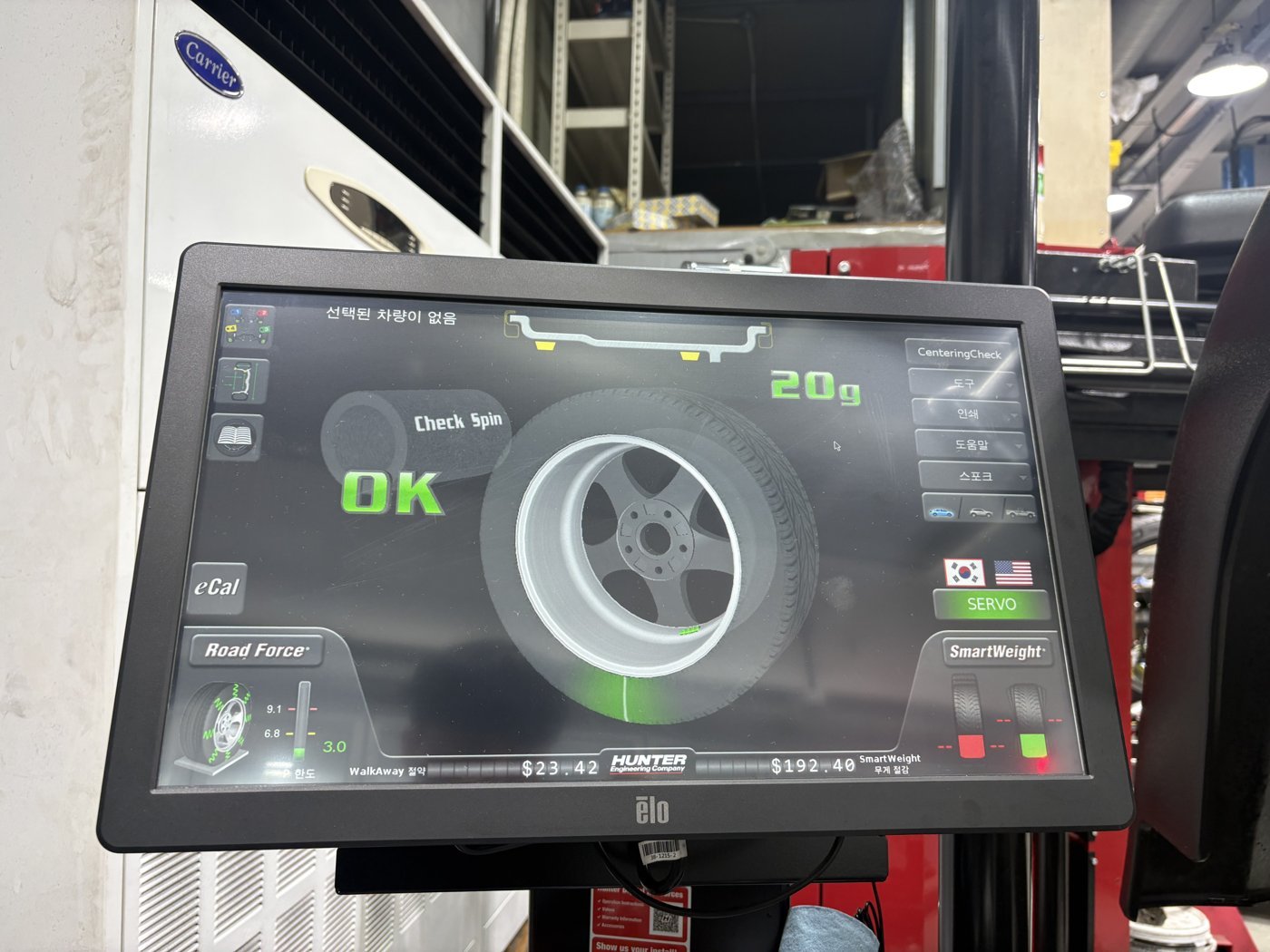
This 2024 Toyota Sienna came in after an alignment elsewhere. After we adjusted it, the owner called to say fuel economy had improved considerably.
Tire vibration remained. The owner returned to the previous balancing shop, was told nothing was wrong and then came back to us. Road Force (RFV) work resolved that vibration.
01 / NHC MOTORS
An alignment adjustment, then a fuel-economy report
We measured and adjusted the direction of all four wheels on HUNTER equipment.
The owner later reported a considerable improvement in fuel economy. In our view, correcting the poor previous alignment restored fuel economy that had been lost. Wheels pointing in different directions make the tires drag as they roll.
02 / NHC MOTORS
The balancer said OK, but the car still vibrated
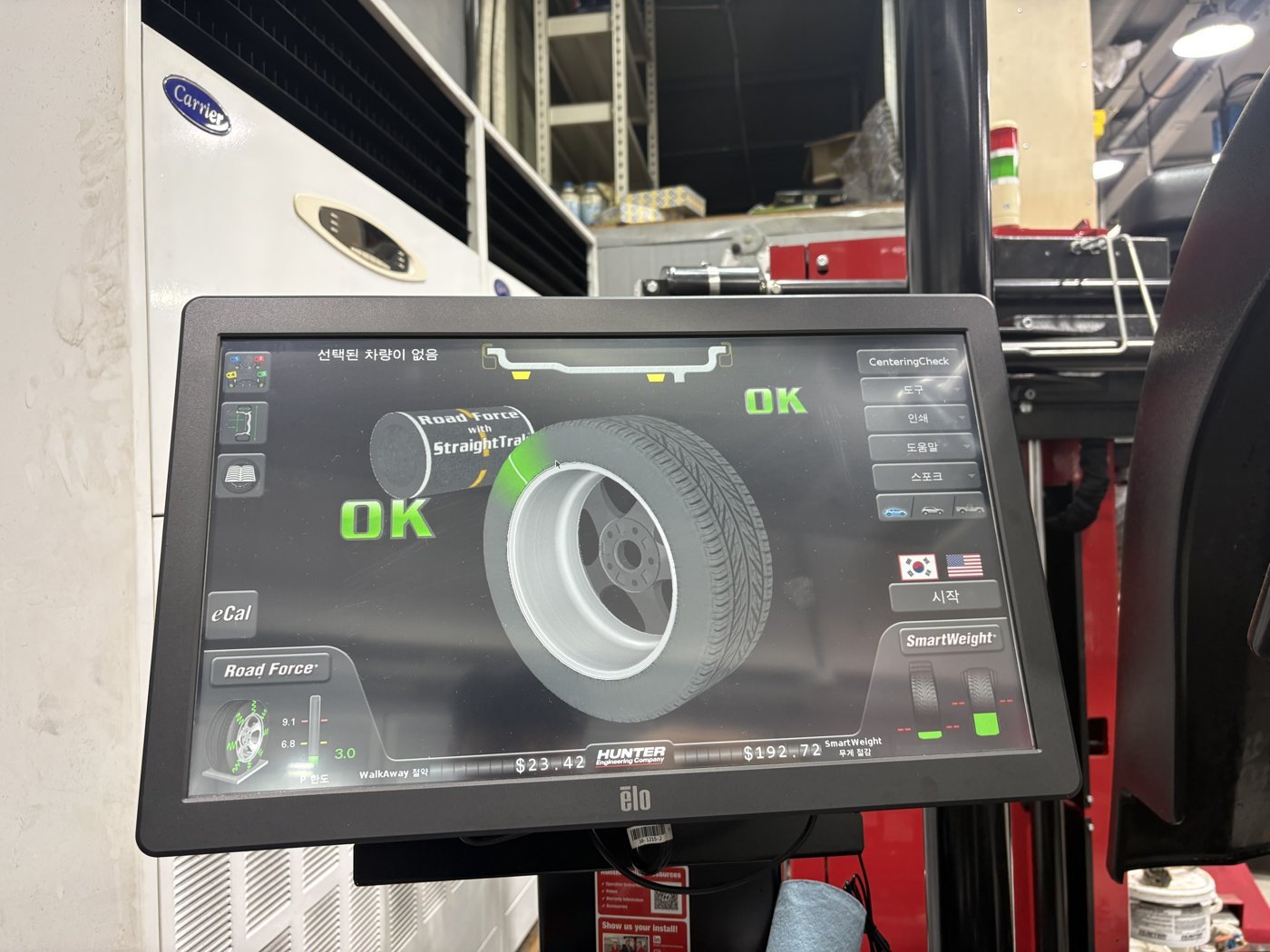
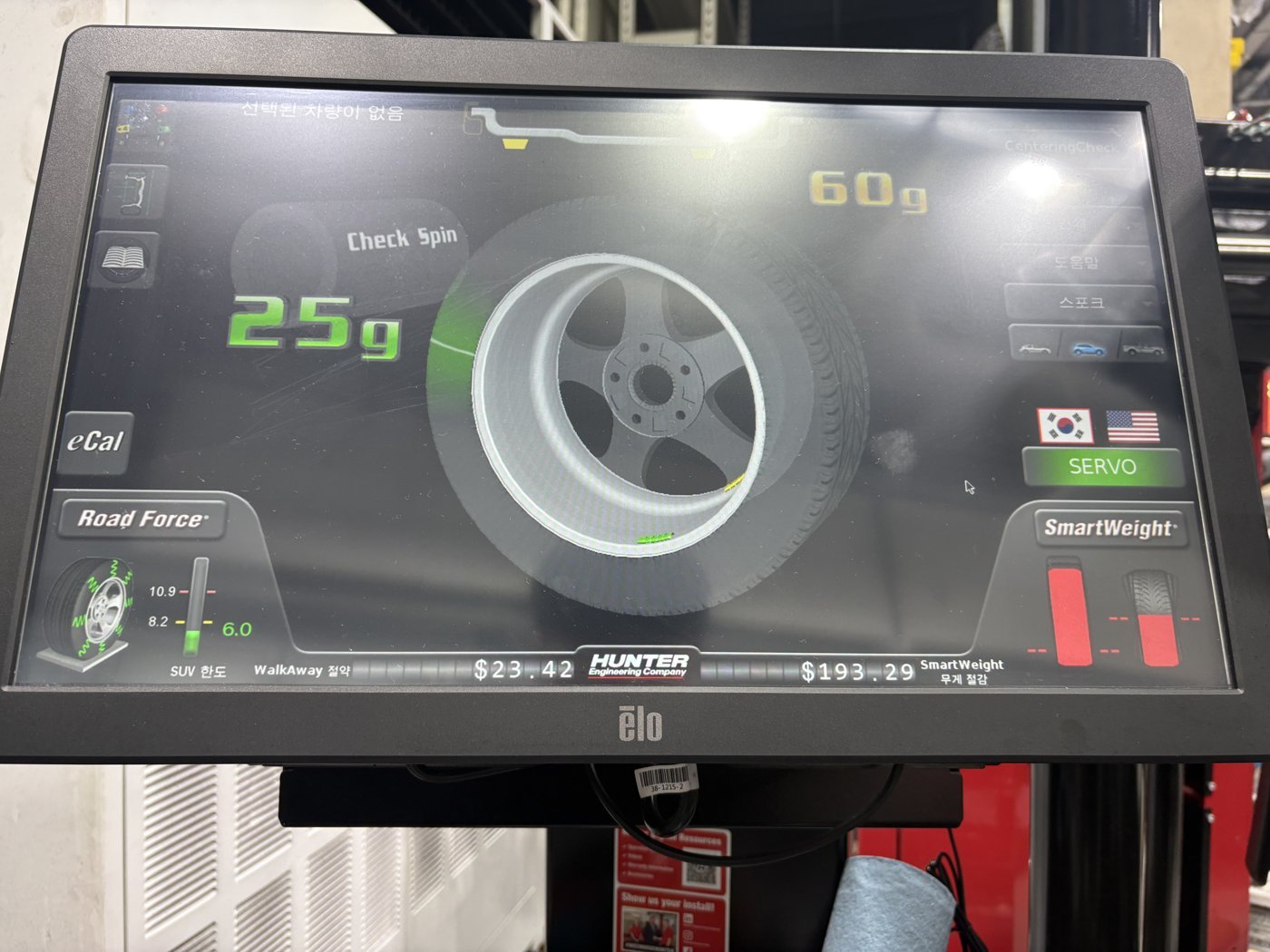
Tire vibration remained after the alignment. The balancing shop the owner revisited found no problem. On the return visit, we also balanced each wheel with weights and received an OK reading.
A balancer checks weight distribution while the wheel spins freely. On the road, the car’s weight presses on the tire. Even if weight is balanced, the force of a loaded tire can rise and fall as it rolls. A Road Force machine measures that change as RFV.
03 / NHC MOTORS
RFV ranged from 1.0 kg to 6.0 kg across the four wheels
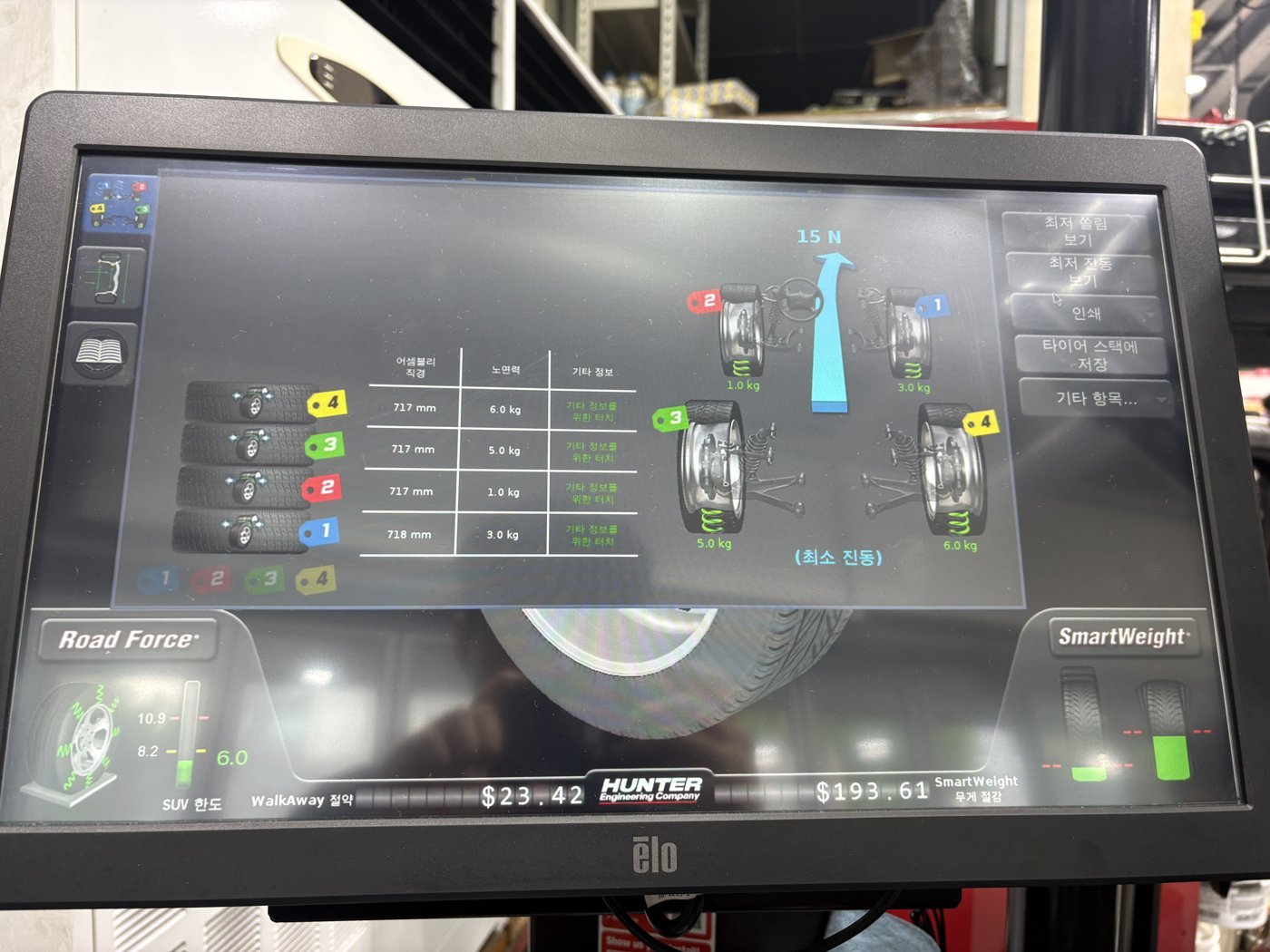
With a roller pressing on the tires, we measured No. 1 at 3.0 kg, No. 2 at 1.0 kg, No. 3 at 5.0 kg and No. 4 at 6.0 kg. A lower reading means the force is more even through a revolution. All four had passed balancing, yet their RFV readings differed.
04 / NHC MOTORS
The proposals for vibration and pull used different positions
The machine proposed two ways to position the four wheels. To reduce vibration, its screen placed low-RFV wheels No. 2 and No. 1 at the front and No. 3 and No. 4 at the rear, showing a predicted lateral force of 15 N. To reduce pull, it placed No. 3 and No. 1 at the front and No. 2 and No. 4 at the rear, showing 5 N.
RFV describes variation in the tire’s vertical force and relates to vibration. Lateral force pushes sideways and relates to a car drifting to one side. The 15 N and 5 N figures are machine predictions, not road measurements. After the return-visit RFV work, the tire vibration troubling the owner was resolved.
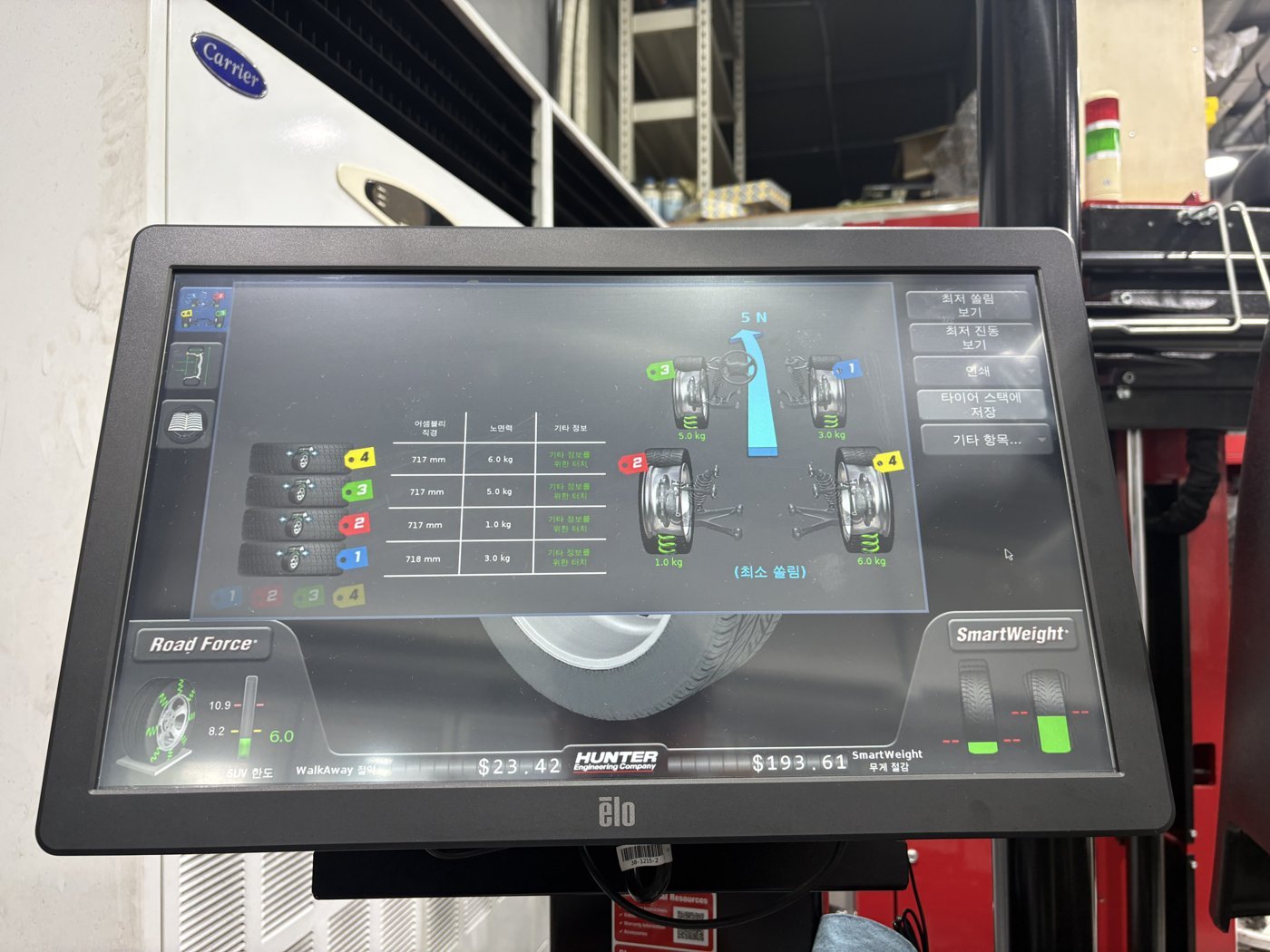
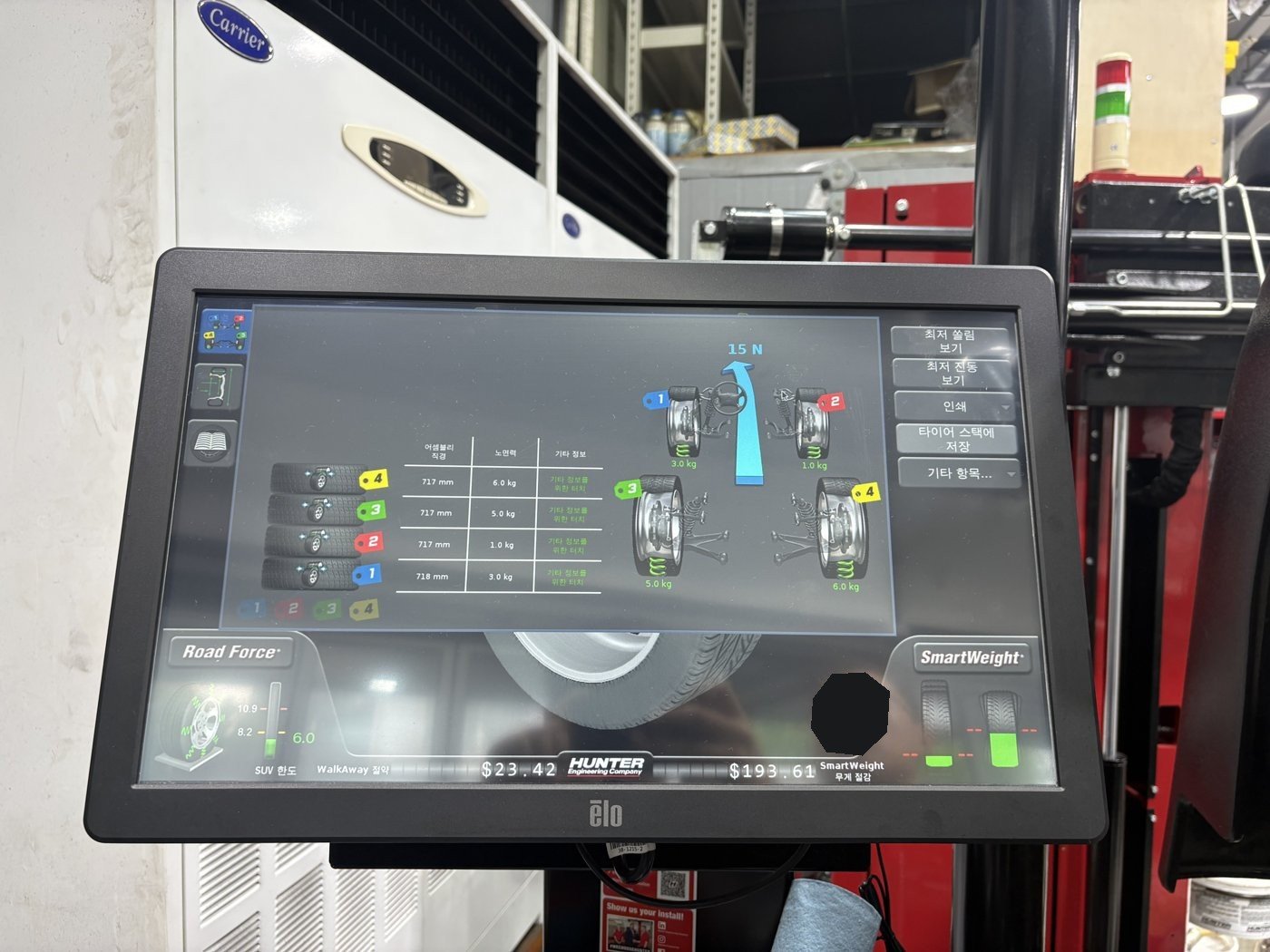
Four wheels, two proposed positions
No. 1 3.0 / No. 2 1.0 / No. 3 5.0 / No. 4 6.0 kg
On screen: front No. 2 & No. 1, rear No. 3 & No. 4 / lateral force shown 15 N
On screen: front No. 3 & No. 1, rear No. 2 & No. 4 / lateral force shown 5 N
Match the positions to the vibration or pull and the mounting requirements
Frequently asked questions
Can correcting alignment change fuel economy?
It can when the alignment was well out. This Sienna’s owner reported a considerable improvement. We believe the work restored fuel economy lost to the previous alignment.
Why does it still vibrate when the balance is OK?
Weight balancing and Road Force measure different things. This Sienna passed balancing, but RFV across the four wheels ranged from 1.0 to 6.0 kg under load.
Is 6.0 kg the weight of the wheel?
No. It is the machine’s reading for how much force changes as a loaded tire makes one revolution. It is separate from balance weights measured in grams.
Related reading
- Guide
Balance OK, but still shaking at speed?Why a balanced wheel can still cause tire vibration.
- Guide
Why a car pulls — when the alignment is fine but it still pullsHow tire lateral force, alignment and road slope can affect pulling.
- NHC video
Causes of vehicle pull and tire inspection ▶ Watch on YouTube
Explains why tires also matter when checking a pull.
Still vibrating after alignment and balancing?
We measure Road Force on each wheel and look at positions suited to vibration or pull. If you have already been to another shop, tell us the speed at which the car vibrates so we can start with that condition.
We explain the work and estimate before proceeding with your consent.
Call for service adviceBook via Naver031-258-1617 · NHC Motors, Suwon · By appointment
Published 2026-09-24