NHC Motors / Cases / Cullinan
ROLLS-ROYCE CULLINAN · ALIGNMENT & RFV
Rolls-Royce Cullinan
An uncomfortable ride after the change to 23 inches
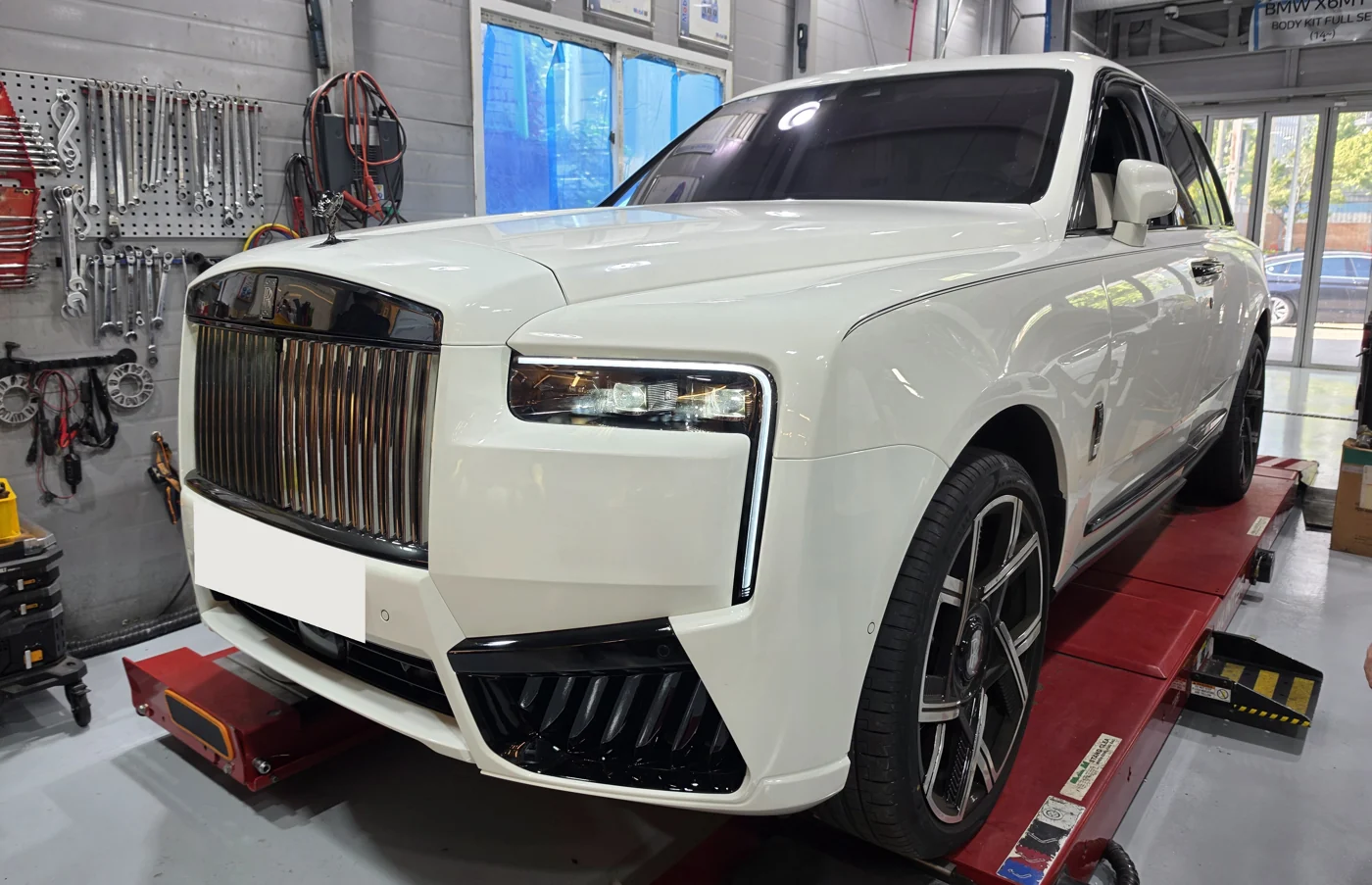
The customer came to us because the ride had become much less comfortable after converting from factory 22-inch to 23-inch wheels. We drove the car together, adjusted the alignment while keeping the ride height consistent, and rematched all four tires to their wheels.
01 / CULLINAN
Driving together revealed bouncing and twisting movement
The ride had become much less comfortable after the conversion from factory 22-inch to 23-inch wheels, which brought the customer to us. Driving together, we also found symptoms of bouncing, twisting body movement and vibration.
Alignment alone does not necessarily resolve these movements. To identify the cause, we needed to check both the direction of the wheels and how consistently each tire carries load as it rotates.
02 / CULLINAN
Holding the ride height steady before adjusting alignment
The alignment was not correct when the car arrived. The suspension also kept changing the ride height during measurement. A height change can alter wheel angles, so simply following the readings as they changed would not give us a consistent adjustment.
A Rolls-Royce especially needs a workshop familiar with its height control and experienced in adjusting these cars. Unless the changing ride height is brought under control, an angle setting can change with it.
We first set the reference height, then selected transport mode with the diagnostic tool to restrict suspension height control. With the height held steady, we adjusted the front and rear alignment and checked that both the height and wheel angles remained consistent.
RIDE HEIGHT · ALIGNMENT
Keep the same height while measuring and adjusting
- Set the reference height
- Hold height with transport mode
- Adjust front and rear alignment
- Recheck height and angles
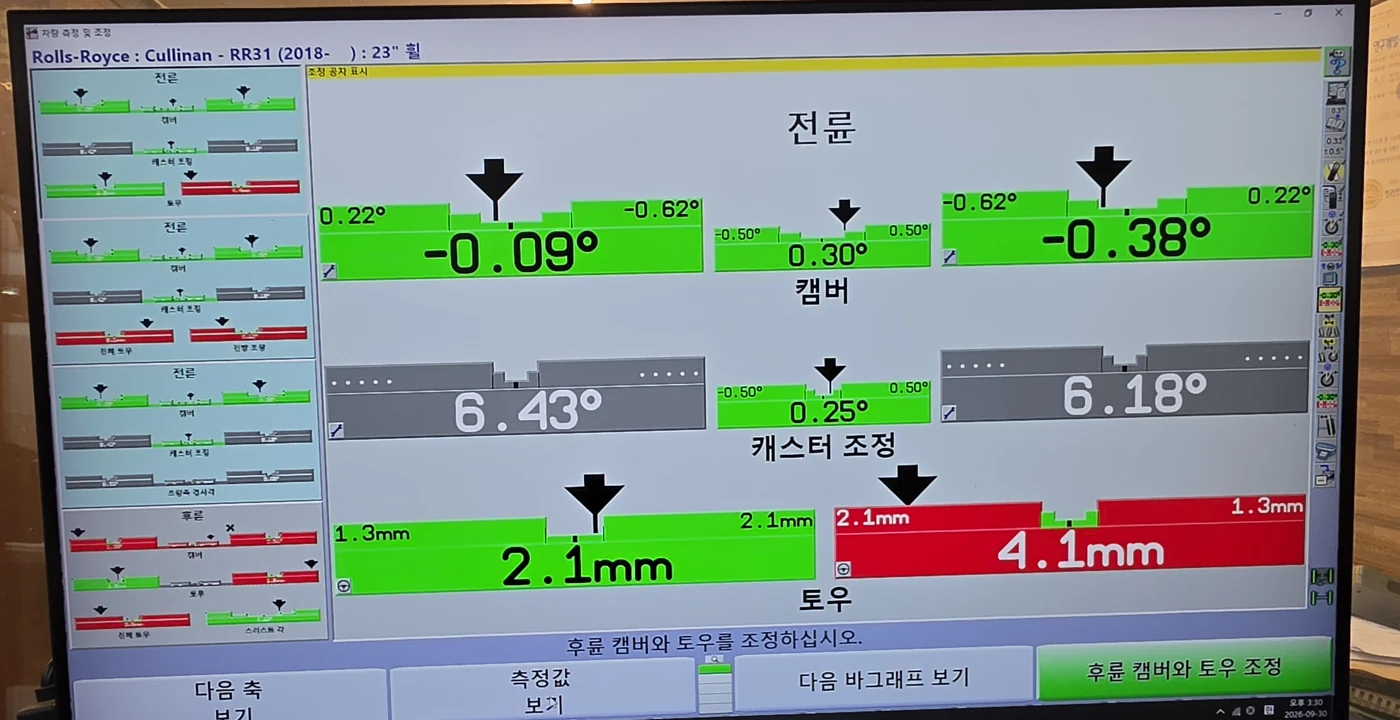
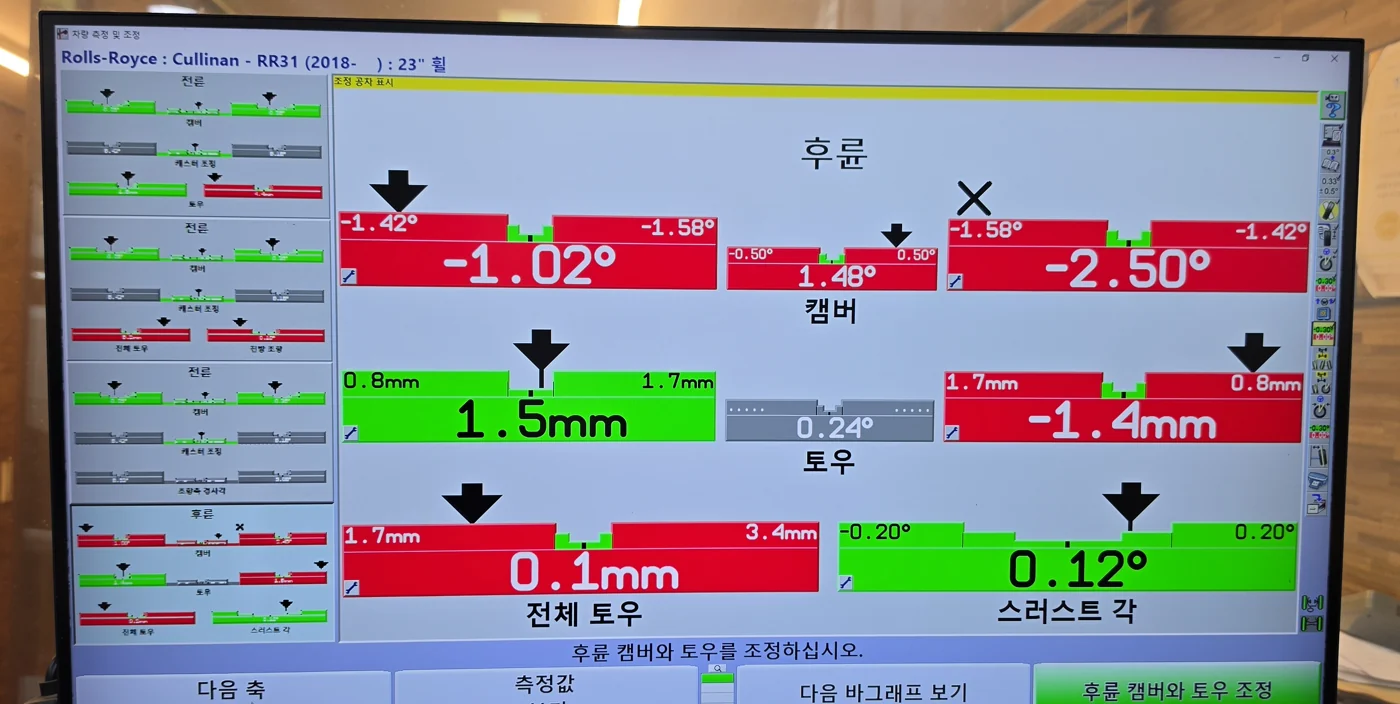
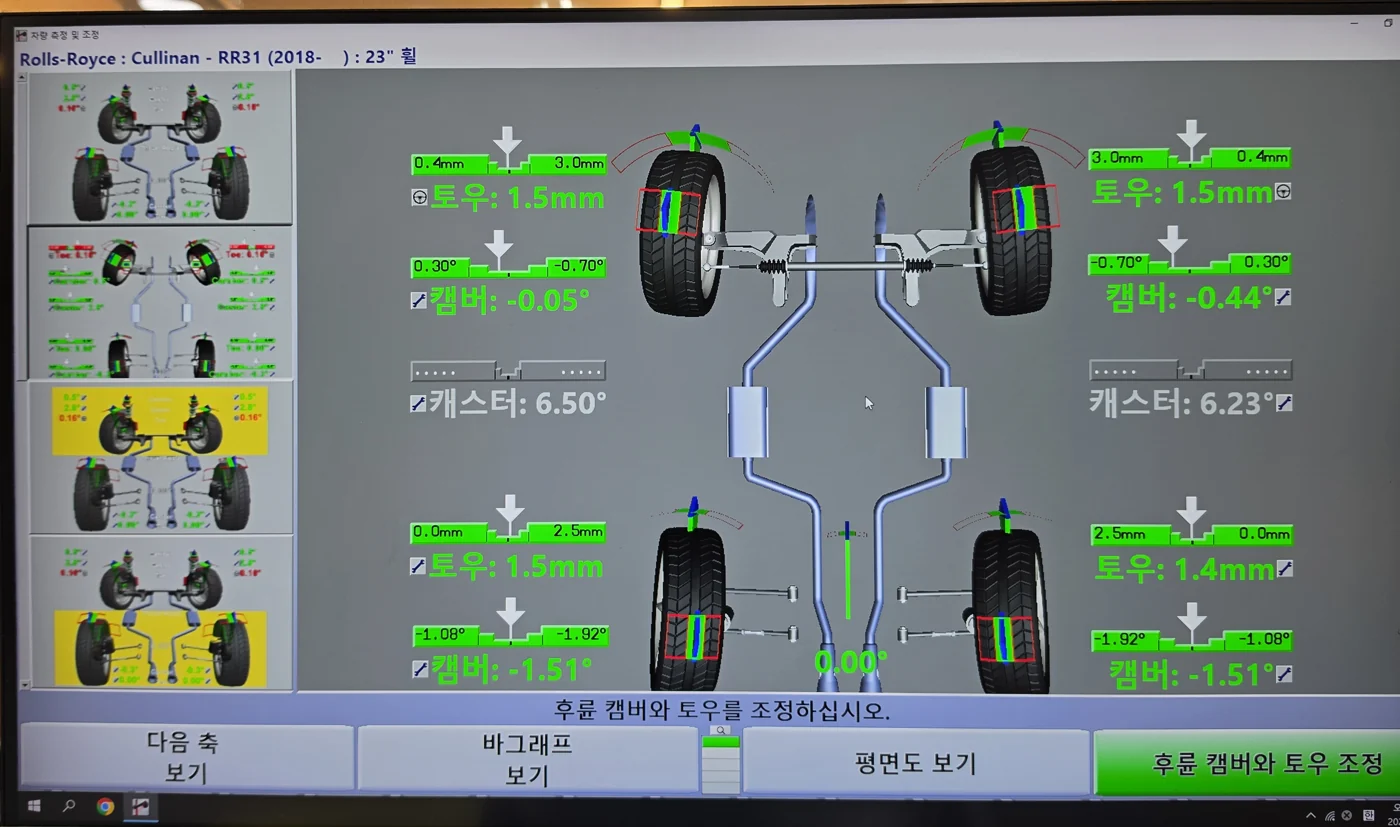
Thrust angle shows how far the direction of the rear wheels differs from the vehicle centerline.
03 / CULLINAN
Ordinary balance was correct, but RFV remained high
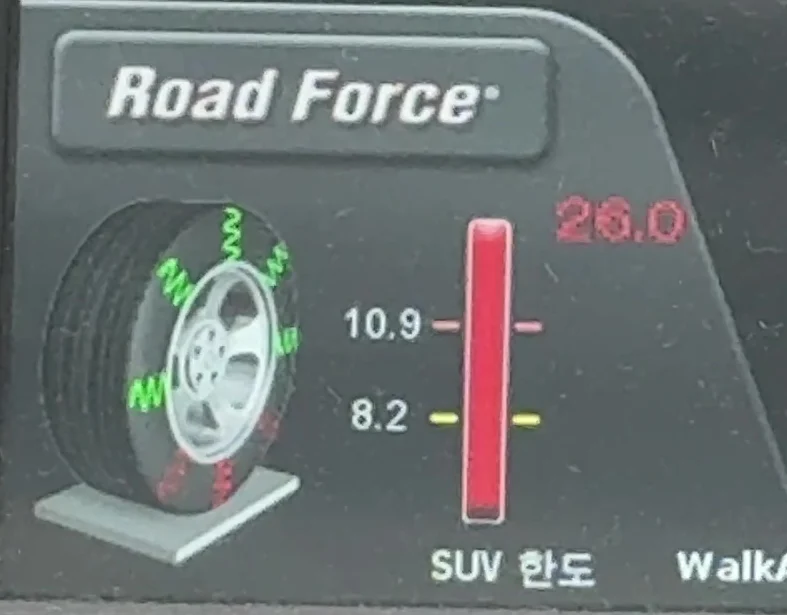
The weight balance showed OK, but the RFV warning remained. Even with correct mass balance, a tire can produce uneven force as it rotates under the vehicle’s load. We therefore checked it under load rather than stopping at ordinary balancing.
Before the work, the tires were not mounted on the wheels to run true and even. It was not obvious to the eye, but put simply, the assemblies were not rolling evenly — a little like an egg. Even with correct ordinary balancing, this can be felt as vibration once the vehicle’s weight is on the wheels.
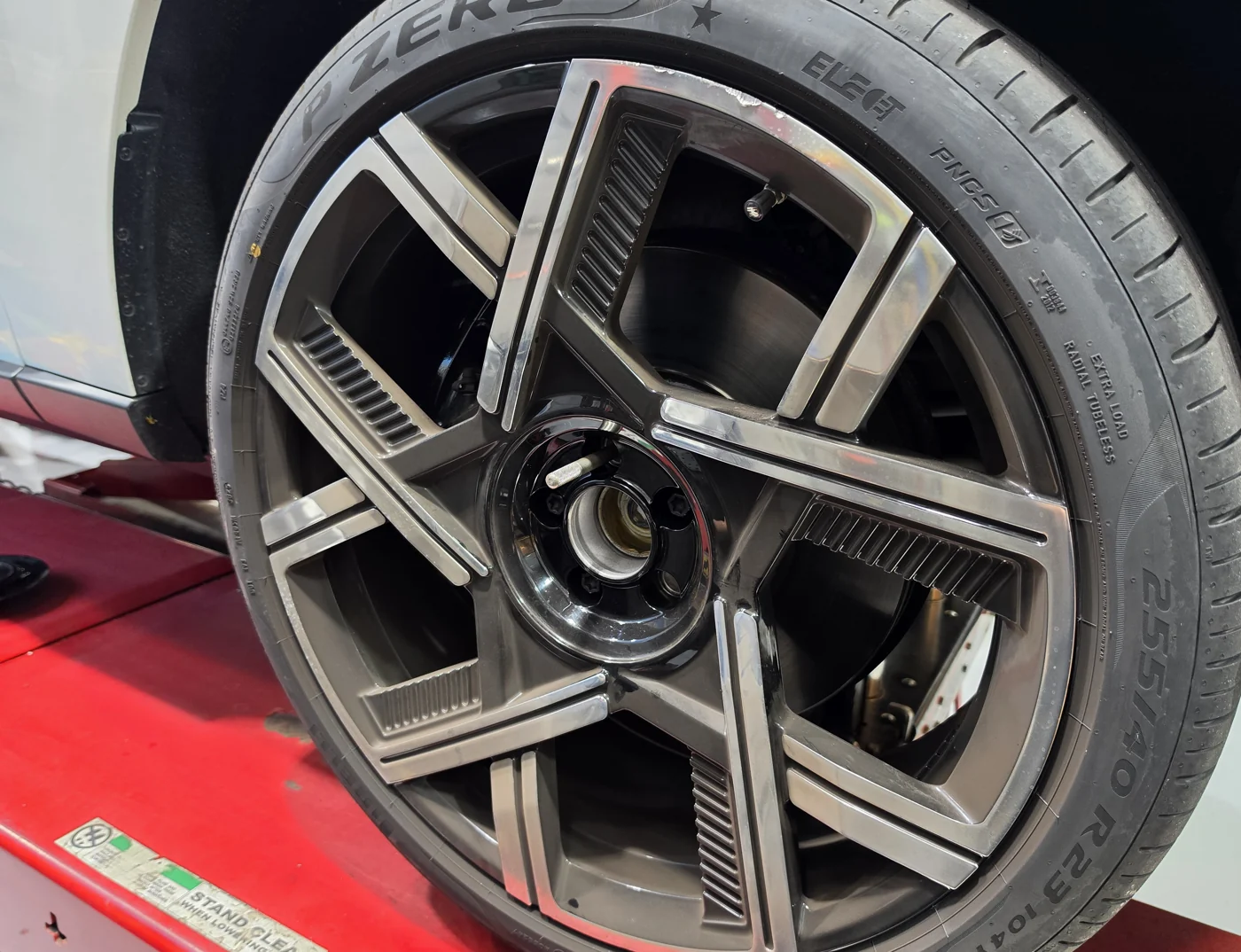
One wheel showed a Road Force reading of 26.0kg during the work. We assessed 26.0kg as very high for this Cullinan. We therefore measured each wheel and changed the tire’s position on the wheel to reduce force variation.
If continued driving in this state leads to irregular wear, repositioning the tire later may no longer be enough to restore even rolling. That is why getting the tire and wheel combination right before it leads to irregular wear mattered.
WEIGHT BALANCE / ROAD FORCE
Vibration can remain after ordinary balancing
Mass balance · correction in g
The wheel is spun to find mass imbalance, which is corrected with balance weights. The tire is not pressed by a load roller during this measurement.
RFV · displayed in kg
A roller presses the rotating tire to check how much radial force changes over one revolution. This difference can remain even when the weight balance is correct.
04 / CULLINAN
Repositioning the tires through repeated matching attempts
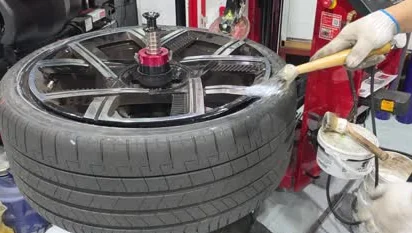
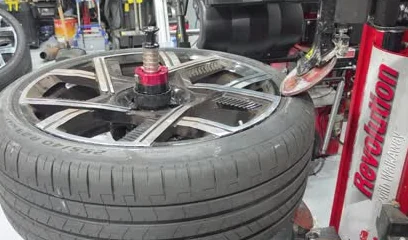
We separated all four tires from their wheels and changed their relative positions. Matching aligns the wheel and tire characteristics so that they complement each other. After repositioning, we spin the assembly again to check whether the measured value has actually fallen.
One matching attempt did not bring the readings down to the desired level. One rear wheel in particular needed four or five rounds of repositioning and measurement to bring the reading down.
05 / CULLINAN
Changing left-right placement after matching all four wheels
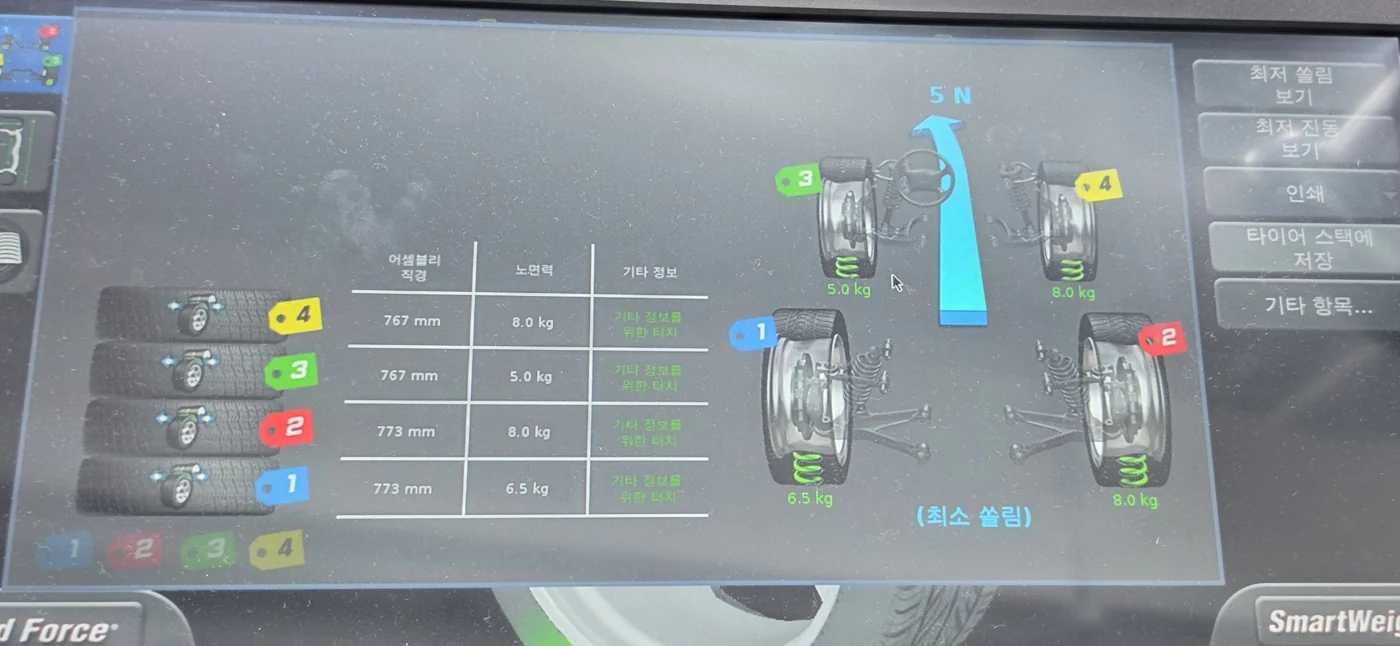
After matching, the four RFV readings were 6.5 / 8.0 / 5.0 / 8.0kg.
We used the four measurements to change left-right placement on the front axle and on the rear axle. Finally, we used nitrogen to set the tire pressures.
Each ID identifies a wheel on the equipment.
06 / CULLINAN
The rear resonance and unsettled cornering did not recur on the next drive
On the drive after the work, the rear resonance and unsettled movement in corners heard and felt earlier did not recur. The ride was smoother and the cabin quieter than on our first drive together.
The 23-inch wheels and tires do not necessarily give the same ride as the original 22-inch setup. Further driving on your usual roads is needed to assess how the ride feels in everyday use.
07 / CULLINAN
A total inspection will follow on the next visit
This time, we completed the alignment and RFV matching for all four wheels, followed by a road check. We agreed to carry out a total vehicle inspection at the next visit and follow up on any discomfort felt in the meantime.
Frequently asked questions
Why can vibration remain even when ordinary balance is correct?
Even with correct mass balance, a tire can produce uneven force as it rotates under the vehicle’s load. We therefore checked it under load rather than stopping at ordinary balancing.
Does rematching a tire remove uneven wear that has already developed?
Matching does not restore sections of a tire that have already worn unevenly. Once wear has progressed, rematching alone may not be enough to make it roll evenly, so the tire condition needs to be checked first.
If the ride became uncomfortable after a wheel change
Tell us when the wheels and tires were changed, which roads bring out the discomfort, and what you feel. We will check the ride height and wheel condition and explain which measurements and adjustments are needed.
We explain the work and estimate first, then proceed with your agreement.
Call 031-258-1617Book on NaverBy appointment only · Gwonseon-gu, Suwon
Total inspection scope and booking information (Korean)