NHC MOTORS · SERVICE RECORD
Mercedes E-Class W213 front and rear pads and wear sensors: discs checked separately
We replaced the front and rear brake pads and wear sensors, and treated the contact areas to help prevent noise. The discs need their own assessment rather than an automatic replacement with the pads.
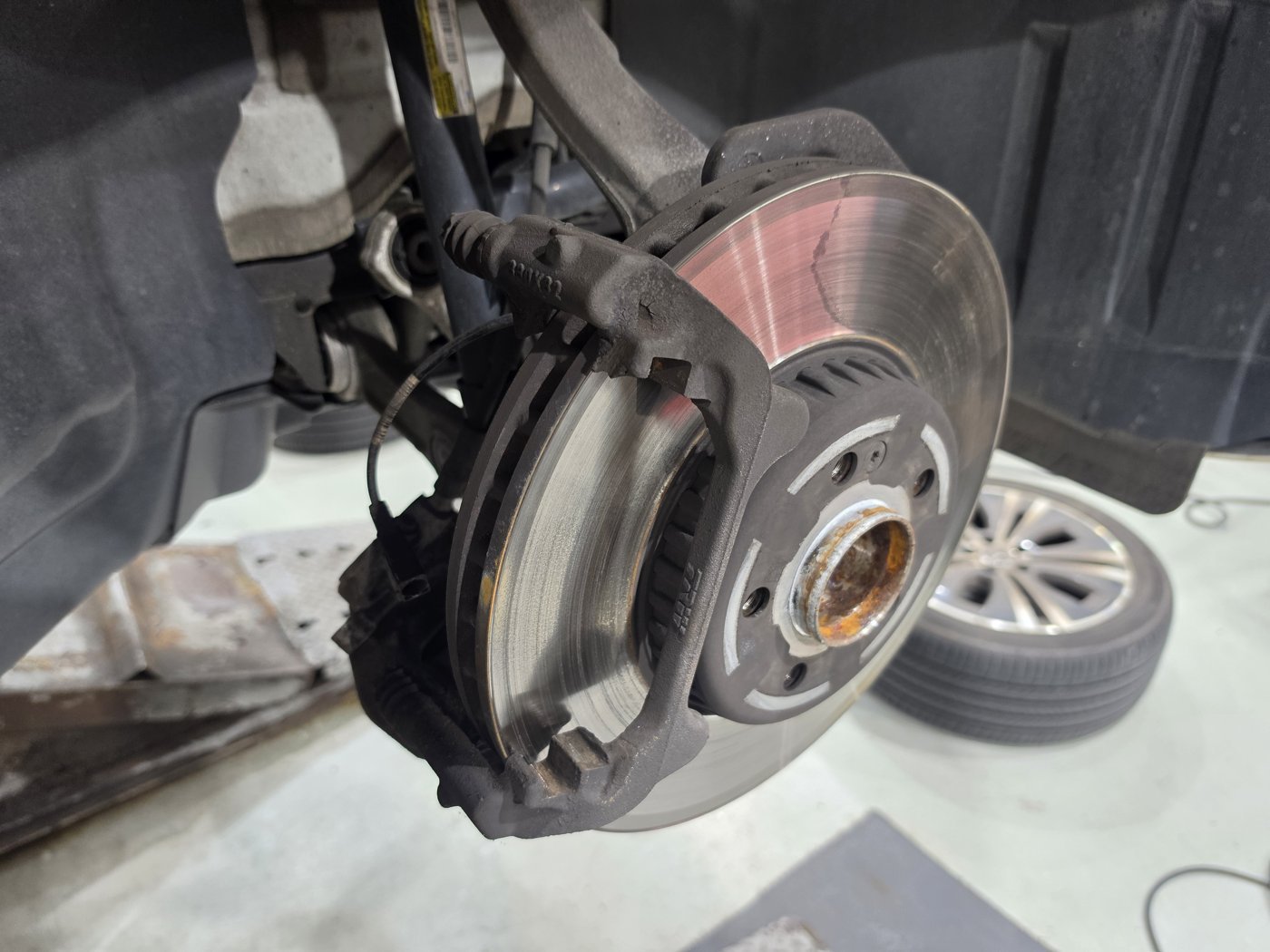
On this 2021 Mercedes-Benz E-Class W213, we replaced the brake pads and wear sensors on both axles. With the wheels off, we also looked at the disc surfaces where the pads make contact.
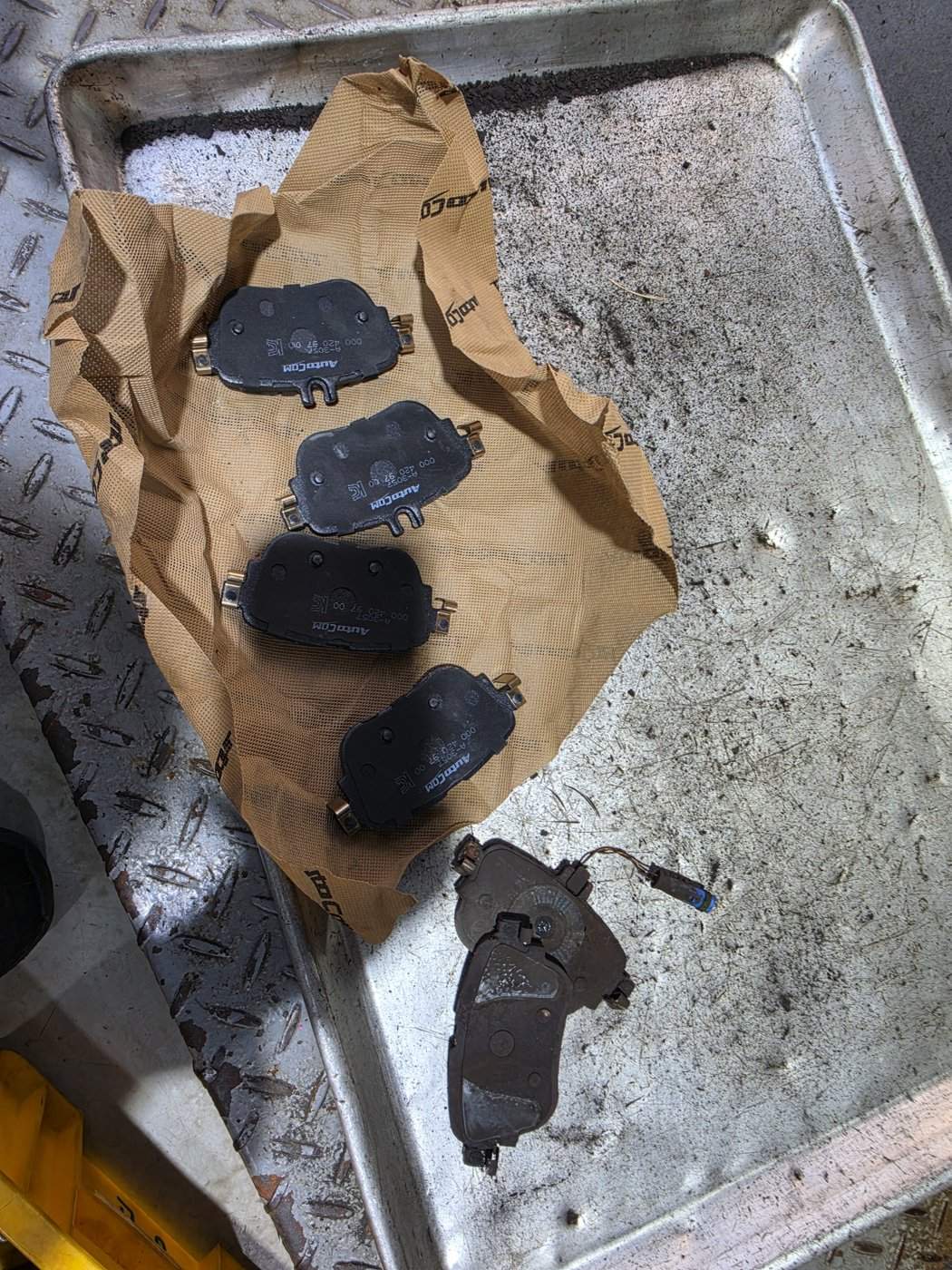
The front and rear pads and sensors have different shapes, so we matched the parts to each axle before fitting them. We applied the three-part brake-noise treatment at the front and rear. Replacing the pads alone does not mean the discs automatically need replacing.
01 / NHC MOTORS
With the wheels off, we could see the pads and discs
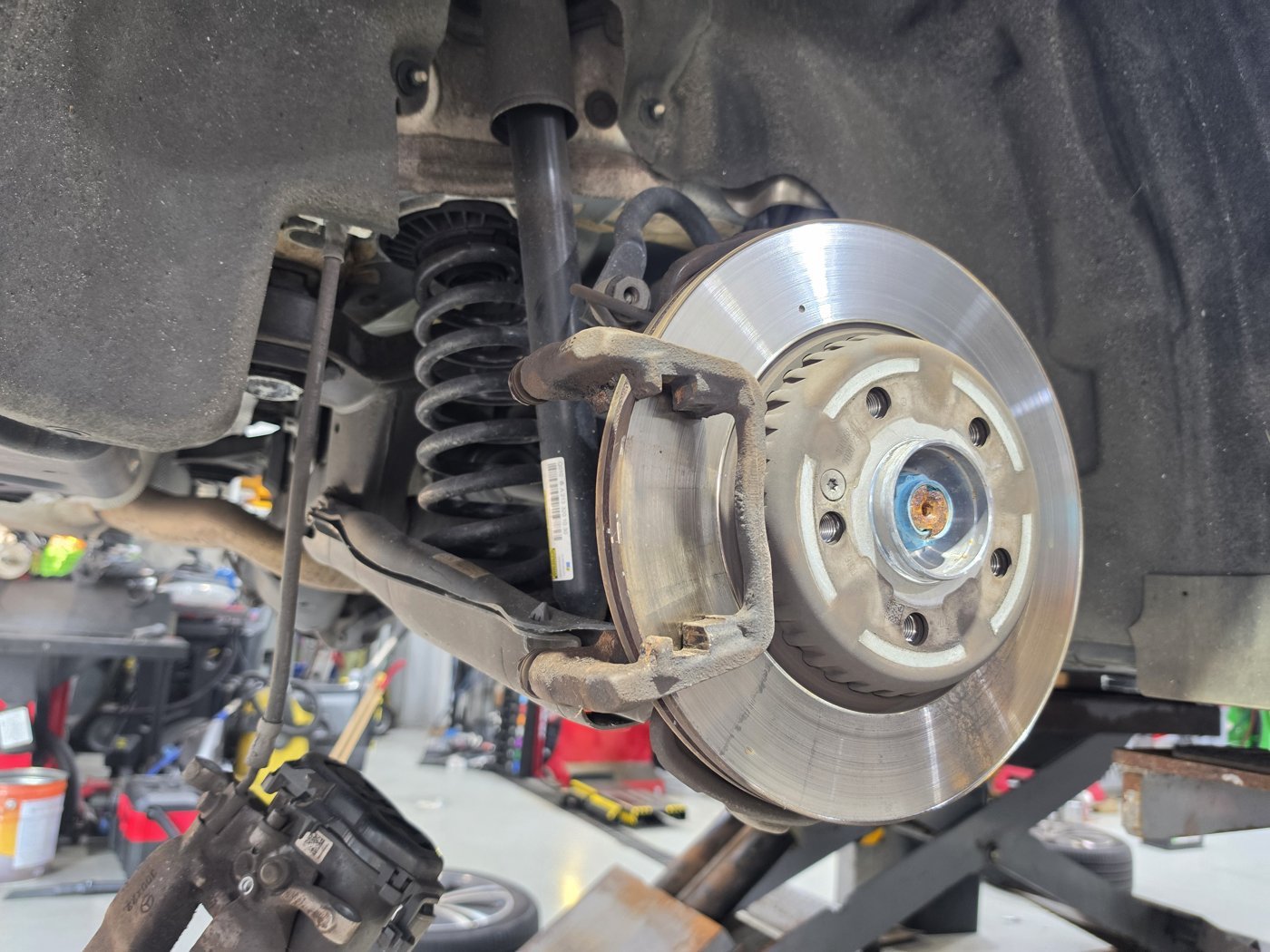
A pair of pads in each caliper grips the disc to slow the car. The inner pad is hard to see through the wheel, so both sides need to be checked with the wheel and caliper opened up.
A disc is assessed separately by its contact surface, the lip around its edge and its thickness. Those checks help determine whether resurfacing or replacement is needed. A pad and sensor change by itself does not establish that the disc must also be changed.
02 / NHC MOTORS
Front and rear pads and sensors fitted to their respective axles
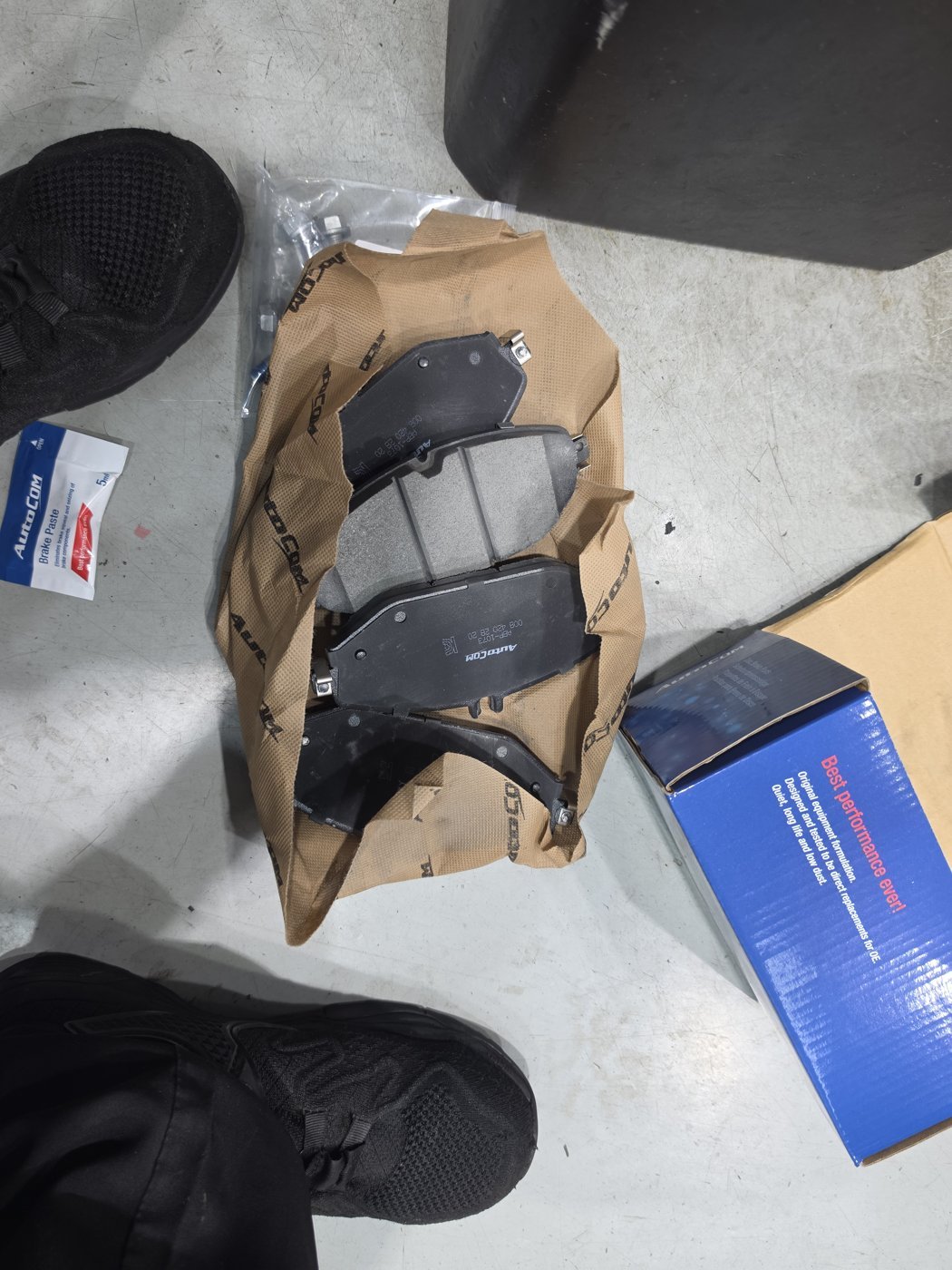
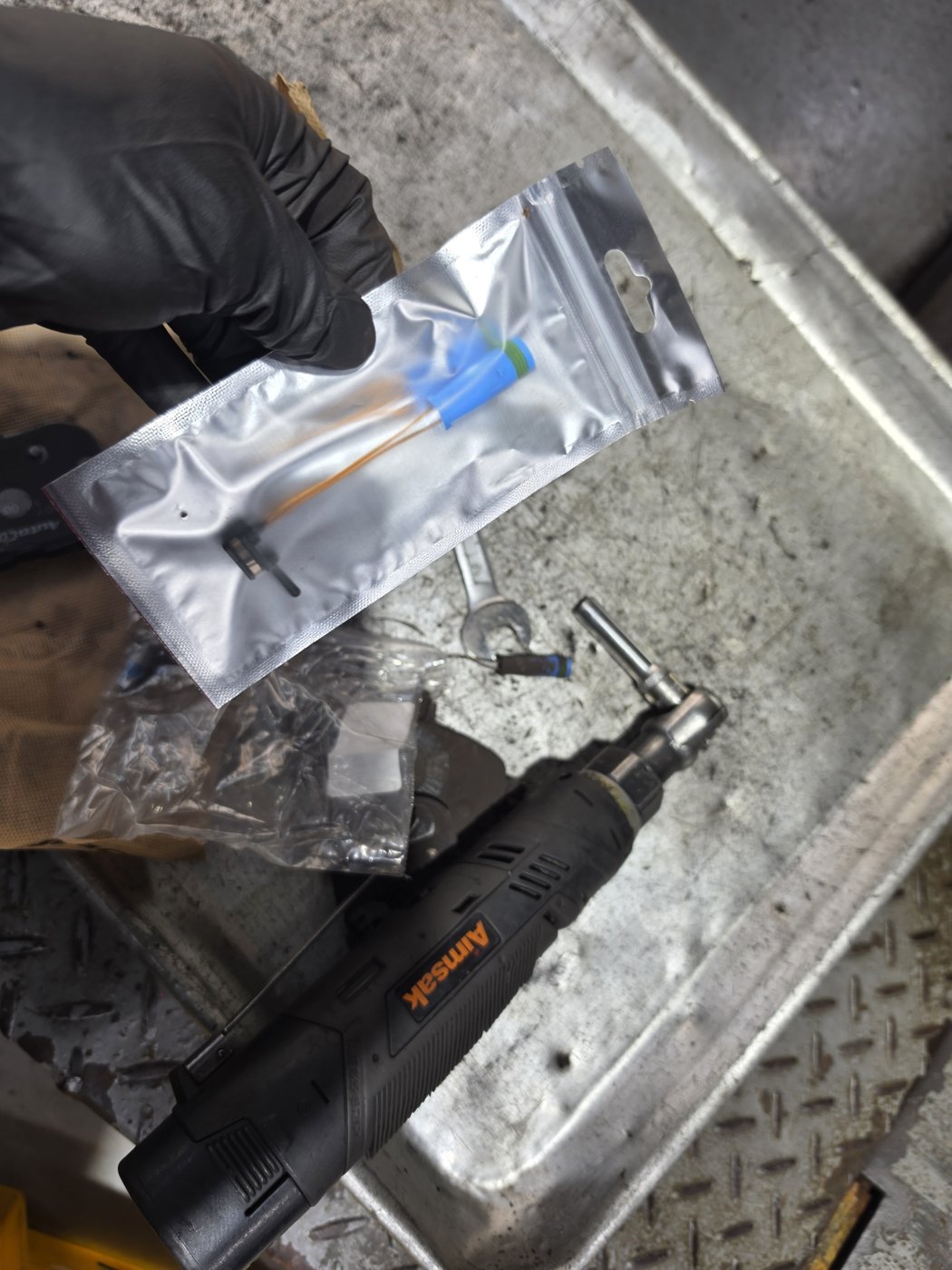
We replaced the front pads with new parts marked AutoCom. Before fitting them, we checked the pad shape and the grooves and edges of the friction material. Pad dimensions can vary even within the E-Class range, so the parts must match this car's brake specification.
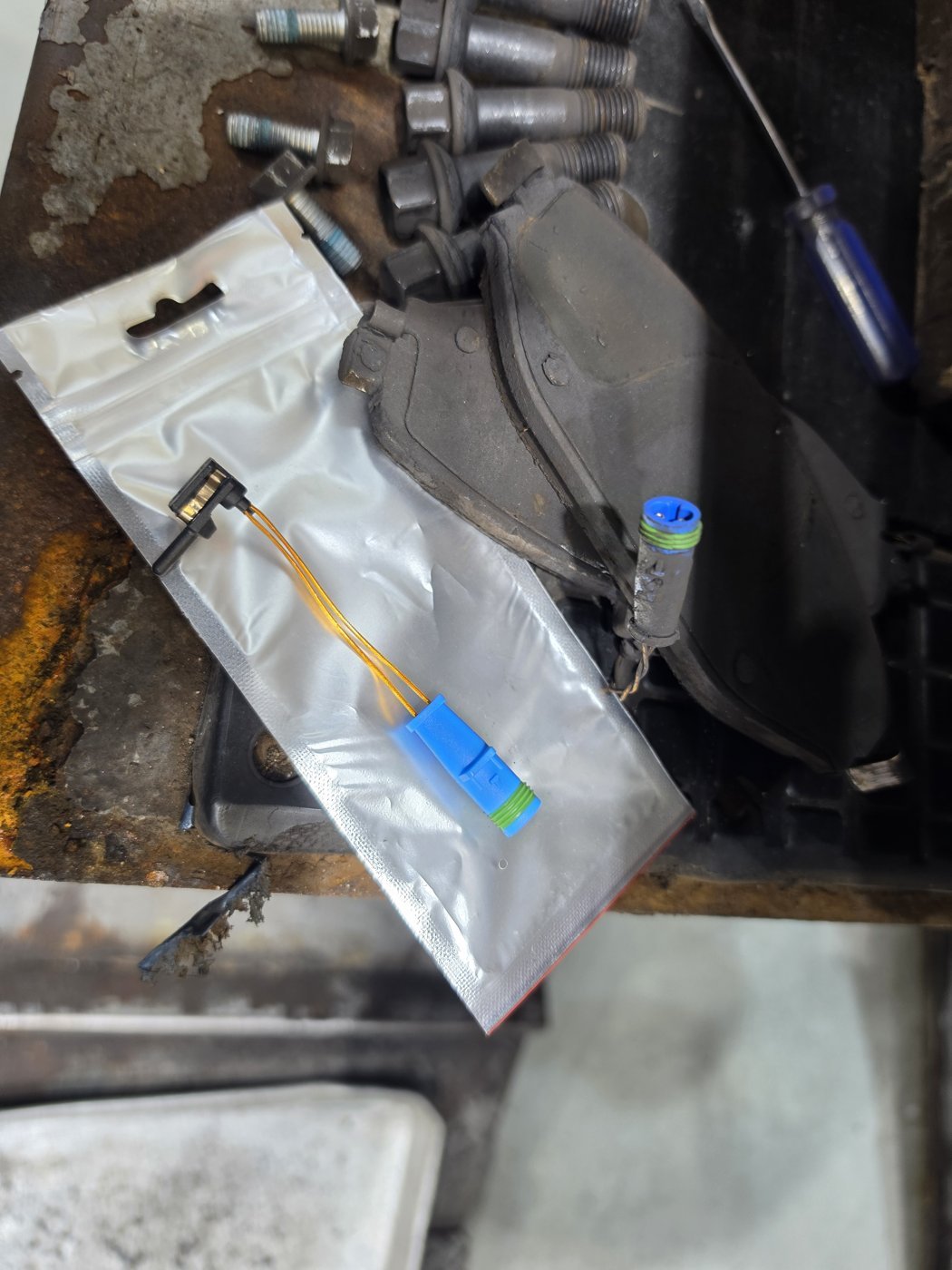
The rear pads differ in shape from the fronts, and we replaced the wear sensors at both ends as well. A sensor warns the driver on the instrument panel when the pad wears down. Its connection must also be checked when the parts are changed.
03 / NHC MOTORS
We treated the pad contact areas to help prevent noise
We applied the three-part brake-noise treatment while replacing the pads on both axles. At the front, we cleaned the pad contact areas and caliper slide points first. Cleaning the places where the pads seat and move helps reduce brake noise.
If a caliper does not move freely, one pad can stay in contact with the disc and wear differently from the other. That is why we look at the inner and outer pads and compare the axles rather than judge the brakes from one pad alone. Future replacement timing depends on their actual wear.
04 / NHC MOTORS
What to watch for after a pad change
New pads take time to bed against the existing disc surface. Avoid hard braking at first and pay attention to an unusual sound or pedal response.
If the wear warning stays on, the sensor connection needs checking. If braking repeatedly brings a vibration or sound, the speed and wheel area where it happens will help us check the disc and caliper.
Separate checks for pads, sensors and discs
Inner and outer wear; correct specification for each axle
Separate parts; check placement and connection
Consider thickness, surface and braking vibration
Frequently asked questions
How do you decide whether to replace the pads and discs together?
We check pad wear, disc thickness and surface condition, and any vibration under braking separately. Pads needing replacement do not automatically mean the discs do too.
Does the wear sensor need changing with the pads?
The sensor is a separate part, and the decision depends on its condition. On this W213, we replaced the sensors at both ends along with the pads.
What is the three-part brake-noise treatment?
It treats the appropriate pad contact and caliper slide areas to help reduce noise and support free movement. We applied it at the front and rear of this W213.
Related reading
- Guide
Porsche Panamera GTS: how far should the pad and disc replacement go?A separate car where pad and disc replacement were assessed individually.
- NHC video
Audi R8 brake pad and disc care ▶ Watch on YouTube
Shows brake pad and disc work on an Audi R8, a different vehicle.
We check W213 pads and discs on their own merits
If a wear warning is on, or braking brings a sound or vibration, tell us when you book. We will check the front and rear pads and sensors as well as the disc surfaces and thickness, then explain what needs attention.
We explain the work and estimate before proceeding with your consent.
Call for service adviceBook via Naver031-258-1617 · NHC Motors, Suwon · By appointment
Published 2026-09-26