NHC MOTORS / Service cases / Audi R8 Spyder
AUDI R8 SPYDER · SUSPENSION & BRAKE CARE
Audi R8 Spyder · Broken Spring Repair and Brake Care
This 2013 Audi R8 Spyder felt unstable as the accelerator was pressed and released. We found a broken rear spring, replaced both rear springs, and reset the ride height and alignment. We machined the brake discs in March 2025, then fitted new discs and tyres on a later visit.
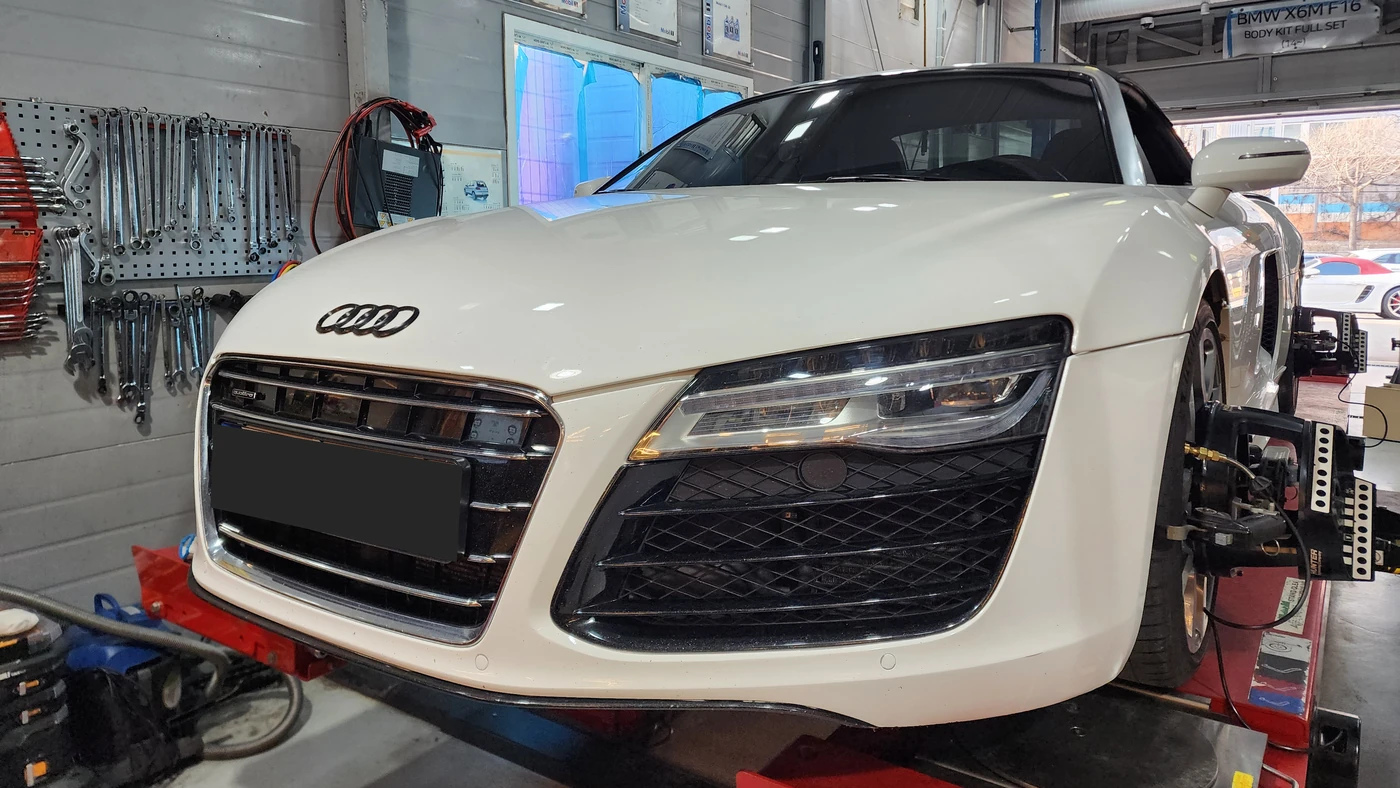
R8 care at a glance
| Concern | Lateral instability as the accelerator was pressed and released |
|---|---|
| March chassis work | Both rear springs, ride-height reset and alignment |
| March brake work | Machining the existing discs |
| Later care | New Zimmermann discs, Michelin PS4S tyres and assembled runout check |
In this case
- An unstable feel and a change in ride height
- A broken rear passenger-side spring, followed by replacement on both sides
- Resetting all four wheels after the ride-height work
- March 2025 · Machining the disc friction surfaces
- The March road test and the owner’s response
- Later service · New discs when machining margin had reduced
- Tyre replacement was also an opportunity to inspect the wheels
01
An unstable feel and a change in ride height
The R8 is Audi’s mid-engine high-performance sports car. This Spyder 5.2 FSI quattro has a naturally aspirated V10, all-wheel drive and a powered soft top.
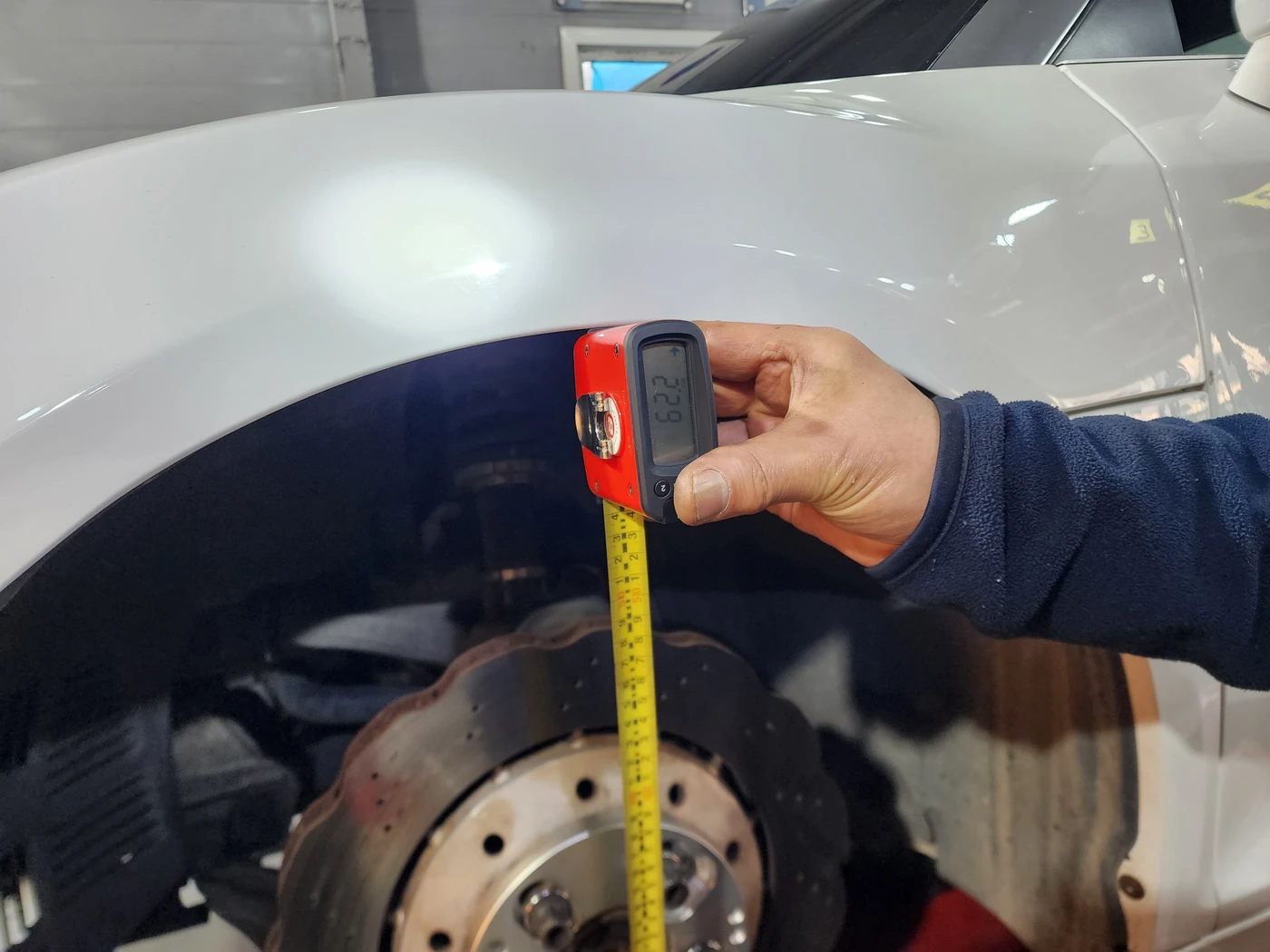
The owner requested an inspection after experiencing unstable behaviour on the motorway. During a road test, the car also moved laterally as the accelerator was pressed and released. Ride-height measurements showed changes from the previous settings, including differences from side to side.
Audi official · 2013 R8 introduction ↗
02
A broken rear passenger-side spring, followed by replacement on both sides
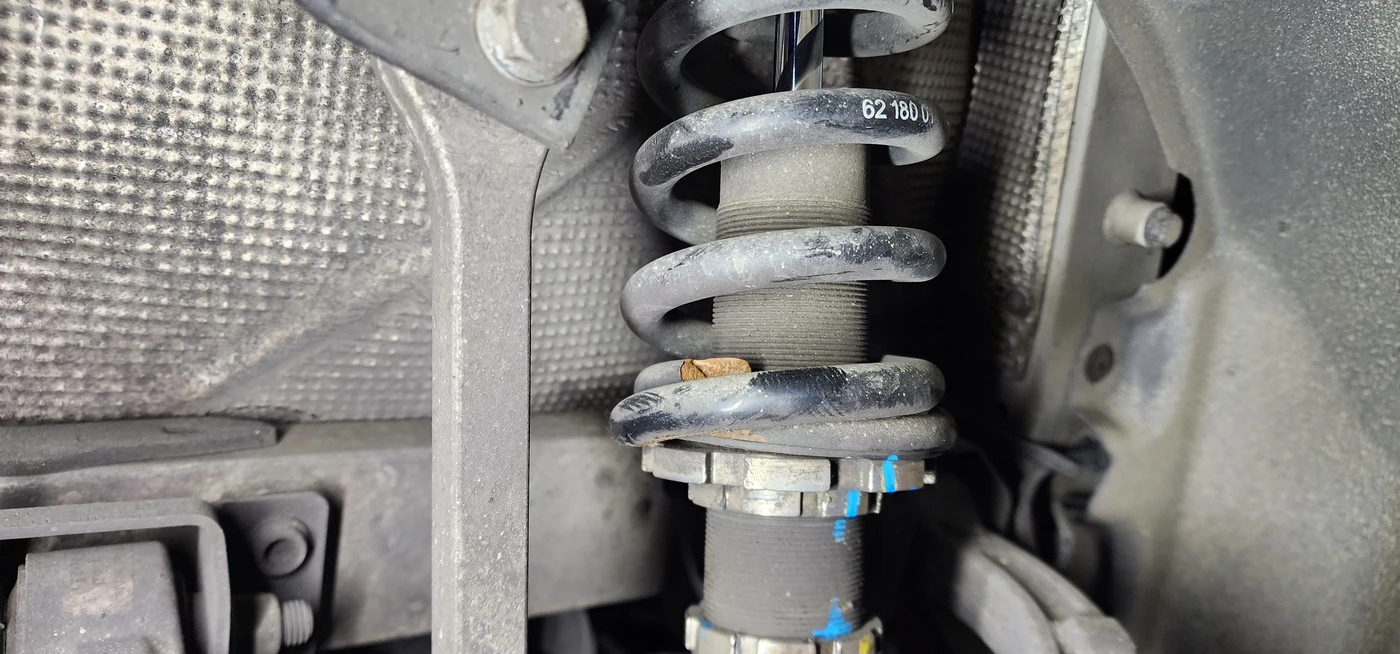
While checking the ride height, we found a broken spring on the rear passenger side. The fracture was visible at the end of the spring. The technician judged it to be a major cause of the rear imbalance and repaired the spring first.
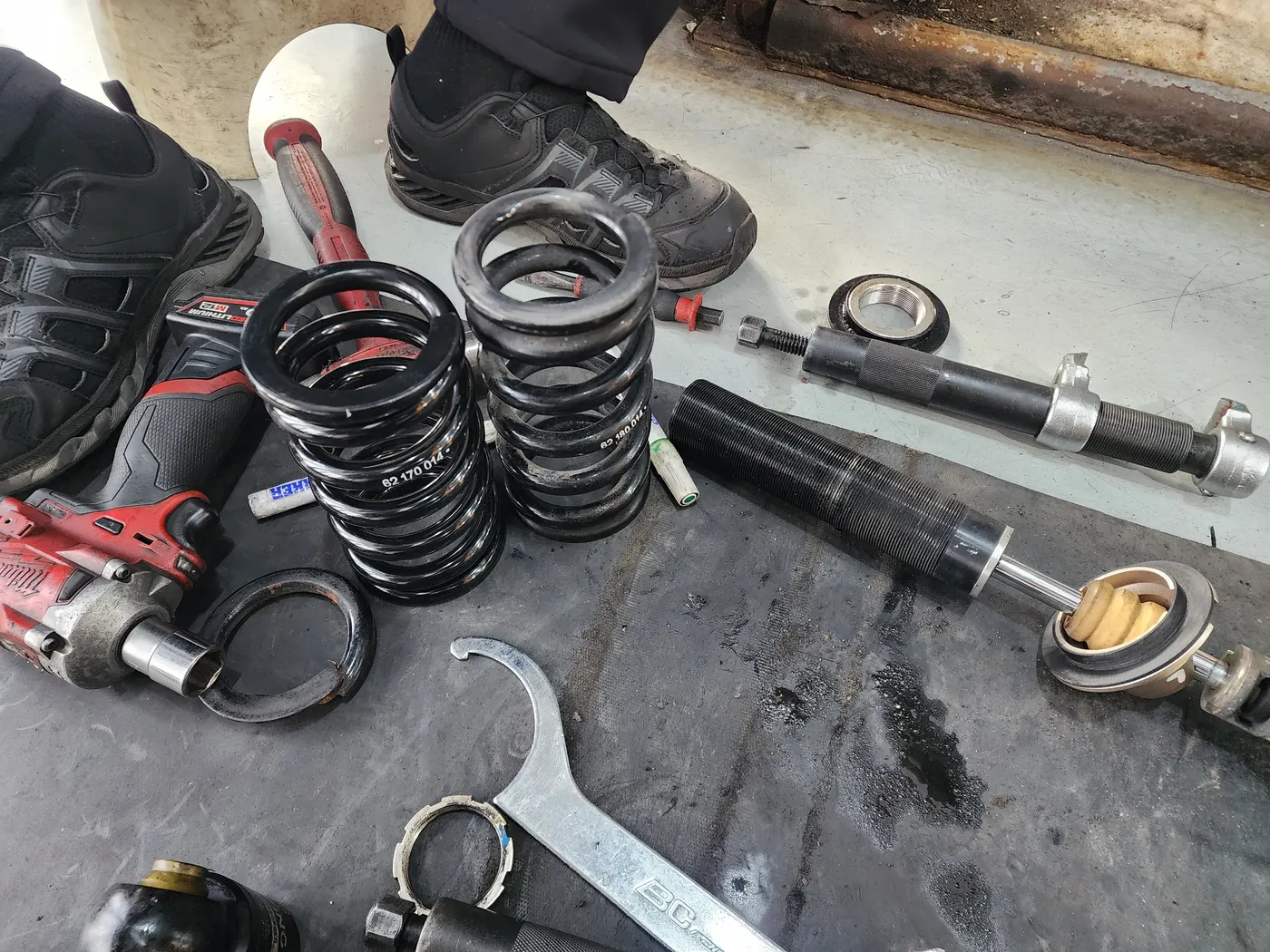
Both rear springs were replaced. A spring of the previous length was difficult to source, so the settings were revised for the length of the new springs. We compared the removed and replacement parts, checked the assembled length and ride height under the car’s load, then proceeded to alignment.
03
Resetting all four wheels after the ride-height work
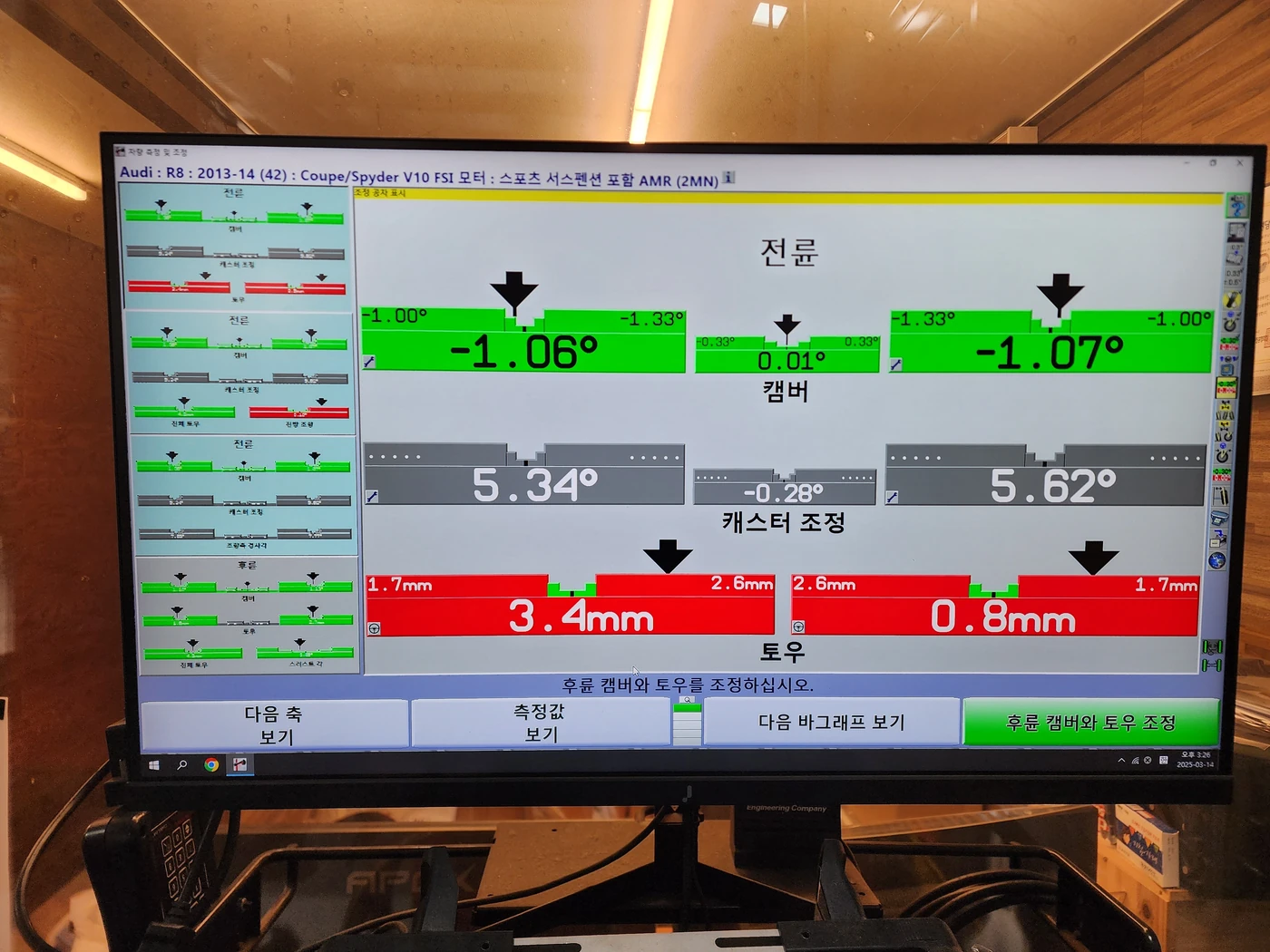
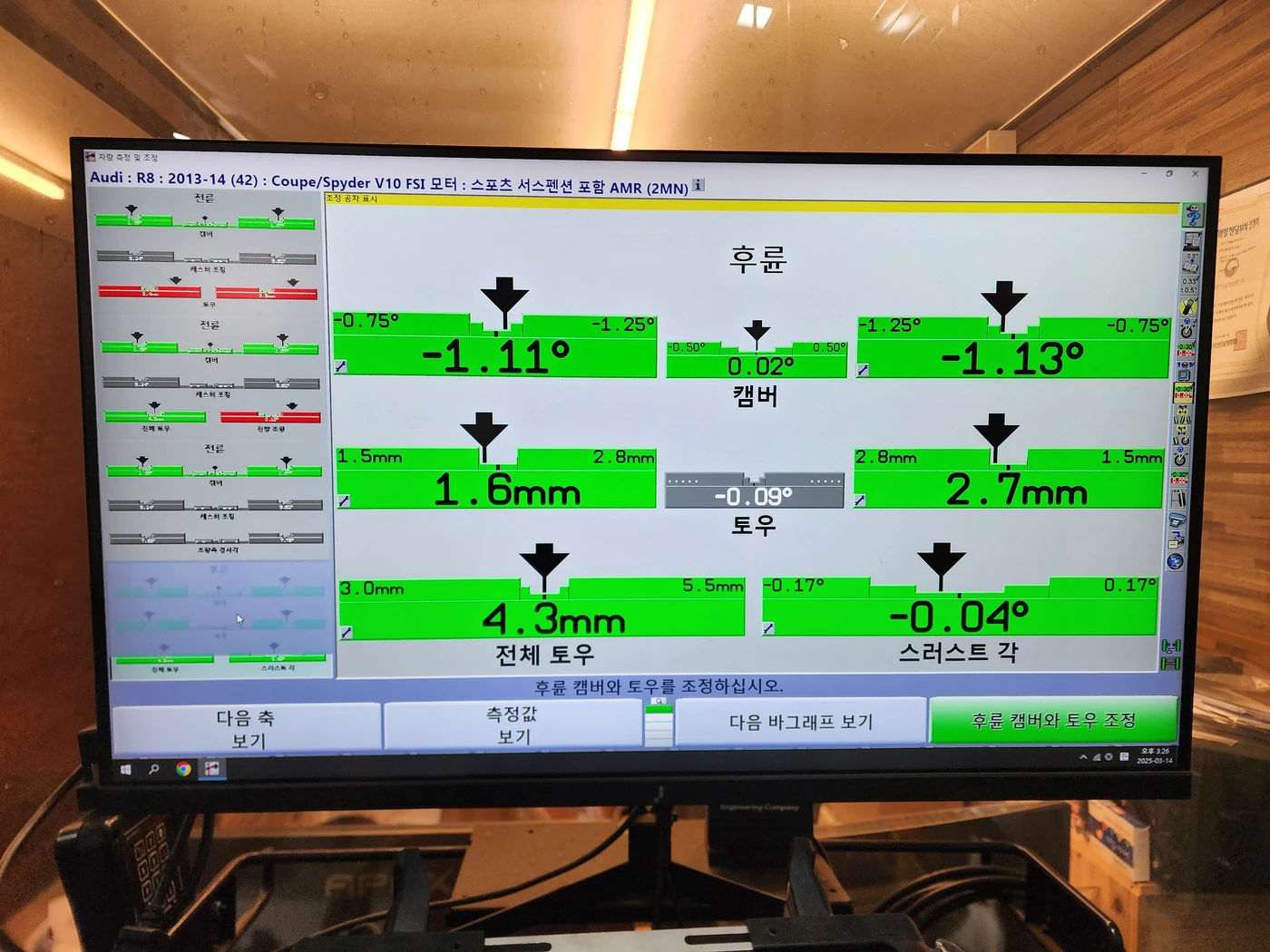
The alignment was adjusted on 14 March after the spring and ride-height work. Before adjustment that day, the front toe readings differed substantially from side to side. The rear readings were within the machine’s displayed range, but could be made more even.
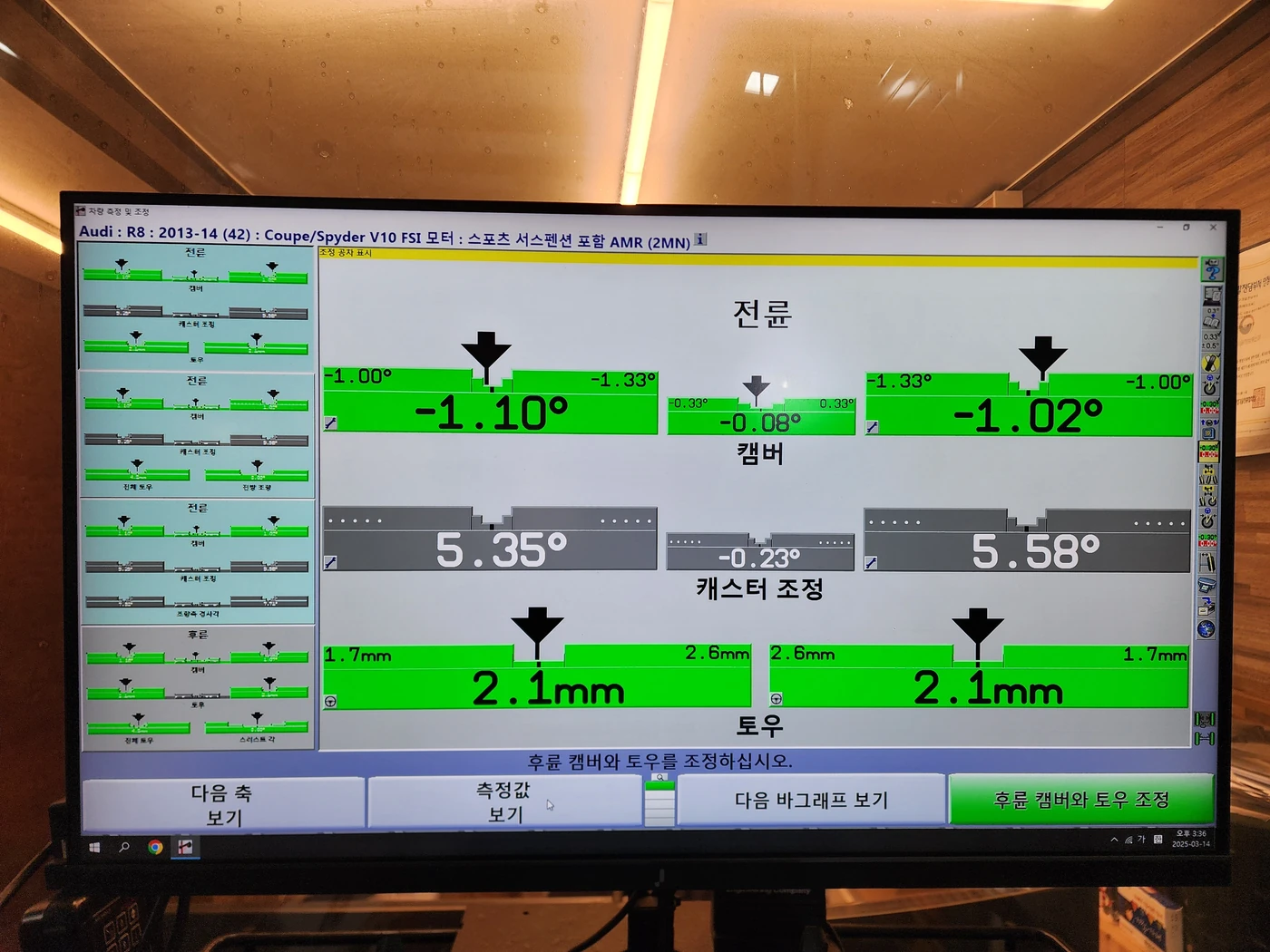
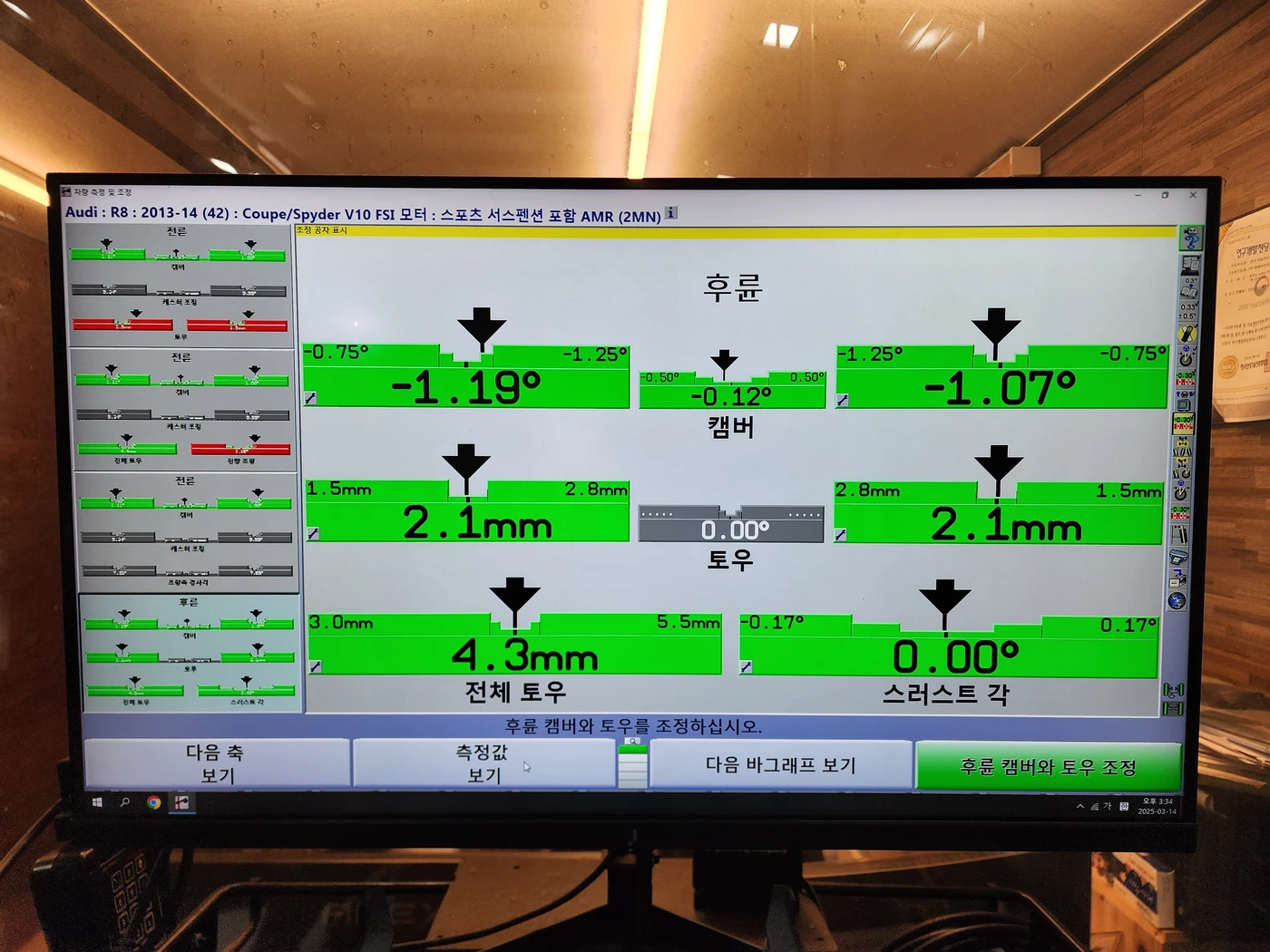
Final toe was set to 2.1mm on each side at both axles. Camber, caster and thrust angle were also measured. The comparison below uses readings photographed before and after the same adjustment on 14 March.
Four-wheel toe · compared with the final setting
Before · versus final setting
Side-to-side difference · front 2.6mm / rear 1.1mm
After · final setting
Side-to-side difference · front 0.0mm / rear 0.0mm
| Item | Left, before → after | Right, before → after |
|---|---|---|
| Front toe | 3.4 → 2.1 mm | 0.8 → 2.1 mm |
| Rear toe | 1.6 → 2.1 mm | 2.7 → 2.1 mm |
| Front camber | -1.06 → -1.10 ° | -1.07 → -1.02 ° |
| Rear camber | -1.11 → -1.19 ° | -1.13 → -1.07 ° |
| Front caster · measured | 5.34 → 5.35 ° | 5.62 → 5.58 ° |
Rear thrust angle: −0.04° → 0.00°. Toe is in mm; camber, caster and thrust angle are in degrees.
Actual measurement screens · click to enlarge
04
March 2025 · Machining the disc friction surfaces
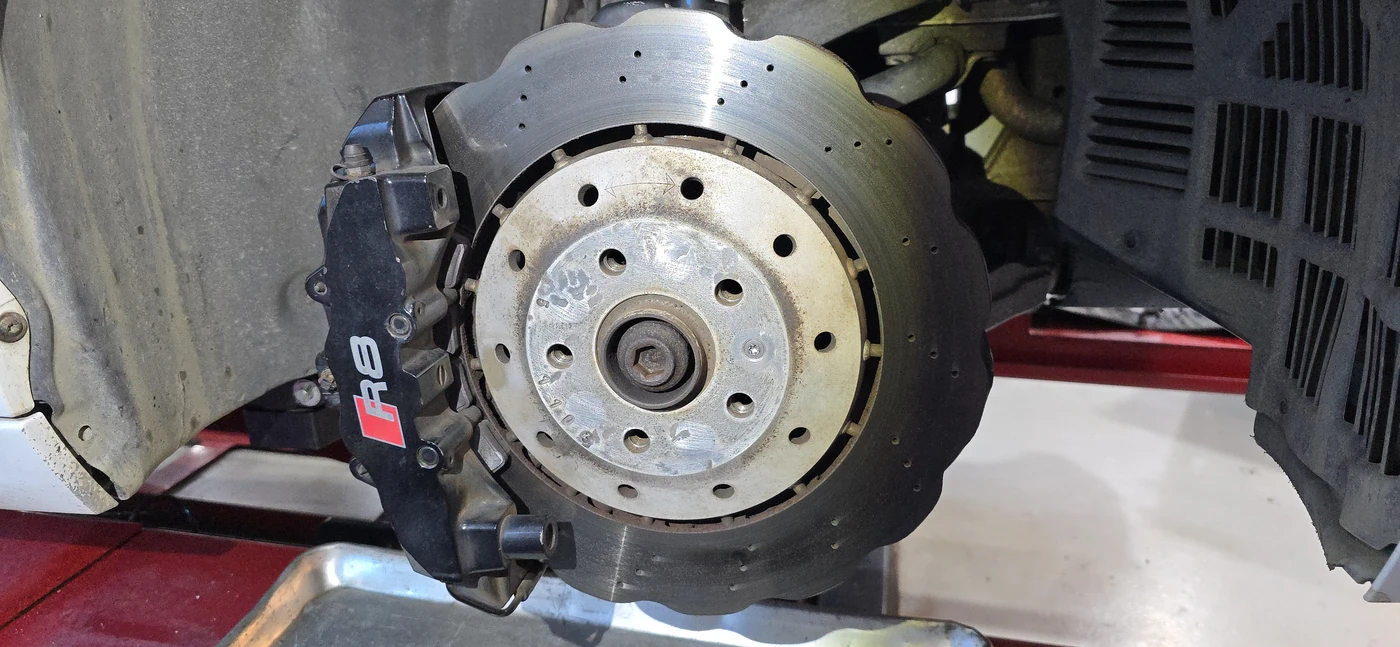
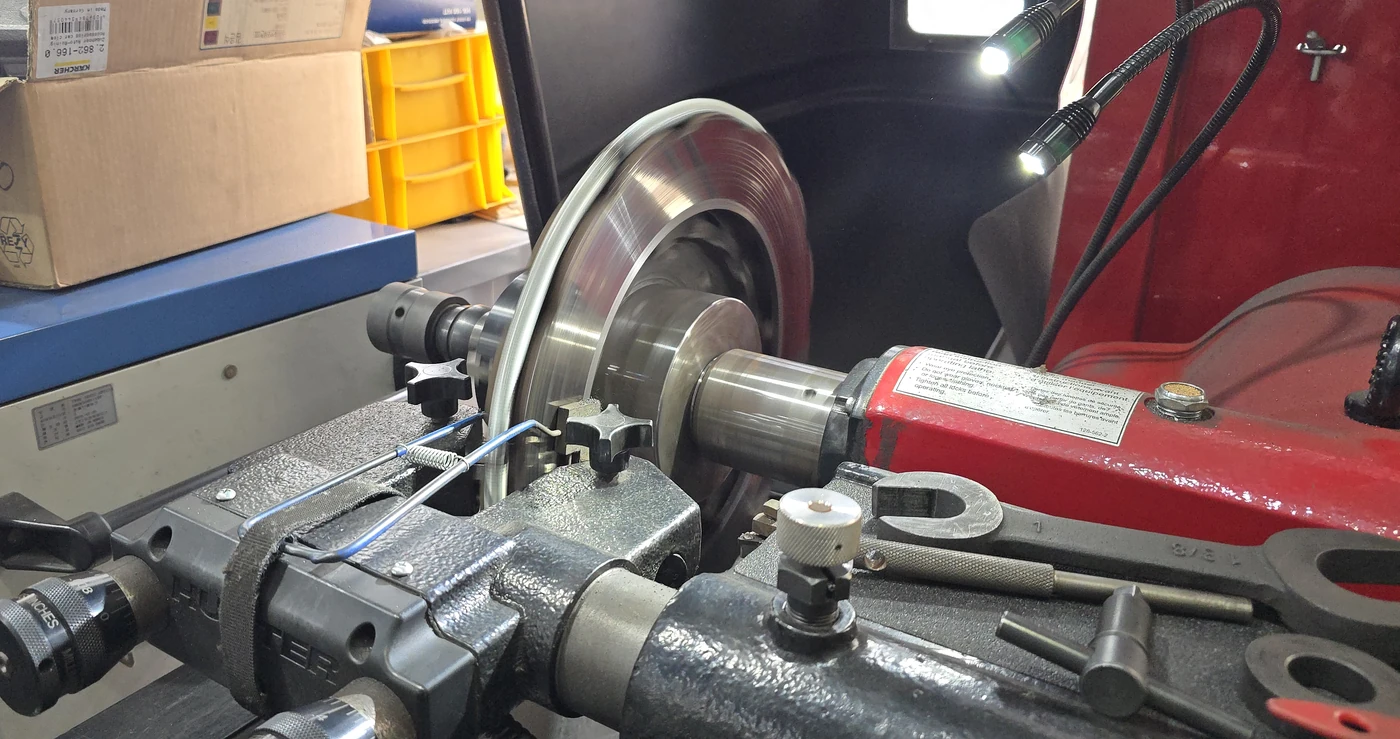
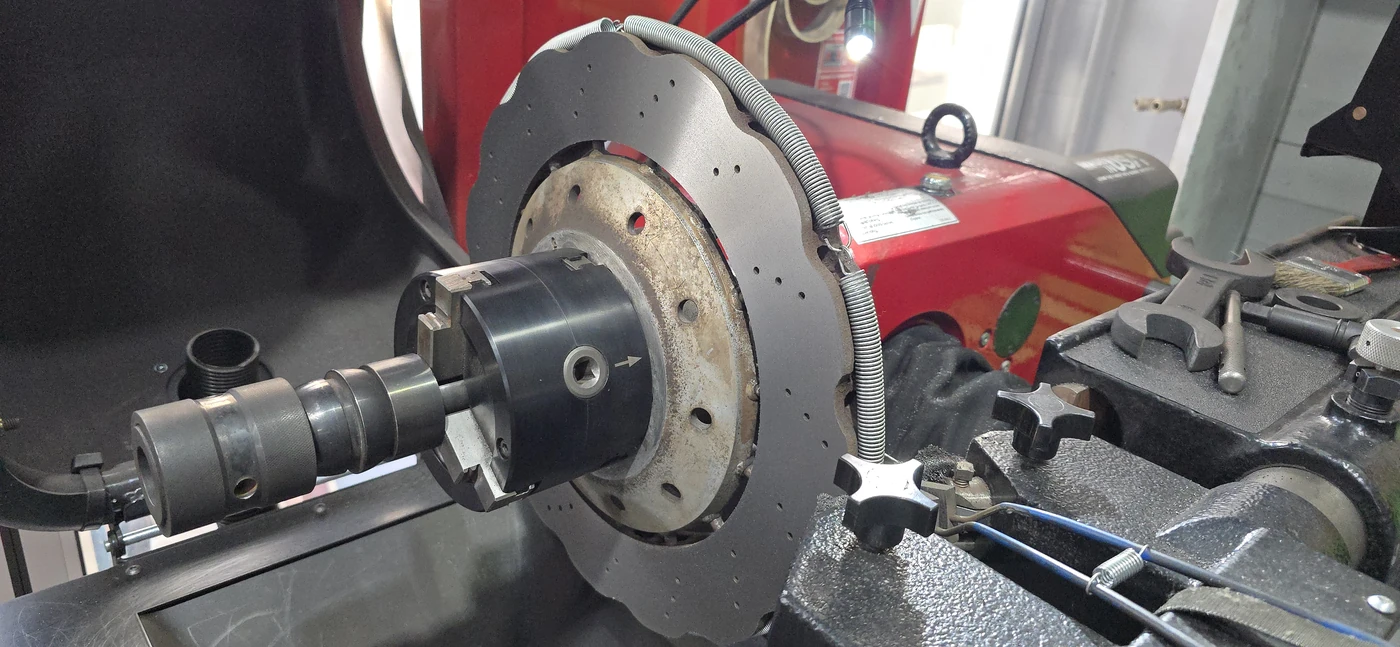
We removed the brake discs, mounted them on a dedicated brake lathe and machined the friction surfaces.
Remaining thickness and surface condition determine whether a disc can be machined. With enough material left, the friction surfaces can be refinished for continued use. A disc with insufficient machining allowance needs replacement.
05
The March road test and the owner’s response
After replacing the springs, resetting ride height and adjusting the alignment, we road tested the car. The owner said it felt much better than before, when it had swayed as the accelerator was pressed and released.
06
Later service · New discs when machining margin had reduced
The car returned later with increased brake judder. The previously machined discs had less material left for another cut, so this time we fitted new discs.
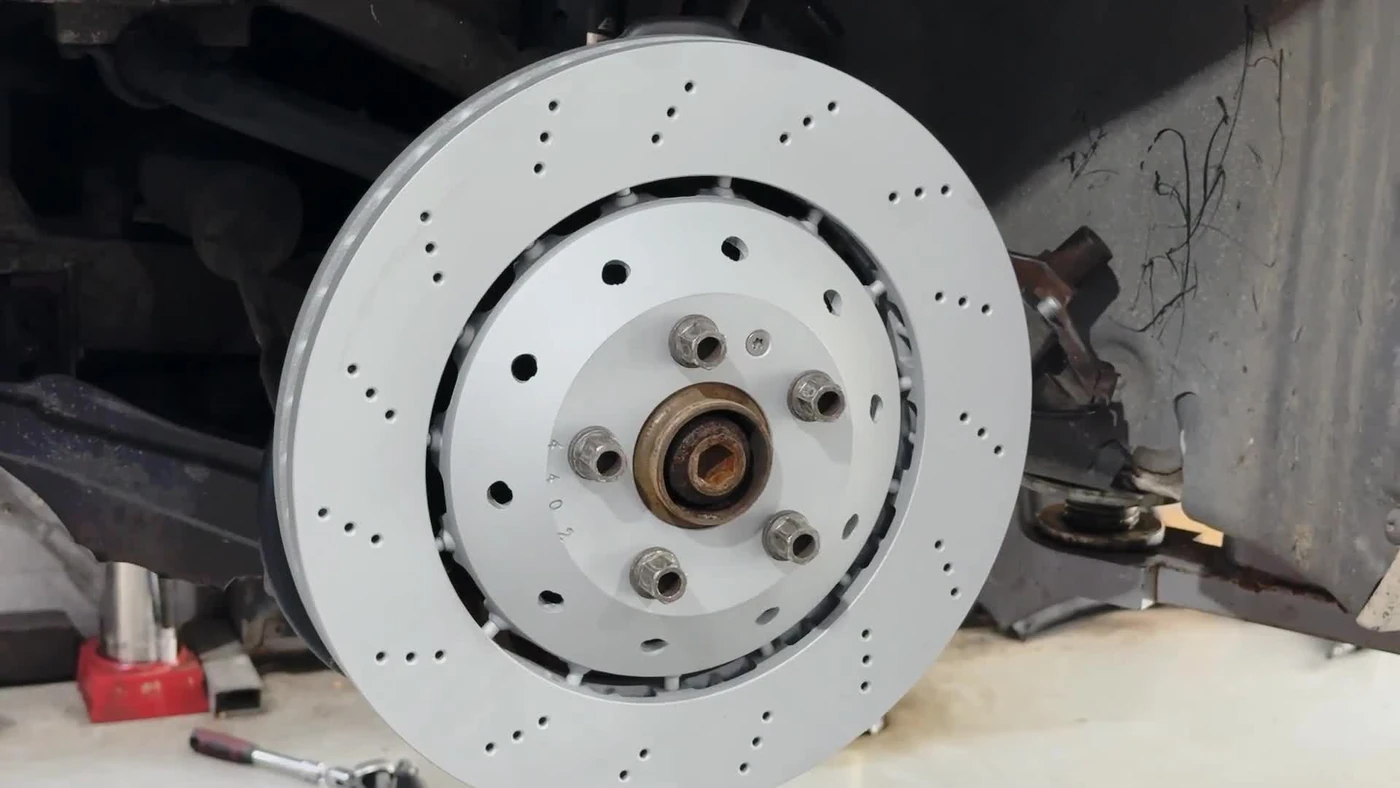
We used German-made Zimmermann discs, chosen from the technician’s experience with their quality. During assembly, we checked the surfaces where each disc meets the hub carefully.
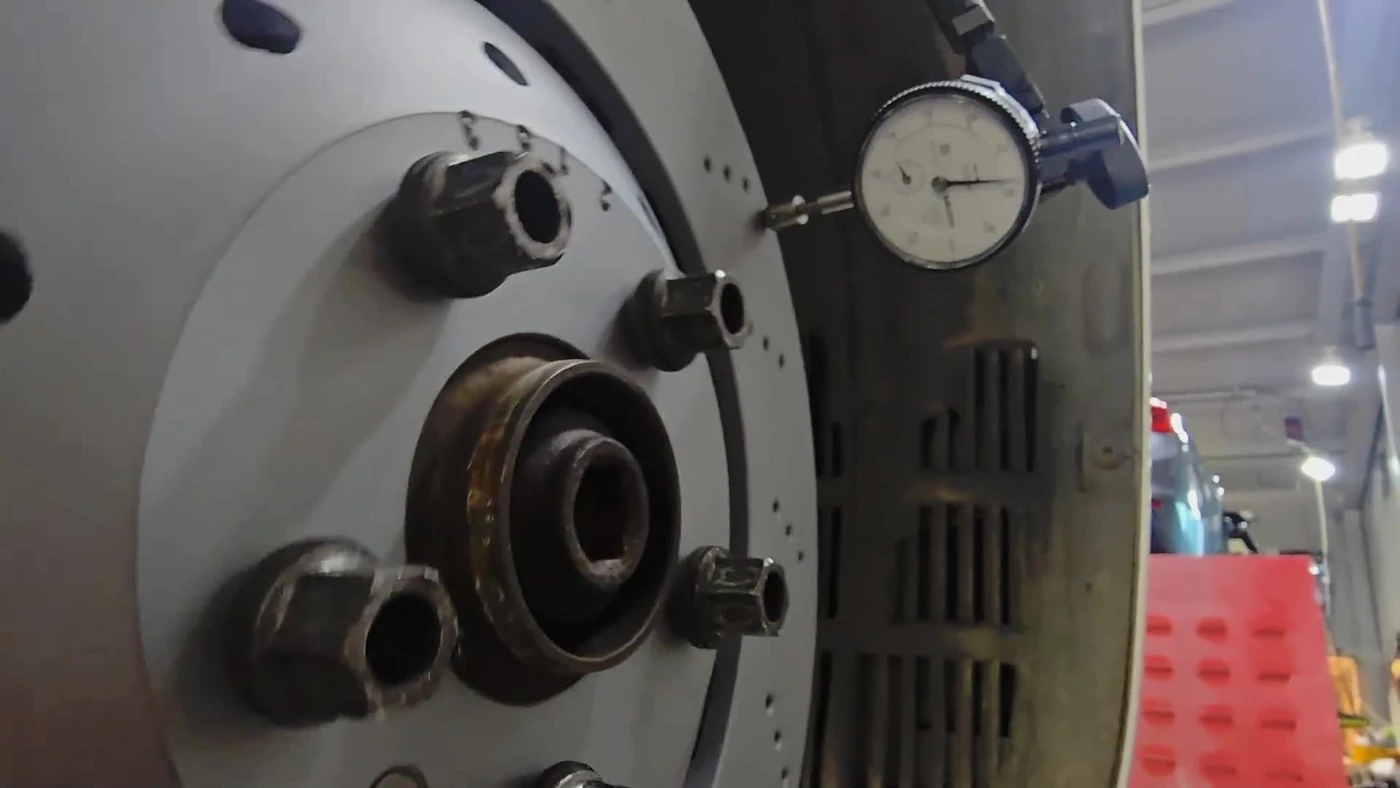
Debris or unevenness at the mounting face can leave even a new disc rotating at a slight angle. After assembly, we rotated the disc against a dial gauge to measure runout. The technician reported approximately 0.02mm. Runout is the sideways movement of the disc’s friction face as it rotates.
Assess surface condition and remaining thickness before machining or replacement.
Prepare the contact surfaces between the disc and hub.
Rotate the disc against a dial gauge to assess runout.
07
Tyre replacement was also an opportunity to inspect the wheels
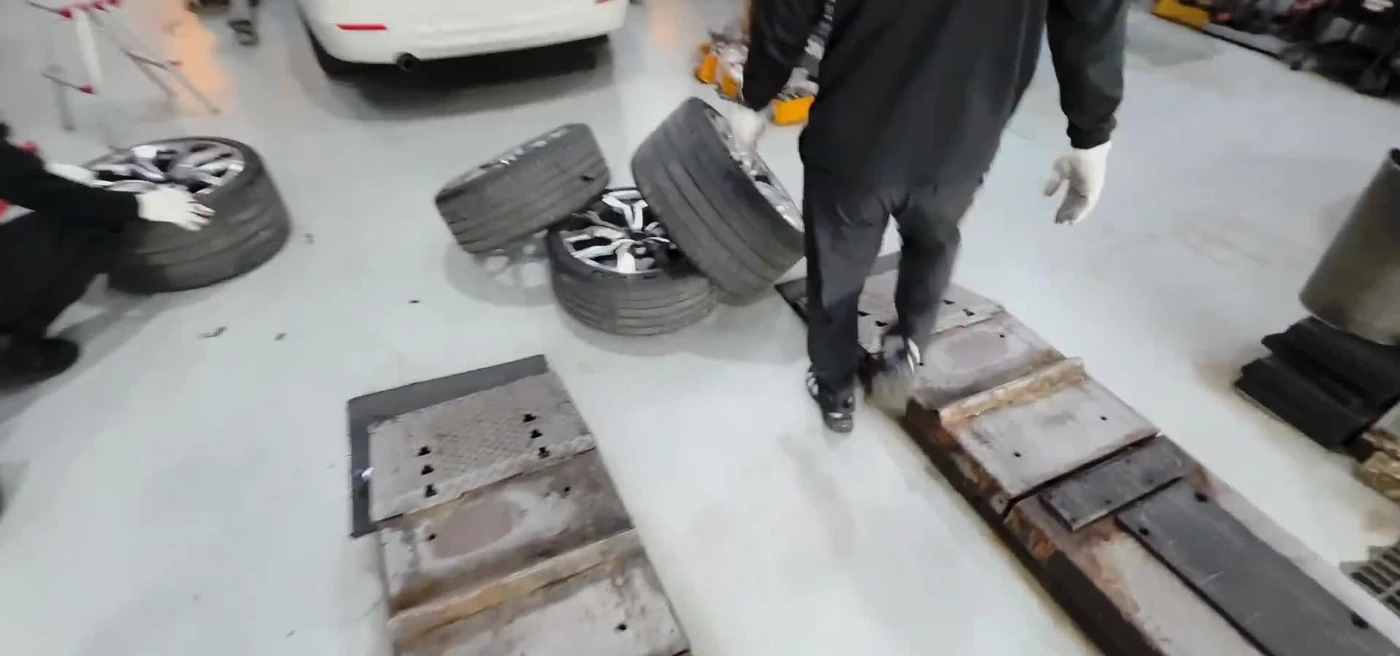
Michelin Pilot Sport 4S tyres were fitted. Old adhesive residue on the wheels and the tyre stickers were removed before balancing. The tyre work also included checking the wheels for deformation.
We found slight deformation on the inner side of a wheel. After considering its expected effect on this car’s driving feel and the cost of repair, the technician decided to leave it without straightening.
Later brake replacement · the actual work
 High-performance car brake care — Audi R8Watch the 13 min 57 sec video on YouTube ↗
Video published 24 April 2025 · Covers disc replacement after the earlier March machining.
R8 suspension and brake care FAQ
Is alignment alone enough when a car drifts under acceleration or deceleration?
Ride height, springs and other suspension components should also be inspected. This R8 had a broken rear passenger-side spring. Both rear springs were replaced and ride height reset before the alignment was adjusted.
Does a car need further setting work after spring replacement?
Spring replacement can change ride height, so we check the installed height and wheel alignment afterwards. On this R8, we adjusted the settings for the new spring length and checked ride height under the car’s weight.
How do you choose between machining brake discs and replacing them?
The decision depends on remaining thickness and surface condition. This R8’s discs were machined in March 2025. When judder increased again later, we considered the remaining machining margin and fitted new discs.
Why measure runout after installing new discs?
The disc-to-hub contact faces and assembly condition can affect how a new disc rotates. A dial gauge checks the assembled result. The technician reported approximately 0.02mm of runout in this service.
NHC MOTORS · SUWON
Let us assess your car’s handling and brakes
If your car feels unstable as you accelerate or decelerate, or judders under braking, we can inspect the suspension, wheels, tyres and brakes to identify the cause and explain the work needed. We apply the same care to imported cars, supercars and Korean models, assessing what needs replacement and what can remain in service.
Call 031-258-1617Book on Naver524 Maesonggosaek-ro, Gwonseon-gu, Suwon · By appointment